
Torsion vs Extension Springs: What's the Difference?
By the H&D Garage Door team · Updated
What is the difference between torsion and extension springs?
Torsion springs sit on a metal shaft above the garage door and twist to store energy. When the door rises, they unwind and turn the shaft, which winds the lift cables onto drums. Extension springs run alongside the horizontal tracks near the ceiling and stretch as the door comes down, then pull the door up through a set of pulleys and cables.
Both do the same job: they carry most of the door's weight so it can be lifted by hand or by an opener. On most two-car and heavier doors, torsion springs give smoother, more controlled lifting and keep a broken spring contained on its shaft. Extension springs use simpler hardware and still show up on many lighter and older doors. The sections below compare them in detail.
How can you tell which springs your door has?
You can tell from the floor with the door closed, without touching anything. Look at the wall just above the top of the opening.
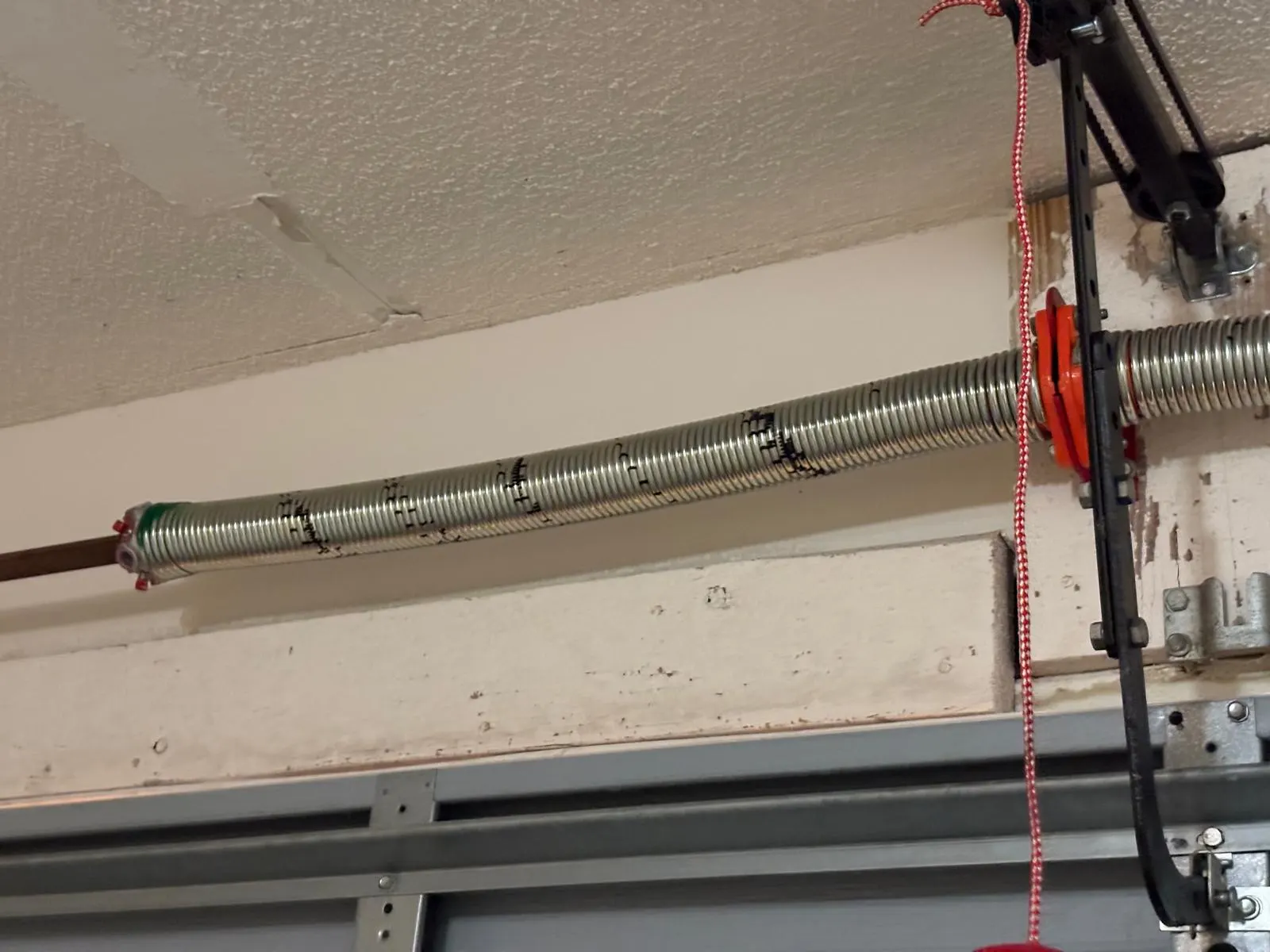
- A coiled spring wrapped around a horizontal bar, with a bracket in the middle and a round drum at each end, is a torsion system
- Long springs running parallel to the ceiling tracks on both sides, with a pulley at one end and a cable through the middle, are extension springs
- A bar above the door with no visible coil, but a tube or housing along it, may be an enclosed torsion system with the spring inside
- A spring and shaft sitting near the back end of the tracks rather than above the opening is a rear-mount torsion setup used in tight garages
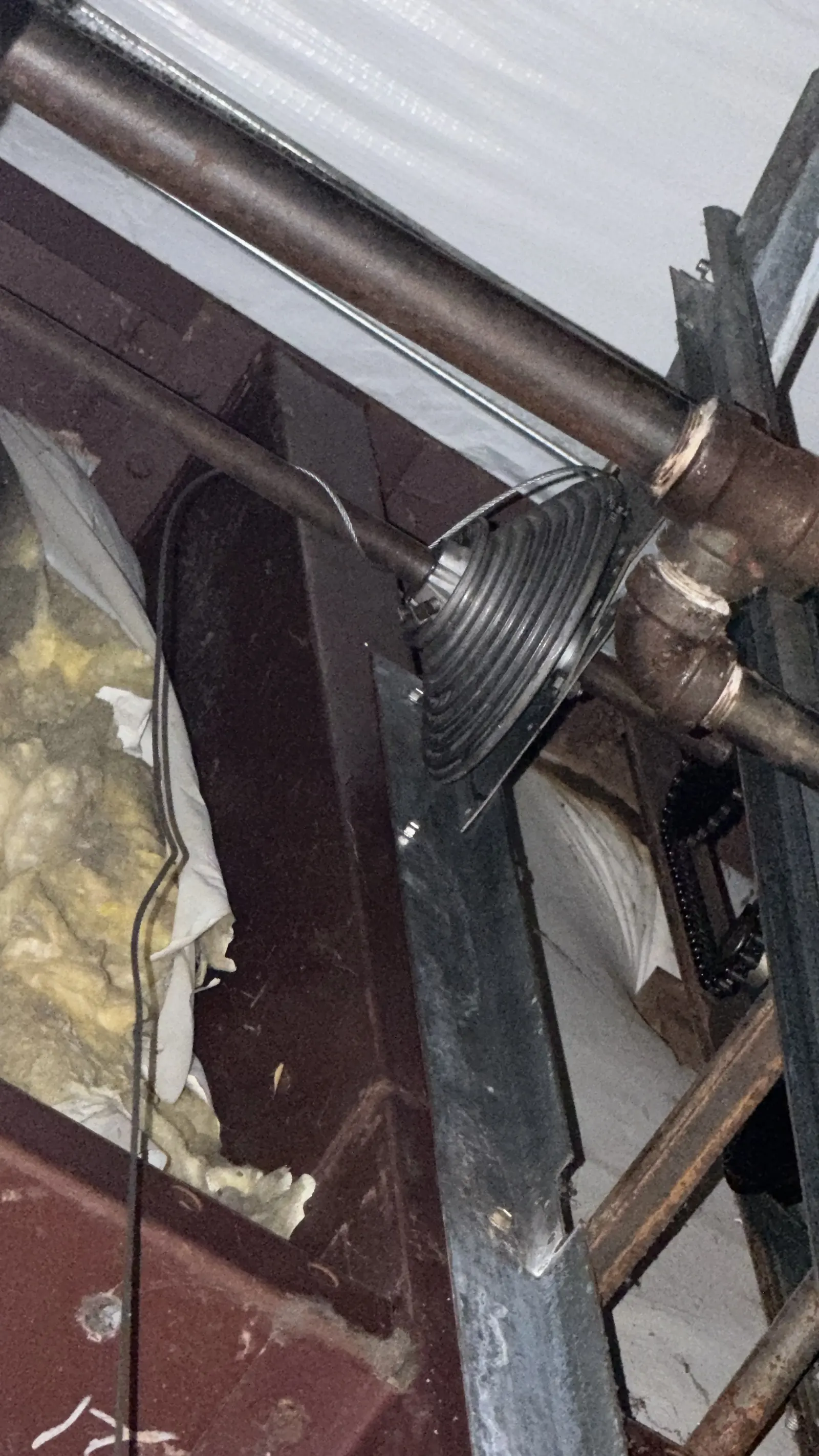
How do torsion springs work?
When the door is closed, the torsion spring is wound tight. Each end is locked to a cone: one fixed to a bracket on the wall, the other clamped to the shaft. As the door opens, the spring relaxes and turns the shaft, and the drums on each end wind the lift cables evenly from both sides. As the door closes, the door's weight winds the spring back up.
Because one shaft drives both cables, the two sides of the door lift together. A residential door may have a single spring or a pair, and heavy doors can carry more than two. The shaft rides in bearings at each end and often at the center, and those bearings, drums and cables are part of the system a technician inspects.
How do extension springs work, and why do they need safety cables?
Extension springs are stretched when the door is down and contract as it goes up. Each spring connects to a pulley and a cable that runs to the bottom corner of the door on its side. Because the two sides work separately, each spring has to match its partner closely, or one side of the door will rise ahead of the other.
A stretched spring that breaks can whip across the garage with real force. That is why DASMA, the industry association, says every extension spring needs a safety cable running through its center, secured to the wall or ceiling at each end. The cable doesn't help lift the door. It holds the pieces if the spring snaps. If you look up and don't see one through each spring, mention it when you call.
Which system is safer?
Both store enough energy to cause serious injury, so neither is safe to work on without training. The difference is what happens when one breaks. A torsion spring that fails usually stays on its shaft and spins apart there. An extension spring without a safety cable can fly loose, and even with one, the door often lifts crooked because only one side has lost its spring.
Torsion systems also keep the springs out of reach above the opening, while extension springs and their pulleys run right over where cars park and people store things. That doesn't make an extension door unsafe if it is set up correctly with containment cables, but it is one reason torsion has become the common choice on new two-car doors.
Which lasts longer and runs quieter?
Spring life is measured in cycles, and both types are made in standard and higher-cycle versions. The industry's sectional door specification calls for door systems designed to run at least 10,000 cycles, and either spring type can be built to that or beyond. Torsion springs are easier to build for very high cycle counts, because the wire size and length can be changed to lower the stress on each coil. Our article on how long garage door springs last explains cycle ratings in more depth.
On noise and smoothness, torsion usually wins. The door moves under the steady control of one shaft, so it tends to glide rather than bounce. Extension systems can jerk at the start of travel, and their pulleys squeak as they wear. Either system runs quieter and lasts longer when the door is balanced and the moving parts are lubricated as the manufacturer recommends.
Which doors suit each system?
Extension springs are common on lighter single-car doors, older doors and some builder-grade installations, and on garages where the wall above the opening doesn't leave room for a shaft. They do the job well on a light door when they are matched and contained.
Torsion springs suit most two-car doors, insulated doors and anything heavy, because a torsion system can be sized precisely and can share the load between two or more springs. Tall doors, wood doors and doors reinforced for wind usually rely on torsion. Commercial sectional doors use torsion springs as well, often several on one heavy shaft, and rolling steel doors keep their springs inside the barrel above the opening.
What about low headroom and other special cases?
Headroom is the space between the top of the door opening and the ceiling. A standard torsion setup needs room for the shaft, drums and the curve of the track above the door. When a beam, duct or low ceiling is in the way, manufacturers offer low-headroom track and spring kits. Some place the torsion shaft lower on the wall, and others use a rear-mount design with the spring at the back end of the horizontal tracks.
Enclosed torsion systems, where the spring sits inside a tube, are another option some manufacturers use, and some of them need less clearance than an open spring. These systems use their own parts, so a technician has to know which design is on the door before replacing anything. Very heavy or oversized doors may need more than two springs or a heavier shaft, which is a sizing question only an on-site measurement can answer.
Should you convert extension springs to torsion?
Converting can make sense when your extension springs are due for replacement anyway, when the door got heavier after insulation or a new section, when it lifts unevenly or noisily, or when the springs have no safety cables. It also tends to suit two-car doors that came from the builder with extension springs.
It makes less sense when the garage lacks room for a torsion shaft and no low-headroom option fits, or when a light door is running smoothly on matched, contained extension springs. A technician should check the door's weight, size and headroom before recommending either path. For what goes into the price of a conversion or a straight swap, see our guide to garage door spring replacement cost.
Why is spring work a job for a technician?
Torsion and extension springs hold the energy needed to lift a door that may weigh a couple hundred pounds, and DASMA says springs should be replaced only by a trained technician. Releasing or loading that tension is where injuries happen, and it isn't something to learn from a video. The cables carry the same load, so they are off-limits too. If a lift cable looks frayed or slack, see our garage door cable repair page and stop using the door.
What you can safely do is look. Note which system you have, check from the floor for a gap in a torsion coil or a sagging extension spring, and confirm that extension springs have safety cables. Our guide to broken spring signs shows what a failed spring looks like.
Need springs replaced or upgraded?
Our broken spring repair service covers torsion and extension springs and conversions between them. In northeast Ohio, where cold mornings finish off tired springs, see our Cleveland broken spring repair page. Call (888) 754-4130 and tell us which system you see above your door.