Signs you need door repair
- The door won't open, or opens only a few inches and stops
- The door won't close, or closes only while you hold the wall button
- The door starts down, then reverses back up
- The opener hums or clicks but the door doesn't move
- Loud bangs, grinding or popping sounds when the door moves
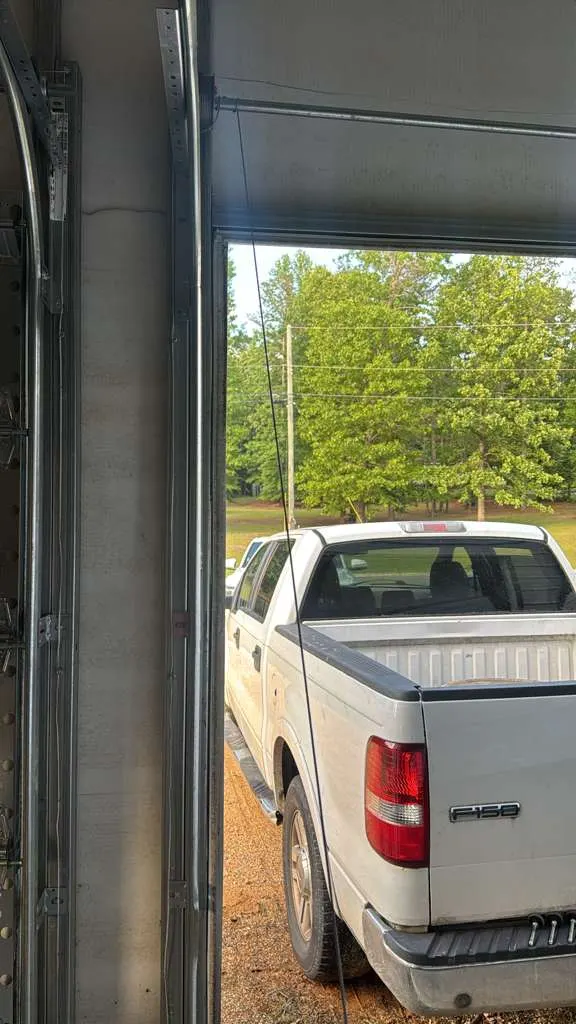
- The door hangs crooked or one side is lower than the other
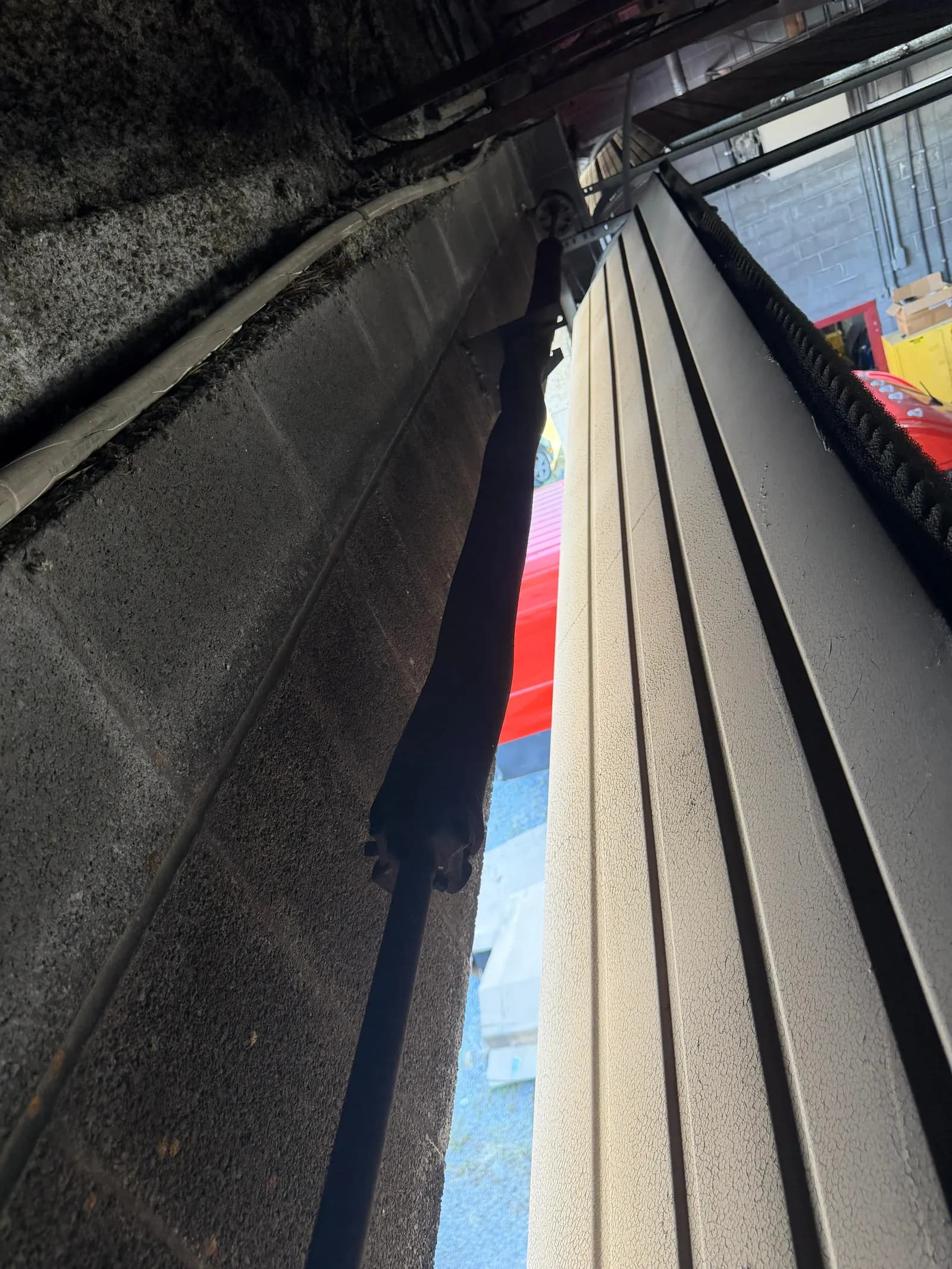
- A cable is loose, frayed or hanging off the drum
- Panels are dented, cracked or bowed in the middle
- The door feels very heavy when you lift it by hand
Why won't my garage door open?
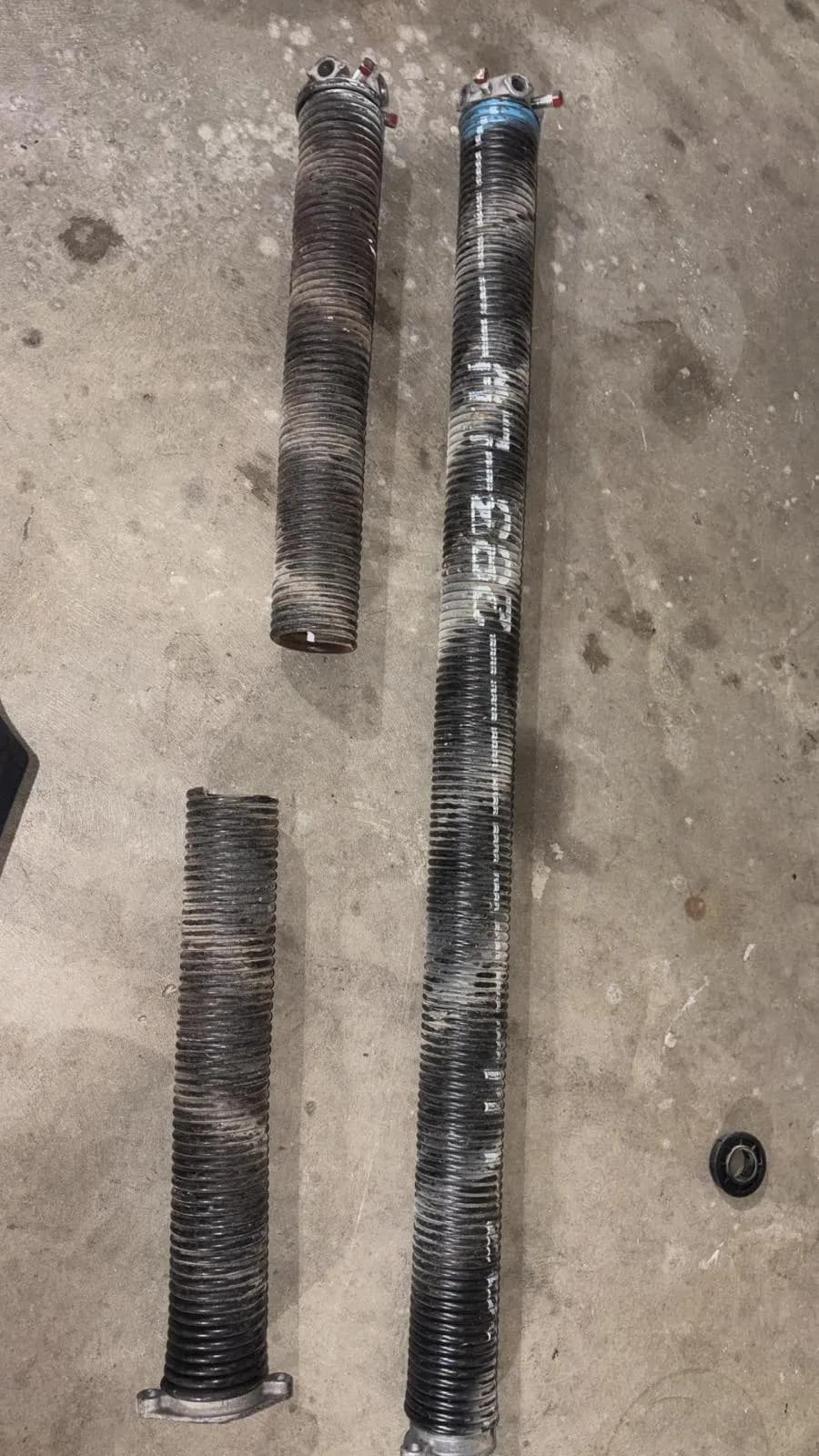
If the opener runs but the door stays down, a broken spring is the most likely cause. Springs do the heavy lifting, not the motor. When one snaps, the opener tries to lift the full weight of the door and gives up after a few inches. You may have heard a loud bang from the garage earlier, and you may see a gap in the coil above the door. That job belongs on our broken spring repair page.
If nothing happens at all, start with power. Check that the opener is plugged in, the outlet works, and the breaker hasn't tripped. Many wall consoles also have a lock or vacation button that blocks remotes; if a small light is blinking on the console, that lock may be on.
If the door opened fine yesterday and now opens only partway, the problem may be the opener's travel limits, a worn drive gear, or a binding track. Those need hands-on testing.
Why won't my garage door close all the way?
The most common cause is the safety sensors. Every residential opener made for the US market since January 1, 1993 must have an auto-reverse system, and most use two small photo eyes near the floor on each side of the door. If the beam between them is blocked or the eyes are out of line, the door refuses to close or reverses right after it starts down.
Look at the lights on both sensors. On many models one light stays solid on each side when they're aligned. A blinking or dark light usually means a misaligned eye, a dirty lens, a cut wire, or low morning sun shining straight into the receiver.
If the door closes only while you hold the wall button down, that's a classic sign the opener has gone into sensor-bypass mode. It's telling you the sensors aren't seeing each other. Our garage door opener repair team handles sensor wiring, alignment and replacement.
- Something is in the beam path (a broom, a bag, a bike tire)
- A sensor bracket got bumped and the eyes no longer line up
- Spider webs or dust are covering a lens
- A sensor wire is stapled through, chewed or loose at the opener
What does it mean when the garage door makes noise but won't move?
A humming opener with a door that stays still often points to a stripped drive gear inside the motor head, a seized door, or a door so out of balance that the motor can't lift it. A rapid clicking sound usually means the opener is trying to start but something stops it, like a failed capacitor, a relay problem, or a logic board fault.
A single loud bang followed by a door that won't lift is almost always a spring. Grinding and squealing during travel usually means dry or worn rollers, bent track, or worn bearings on the spring shaft. Popping at the same spot every time often means a roller is catching on a dent in the track.
Noise is useful information. Before your visit, note when the sound happens (opening, closing, or both), where it seems to come from (the motor, the top of the door, or the sides), and whether it started suddenly. That helps the technician narrow it down quickly.
Is my garage door off track, or is it a cable problem?
When a door hangs crooked, the cause is usually a lift cable, the track, or both. Each side of the door has a steel cable that winds onto a drum at the top. If one cable frays, slips off the drum or snaps, that side drops and the door twists. A twisted door can then pop its rollers out of the track.
Off-track doors also happen when a car bumps the door, when a roller breaks, or when the track brackets loosen over time. You'll see rollers sitting outside the track, a gap between the door and the frame, or a panel bent at an angle.
Do not run the opener on a crooked door. It can pull the door further out of the track and bend the panels. See our pages on garage door cable repair and off-track repair for what's involved. Worn rollers are often part of the same repair.
Should I repair or replace my garage door?
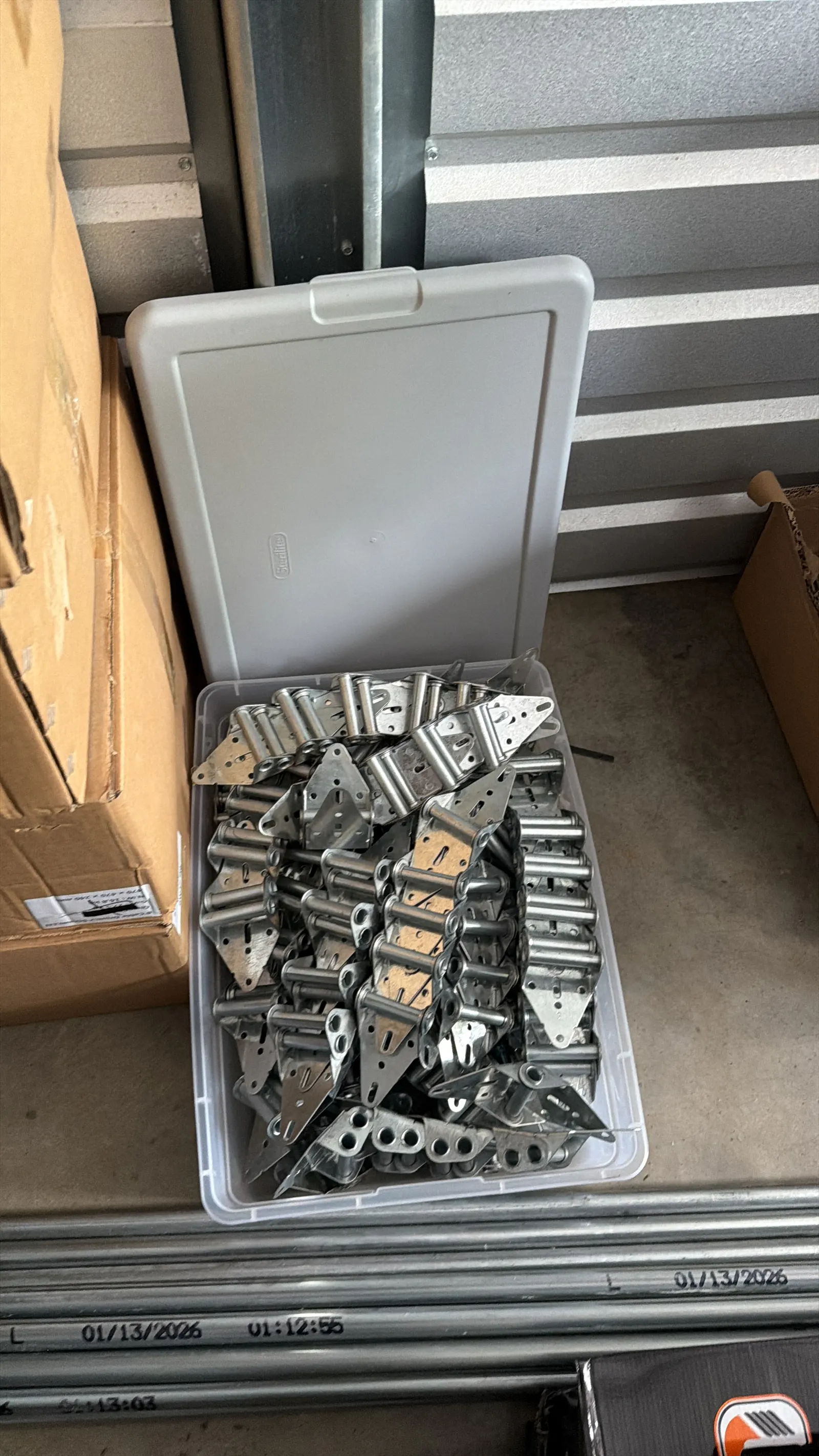
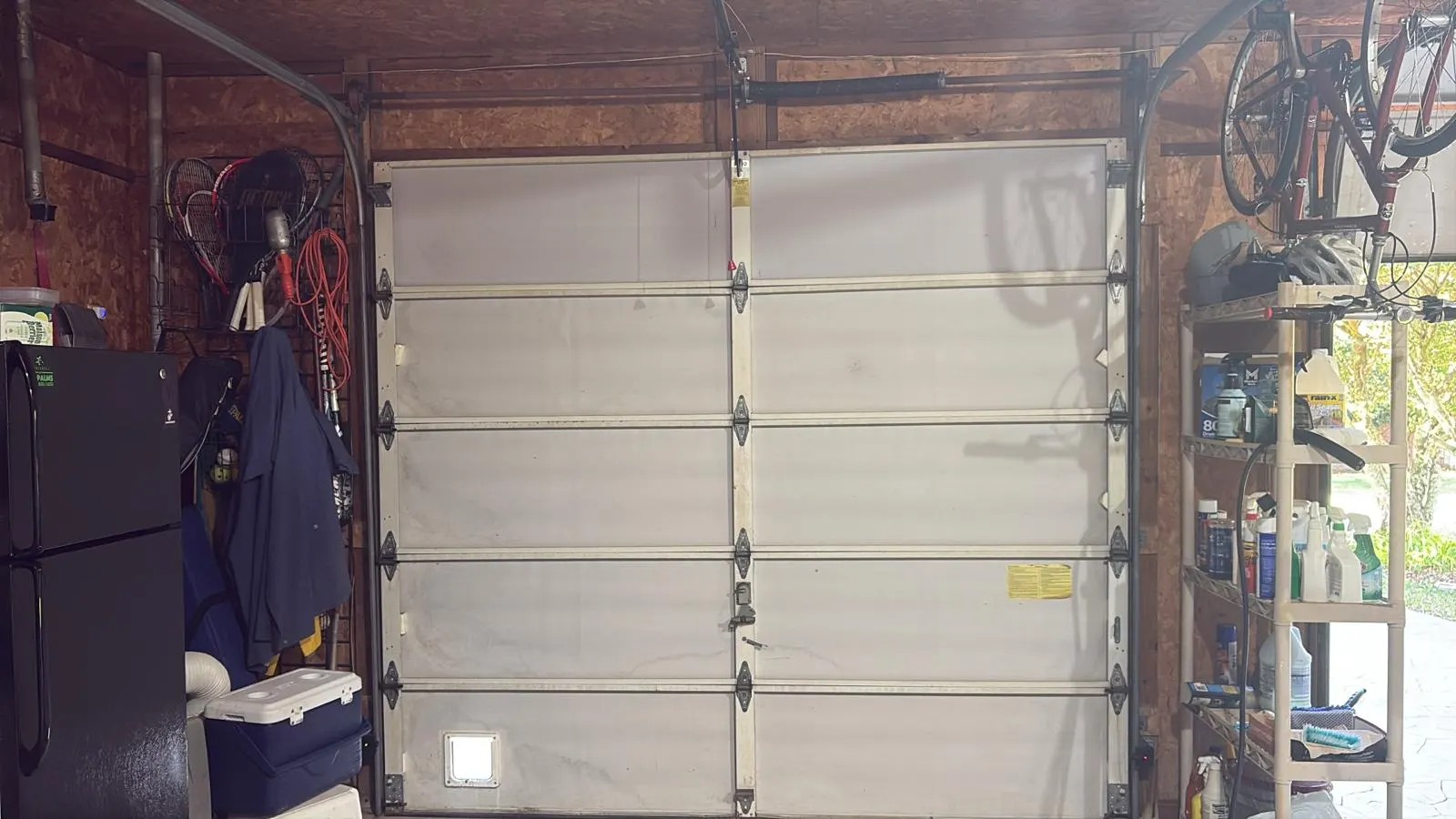
Most doors can be repaired. Springs, cables, rollers, hinges, sensors and openers are all replaceable parts, and fixing them is usually the right call on a door that's otherwise in good shape.
Replacement starts to make sense when several things are true at once: panels are cracked or rusted through, the door is very old and parts are hard to find, it has no insulation and the garage is too hot or too cold to use, or you've had repeated repairs in a short time. One badly damaged section can sometimes be swapped out on its own through panel replacement, if a matching panel is still made.
We'll tell you honestly which way we'd go if it were our own door. If a new door is the better choice, we can walk you through the options on the same visit.
What affects the cost of garage door repair?
We don't quote prices online because every door is different, and a number on a website rarely matches the real job. Here's what drives the price of a repair, so you know what to expect when we give you a quote.
- Which part failed: a sensor adjustment is a small job; a pair of torsion springs is a bigger one
- Door size and weight: a heavy two-car insulated door needs stronger springs and cables
- Torsion vs. extension springs, and standard vs. high-cycle springs
- How many parts are worn: replacing rollers or cables while the door is already apart can save a second visit
- Opener brand, age and whether parts are still available
- Damage to panels or track from an impact
- Timing: an urgent visit for a stuck door may cost more than a planned one
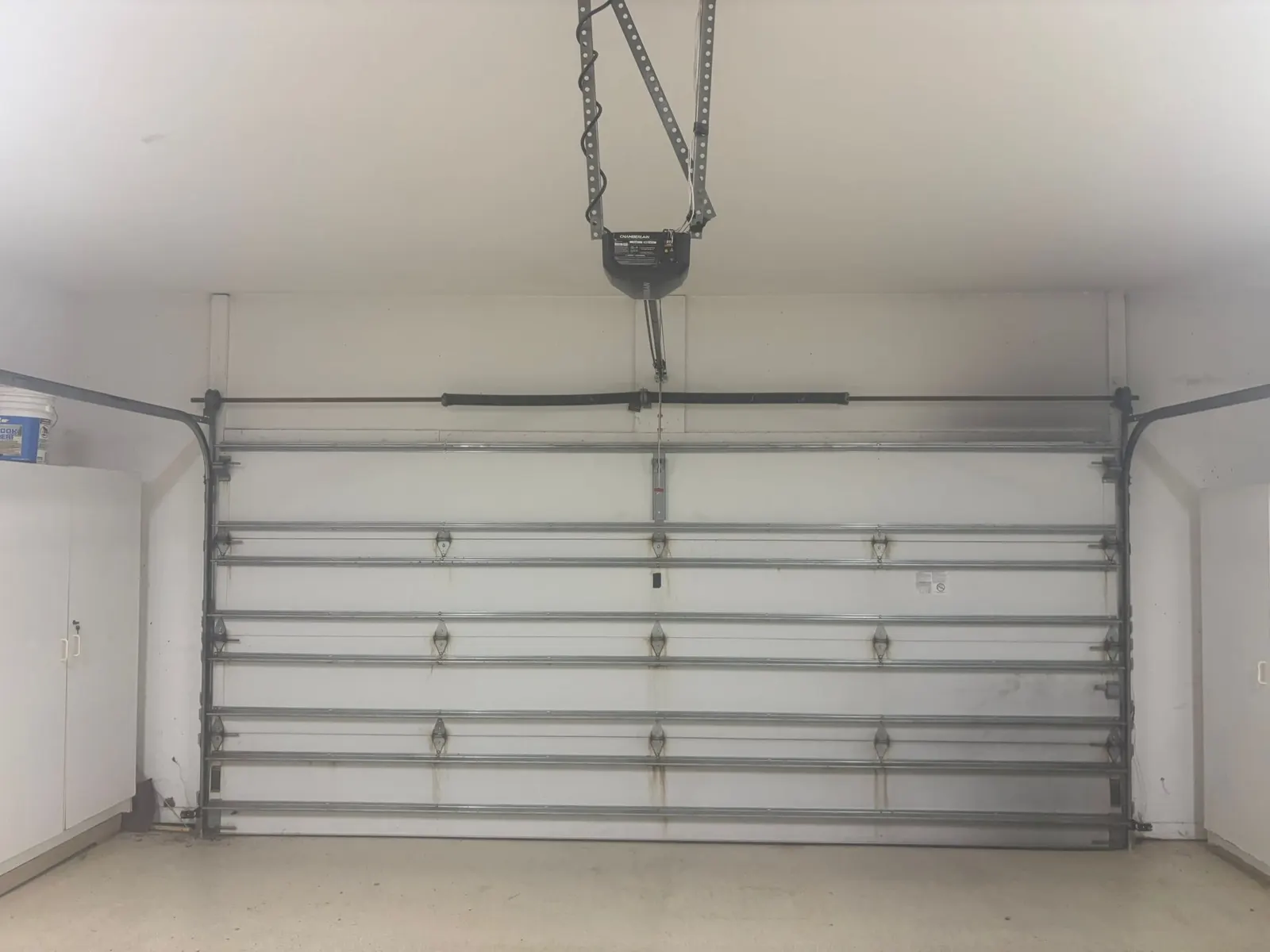
Garage door safety checks you can do before you call
A few checks are safe for any homeowner and might save you a service call. Anything beyond this list involves parts under spring tension and should be left to a technician.
If these checks don't fix it, or if you see a broken spring, a loose cable, or a door hanging crooked, stop using the door and contact us. If your car is trapped or the door won't close and you can't leave the house open, read our emergency garage door repair page for what to do while you wait.
- Confirm the opener has power and the breaker is on
- Check whether the wall console's lock or vacation mode is on
- Replace the remote battery and try the wall button too
- Wipe the photo-eye lenses and make sure nothing blocks the beam
- Look for obvious debris in the tracks or under the door
- Never loosen spring hardware, cables, drums or bottom brackets
How the service works
- 1
Listen and look
The technician asks what you noticed, then watches the door run (if it's safe to) and inspects springs, cables, rollers, track, hinges and the opener.
- 2
Test balance and safety
With the opener disconnected, they check whether the door is balanced, then test the auto-reverse and photo-eye sensors.
- 3
Explain and quote
You get a plain explanation of what failed, what else is worn, and a quote before any work begins.
- 4
Repair
Failed parts are replaced and the door is adjusted so it travels evenly and closes fully against the floor.
- 5
Lubricate and re-test
Moving parts are lubricated, the opener force and travel limits are set, and the safety reversal is tested again before the technician leaves.