
Why Replacing a Garage Door Spring Yourself Is Dangerous
By the H&D Garage Door team · Updated
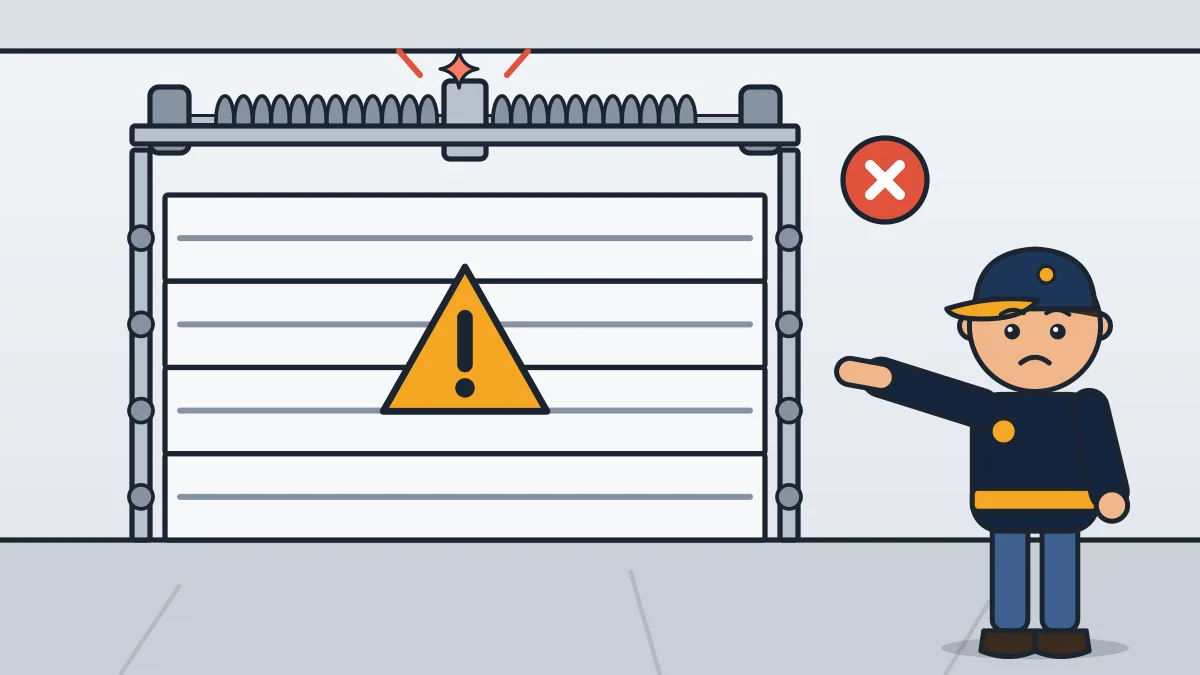
Is it dangerous to replace a garage door spring yourself?
Yes. A garage door spring is wound or stretched to hold the weight of the entire door, and that stored force is released the moment something slips. The industry's own guidance is blunt about it: DASMA, the door manufacturers' association, says spring replacement on garage doors should only be performed by a trained door systems technician, and spring makers print warnings that high spring tension can cause serious injury or death.
This post is not a how-to. It explains why the job is risky, how DIY attempts typically go wrong, and what to do safely in the meantime. If your spring just broke, skip to the section on the next hour, or see our broken spring repair service.
How much force a torsion spring holds
A sectional garage door is heavy. A two-car steel door, especially an insulated one, weighs far more than one person can safely lift. The reason you can raise it by hand when it's working is the spring: it's twisted tight when the door is down, and it gives that energy back as the door goes up, so the door feels nearly weightless.
That's the problem with working on it. When the door is closed, the spring is at its tightest. Any part that holds the spring in place, and anything you hold in your hands while you work on it, is carrying that force. If a tool slips or a part lets go, the energy comes out all at once, as a spinning shaft, a swinging tool or a falling door.
A broken spring doesn't make the rest of the system safe either. On a door with two springs, the other one is still fully wound. The cables, drums and bottom brackets are still connected to that tension.
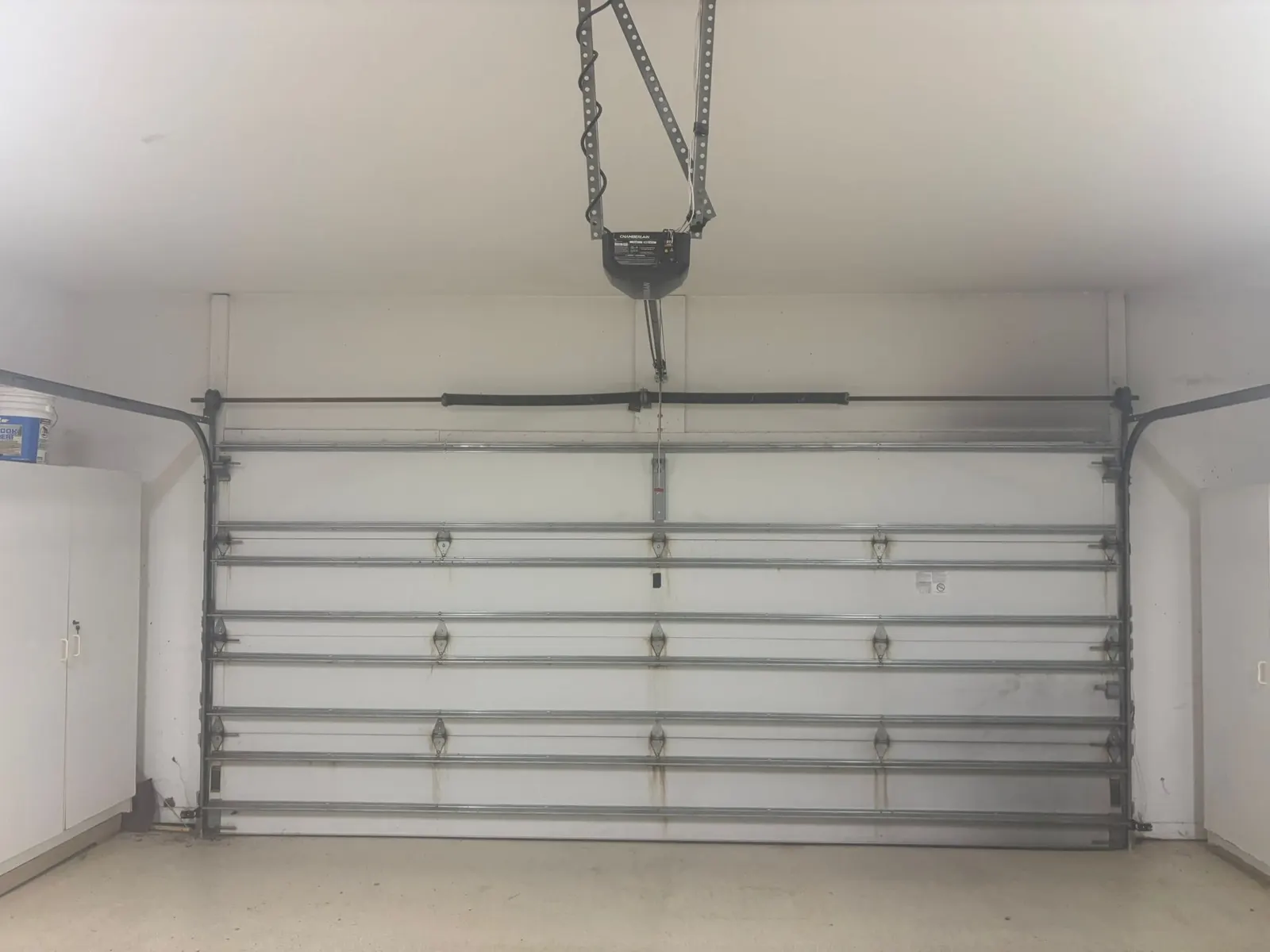
The 5 ways DIY spring jobs go wrong
These are the common ways a DIY spring job goes wrong. None of them requires carelessness. They can happen to careful people who don't do this work every day.
- Improvised tools. Spring work uses purpose-made tools, and anything improvised can slip under load. That is the classic source of hand, wrist and face injuries.
- The wrong spring. Springs are matched to the door's weight, height and drum size by wire size, length and wind direction. A spring that looks right but isn't will leave the door too heavy or make it fly up, and either one wears out the opener and cables.
- Losing control while releasing tension. Taking the load off the old spring is one of the riskiest moments, because it is easy to underestimate how much force is still stored.
- Cables jumping the drum. If a cable goes slack during the job, it can come off the drum at the end of the shaft. When tension comes back, the door can twist, jam in the track or drop on one side.
- Replacing only one spring of a pair. The new spring and the old one don't pull the same, so the door runs out of balance and the old spring often fails soon after.
Extension springs aren't the safe kind either
Some doors, especially older ones, use extension springs instead: long springs that run along the horizontal tracks on each side and stretch as the door closes. Because they're out in the open, people assume they're easier and safer. They aren't.
An extension spring under tension is a stretched coil that can snap. If it breaks without a safety cable running through its center, pieces of the spring, the pulley or the hardware can whip across the garage. Doors without safety cables should have them added by a technician. Don't stand near a stretched extension spring while the door is down, and don't try to remove or re-hook one.
Our post on torsion vs. extension springs explains how each system works.
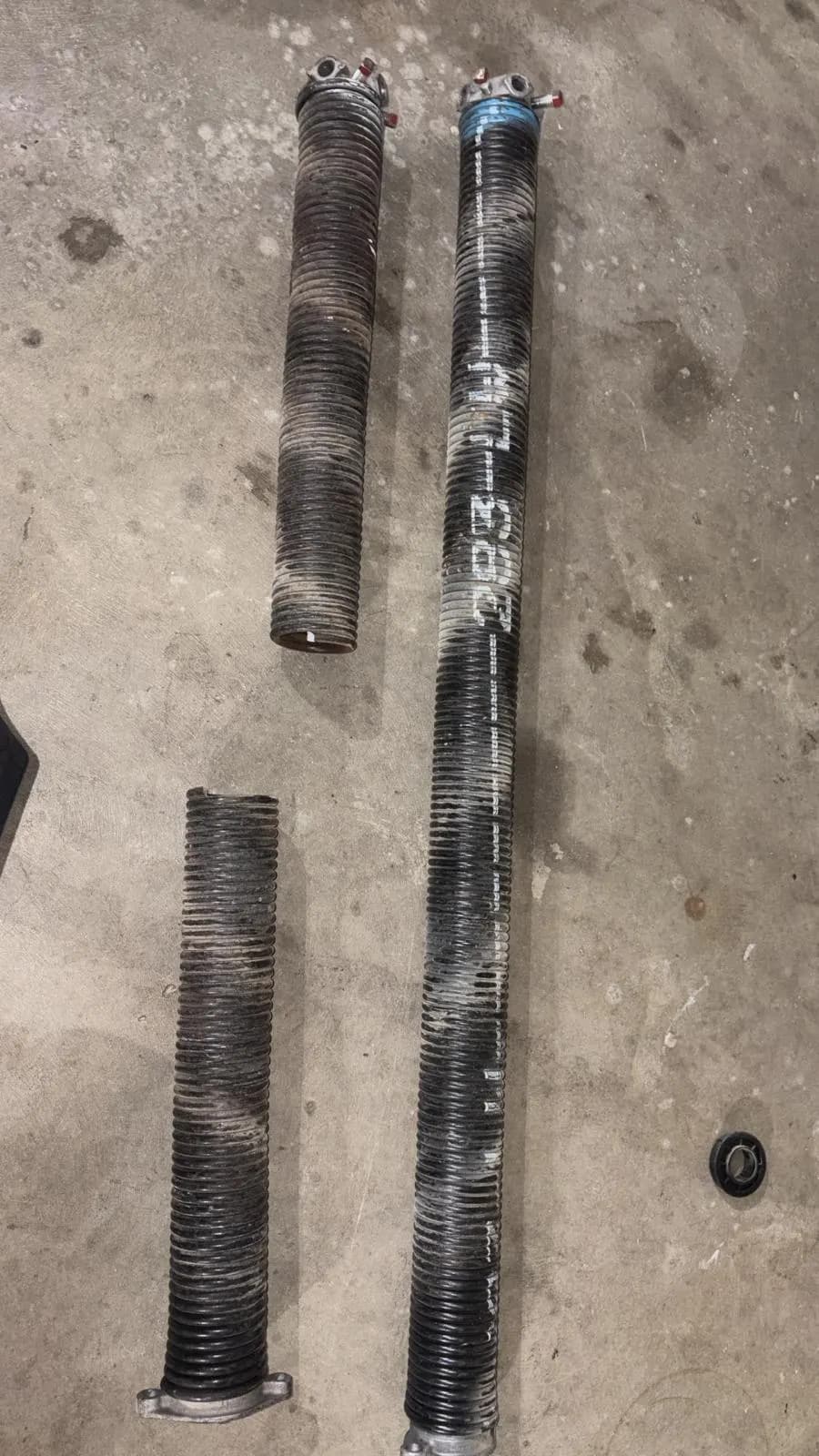
Why the pros replace springs in pairs and re-balance the door
On a door with two springs, a technician will usually suggest replacing both. Springs installed on the same day have the same number of cycles on them, so when one breaks, the other has usually used up most of its life too. Replacing both also keeps the door's lift even from side to side.
A spring job doesn't end when the spring is on. The technician checks that the door is balanced, meaning it stays put when you let go of it halfway up, and checks the cables, drums, rollers and bottom brackets that were under the same strain. Then the opener's force and safety reversal are tested. An unbalanced door makes the opener do the spring's work, and that shortens the opener's life.
If you're not sure whether your spring is actually broken, our guide to signs of a broken garage door spring will help, and our spring replacement cost guide explains what changes the price.
Your spring just broke: what to do (and not do) in the next hour
Most people find out when they hear a loud bang from the garage or when the door suddenly won't open. Here's what to do right away:
- Don't use the opener. It isn't built to lift the full weight of the door, and running it can strip its gears or pull a cable off the drum.
- Leave the door where it is. If it's closed, keep it closed. Don't try to lift it by hand.
- If the door is stuck open, don't pull the emergency release. Without a working spring, the door can come down hard. Keep people, pets and cars out from under it.
- Look from a distance, not up close. A gap in the spring coil above the door confirms it, but don't touch the spring, cables or brackets.
- Call a technician and say a spring broke. Tell them if the door is open or closed and whether your car is inside.
Cold-weather spring breaks in Cleveland and Milwaukee
In northern Ohio and southeastern Wisconsin, many spring breaks are noticed on cold mornings, when the door that worked last night won't lift for the morning commute. A spring near the end of its life often gives out during that first cycle of the day.
The advice is the same as anywhere: leave the door closed and don't let the opener fight it. If your car is trapped, tell the call center when you book. See Cleveland broken spring repair or Milwaukee broken spring repair for how we handle these calls in each area.
Get the spring replaced safely
Call (888) 410-7013 or send the form. One number reaches our call center, which sends the closest available technician, and same-day service is available. Form requests get a call back within an hour.