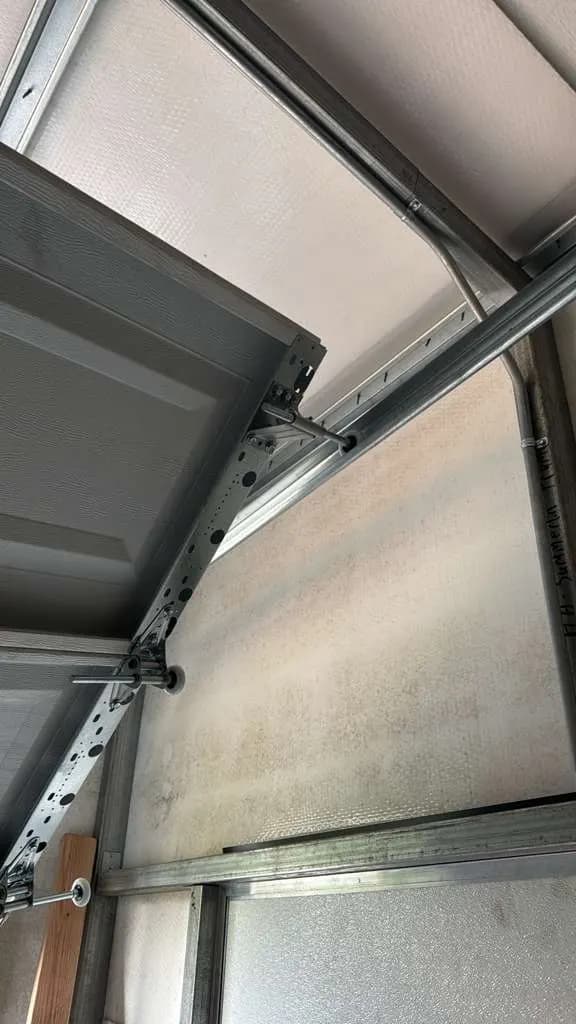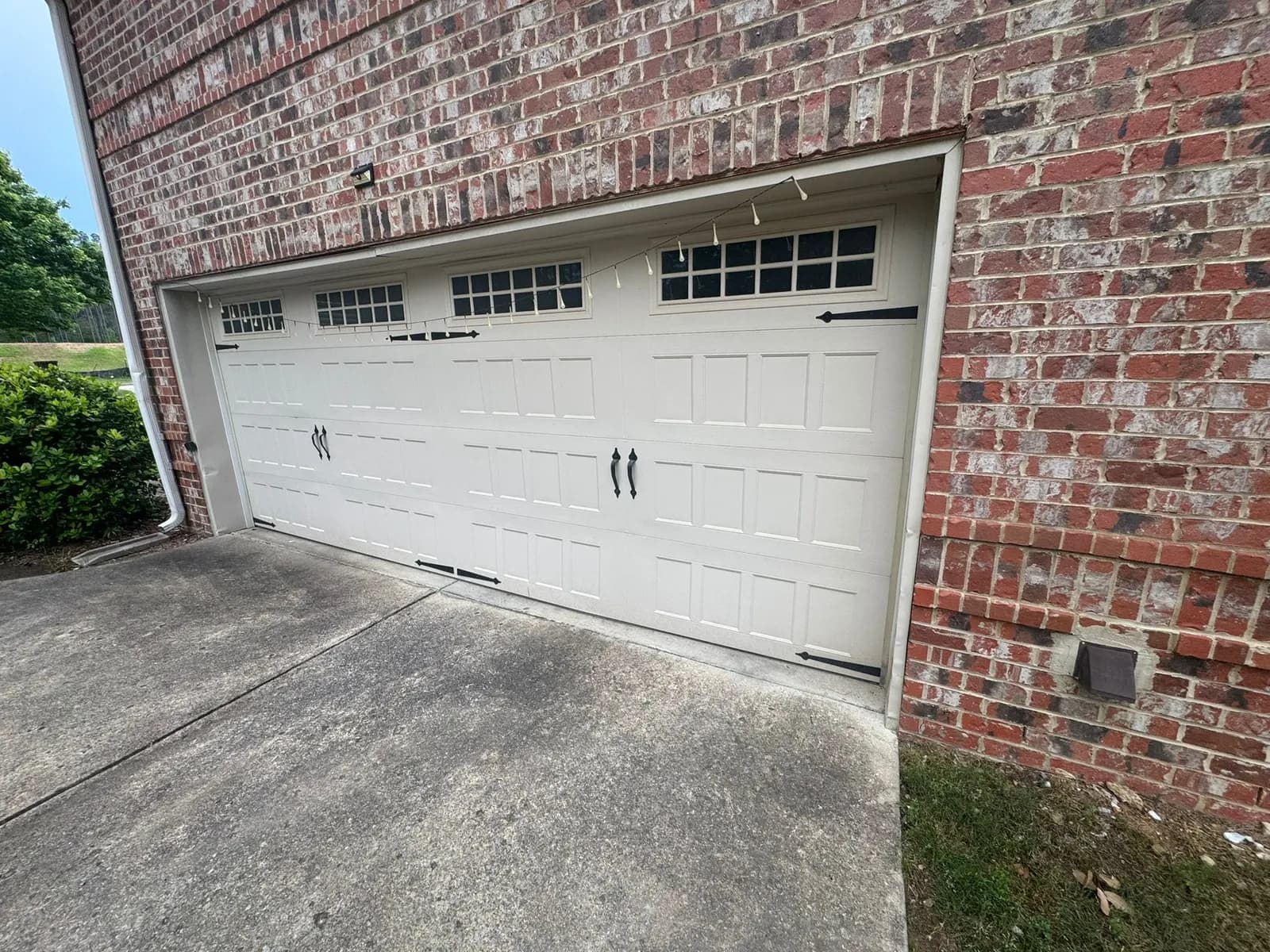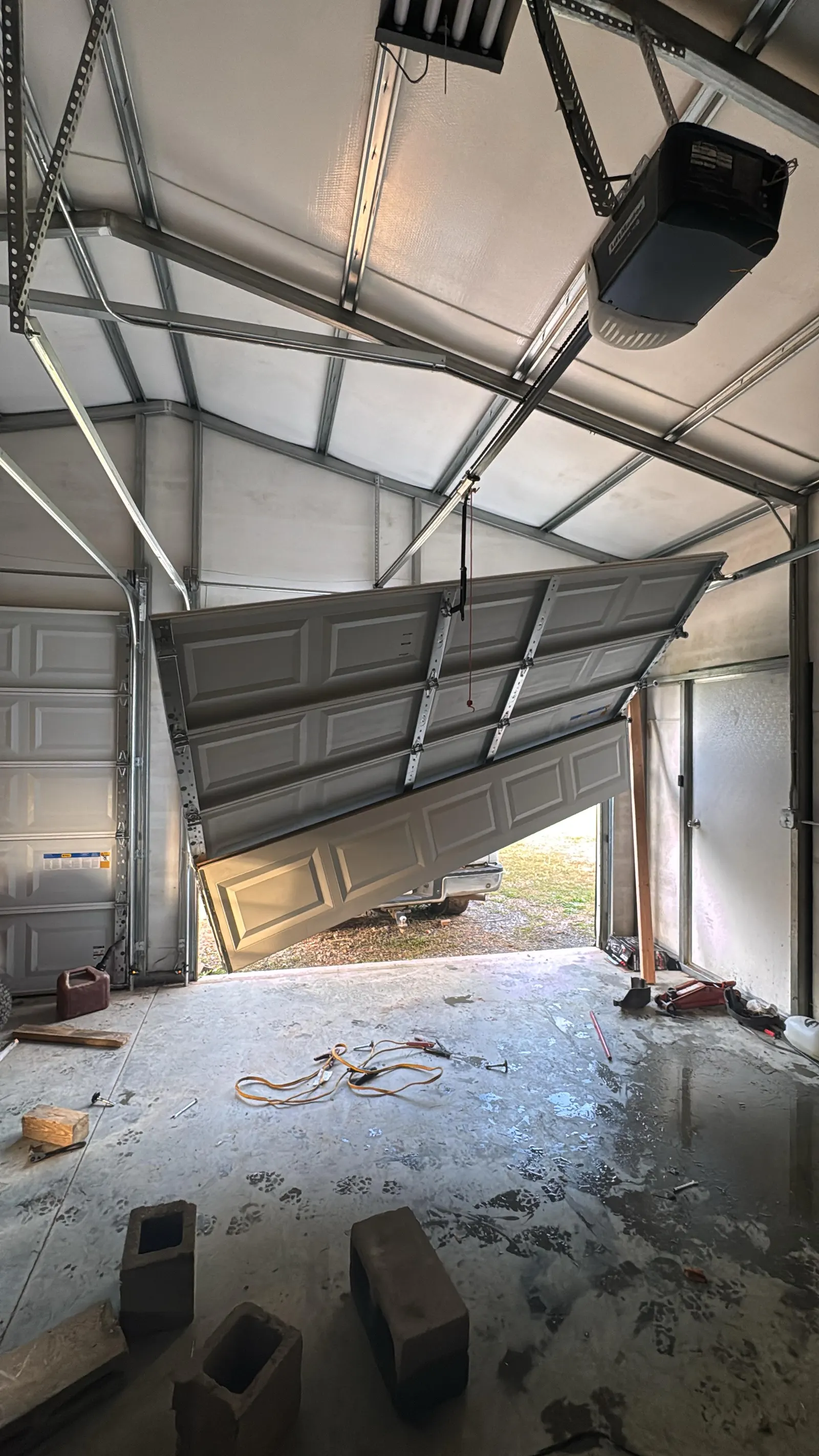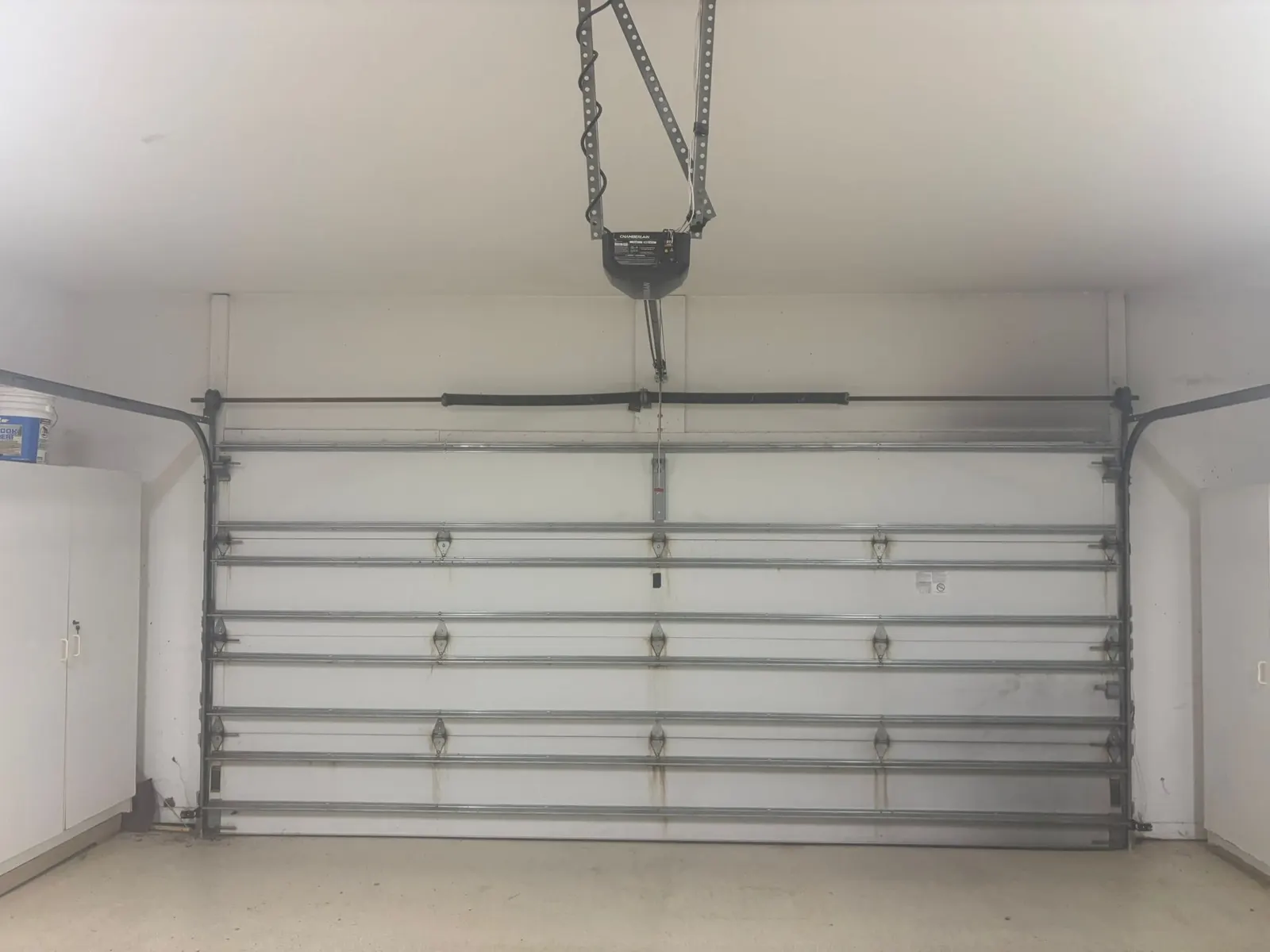
Signs you need panel replacement
- A dent from a car bumper, ball or lawn equipment
- A section that is bent, bowed or folded inward
- Cracks in the steel skin, wood or fiberglass
- The bottom panel is rusted, rotted or popped out
- A damaged window insert or broken glass section
- Hinges pulling out of a section, or loose stiles
- The door rubs, binds or won't seal at the bottom
- Water getting in through a damaged lower section
Can you replace just one garage door panel?
In many cases, yes. A sectional garage door is made of horizontal sections hinged together, and each section can be removed and replaced. If the dent or crack is limited to one section and the manufacturer still makes that section in your size, design and color, a single-panel swap is a sensible repair.
The catch is matching. Doors are built in specific designs, thicknesses, embossing patterns and colors, and manufacturers update or retire lines over time. To match a section, we need the brand, model and size, which are often on a label on the inside of the door. We work on all major brands, including Clopay, Amarr and Wayne Dalton, and can check what's available for your door.
Repair, replace a panel, or replace the door?
There are really three options, and the right one depends on how bad the damage is and how old the door is:
- Leave or repair it: small cosmetic dents that don't affect the frame or the way the door runs
- Replace one or two sections: real damage in a limited area on a door that is otherwise in good shape and still made
- Replace the whole door: damage across several sections, an older or discontinued model, or a door you were already planning to upgrade
How do I tell if a dent is just cosmetic?
Look at the door from inside with it closed. A shallow dent in the outer skin that hasn't creased the steel or bent the section's frame is usually cosmetic. The door may look worse, but it runs and seals normally.
The dent becomes a repair problem when the section is bent so it no longer sits flat, the inside frame (the stiles and rails) is creased, a hinge is pulling out, or the door rubs and binds as it moves. A bent section also puts strain on the rollers and opener. If an impact also pushed the door out of the track, start with our off-track garage door repair page.
Why the bottom panel fails first
The bottom section takes the most abuse. It's the one cars bump, it sits closest to standing water, and it holds the bottom brackets that connect to the lift cables. On steel doors it's where rust shows up first. On wood doors, it's where rot starts.
A rusted or rotted bottom section can sometimes be replaced alone. Because the bottom bracket and cable attach there, this job involves the lift system, and spring tension has to be handled by a technician. If the cable or bracket is damaged too, our garage door cable repair page explains what's involved. A new bottom seal goes on at the same time.
Will a new panel match my old door?
A new section from the same line should match in design and size, but color is the tricky part. Your existing door has spent years in the sun, and a fresh panel can look noticeably brighter. In strong sunlight, as in Florida, fading tends to be more pronounced. Some homeowners repaint the whole door after a section swap so it looks even.
If the exact section isn't made anymore, a close substitute rarely looks right, because embossing and panel shapes differ between lines. That is usually the point where a new garage door installation makes more sense, and it lets you add insulation, windows or a stronger door at the same time.
When the whole door should go
We'll tell you honestly when a panel swap isn't worth it. Common reasons to replace the door instead:
- Two or more sections are bent or cracked
- The model is discontinued and no matching section exists
- The door is old enough that springs, rollers and cables are also worn out
- You want insulation, a stronger door or a new look anyway
- Rust or rot runs across several sections
What affects the cost of garage door panel replacement?
We quote after confirming what section your door needs and whether it's available. The main factors are the door's brand, model and size; the material (steel, insulated steel, wood, aluminum or fiberglass); whether the section has windows; which section it is, since the bottom section involves the lift system; shipping and lead time for the section; and whether repainting or other repairs are needed. For general door issues beyond the panel, see garage door repair.
How the service works
- 1
Assess the damage
We check the panel, frame, hinges, track and lift system and note your door's make and model.
- 2
Confirm availability
We check whether a matching section is still made and explain your options.
- 3
Order the section
If a panel swap makes sense, the matching section is ordered for your door size.
- 4
Install and secure
We release tension where needed, swap the section and re-install hinges and hardware.
- 5
Balance and test
The door is balanced, the seal checked and the opener and safety reverse tested.