
Are Hurricane Garage Doors Required in Florida? What Orlando Homeowners Should Know
By the H&D Garage Door team · Updated
Are hurricane garage doors required in Florida?
Yes, in the sense that matters most: the Florida Building Code requires every new or replacement garage door to be rated for the wind pressure it will face at your home. That is what people usually mean by a hurricane or wind-rated garage door. What is not required everywhere is an impact-rated door, one tested to survive being hit by flying debris. Impact protection is required only in wind-borne debris regions, which are mostly near the coast, and in Miami-Dade and Broward counties.
For most homes in the Orlando area, that means a replacement door must carry the right wind-load rating, but it usually doesn't have to be impact-rated. Your local building department has the final word for your address.
What is the difference between wind-rated and impact-rated doors?
A wind-rated door, sometimes called wind-load rated, is built and tested to resist the pressure that strong wind puts on it. Wind pushes in on the windward side of a house and pulls out on the leeward side, so doors are rated for both positive and negative pressure. In the US, garage doors are tested to a standard called ANSI/DASMA 108 or to ASTM E330.
An impact-rated door goes further. It has also been hit with a projectile, simulating wind-borne debris such as a two-by-four, and then put through pressure cycles to show it stays closed afterward. Impact doors are heavier and built differently, which changes the springs, the track reinforcement and often the opener.
Why does a garage door matter so much in a hurricane?
The garage door is usually the largest opening in a house. If it buckles or blows in, wind rushes into the garage and pushes up on the roof from inside while the storm pulls on it from outside. That combination can damage or lift the roof over the garage and the rest of the home. A door that holds keeps the house sealed and the pressure under control.
That is why the code focuses on the door's rating and on how it is installed. A rated door that is anchored to weak framing, or missing its reinforcement struts, won't perform the way its label says.
Is Orlando in a wind-borne debris region?
For most of the Orlando area, no. Under the Florida Building Code, wind-borne debris regions are the parts of the hurricane-prone region where the ultimate design wind speed is 140 mph or higher, plus areas within one mile of the coast where it is 130 mph or higher. Inland Central Florida, including most of Orange, Seminole and Osceola counties, sits around the 130 mph range on the design maps, below that trigger.
Design wind speed changes with location and with the building's risk category, so check your exact address. Orange County and the other local building departments can tell you the design wind speed and whether impact protection applies. If you live in a part of the region that does require it, glass in the garage door would need protection too.
What is Florida product approval?
Florida runs a product approval system for parts of the building envelope, and exterior doors, including sectional and roll-up garage doors, are one of its categories. A garage door model gets approved by showing test results and installation instructions for the pressures it is rated to handle. Approved products are listed with an approval number on the Florida Building Commission's website, floridabuilding.org.
Products can also be approved locally by the building department. Either way, the approval only holds if the door is installed the way the approval describes, with the specified anchors, fasteners, struts and track. Orange County, for example, asks for product approval details as part of its permit paperwork.
What about Miami-Dade approval?
Miami-Dade and Broward counties fall in the High-Velocity Hurricane Zone, which has the state's strictest requirements. Products used there typically carry a Miami-Dade Notice of Acceptance, often shortened to NOA. You'll see "Miami-Dade approved" on some doors sold elsewhere in Florida. It signals a demanding test, but for an Orlando home the question is whether the door is approved and rated for the pressures at your address, not whether it carries an NOA.
How can you tell if your garage door is wind rated?
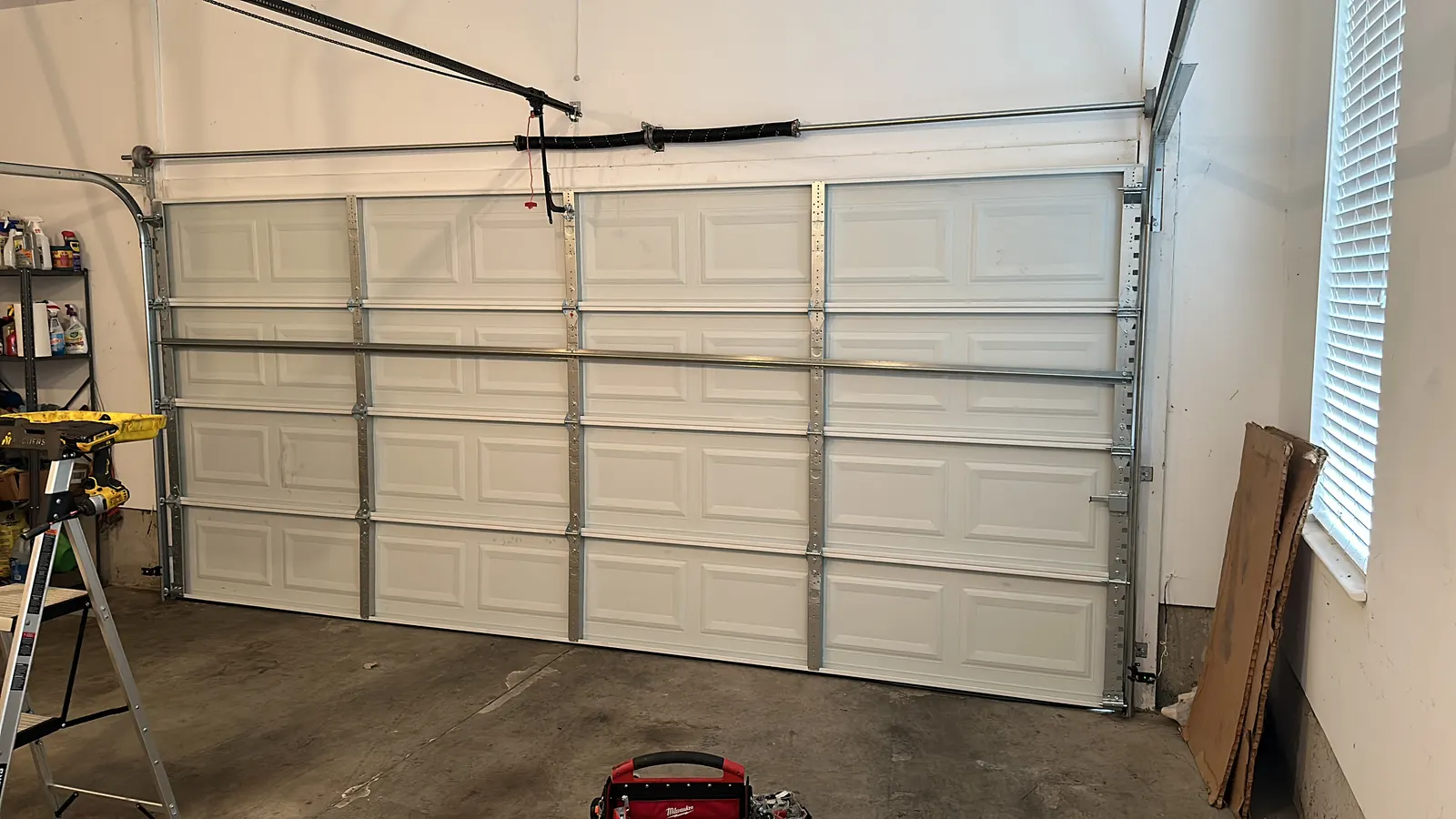
Most wind-rated doors carry a label from the manufacturer. Look on the inside of the door, often on an end stile near the bottom or on the side of a section. The label typically lists the model, the design pressure ratings and the product approval number. Some older labels have been painted over or removed.
Other clues are horizontal reinforcement struts across the inside of the sections, heavier hinges and track, and extra mounting hardware at the jambs. If there is no label and no reinforcement, the door may predate current requirements. A technician can identify the model and tell you what it was built to.
Do you need a permit to replace a garage door in Orlando?
In many Central Florida jurisdictions, replacing a garage door requires a building permit, because the door is part of the structure's wind resistance. Requirements differ between Orange County, the City of Orlando and neighboring cities and counties. Before work starts, ask your installer whether a permit is needed for your address, who will apply for it, and which product approval number the new door carries. Repairs such as springs, cables and rollers generally don't change the door's rating, but replacing sections should use parts that match the approved model.
Does repairing a wind-rated door affect its rating?
Routine repairs usually don't, as long as the parts match what the door was built with. Springs sized for the door, matching cables and drums, and rollers of the right type keep it working as designed. The rating depends more on the sections, the reinforcement struts, the track and the way the door is fastened to the opening.
That is where repairs can go wrong. Removing struts to fix a dent and not putting them back, swapping in a section from a different model, or re-mounting the track with lighter fasteners can leave a door that no longer matches its approval. If your door needs a replacement section, ask for one made for the same model so the reinforcement and hinges line up with the original design.
Can you upgrade an existing door for hurricane season?
Retrofit bracing kits exist for some doors, and some manufacturers sell reinforcement struts for their own models. Whether they help depends on the door and how it was approved. For an older door with no rating, replacement with a rated door is usually the more reliable path.
Before a storm, a few simple steps help any door. Make sure it closes fully and locks, check that the bottom seal sits flat, and don't open it while the storm is passing. If the power goes out, leave the door closed rather than pulling the emergency release.
What should you ask before buying a new door?
Ask for the door's design pressure rating and its Florida product approval number, and whether those meet the requirements for your address. Ask whether it is impact-rated and whether you need that. Ask how it will be anchored and whether the struts and track are included as the approval requires. And ask whether your opener can handle the heavier door.
Our garage door installation page explains how replacement works, and our Orlando garage door installation page covers Central Florida specifics. For other local repair topics, see our Orlando area guide or read about garage door repair in Florida. Call (888) 754-4130 to talk through your options.