
Garage Door Drum Repair: Signs a Cable Drum Is Damaged
By the H&D Garage Door team · Updated
Can a garage door cable drum be repaired?
A damaged drum is usually replaced, not repaired. A cracked or worn drum can't be safely patched, and leaving it in place risks the cable letting go. What a technician can often fix is the setup around it: a drum that slipped on the shaft can be reset, and cables that were wound at the wrong length can be corrected.
Because the drum sits on the spring shaft and holds the lift cable under full spring tension, any drum work is technician-only. If a cable is already loose or off the drum, stop using the door and read what to do when a garage door cable comes off.
What does a garage door cable drum do?
On a door with torsion springs, a steel bar runs above the door opening with the spring (or springs) on it. At each end of that bar is a drum: a grooved spool, usually cast aluminum. A lift cable runs from the bottom corner of the door up to each drum.
When the door opens, the spring turns the bar and both drums wind their cable into the grooves at the same rate, so both sides of the door rise together. When it closes, they unwind. The drums are a matched left and right pair, wound in opposite directions, and each one is locked to the bar with set screws.
Doors with extension springs, the long springs that stretch along the horizontal tracks, don't use drums. Their cables run over pulleys instead. If you aren't sure which system you have, our post on torsion vs. extension springs shows the difference.
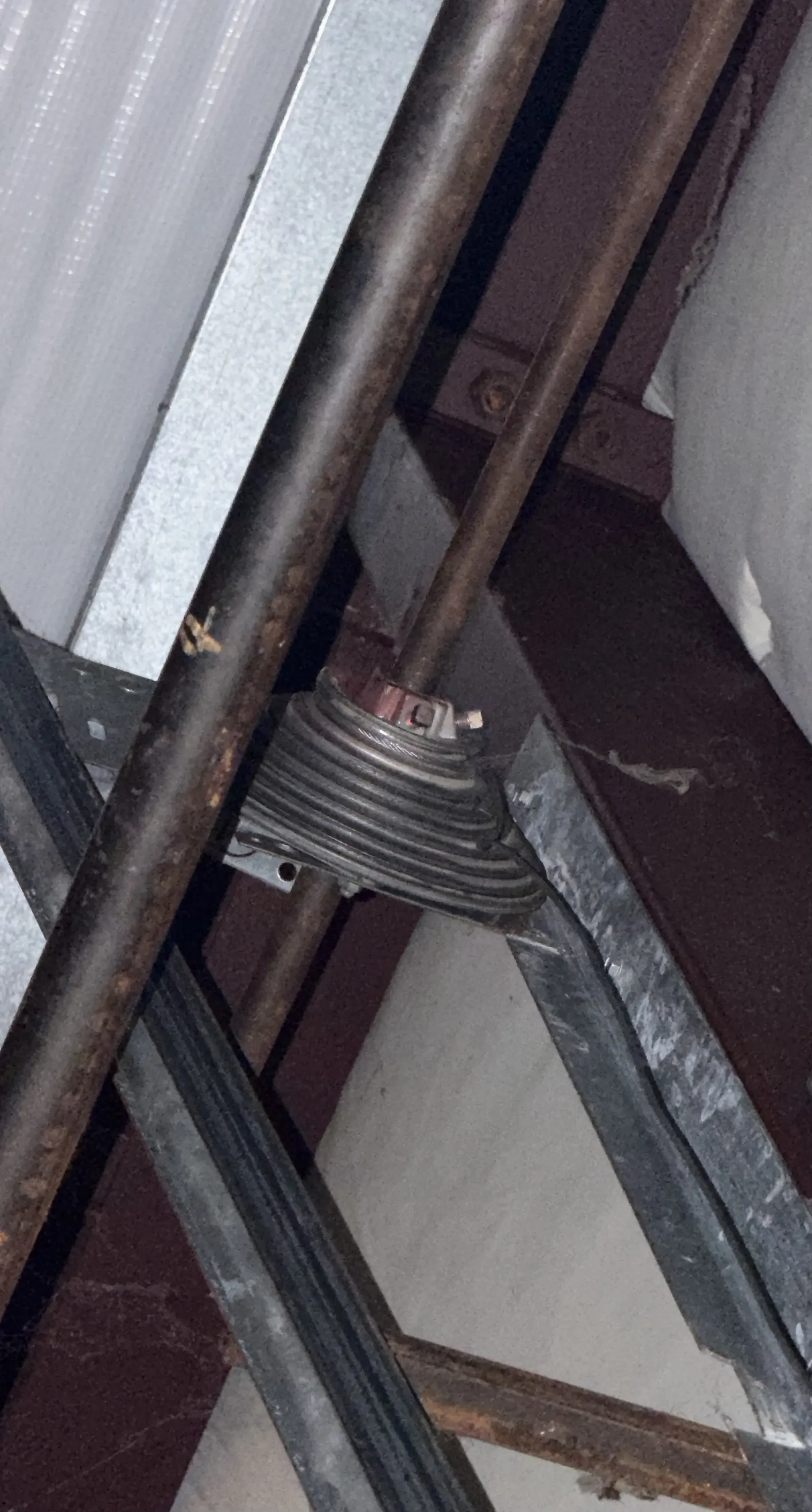
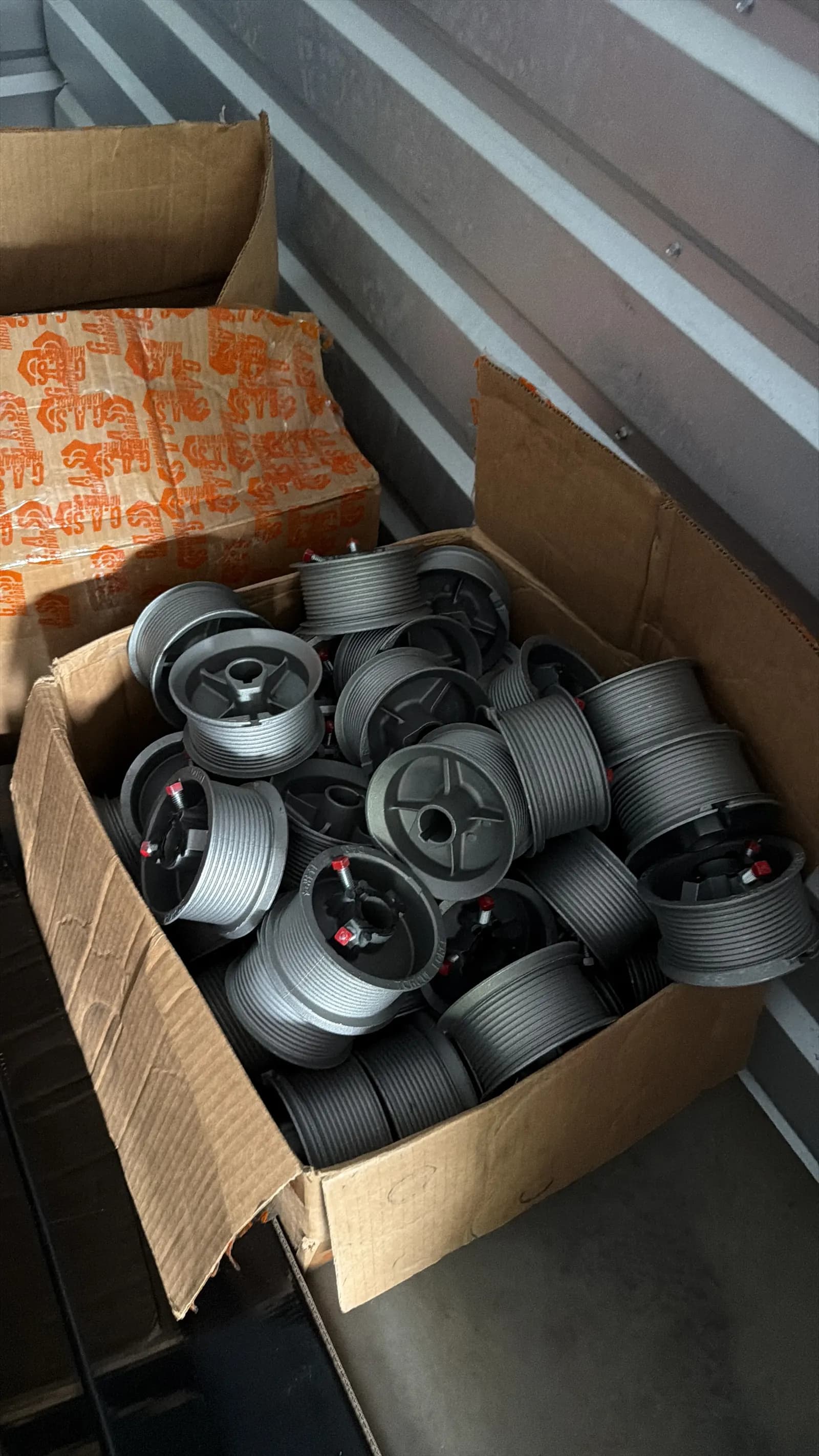
Not all drums are the same
Drums are matched to how the door travels and how heavy it is. That matters, because the wrong drum is a common reason cables misbehave.
- Standard-lift drums are the usual residential type. The cable winds onto a flat, grooved section as the door turns back along the ceiling tracks.
- High-lift drums have a flat section plus a tapered section. They let the door rise farther up the wall before it turns back, which frees ceiling space for storage racks or a car lift.
- Vertical-lift drums are larger and cone-shaped, for doors that go straight up the wall. They're more common on commercial buildings.
- Drums also come in sizes for different door heights and weights, so a tall or heavy door needs a drum that holds enough cable.
Signs a garage door drum is damaged
Most drum problems show up as an uneven door or a cable that won't stay where it belongs. Look from a safe distance with the door closed, and don't touch the drums, cables, set screws or bottom brackets.
- The door rises or closes crooked, with one side leading the other
- A cable keeps coming off the same drum, even after it was put back
- Cable wraps cross over each other or sit outside the grooves
- A visible crack, chip or broken flange on the drum
- Grooves that look worn smooth or chewed where the cable rides
- A gap that has opened between the drum and the bracket, or a drum that has moved along the bar
- A clicking, slipping or grinding sound at the top corner as the door moves
- One cable is tight while the other hangs slack with the door closed
Why garage door drums get damaged
Drums are tough parts, so when one fails there's usually a reason behind it. A technician looks for that reason, because a new drum on top of the same problem fails the same way.
- A broken spring or a door that closed on an object lets the cable go slack, and the cable can bind and score the drum when tension comes back
- Loose set screws let the drum slip on the bar, so one side winds more cable than the other
- Overtightened set screws can crack a cast drum
- A door that came out of its track twists the cables and puts side load on the drum
- Drums that don't match the door's lift type or height leave the cable with nowhere to wind
- Plain wear and rust on older doors, especially where the cables are also fraying
Why does my garage door cable keep coming off the drum?
A cable that comes off once can be bad luck. A cable that keeps coming off the same drum usually points to the drum or something around it: worn grooves that no longer hold the cable, a drum that has slipped on the shaft, a cable set at the wrong length, a weak spring that lets the cable go slack at the bottom of travel, or a bent track that makes the door bind. Resetting the cable without finding that cause just repeats the call.
A slack cable is also a common sign that a spring has broken. If you see a gap in the spring coil above the door, the door needs broken spring repair, and the drums and cables should be checked in the same visit. Our post on why garage door springs break explains what to look for.
Why drum repair isn't a DIY job
Replacing a drum means taking the load off the spring system first. The spring has to be unwound with proper winding bars, the cable released, the drum removed and the new one set at the right position on the bar. Then the cable is wound back at the correct length and the spring is rewound to the right tension. Each step is done against stored energy that can break a wrist or worse if a tool slips.
The set screws that hold a drum are part of that system. Loosening one while the spring is loaded can let the drum spin and the door drop. For homeowners, the safe part ends at looking and listening. Our garage door maintenance page lists the checks you can do yourself.
What happens during a drum and cable repair visit
A technician first secures the door so it can't move, then inspects the full lift system: both drums, both cables, the springs, the bottom brackets, the bearings at each end of the bar, and the tracks and rollers.
If a drum is cracked or worn, drums are usually replaced as a left and right pair so both sides wind the same way, and new cables often go on at the same time, since a damaged drum tends to fray its cable. The cables are set to equal length, the spring is rewound to suit the door, and the door is balanced and run through several full cycles. If the door also came out of its track, off-track repair is done in the same visit. You'll get the price before any work starts, and our garage door cable repair page explains the rest of the cable side of the job.
Drum problems on commercial doors
Commercial sectional doors use the same drum-and-cable idea, but the drums are often larger high-lift or vertical-lift types, and the doors cycle many times a day. That makes worn grooves and slipping drums more common. On a loading dock, a cable that keeps jumping a drum can shut down shipping and receiving. If that sounds familiar, see our commercial garage door repair page.