Why do garage door springs snap on cold Nashville mornings?
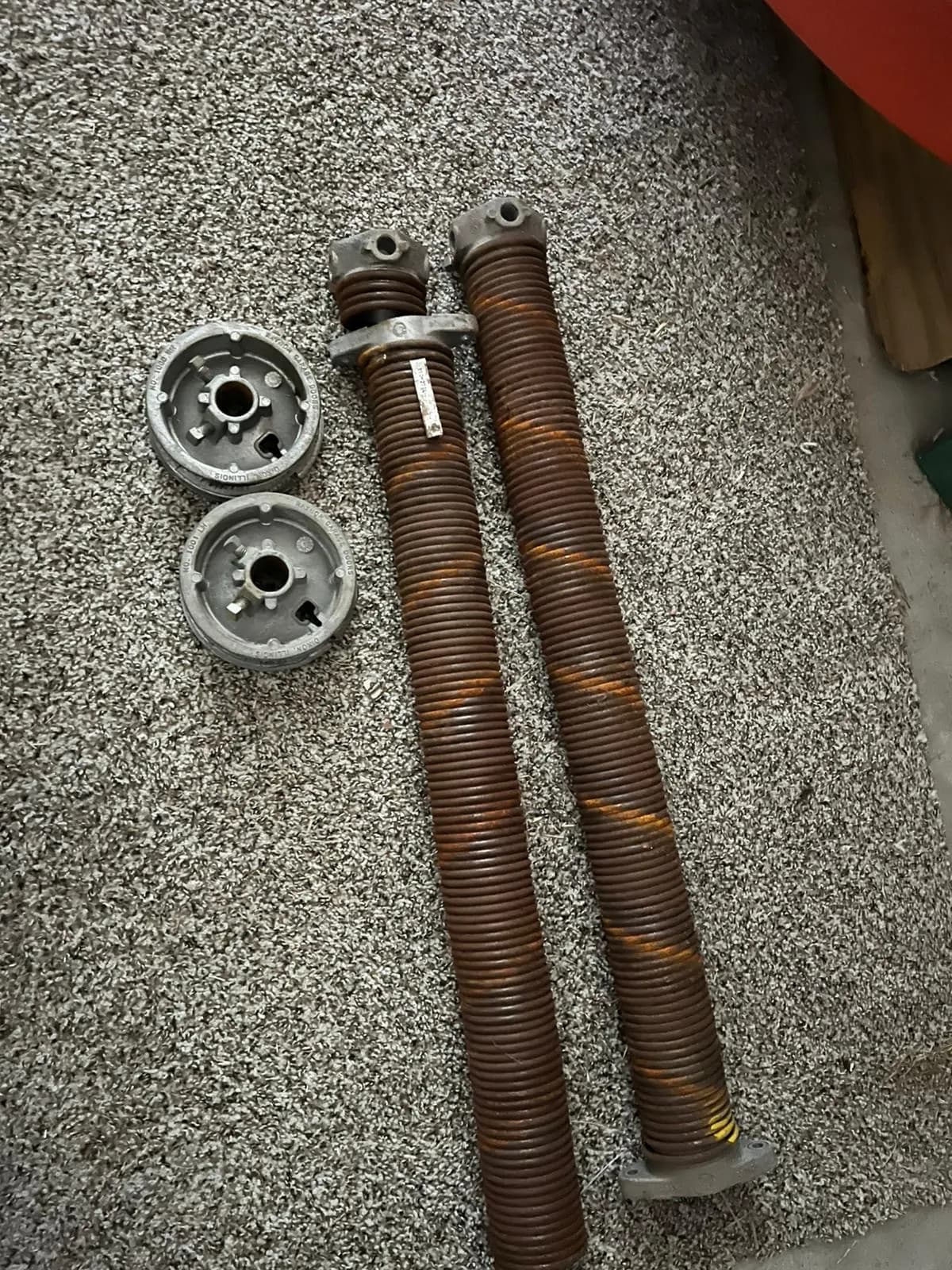
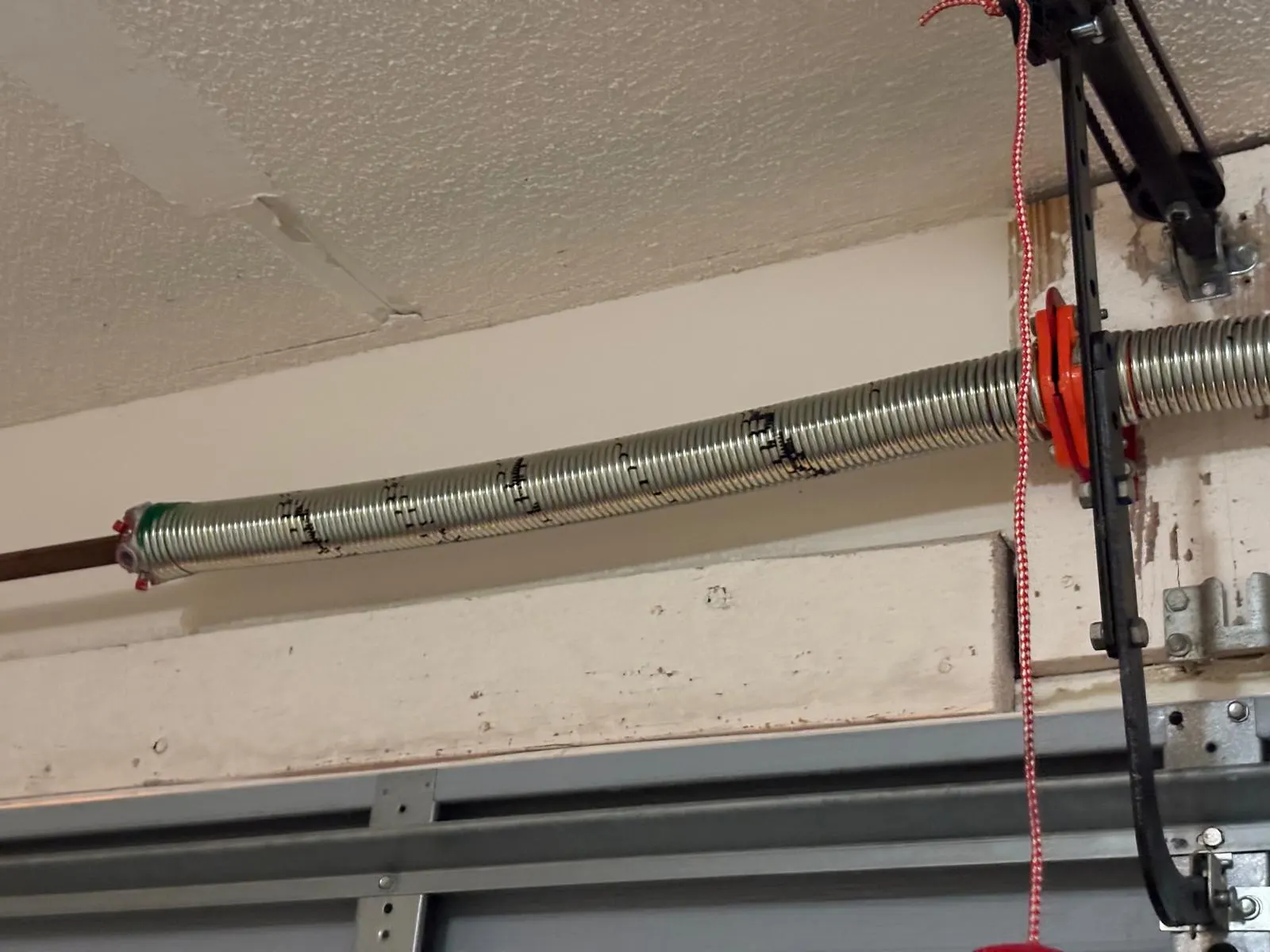
A torsion spring is a tightly wound steel coil that stores enough energy to lift your door. Every open and close uses up part of its rated life. Cold makes steel less forgiving. On a morning in the 20s, a spring that's already near the end of its life is more likely to crack, and broken springs often turn up right after a cold front.
Nashville doesn't stay frozen, though. It swings above and below 32 degrees again and again through the winter, and summer humidity rusts the coils the rest of the year. Rust pits become weak spots, and temperature swings keep working on them. That combination is why spring breaks tend to cluster between December and February.
What if my garage has two or three doors?
Many newer homes in Franklin, Brentwood, Nolensville, and Spring Hill have three-car garages, often with a double door and a single door, or three singles. Each door has its own springs. They were usually installed together, they've made a similar number of cycles, and they live in the same temperatures.
When one spring breaks, we check the springs on the other doors too. We'll tell you honestly if they look worn so you can decide whether to handle them now or later. On a double door with one spring, we may recommend converting to two springs so the load is shared.
Is it safe to open the door after a spring breaks?
No. With a broken spring, the door's full weight is on the opener and cables. Running the opener can strip its gears, snap a cable, or pull the door off track. Pulling the emergency release can let the door drop.
Never try to unwind or replace a torsion spring yourself. It's under extreme tension, and the winding process causes serious injuries every year. Leave the door closed, park outside, and call us. If a cable broke too, our cable repair page explains what that means.
How can I tell it's a broken spring and not the opener?
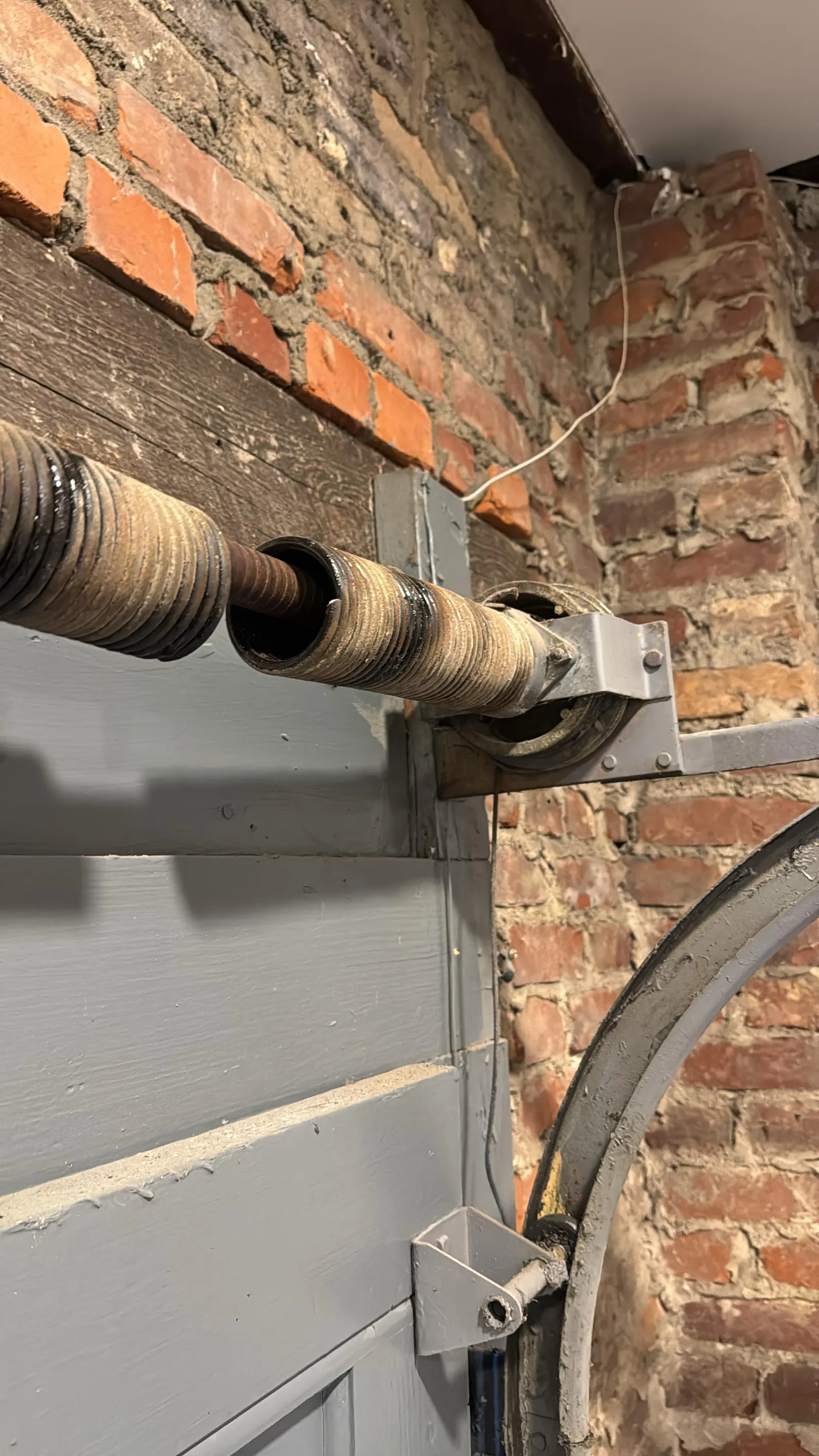
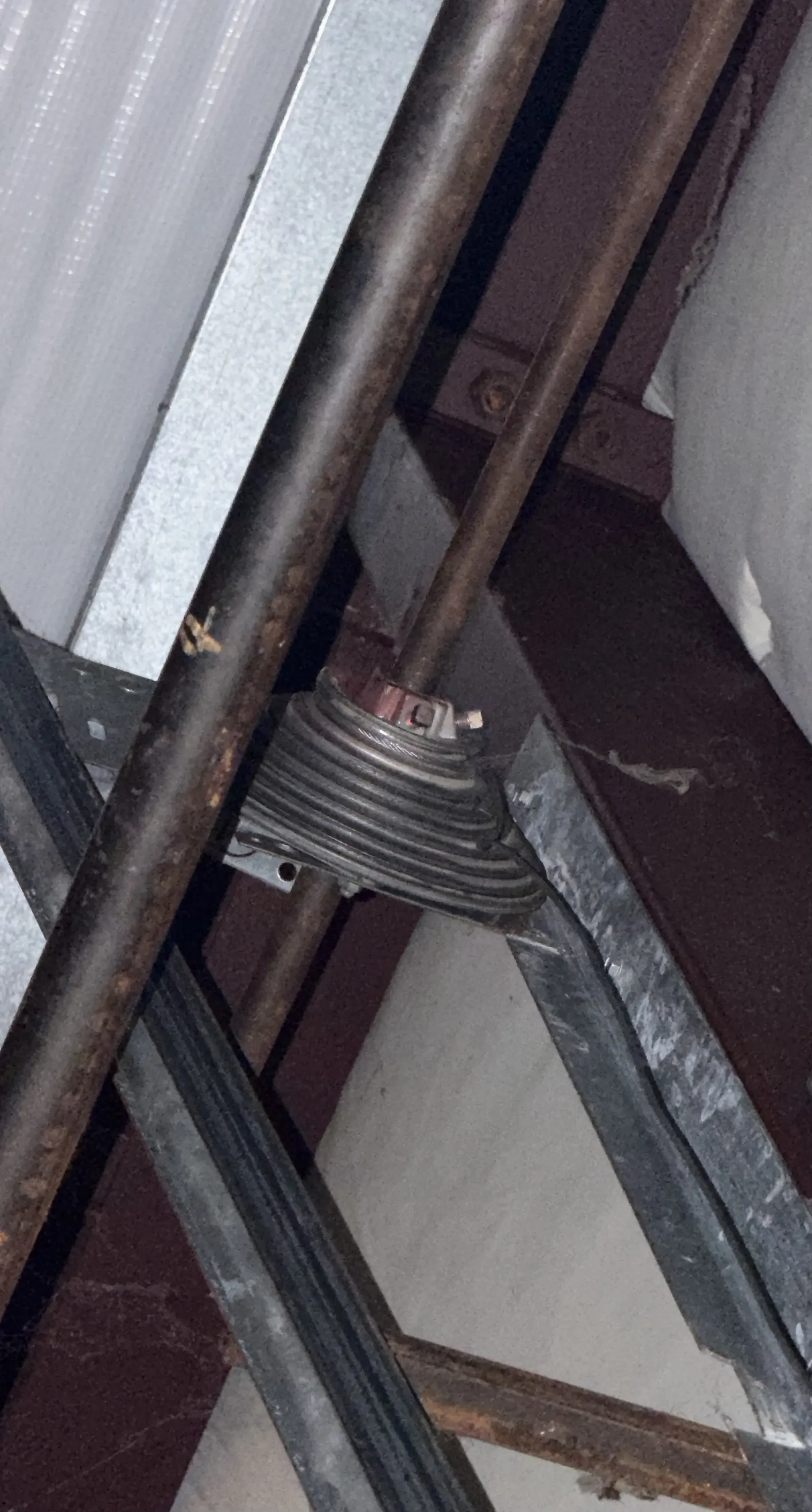
Look above the closed door. On most Nashville homes, a torsion spring runs along a metal bar across the top of the opening. A broken one shows a clear gap of a few inches somewhere in the coil, and the two halves may have spun apart. Older doors and some detached garages use extension springs instead, which stretch along each side above the horizontal track. A broken extension spring usually hangs loose or is missing, and it should have a safety cable running through it.
Other signs point the same way: the door opens a few inches and stops, the opener hums or strains but the door barely moves, the door looks crooked as it lifts, or a cable hangs loose next to the door. If the opener runs and the door doesn't move at all, the drive gear may be the problem instead, which our Nashville opener repair page covers. Our post on broken spring signs has more examples. Either way, look but don't touch.
Do you replace extension springs as well as torsion springs?
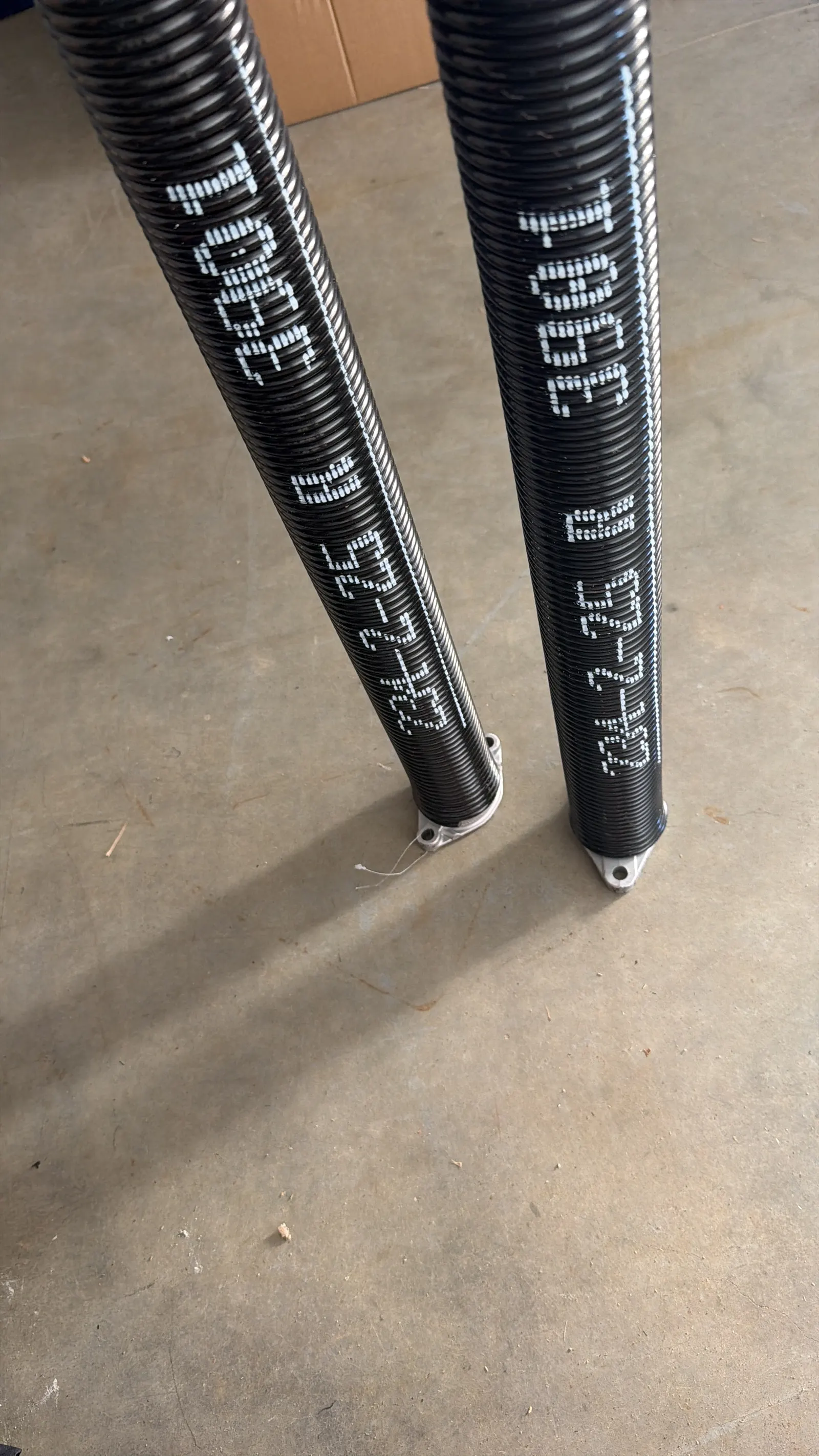
Yes. Most doors built around Nashville in the last few decades have torsion springs, but extension springs are still common on older doors, on single doors in Madison and other mid-century neighborhoods, and on some detached garages and workshops. The two systems work differently, and an older extension-spring door can sometimes be converted to torsion. We'll tell you which you have and what the options are. Our guide to torsion vs. extension springs explains the difference.
Extension springs need safety cables threaded through them, so a broken spring can't whip across the garage. Many older doors are missing those cables. If yours are missing, we'll point it out when we replace the springs.
Where do you replace garage door springs around Nashville?
We replace springs across Davidson County and the surrounding counties, out to roughly 40 miles from downtown. Each area has its own pattern. In Hendersonville and Gallatin, many homes sit near Old Hickory Lake, where damp air adds rust to the coils. In Murfreesboro and Smyrna, large subdivisions from the 2000s and 2010s now have builder-installed springs reaching the end of their cycle life at about the same time. In Franklin, Brentwood, and Nolensville, heavier insulated and carriage-style doors on multi-car garages need springs sized for that extra weight.
Closer in, we work in Antioch, Hermitage, and Mount Juliet. If your town isn't listed, call and ask. Our Nashville service area page lists the rest.
What happens during a spring replacement in Nashville?
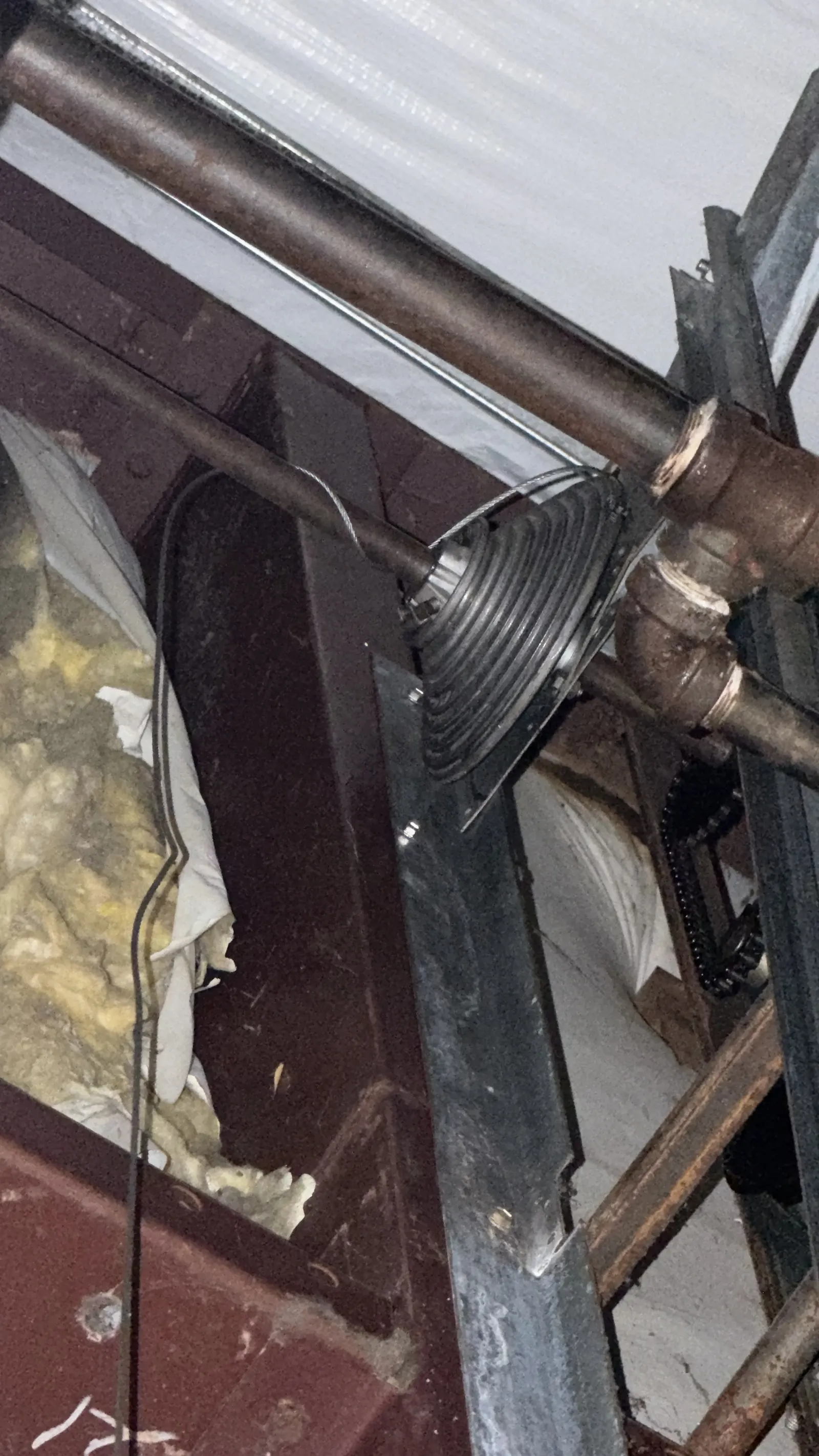
We secure the door, remove the broken spring, and check the door's weight and balance. Then we install springs sized to your door, inspect the cables, drums, center bearing, and rollers, and lubricate moving parts with a product that won't gum up in the cold. Finally, we test the opener's force and reverse settings.
On older doors in Madison or Belle Meade, cables and bearings may be worn from decades of use. If they are, we'll show you before replacing anything. Cost depends on spring type and size, whether we replace one or both, and the condition of the cables and rollers. We'll quote on site. For more, see our national broken spring repair page, our Nashville opener repair page, or our Nashville service area.
Signs you need spring repair
- A loud bang from the garage, like a gunshot or a dropped board
- A visible gap of a few inches in a coiled spring above the door
- The door opens only a few inches, then the opener stops or reverses
- The door feels extremely heavy when you try to lift it
- The door rises crooked or one side lags behind
- Cables look slack or have come off the drums
- The opener strains, hums or the motor runs with no lift
- On extension spring doors, a stretched or hanging spring along the side track
Want the full rundown on causes, repair options and what to expect? Read our complete guide to broken garage door spring repair, or see all garage door services.