Why do garage door openers fail after storms in Orlando?
Central Florida sits in the most lightning-active region of the United States. The sea breezes from both coasts meet over the middle of the state and build storms nearly every summer afternoon. Four Corners, at the edge of our service area, led the country in lightning density in 2022.
A strike doesn't have to hit your house to hurt your opener. A surge on the power line or through the ground can damage the logic board, the radio receiver, or the wall control. Common signs: the opener lights work but the motor won't run, the remotes stopped working but the wall button still does, or the unit is completely dead even though the outlet has power. We test each piece before we replace anything.
Can humidity damage a garage door opener?
It can. Moisture in Orlando garages can corrode the photo-eye connections and the low-voltage wire terminals. A corroded connection causes the classic symptom: the door goes down, then reverses for no clear reason, or it only closes when you hold the wall button.
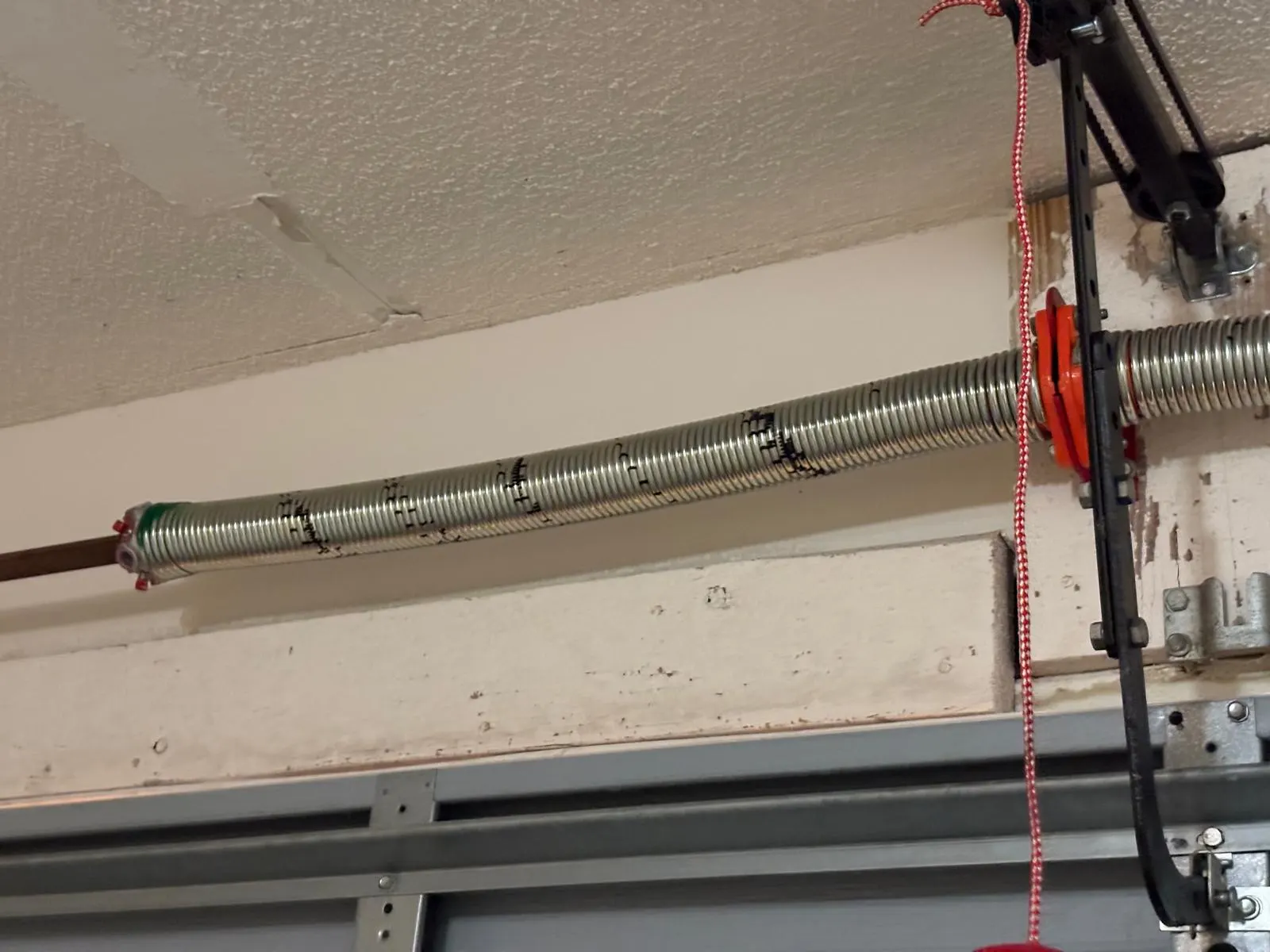
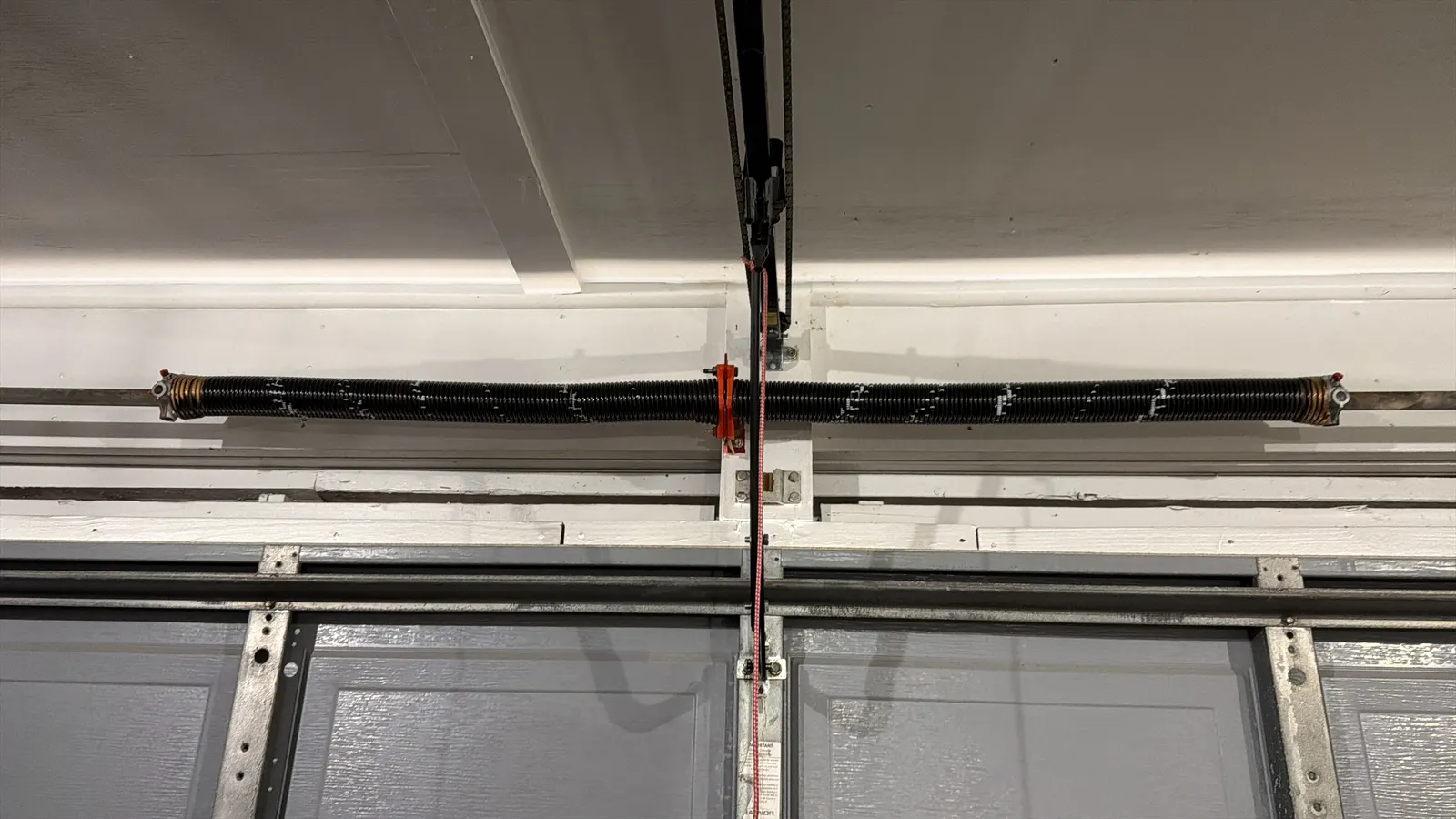
Heat adds stress too. An attached garage in July can get very hot. If springs are worn and the door is out of balance, the motor works harder, overheats, and its thermal protection shuts it off until it cools. In that case the real fix may be the springs, not the opener. See our Orlando spring repair page if your door feels heavy.
What if the power goes out during a hurricane?
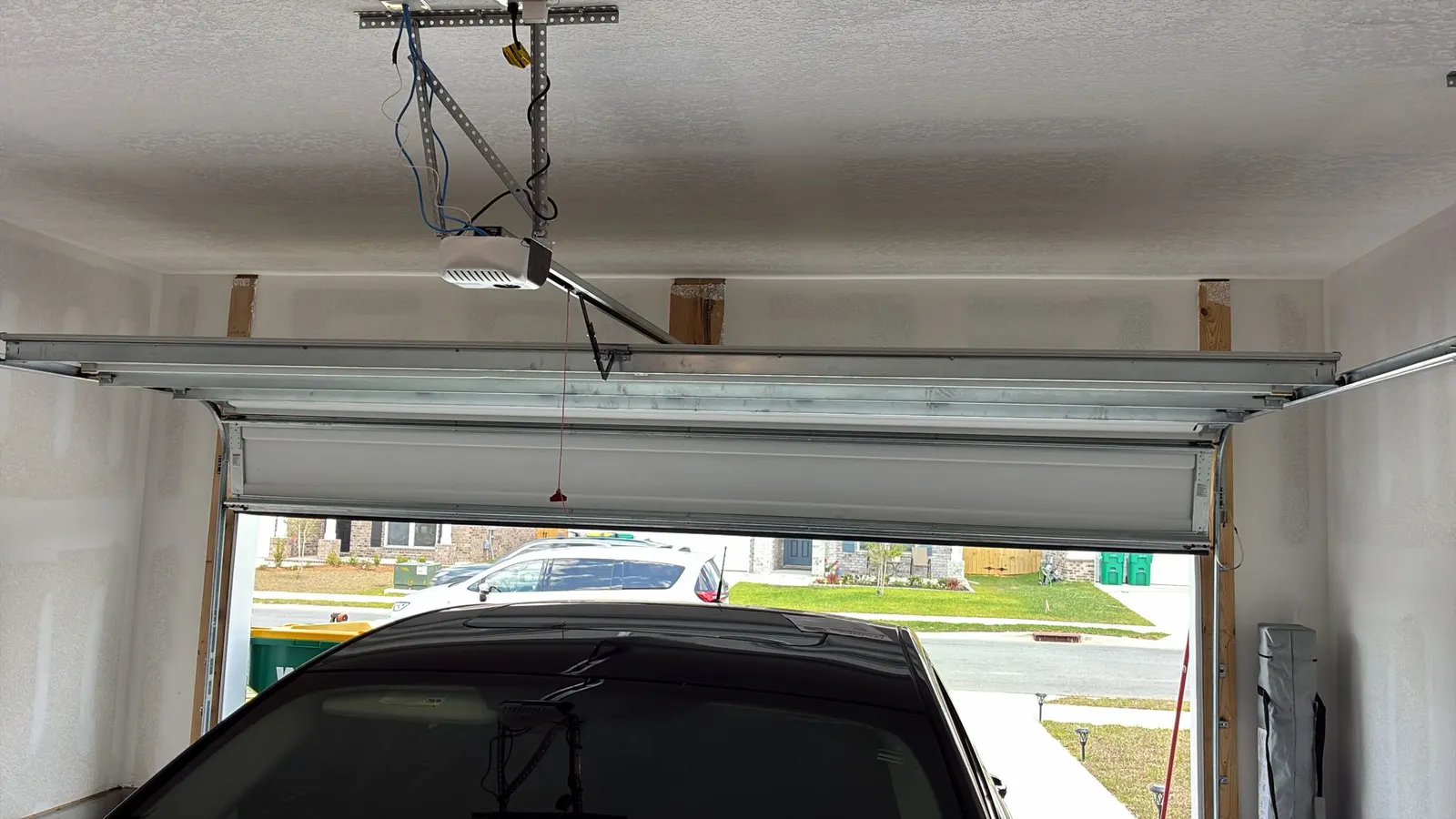
Ian and Milton both caused widespread power outages across Central Florida. When the power is out, a standard opener won't run. If the door is fully closed and the springs are intact, the red emergency release lets you lift it by hand. Never use the release when a spring is broken or the door is partly open, because it can drop.
Many newer openers offer battery backup, which lets the door run a limited number of cycles without power. If you're repairing or replacing an opener, ask us about adding it. Also, after a long outage, the opener may need its travel limits reset or its remotes reprogrammed.
Repair or replace: what makes sense for Orlando homes?
If the opener is fairly new and the problem is a board, sensor, or gear, repair usually makes sense. If it's an older chain-drive unit, has failed more than once from surges, or parts are no longer made, a new opener may serve you better. Newer models are quieter, offer smartphone control, and include rolling-code security.
Many homes in Lake Nona, Horizon West, and Winter Garden came with builder-installed openers that are now reaching the age when gears and sensors wear out. We'll tell you which way we'd go and why. For a new unit, see our opener installation page. For repairs, see the national opener repair page or our Orlando service area.
What can I check before you arrive?
Check the breaker and the outlet, since storms trip breakers often. Make sure the wall control isn't in lock or vacation mode. Look at the photo eyes near the floor: both lights should be steady, and the lenses should be clean and pointed at each other. Replace the remote battery.
If none of that helps, leave the opener unplugged if you suspect surge damage, and call us. Don't try to adjust the springs to make the door "easier" for the opener.
Signs you need opener repair
- The opener hums but the door doesn't move
- The opener clicks repeatedly with no movement
- The opener light or console button blinks a pattern
- The door only closes while you hold the wall button
- The remote or keypad stopped working, but the wall button works
- The door reverses for no visible reason
- The motor runs but the chain or belt doesn't move the trolley
- The opener stopped working after a power outage or storm
Want the full rundown on causes, repair options and what to expect? Read our complete guide to garage door opener repair, or see all garage door services.