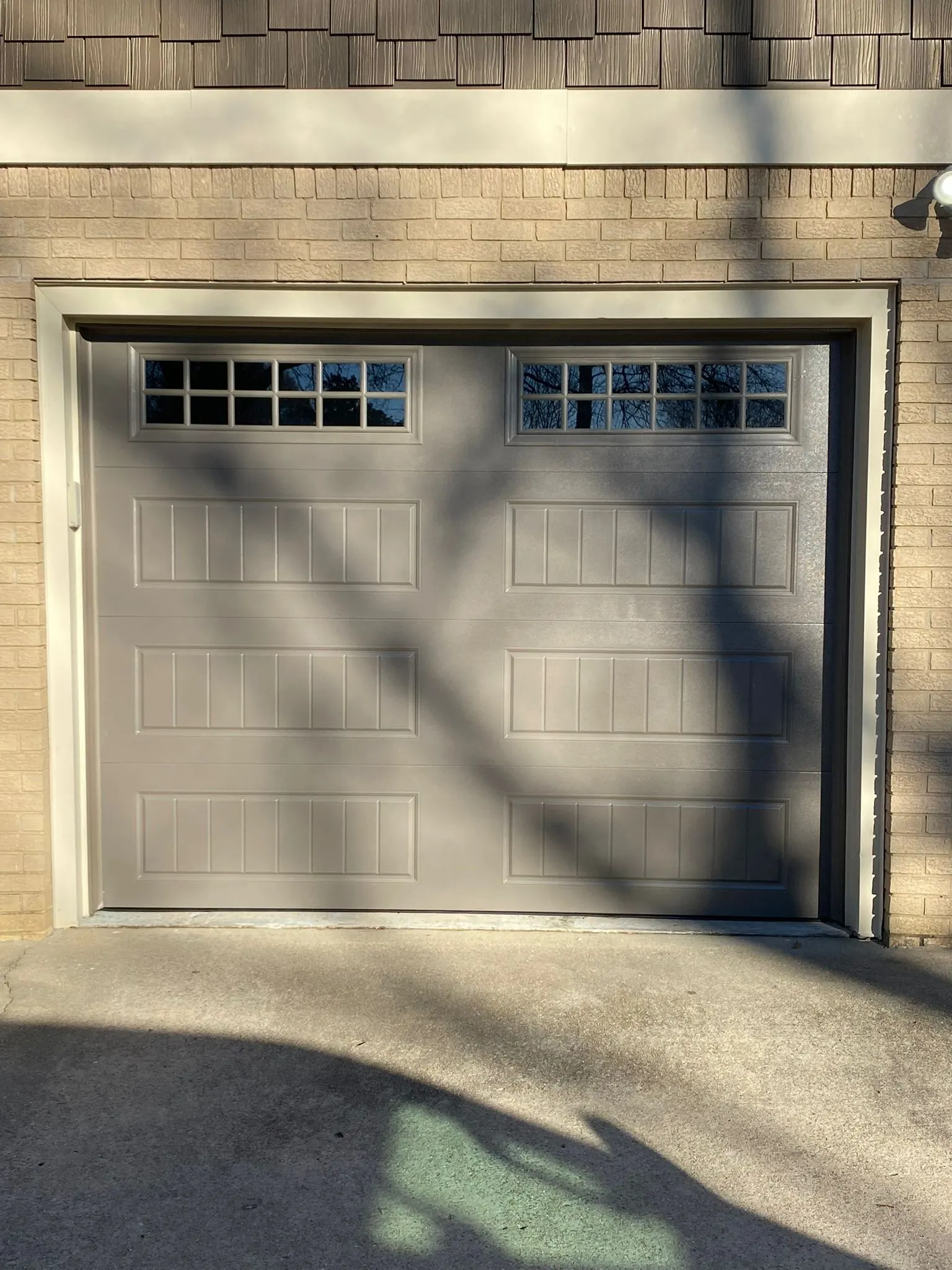
Steel-town housing and the garages behind it
When the steel mill came to Lorain in the 1890s, the town grew from about 5,000 people in 1894 to about 16,000 by 1900. The company bought 4,000 acres and set aside 2,300 of them for homes and businesses. South Lorain filled with housing for steelworkers and their families, and immigrants from Mexico and Puerto Rico settled along East 30th Street and Vine Avenue, which became one of Ohio's largest Latino communities.
Lorain kept growing, to about 78,000 people by 1970. Around one in five homes here was built before 1940. The oldest blocks near the lake and the harbor hold frame bungalows, brick worker cottages and two-family doubles. Central Lorain along the Broadway corridor mixes early-1900s homes with post-war houses.
Most of those homes were built before two-car garages were normal. Garages are usually detached, at the back of the lot, and often sized for one car. Many have been rebuilt or patched over the decades, so two garages on the same block can need very different repairs.
Two-family homes: who owns the garage door?
Lorain has a lot of two-family homes, and a shared garage or a garage split between two units is common. That raises practical questions.
Who is responsible for repairs? Usually the owner, but a lease may say otherwise. If you're a tenant, tell your landlord as soon as the door has a problem, especially a broken spring or a cable that has come off the drum.
How many people use it? A door used by two households cycles twice as often, so springs, rollers and openers wear out sooner. Higher-cycle springs can be worth it on a busy shared door.
Who has the remote? When tenants change, reprogram the opener so old remotes and keypad codes stop working. Most modern openers make that simple, and we can help if yours is older.
Landlords with several properties can call us to look at multiple doors in one trip.
Lake wind, moisture and rust
Lorain sits on Lake Erie at the mouth of the Black River, and the lake shapes the weather here. The west side of Northeast Ohio usually gets less lake-effect snow than the east suburbs, but homes near the shore get steady wind and moisture.
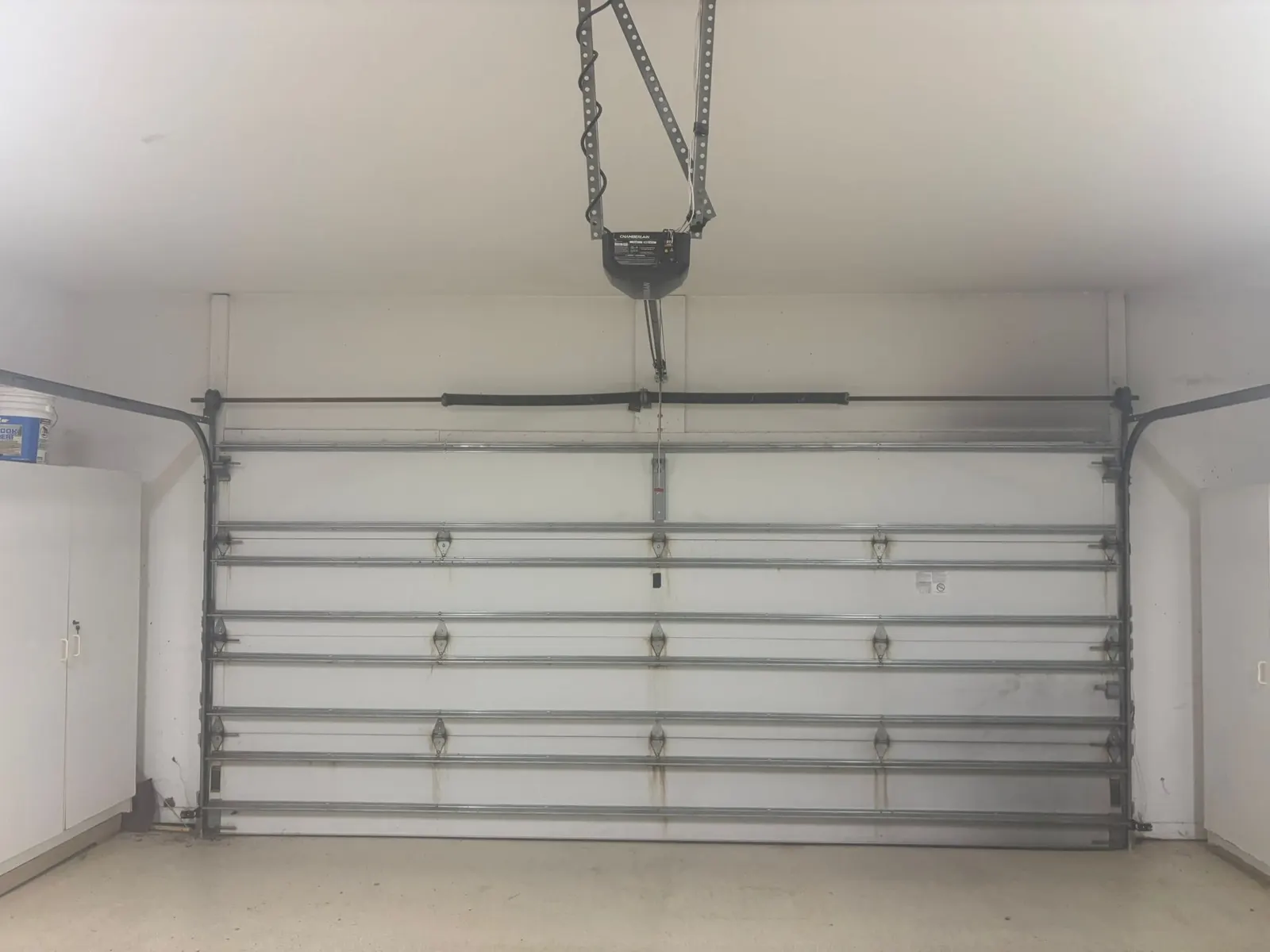
That moisture rusts springs, hinges and track bolts, and a rusty spring is more likely to break. Wind pushes on the face of the door, loosening hardware and wearing rollers. Wood doors and wood jambs on older garages soak up moisture and rot near the bottom.
Lubricate hinges, rollers and springs with a garage door lubricant a couple of times a year, and replace a cracked bottom seal before winter. If a spring looks rusty, stretched or gapped, call a technician. Our broken spring repair service in the Cleveland area can replace it safely.
Replacing a door on an older Lorain garage
Old single-car garages in Lorain often have openings that don't match today's standard door sizes, limited headroom and wood framing that has been repaired more than once. Some still have old hinged doors or a heavy wood overhead door.
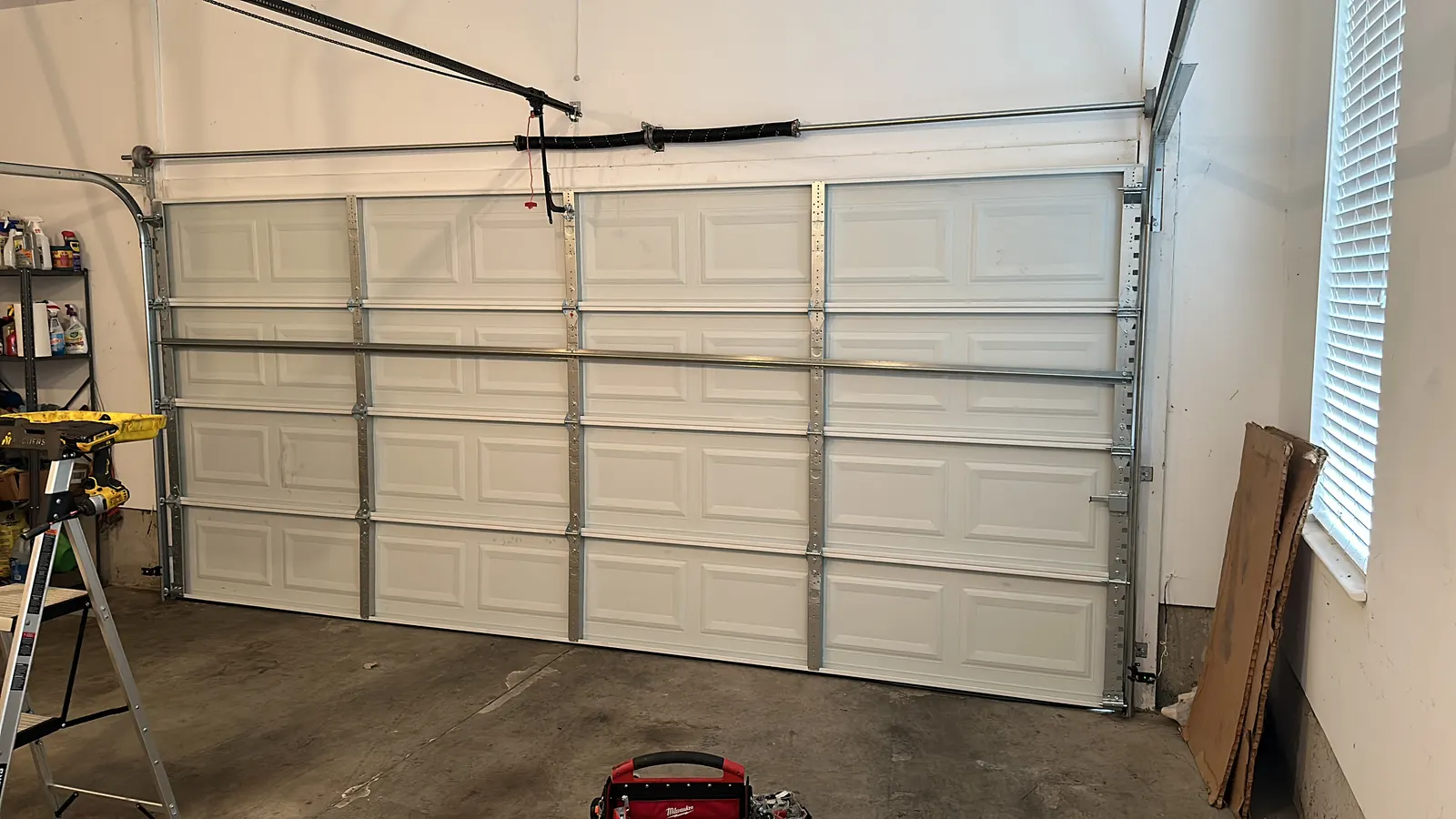
Before you buy a door, we measure the opening, check the headroom and side room and look at the condition of the jambs and header. If the framing is soft, it needs repair so the new track has something solid to hold. Low-headroom track can make a sectional door work on a short garage.
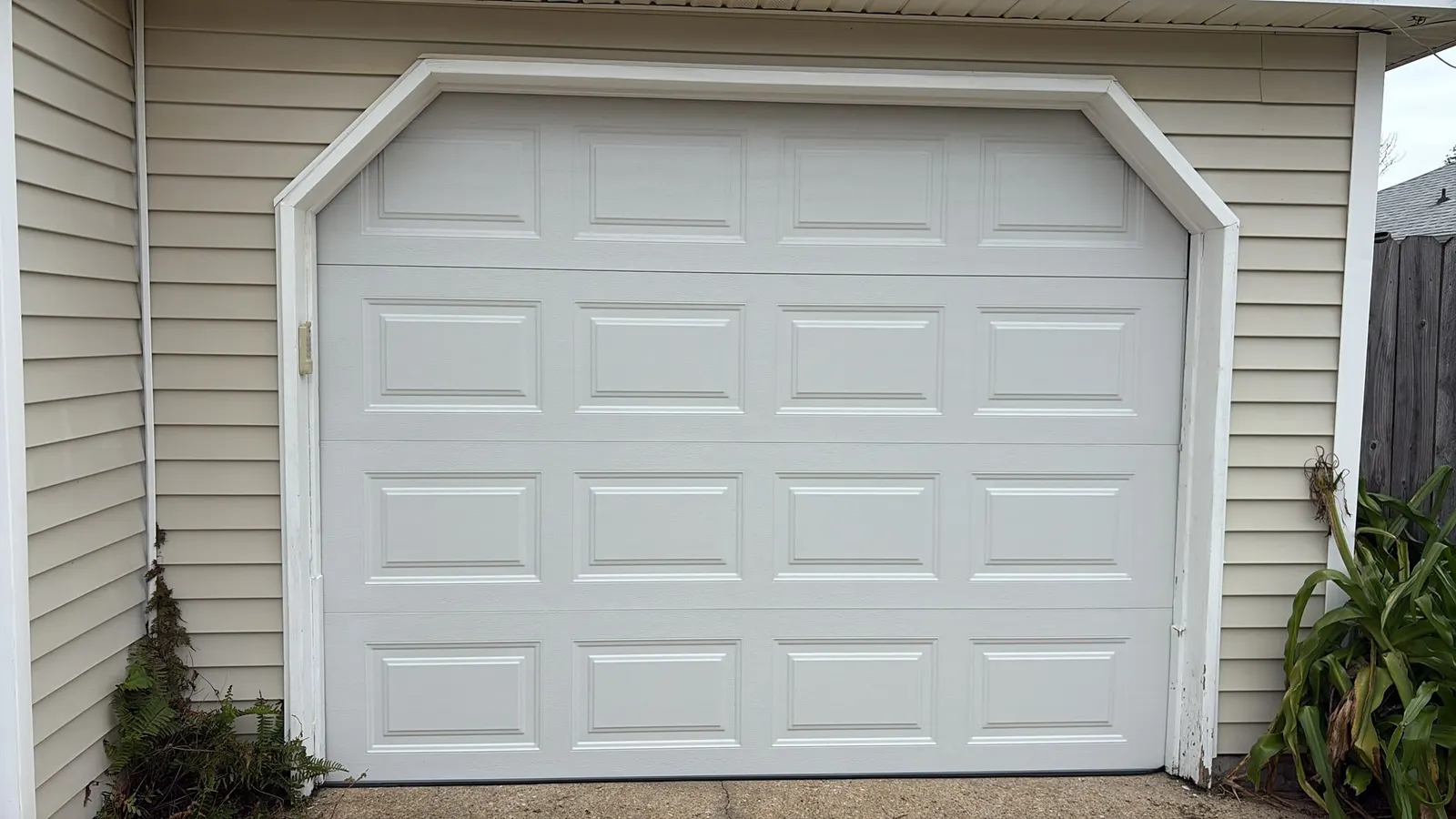
A new insulated steel door is lighter than many old wood doors, seals better and stands up to lake weather. You can read more on our garage door installation page.
Commercial doors around the harbor and industrial areas
Lorain's industrial history goes beyond steel. Ford's Lorain Assembly plant built vehicles for decades before it closed in 2005, and the harbor and the steel works along the Black River still take up much of the city's industrial land.
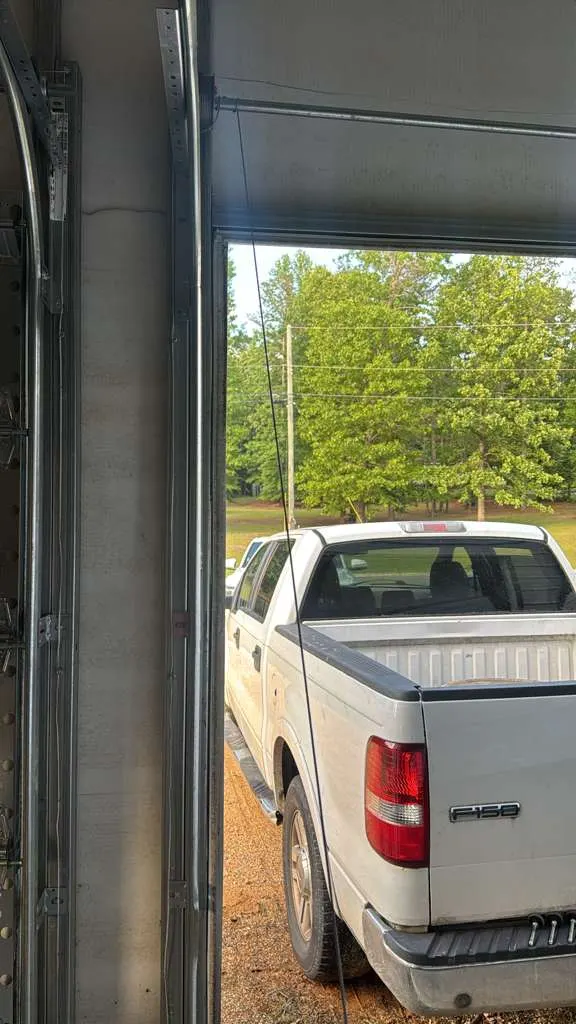
Warehouses, shops and service businesses in Lorain use sectional overhead doors and rolling steel doors that take heavy daily use. Lake air rusts commercial door hardware too. We repair springs, cables, bottom bars, sections and operators on commercial doors. See our commercial garage door repair page for details.
Converting an old tilt-up door to a sectional door
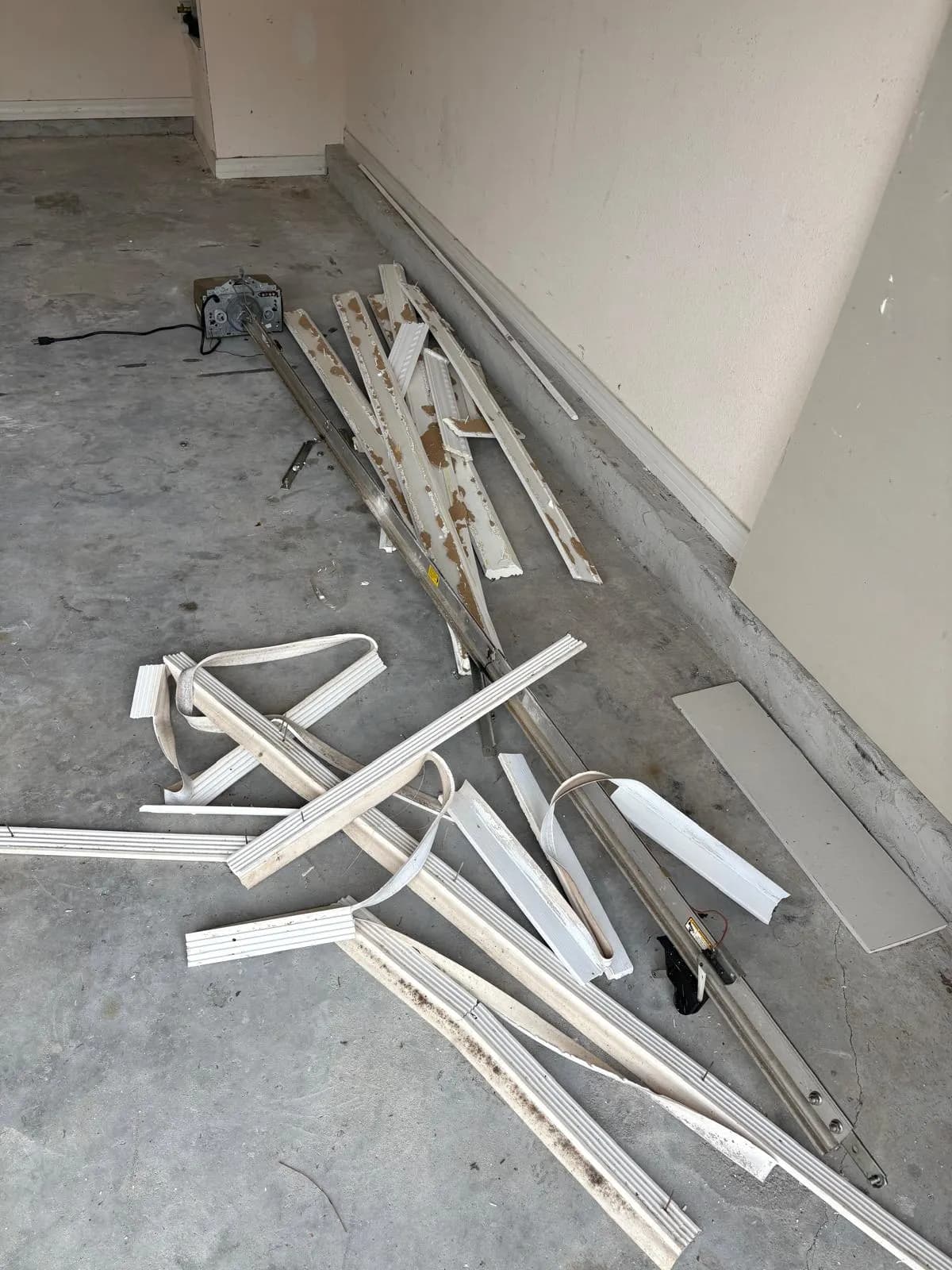
Many older single-car garages in Lorain were built with a one-piece door, the kind that tilts up and out on heavy side springs, or with a heavy wood overhead door. Some still have them. Owners often ask whether they can switch to a modern sectional door that rolls up on tracks.
Usually, yes, but it's more than a door swap. A one-piece door uses a pivoting hardware set and springs on each side of the opening. A sectional door needs vertical and horizontal tracks, a torsion or extension spring system and enough headroom and backroom for the door to roll up into the garage. Old garages sometimes have a low ceiling beam or a short depth that gets in the way.
The opening itself may need work too. Old jambs may be rotted at the bottom, the header may sag, and the opening may not match any standard size. All of that is fixable, and a door can be built to fit an unusual opening.
There are good reasons to convert. One-piece doors swing out into the driveway, which is awkward on a short lot, and their side springs can be dangerous when they wear. A sectional door is safer to run with an opener and seals better against lake weather.
We'll measure and explain what the conversion takes. Lorain is part of the Cleveland area we serve, along with Elyria, Avon Lake and Avon, and calls are routed to the closest available technician.