Signs you need opener repair
- The opener hums but the door doesn't move
- The opener clicks repeatedly with no movement
- The opener light or console button blinks a pattern
- The door only closes while you hold the wall button
- The remote or keypad stopped working, but the wall button works
- The door reverses for no visible reason
- The motor runs but the chain or belt doesn't move the trolley
- The opener stopped working after a power outage or storm
Is it the opener or the door?
Before blaming the opener, find out whether the door itself moves freely. With the door fully closed, pull the emergency release cord to disconnect the opener, then lift the door by hand to about waist height. A healthy door lifts easily and stays roughly where you let go.
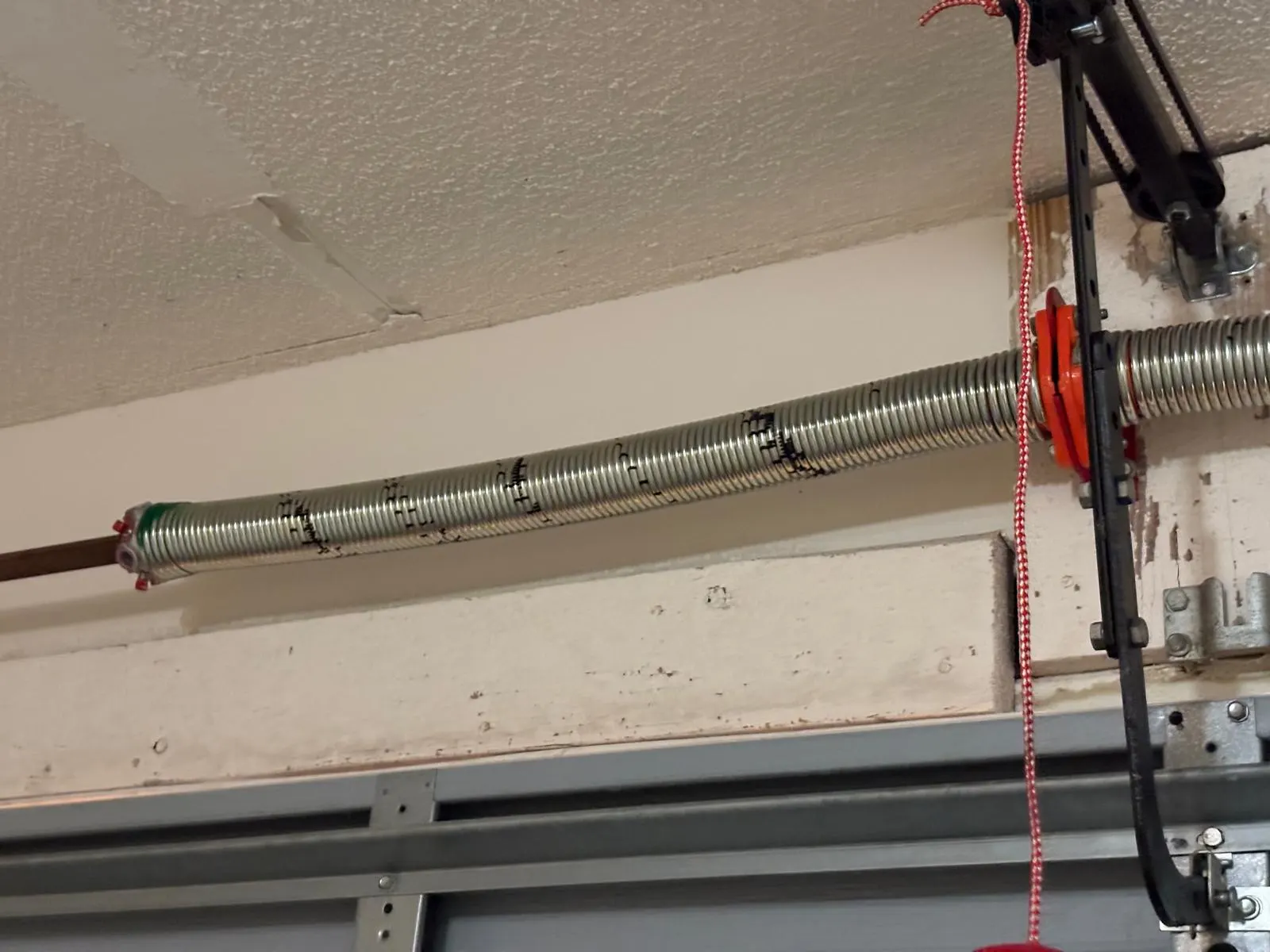
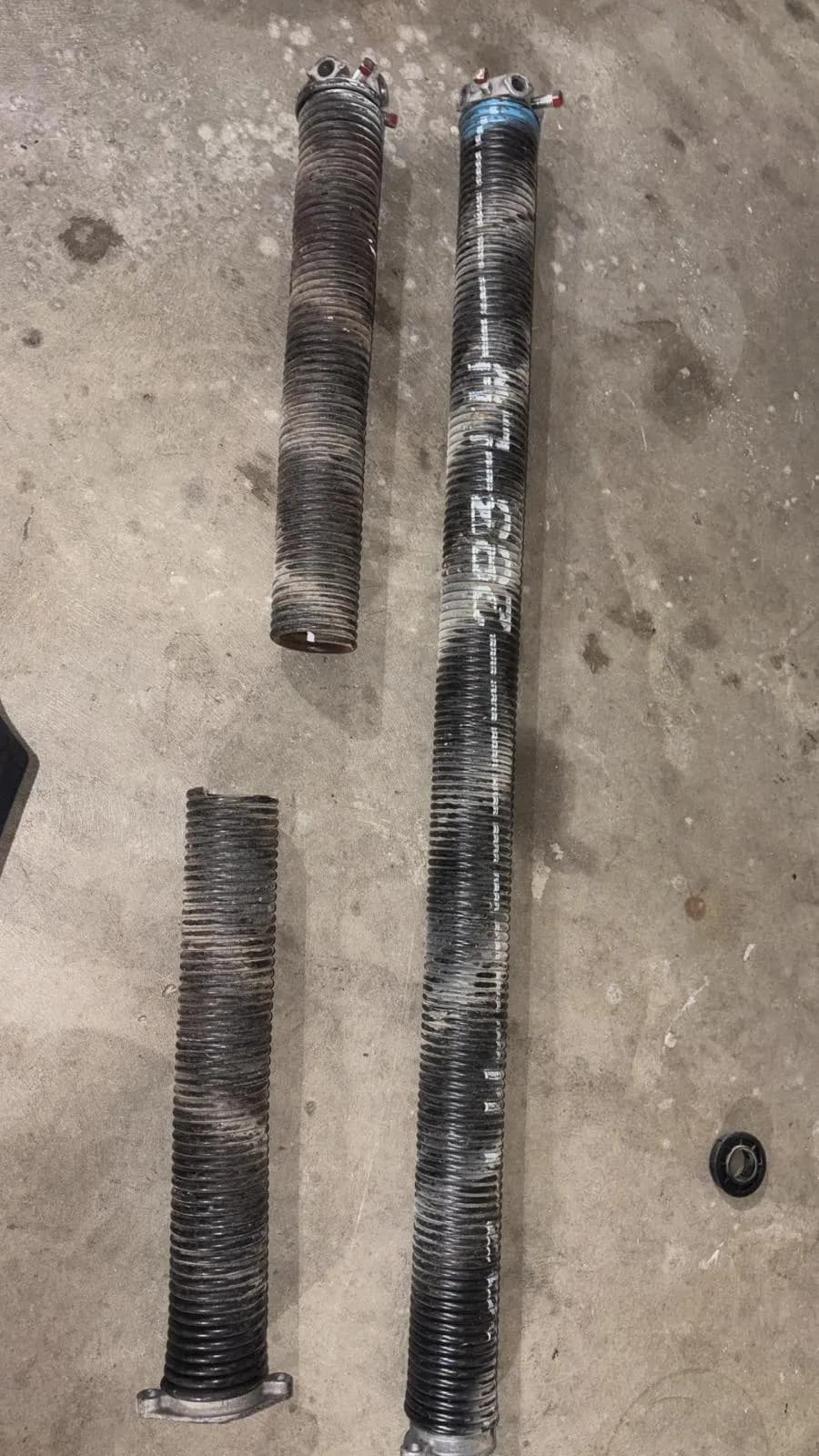
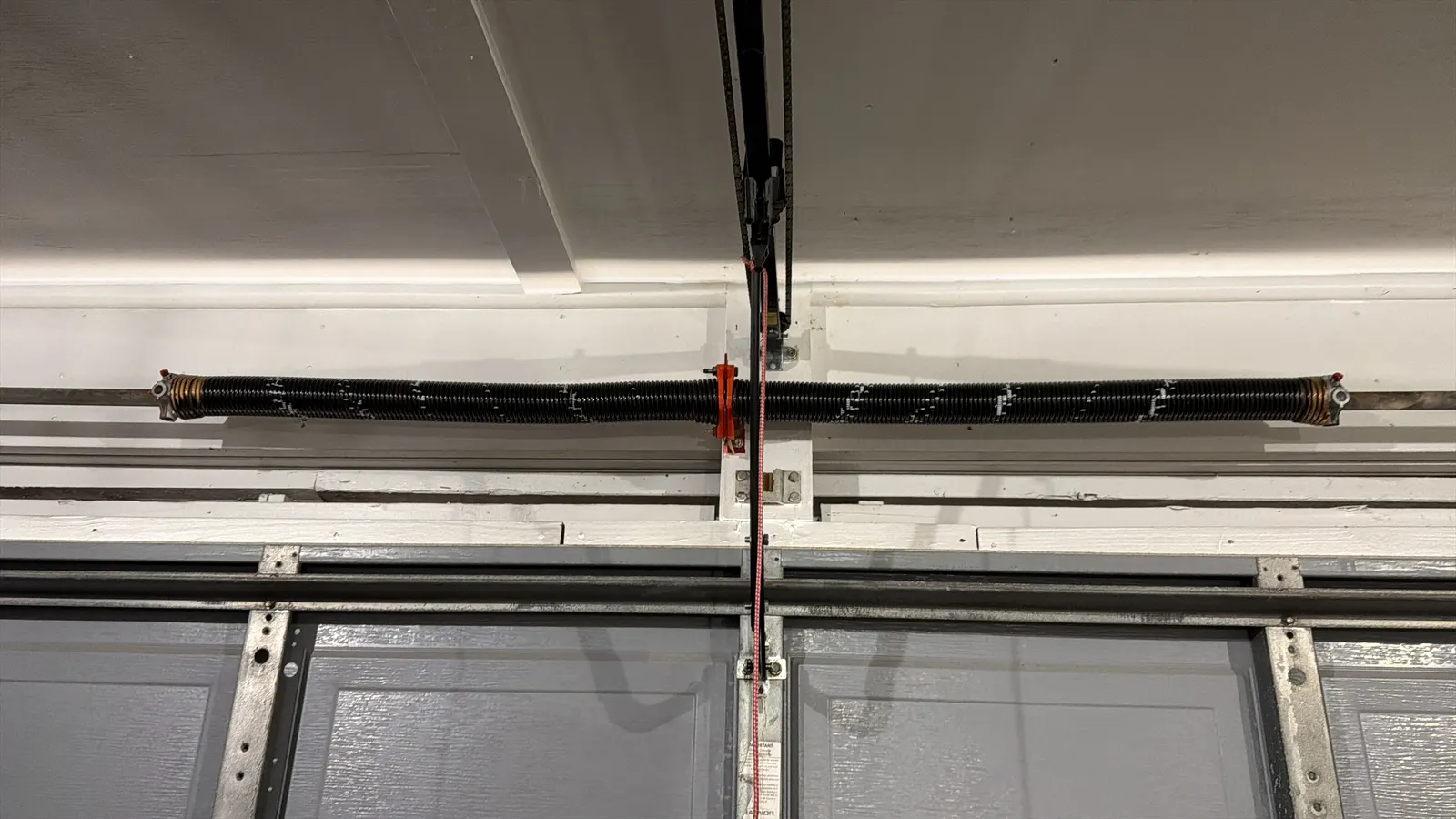
If the door is very heavy, slams down or won't budge, the problem is the door, not the opener. Usually that's a broken spring or a cable issue, and running the opener will only damage it. See broken spring repair for that situation.
If the door moves smoothly by hand, the opener is the likely culprit, and the rest of this page applies. Reconnect the opener by running it until the trolley clicks back into place, or by pushing the trolley lever back as your model's manual describes.
Only do this check when the door is fully closed. If a spring looks broken or the door is partly open, don't pull the release cord.
Garage door opener humming but not moving
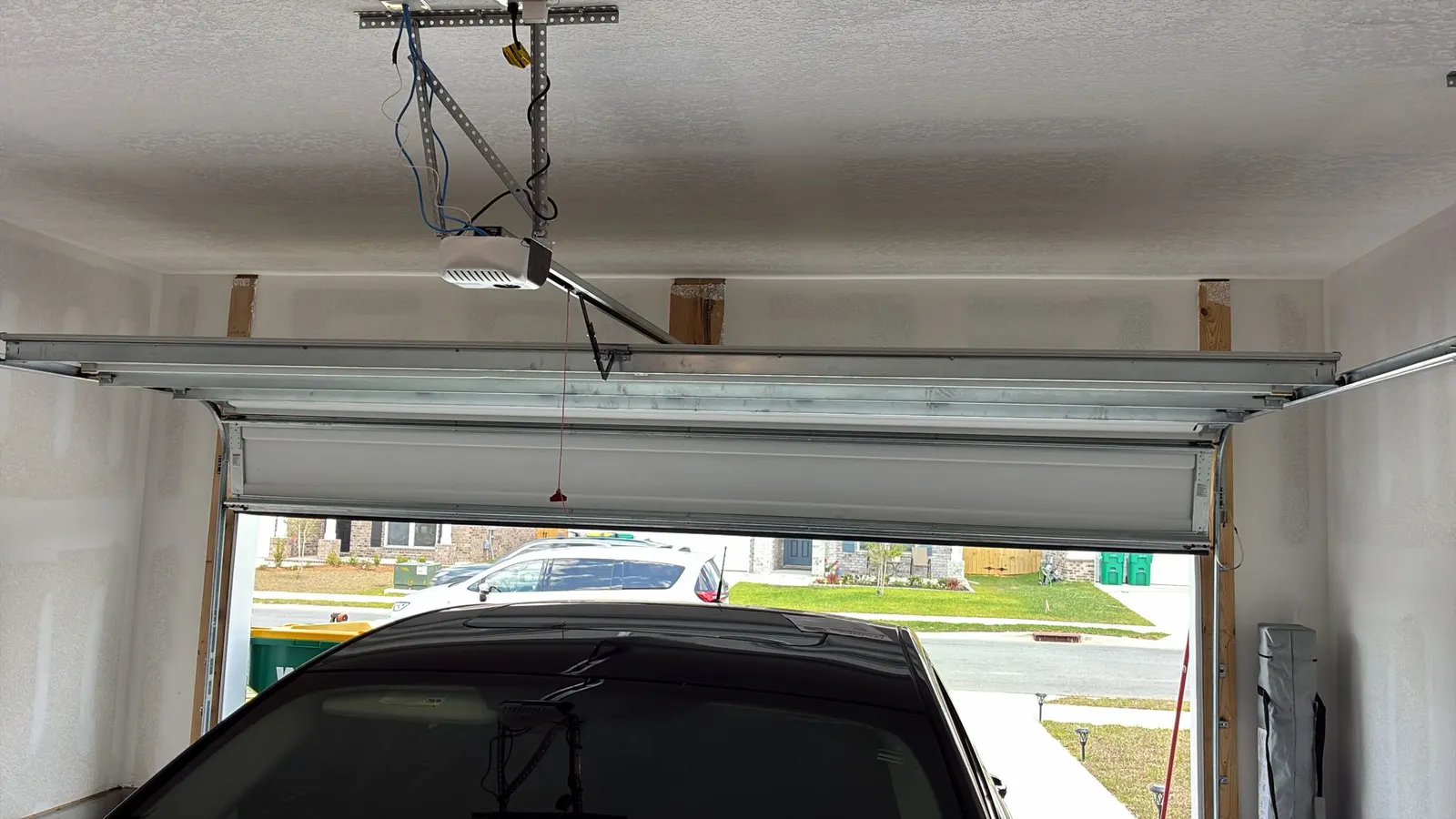
A steady hum with no movement usually means the motor is getting power but can't turn the drive. On many chain and belt openers, a plastic drive gear inside the motor head wears down over the years. Once the teeth strip, the motor spins but nothing grabs the chain. A seized door, a failed motor capacitor, or a tight chain jammed on its sprocket can cause the same sound.
Stop pressing the button if you hear humming. A motor that stalls repeatedly can overheat. A technician opens the motor head, checks the gear and sprocket, tests the capacitor, and tells you whether a gear kit or a replacement opener makes more sense for the age of your unit.
Clicking, blinking lights and error codes
Rapid clicking without movement often points to a relay on the logic board, a failed capacitor, or a stuck safety circuit. Many newer openers also flash a pattern on the motor light or the wall console to report a problem. LiftMaster and Chamberlain, which are made by the same parent company, use blink counts on the learn button or motor lights. Genie uses flashing patterns on the opener and sensors.
A common example: the opener light flashes several times and the door won't close. That usually means the photo eyes aren't seeing each other. Other patterns can point to a wiring short, a travel-limit issue or a motor fault. Your owner's manual or the label inside the light cover usually explains the code.
Count the flashes and tell us when you call. It gives the technician a head start.
Garage door sensor problems
Photo-eye sensors sit about six inches off the floor on each side of the door. If something blocks the invisible beam, the door reverses. That's the feature that keeps the door from closing on a child, a pet or a car. When the sensors fail or drift out of line, the door may refuse to close entirely.
Signs of a sensor problem include a blinking or dark sensor light, a door that closes only while you hold the wall button, or a door that reverses even with a clear path. Common causes are a bumped bracket, a dirty lens, cut or loose wires, and strong low-angle sun hitting the receiving eye at certain times of day, which is a frequent complaint in sunny Florida driveways.
Wiping the lenses and checking the brackets is safe to do yourself. If that doesn't fix it, we test the wiring from the sensors back to the opener and replace or realign the eyes.
Remote and keypad not working
If the wall button works but the remote doesn't, the opener is fine and the problem is the signal. Start with a fresh battery in the remote. Then check whether the wall console's lock or vacation mode is on, since that blocks all remotes and keypads.
If a new battery doesn't help, the remote may have lost its programming, often after a power outage or a board replacement. Remotes are matched to openers by radio frequency and security type, and not every remote works with every opener. Older openers using fixed codes can't pair with many current remotes at all.
Keypads fail for similar reasons: dead batteries, worn buttons, lost programming or moisture inside the case. We reprogram remotes and keypads, replace them with compatible models, and can tell you whether your opener supports newer accessories like Wi-Fi control.
- Wall button works, remote doesn't: battery, programming or lock mode
- Nothing works: power, breaker, outlet or logic board
- Works only up close: weak battery, antenna position or radio interference
Chain, belt, screw and wall-mount openers: what usually fails
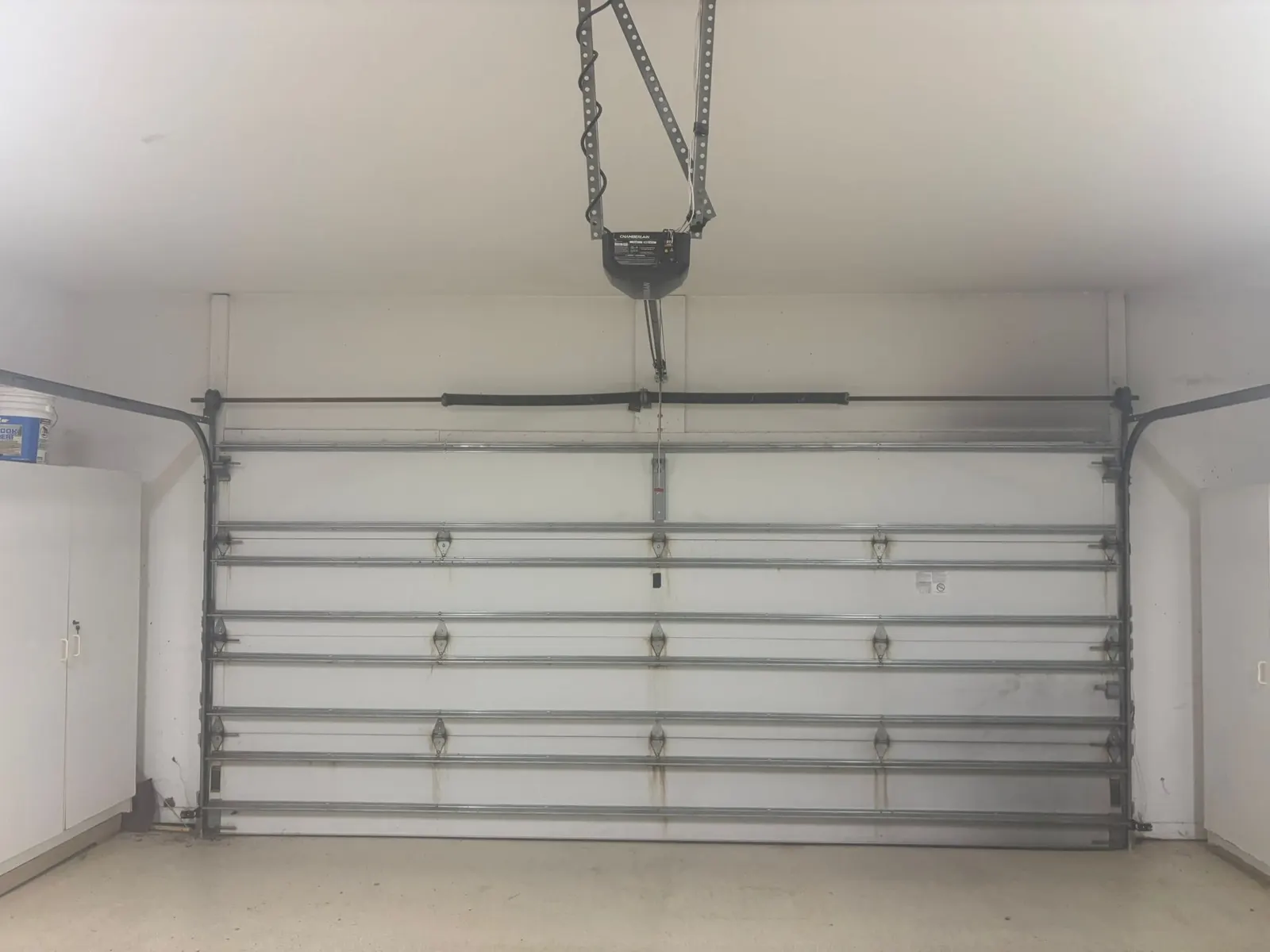
Each drive type has its own weak points. Knowing which one you have helps explain what we'll check. Look at the rail running from the motor to the door: a metal chain, a flat rubber belt, or a long threaded rod tells you the type. If there's no rail at all and the motor sits on the wall beside the door, you have a wall-mount opener.
Climate plays a part too. In Midwest winters, cold thickens lubricant and makes screw drives and chain drives work harder, so a door that runs fine in June may stall or reverse in January. In humid places like Orlando and Nashville, moisture can corrode sensor contacts and wiring terminals over time.
- Chain drive: loose or stretched chain, worn drive gear and sprocket, noisy trolley
- Belt drive: worn or slipping belt, failed gear, tensioner out of adjustment
- Screw drive: dry or worn threaded rod, worn trolley; sensitive to big temperature swings
- Wall-mount (jackshaft): sits beside the door on the torsion shaft; issues with the cable-tension monitor, the electronic lock, or the battery
- All types: travel limits, force settings, logic boards and capacitors
Repair the opener or replace it?
A repair usually makes sense when the opener is fairly new, the problem is a single part (a gear, a sensor, a remote, a board), and parts are still available. Replacement is often the better choice when the opener is old, uses fixed-code remotes, lacks modern safety reversal, is very loud, or needs a costly board on top of other worn parts.
We'll give you both options and be straight about which one we'd pick. If replacement makes more sense, our garage door opener installation page explains drive types, smart openers and battery backup. If the opener checks out and the door itself is the problem, start with our garage door repair guide. Ready to book? Contact us.
How the service works
- 1
Check the door first
The technician disconnects the opener and checks the door's balance and springs, so the opener isn't blamed for a door problem.
- 2
Read the opener
They note any blink codes, test the wall console, remotes and keypad, and check power and wiring.
- 3
Test sensors and safety
Photo eyes are tested for alignment and wiring, and the auto-reverse is checked against an obstruction.
- 4
Repair or replace parts
Gears, sprockets, belts, chains, boards, capacitors, sensors or remotes are replaced as needed, with a quote first.
- 5
Set and verify
Travel limits and force settings are adjusted, remotes are programmed, and the safety reversal is tested before the technician leaves.