
Repair or Replace Your Garage Door Opener? How to Decide
By the H&D Garage Door team · Updated
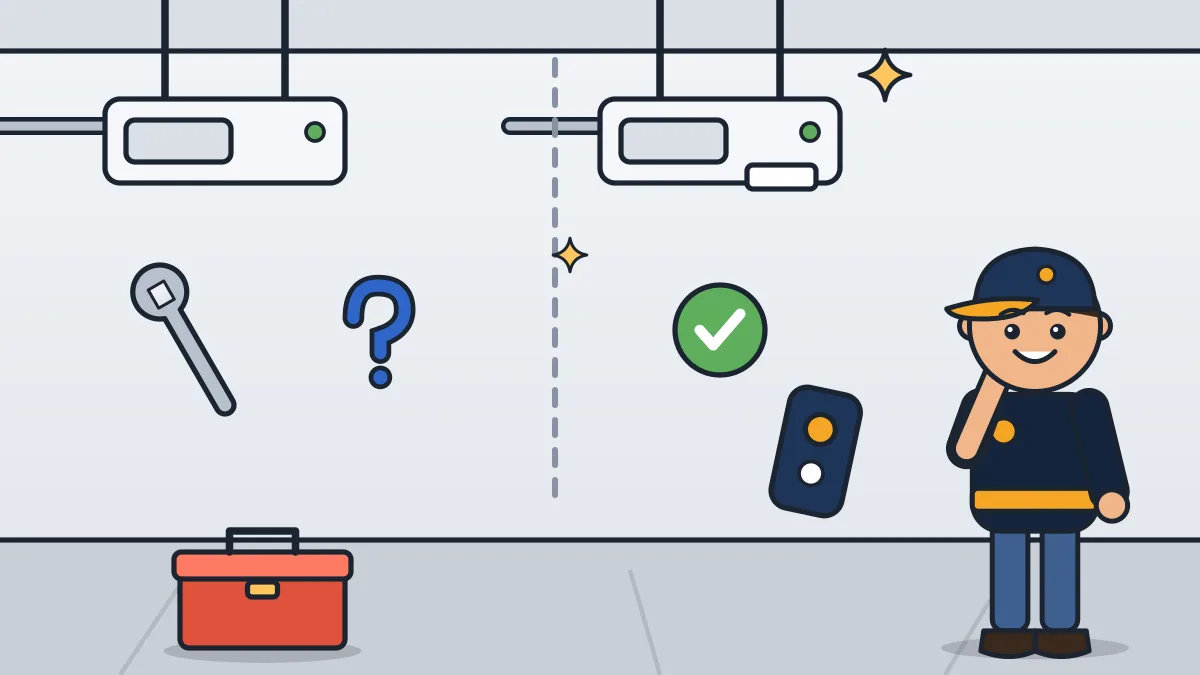
Should you repair or replace your garage door opener?
Repair the opener when it is a newer unit with working photo eyes and the fault comes down to one part, such as a remote, a sensor, a drive gear or a circuit board. Replace it when parts for your model are no longer made, when it has no photo-eye safety system, when it keeps failing, or when it struggles even after the door itself has been checked and balanced.
That last point matters more than most people expect. A lot of openers that seem to be dying are really reacting to a door problem, like a broken spring or a binding roller. So the honest order is: rule out the door, identify the failed part, then decide. If the opener has simply stopped responding and you haven't done the basic safe checks yet, start with our guide to why a garage door opener stops working and come back here once you know the symptom.
Quick decision guide: which symptoms usually mean repair, and which mean replace?
Use this as a starting point, not a verdict. The age of the unit and the availability of parts can flip any line on this list.
- Remote quit, wall button still works: usually repair. A new battery, reprogramming or a replacement remote solves most of these.
- Door reverses before it closes, or the opener light blinks: usually repair. Photo eyes out of line or a damaged sensor wire are common causes, and both are routine fixes.
- Motor runs but the door doesn't move: often repair. A worn drive gear or sprocket is a standard part on many models, but on an older unit it can be the first of several worn parts.
- Opener hums and the door stays put: check the door first. A broken spring makes the door too heavy to lift, and the opener can't do the spring's job.
- Went dead after a storm or power surge: depends on the model. A replacement circuit board is a fair repair if it is still made for your unit. If not, replacement is the realistic path.
- Slows down, stalls or stops midway on a door that is balanced: usually replace. The motor or drive is wearing out across the board.
- No photo eyes at all: replace. The opener predates the safety rules described below.
- Second or third repair in a short stretch: usually replace. Repeated fixes on one aging unit add up and still leave you with an old opener.
How old is too old for a garage door opener?
There is no single number that fits every opener. How long one lasts depends on how many times a day the door runs, whether the door has stayed balanced, the drive type, heat and cold in the garage, and how many power surges it has lived through. Age matters for two practical reasons instead: safety and parts.
Safety first. Federal rules from the Consumer Product Safety Commission require residential openers made on or after January 1, 1993 to meet the UL 325 entrapment protection standard. In practice that means an electric eye or door-edge sensor, or a wall button you must hold down for the door to close. If your opener has no photo eyes near the floor and no edge sensor, it was built before those rules, and it is not worth repairing. Replace it.
Parts come second. Manufacturers stop making circuit boards, gears and remotes for older models over time. When a technician reads the model number off the motor unit, the first question is whether the part is still available. If it isn't, a used or aftermarket part can be a short-term patch at best, and replacement usually makes more sense.
Which problems look like the opener but are really the door?
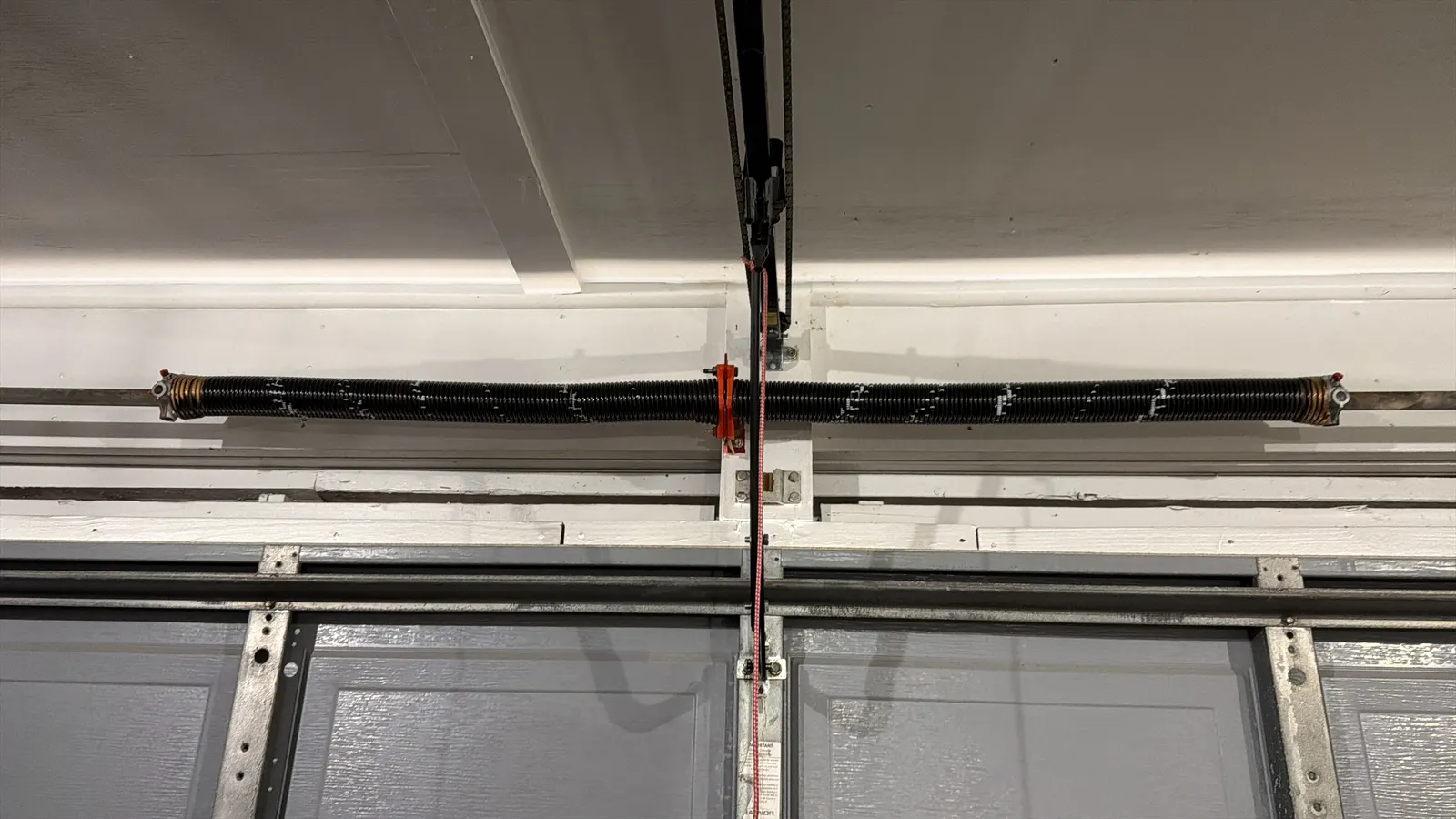
An opener is built to guide a balanced door, not to lift dead weight. When the door's own parts fail, the opener is the thing you notice, because it hums, strains, reverses or quits. Before you pay for a new opener, have these checked.
- A broken spring. You may have heard a loud bang, or see a gap in the coil above the door. The door becomes too heavy, and many openers stop or reverse to protect themselves. See broken spring repair.
- A frayed or slack lift cable. The door may hang crooked or lift unevenly. Cables are under spring tension, so leave them alone and call for cable repair.
- A door off its track or binding. Rollers out of the track, bent track or a jammed roller make the opener fight the door. A technician needs to reset it safely.
- Worn rollers and hinges. They add drag on every cycle, which shortens the life of any opener, old or new.
Why shouldn't you just turn up the opener's force setting?
Because the force setting is part of the safety system. Turning it up so the opener can push a heavy or binding door hides the real problem and makes the door less likely to reverse when it meets a person, a pet or a car. A new opener installed on an out-of-balance door has the same issue, and it wears out sooner too.
One more safety point. If a spring is broken and the door is stuck open, don't pull the red emergency release cord. With no spring holding the weight, the door can come down hard. Keep people and cars out from under it and call a technician.
What should you look for in a replacement opener?
If replacement is the answer, think about how you use the garage, not just what the old unit had. These are the questions worth asking before you choose.
- Is it matched to your door? Heavier insulated, wood or oversized doors need an opener rated for them, and a taller door needs a longer rail.
- How much does noise matter? If there is a bedroom or living space above or beside the garage, a belt drive or wall-mounted unit is quieter than a chain drive.
- Do you want battery backup? It lets the door run during a power outage. California has required it on new openers since July 1, 2019. That law doesn't apply in Florida, Tennessee, Ohio or Wisconsin, but the feature is just as useful during a storm outage.
- Do you want app control? Smartphone control lets you check and close the door from anywhere. It needs a reliable Wi-Fi signal in the garage, so check that first.
- Is the ceiling space spoken for? A wall-mounted opener beside the door frees the ceiling for storage racks or a high-lift track, but it only works with certain door setups.
- Does it use rolling security codes? Current openers change the remote code on every use, which older units with fixed codes don't do.
Does where you live change the answer?
It can. In Central Florida, lightning and power surges are a common reason an opener's circuit board fails, which is why a board repair versus a new unit comes up so often there. Our Orlando garage door opener repair page covers how storms affect openers in that market. A surge protector at the outlet is worth asking about whichever way you go.
In Cleveland and Milwaukee, cold is the bigger factor. Thick grease, weak batteries and stiff doors make an opener look sicker than it is on a frozen morning. If the problem only shows up in the cold, read our guide to cold-weather garage door problems before deciding the unit is finished.
What affects the price of repairing vs replacing an opener?
A repair is priced mostly by the part. Which part failed, whether it is still made for your model, and whether it is in stock or needs ordering all shape the cost. Sensor problems can also involve new wire runs if the old wiring is damaged, and a repair visit that turns up a door problem adds that work to the list.
A replacement is priced by the unit and the installation. The drive type, motor type and lifting rating, and features such as battery backup and app control, set the price of the opener itself. Then come the installation details: a longer rail for a taller door, a new header bracket or ceiling support if the old mounting is weak, an outlet near the motor, removing the old unit, and any spring or roller work the door needs so the new opener isn't fighting it.
We don't publish prices because these details change from one garage to the next. When you call, have the brand and model from the label on the motor unit, a short description of what the opener does, and a photo of the door and springs taken from the floor. That gets you a much more useful answer on the first call.
Ready for a straight answer on your opener?
Our garage door opener repair page explains how a repair visit works. If you've already decided on a new unit, garage door opener installation covers the options and the setup. Call (888) 754-4130 and we'll schedule the earliest available visit, check the door and the opener together, and tell you which path makes sense.