
How Long Does a Garage Door Opener Last?
By the H&D Garage Door team · Updated
How long should a garage door opener last?
There's no fixed number of years. An opener's life depends far more on how it's used and what it's lifting than on the calendar. A well-installed opener on a balanced door in a garage that opens a few times a day can run for a long time. The same opener on a door with weak springs, in a household that uses the garage as its front door, wears out much sooner.
So instead of counting years, look at three things: how hard the opener works every day, what condition the door is in, and whether the opener is showing the signs of wear covered below. When those signs add up, garage door opener replacement usually makes more sense than another repair.
What wears out first inside an opener
Openers rarely fail all at once. One part gives out, and the age of the rest decides whether fixing it is worth it. These are the parts that wear most:
- The drive gear and sprocket. On many chain and belt openers, a plastic gear inside the motor housing does the work. When it strips, the motor hums or runs but the door doesn't move.
- The logic board. Power surges, lightning and heat are hard on the circuit board that controls the motor, the light and the safety sensors.
- The chain or belt. Chains stretch and slap the rail; belts wear and can slip on the sprocket.
- The trolley and rail. The carriage that rides the rail can crack, and the rail can loosen from the header or ceiling.
- Travel and force settings. As parts wear, the door may stop short, reverse for no reason or close too hard, even though nothing has broken outright.
Daily use and door balance matter most
Every open and close is a cycle, and an opener has only so many in it. A family that leaves through the garage several times a day, plus a teenager with their own remote, can put more cycles on an opener in a year than a household that parks in the driveway puts on in several.
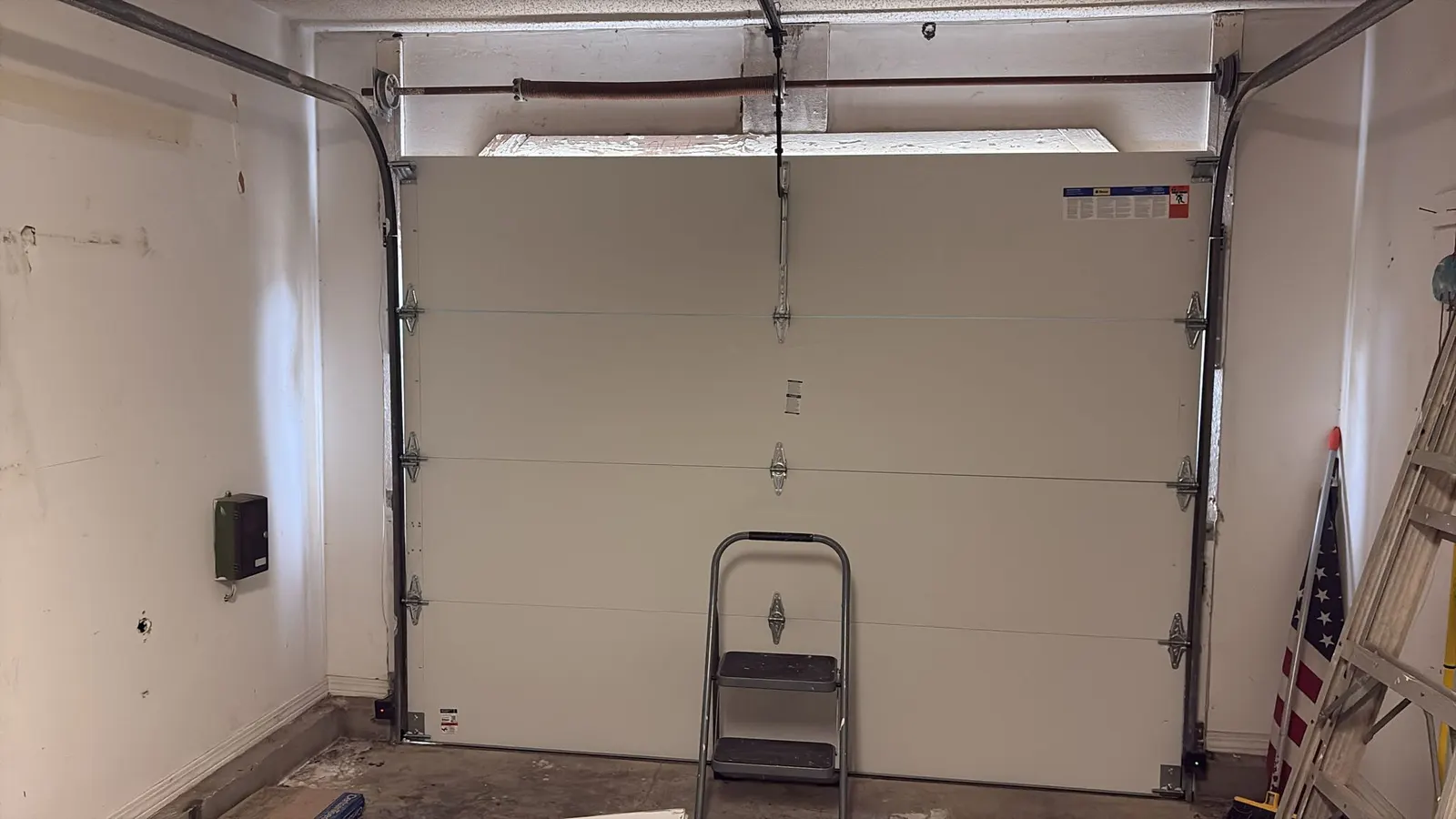
Door balance matters just as much. The springs, not the opener, are supposed to carry the door's weight. When a spring weakens, the opener has to drag a heavy door up the rail on every cycle. That strips gears and burns out motors early, and a brand-new opener installed on an unbalanced door will wear the same way. That's why we check the springs before recommending any opener, and why a heavy door often needs broken spring repair first. Don't adjust springs yourself: they hold enough force to cause serious injury.
Heat in Orlando, cold in Cleveland and Milwaukee
Climate changes how an opener ages. In Central Florida, attached garages get very hot in summer, and heat is hard on electronics and plastic parts. Summer thunderstorms also bring power surges, which is one reason logic boards fail there.
In Cleveland and Milwaukee, the problem is cold. Grease thickens, weather seals stiffen and the door gets harder to move, so the opener works harder on every winter morning. An opener that was just getting by in the fall may stop lifting the door after the first deep freeze. Our post on cold-weather garage door problems covers the winter symptoms in more detail. Nashville sits in between, with hot summers, winter cold snaps and storms that knock out power.
Signs your garage door opener is near the end
One symptom alone doesn't mean the opener is finished. Several of these together usually do:
- It hums, clicks or runs, but the door doesn't move
- It needs more than one press of the button or remote to start
- The door reverses or stops partway for no clear reason, even with the sensors clean and aligned
- Grinding, rattling or straining sounds that get worse over time
- It has needed more than one repair in a short span
- Replacement parts for your model are hard to find
- It has no photo-eye sensors near the floor, or uses old fixed-code remotes
Openers without modern safety features
Federal safety rules for home garage door openers (16 CFR part 1211, which adopts the entrapment provisions of the UL 325 standard) require an opener to reverse when it meets an obstruction. Newer openers pair that with photo-eye sensors near the floor that stop and reverse the door when something crosses the beam.
If your opener has no sensors, or the auto-reverse no longer works when you test it, replacing it is a safety decision, not just a convenience one. Older openers may also use fixed-code remotes that are less secure than the rolling-code systems used today.
Should you repair or replace an old opener?
If the opener is fairly new and one part failed, such as a stripped gear, a worn belt or a bad sensor, repair is usually the smart move. If it's older, has needed repeated fixes, lacks modern safety features, or the part it needs costs a large share of a new unit, replacement usually wins.
Our guide on whether to repair or replace a garage door opener walks through that decision. If the opener simply stopped responding, start with the safe checks in garage door opener not working. And a yearly garage door tune-up that checks balance, the drive and the safety reverse helps any opener last longer.