
Garage Door Opener Not Working? A Troubleshooting Guide
By the H&D Garage Door team · Updated
Why is my garage door opener not working?
A garage door opener stops working for one of four reasons: it isn't getting power, it isn't getting a signal from your remote or wall control, its safety system is stopping it, or something in the drive or the door itself is failing. The fastest way to find out which is to sort the problem by what you see and hear when you press the button.
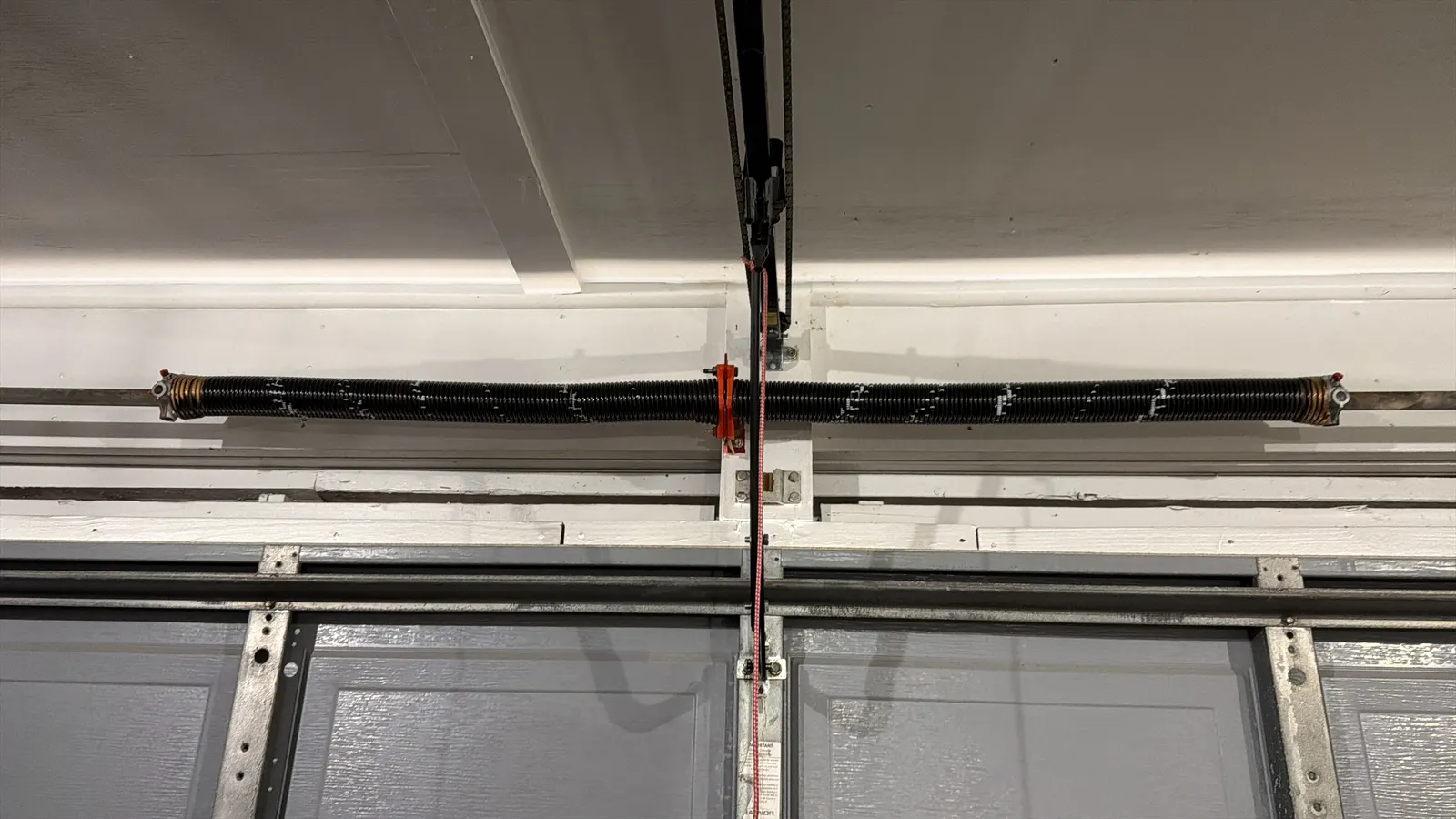
Before you start, make sure the door itself is healthy. If a spring or cable is broken, the opener is not the problem, and running it again can damage it. A quick look above the door for a gap in the spring coil is worth the ten seconds.
Nothing happens at all: is it a power problem?
If the opener light doesn't come on and the motor makes no sound, the unit probably has no power. Check that the cord is fully seated in the ceiling outlet. Check the breaker panel, and check any GFCI outlet in the garage or nearby, since one tripped GFCI can kill power to several outlets on the same circuit.
If the outlet has power and the opener still stays dark, the internal power supply or logic board may have failed. Storm surges are a common cause. Some units also have a fuse or thermal cutout that trips after the motor overheats from repeated runs. Give it time to cool, and if it keeps happening, have it checked.
Only the remote stopped working: what should you check?
If the wall button works but the remote doesn't, the opener is fine and the problem is the signal. Work through these in order.
- Replace the remote battery and try again from close range
- Check the wall control for a lock or vacation mode light and turn it off
- Re-pair the remote using the learn button, following your owner's manual
- Try a second remote if you have one, to rule out a damaged remote
- Make sure the antenna wire hanging from the opener isn't damaged or tucked up
Why does the remote only work up close?
Short range usually comes down to a weak battery, a damaged antenna on the motor unit, or interference. LED bulbs installed in the opener's light sockets are a known source of radio interference on some models, and so are some nearby electronics. If range dropped right after you changed bulbs, try the old type of bulb or one rated for garage door openers.
Older openers that use a single fixed code or an older radio standard may also struggle with newer remotes. In that case the fix is often a compatible receiver or a new opener rather than another remote.
The motor runs but the door won't move: what does that mean?
If you hear the motor and the door stays put, the opener has lost its connection to the door. The most common reason is that someone pulled the red emergency release cord. On most models the trolley reconnects the next time the opener runs, or after a step described in your manual, once the door is fully closed.
If the trolley is connected and the door still doesn't move, the problem is inside the drive. A stripped plastic drive gear, a broken chain or a snapped belt will let the motor spin without moving the trolley. You may hear grinding or see the chain hanging slack. These are repairs for garage door opener repair.
The opener hums or clicks: is the motor failing?
A hum with no movement can point to a failed start capacitor or a seized motor. A single click can mean a relay or board fault. Both are opener problems, but there's an important exception: a door with a broken spring is too heavy for the opener, so the motor hums and strains. Rule out the springs before assuming the motor has failed.
The door starts down and goes back up: is it the sensors?
Almost always. The photo eyes near the floor must see each other before the opener will close the door. Clean the lenses, clear the path and check that both indicator lights are steady. If the opener's light bulbs blink when the door reverses, that is another sign of a sensor fault. On LiftMaster and Chamberlain units, a pattern of blinks or an arrow code on the motor unit tells you more. Our guide to LiftMaster error codes lists them.
If the door reverses after touching the floor rather than before, the limit or force setting is more likely. Those settings are part of the safety system, so leave the adjustment to a technician.
Why does the opener stop partway or quit after a few runs?
An opener that stops in the middle of travel is reacting to resistance, a limit setting, or its own heat. If it stops at the same spot every time, look for a binding roller, a bent track or a dented section at that point. If it stops at random, the force setting may be too sensitive for how the door moves today, often because the door has become harder to move from worn parts or cold weather.
Many openers also have a thermal overload that shuts the motor off after several runs in a row. If the unit goes dead after repeated use and works again an hour later, it's overheating. That points to a door that is too heavy or out of balance, or a motor that is wearing out. Running it harder won't fix either one.
What if the door works but the opener light doesn't?
A dead light with a working motor is usually just a burned-out bulb or a bulb that is the wrong type. Use the bulb style and wattage your manual lists. Some openers have a separate light socket or a light board that can fail on its own, and on some models the light flashes to signal a sensor fault, so a light that blinks instead of staying on is a clue rather than a bulb problem.
Why did my smart opener stop responding in the app?
Wi-Fi openers depend on your home network. A new router, a changed Wi-Fi password or a weak signal in the garage will knock them offline while the wall button and remotes still work. Re-adding the opener in the manufacturer's app usually restores it. If the opener drops offline often, a Wi-Fi extender closer to the garage can help.
Should you repair or replace the opener?
A remote, a sensor, a gear kit or a logic board can often be replaced on its own, and that is usually worth doing on a newer unit. Replacement starts to make more sense when the opener is old and parts are hard to find, when it has no photo-eye safety system, when it is noisy and struggles even on a balanced door, or when you want features like battery backup, quieter belt drive or app control.
A technician can test the door's balance and the opener's settings and tell you which path fits. If you decide on a new unit, see our garage door opener installation page. In southeast Wisconsin, where deep cold strains older motors, see Milwaukee garage door opener repair. Call (888) 754-4130 to schedule a visit.