Signs you need emergency repair
- The door is stuck open and you can't secure the house
- The door is stuck closed and your car is trapped inside
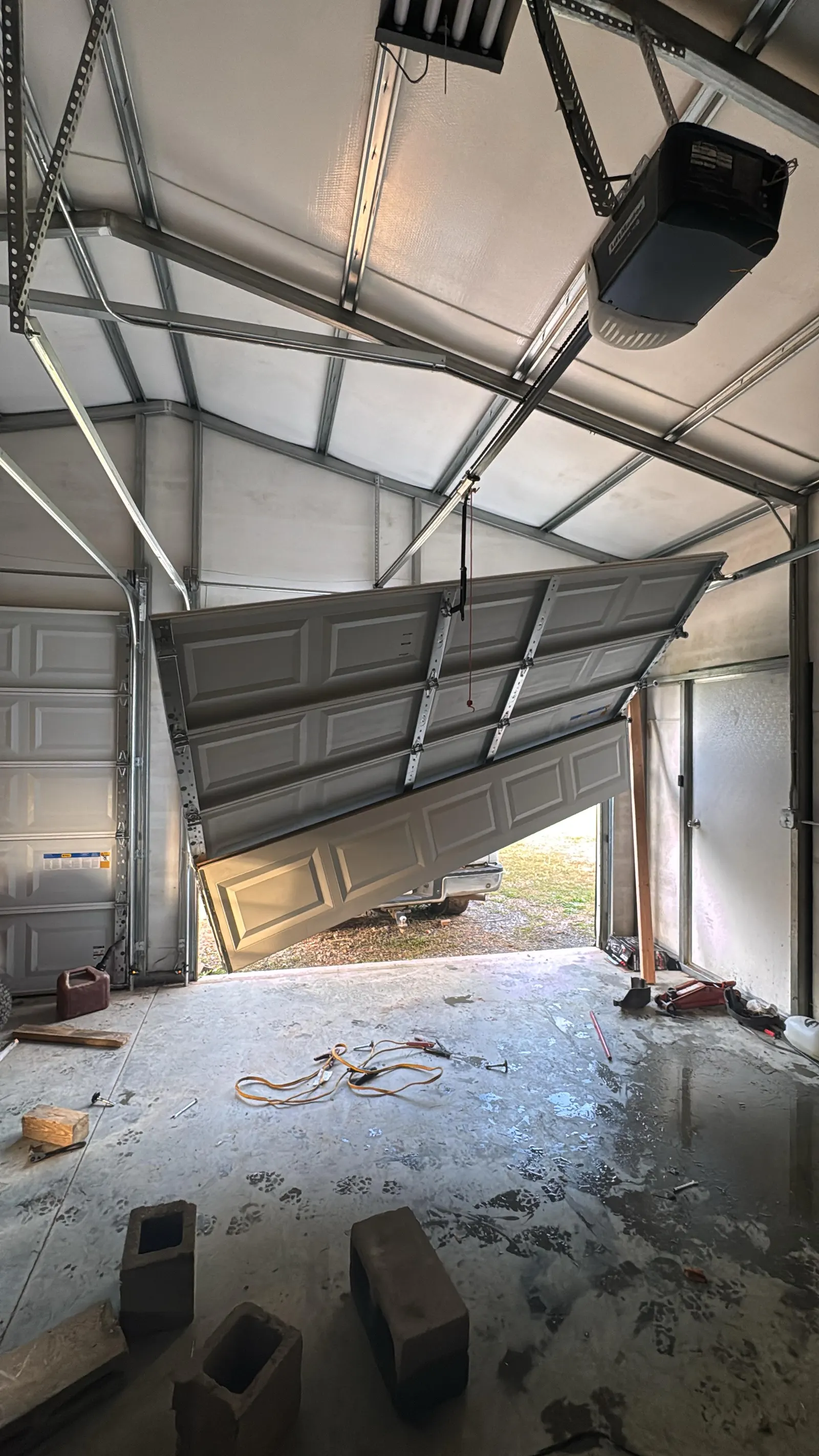
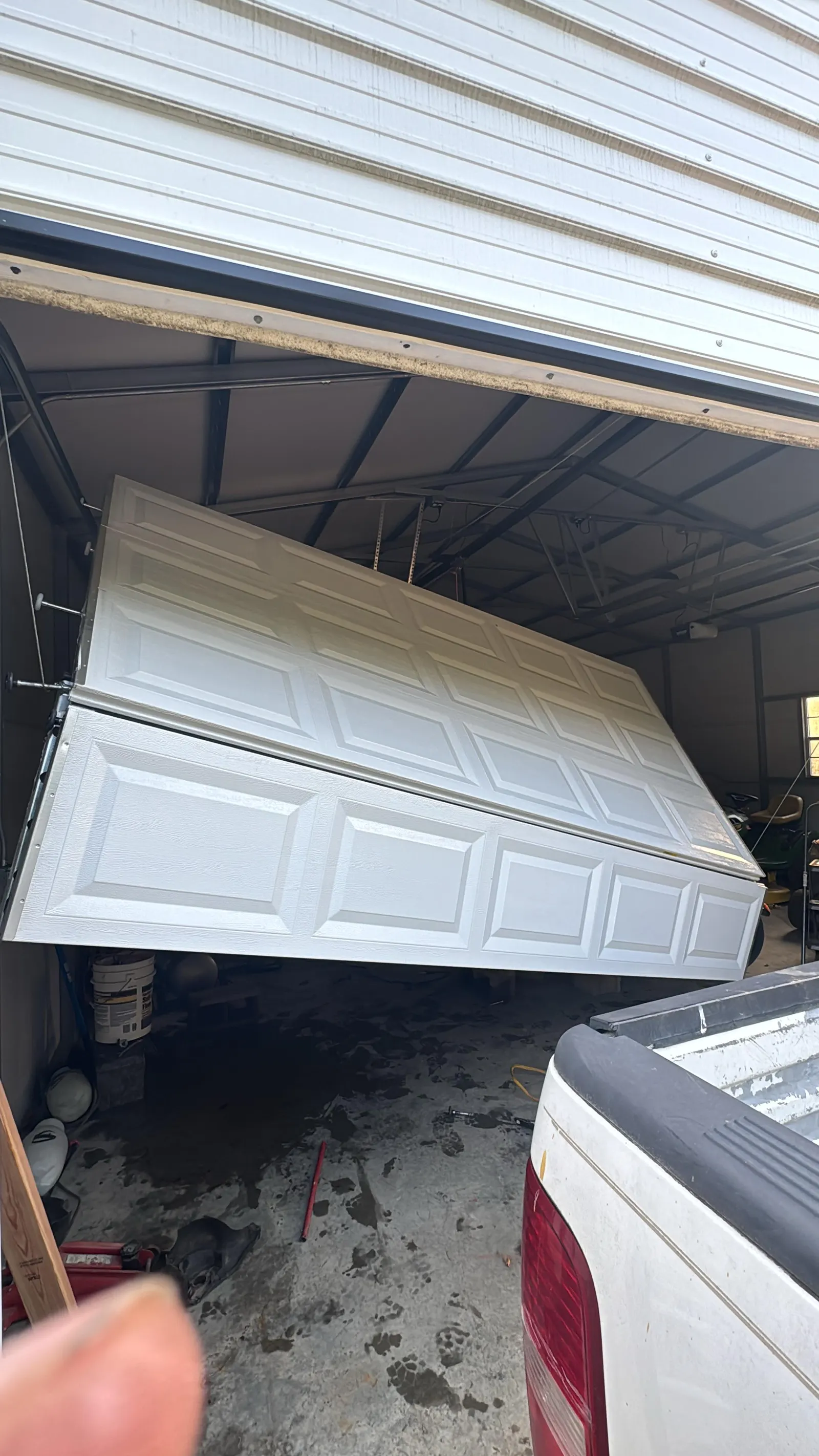
- The door is hanging crooked or rollers are out of the track
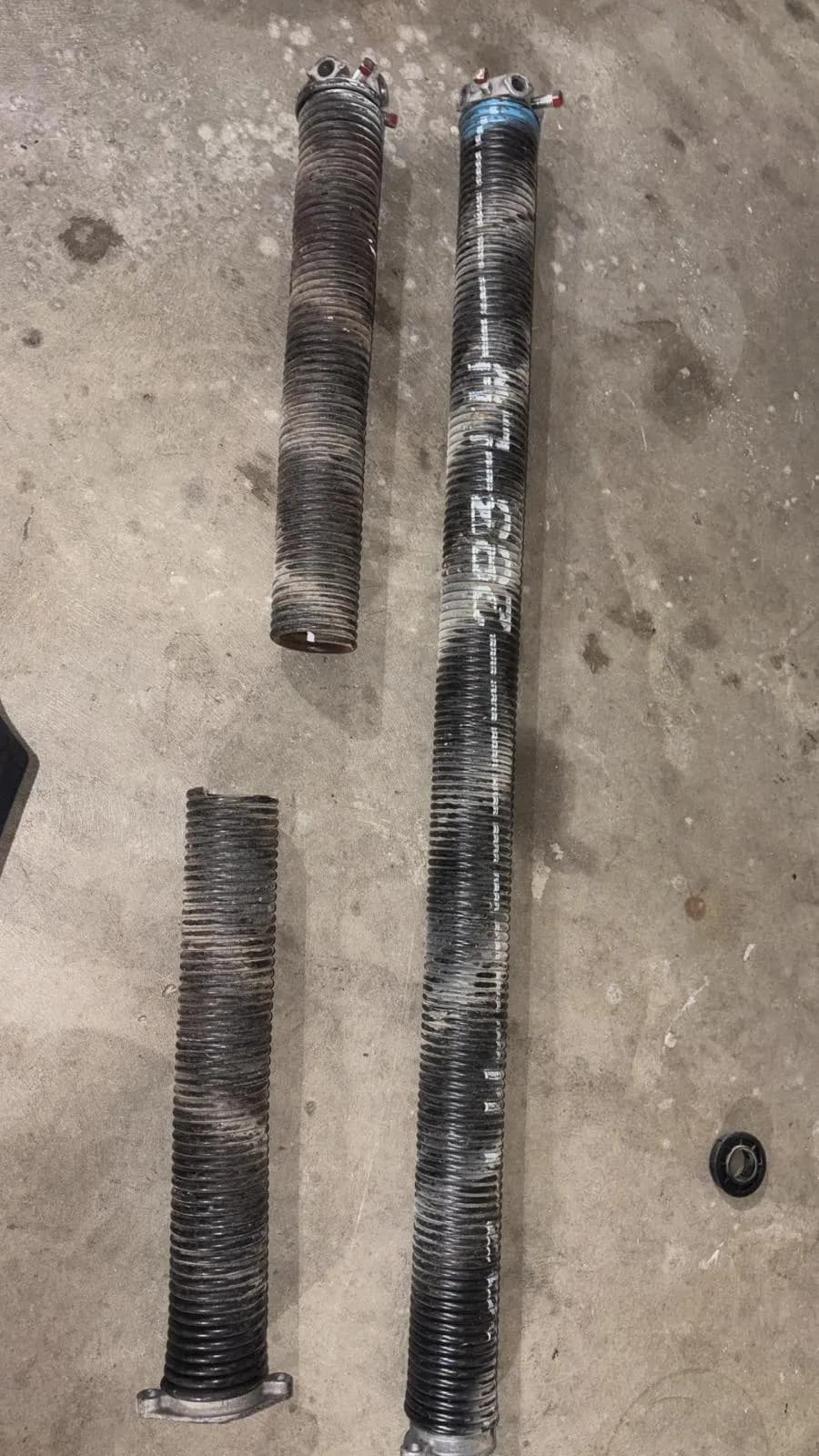
- A spring snapped with a loud bang
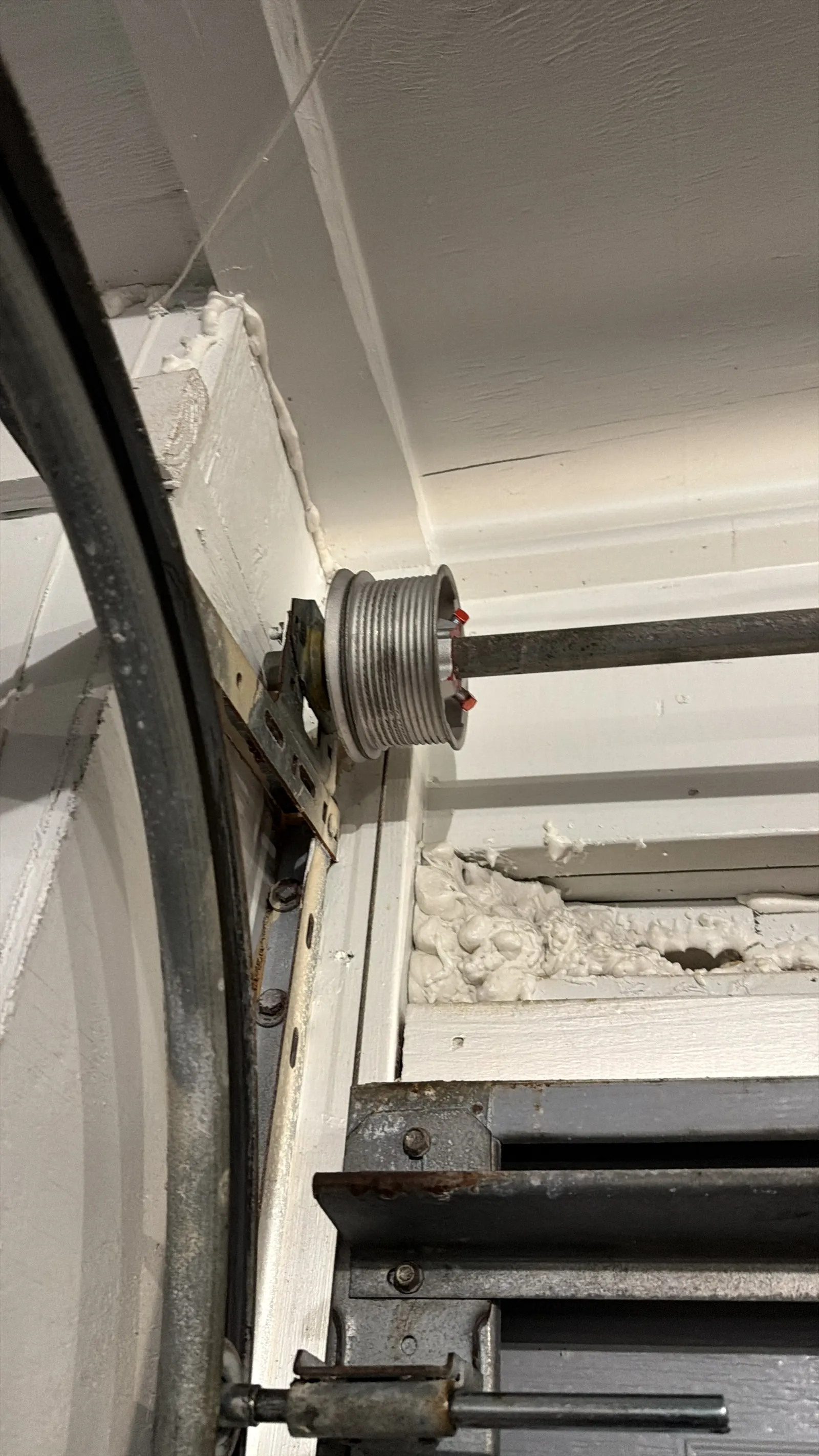
- A lift cable snapped or is hanging loose
- A car hit the door and panels are bent
- The door fell or dropped suddenly when closing
- Storm damage left the door unable to close
First steps in any garage door emergency
Garage door emergencies get worse when people keep pressing the button. Every attempt can pull the door further off track, strip the opener gear, or cause a damaged door to drop. Do these things first, in this order.
When you call, tell us what happened, whether the door is open, closed or stuck partway, and whether your car is inside. A photo from a safe distance is helpful if you can send one. That helps the technician come prepared with the right parts.
- Stop using the opener, remotes and keypad
- Keep children, pets and cars away from the door
- Don't stand under or walk through a partly open door
- Don't pull the red emergency release cord if a spring or cable is broken and the door is partly open
- Unplug the opener if you can reach the plug safely, so nobody runs it by accident
- Call us, describe what you see, and we'll get the earliest available technician scheduled
Garage door stuck open: how to secure your home
A door stuck open leaves your home exposed, and that's stressful, especially at night. First figure out why it won't close. If the opener runs and the door reverses, it may only be the photo-eye sensors. Clean the lenses, make sure nothing blocks the beam, and check that both sensor lights are steady. Holding the wall button down overrides the sensors on many openers and may close the door.
If the door is crooked, a cable or roller is out of place, or you see a broken spring, don't force it down. A damaged door can fall unevenly. In that case, secure the rest of the house: lock the door between the garage and the home, move valuables out of sight, and keep the area well lit.
If the opener simply lost power, see the power outage section below.
Garage door stuck closed with the car inside
When a closed door suddenly won't open, the most common cause is a broken spring. Check above the door for a gap in the coil. If a spring is broken, the door is carrying its full weight with nothing to counterbalance it.
Our honest advice is to arrange another ride and let the technician open the door safely once the spring is replaced. Lifting a broken-spring door by hand is how people get hurt, and it can also bend panels and track.
If the door is closed and the springs look fine, the problem may be the opener. With the door fully closed, it's reasonably safe to pull the emergency release and try lifting the door by hand. If it lifts easily and stays up, you can carefully open it. If it feels very heavy, set it back down and wait. Our broken spring repair page explains what we'll do when we get there.
Garage door off track or hanging crooked
An off-track door is unstable. Rollers have left the track, so the door isn't fully guided, and it may be held up by one cable on one side. Do not run the opener, do not try to push rollers back into the track, and keep people out from under the door.
Off-track doors are usually caused by a car bumping the door, a snapped cable, broken rollers or loose track brackets. In Florida, high winds during storms can also flex and push a door out of its tracks. The repair often involves releasing spring tension, straightening or replacing track, and replacing rollers or cables, which is work for a trained technician only.
See off-track repair for what that job involves, and garage door cable repair if a cable snapped.
What to do when a spring or cable snaps
A snapped torsion spring sounds like a gunshot. A snapped cable is quieter but leaves the door hanging lower on one side. In both cases, the door is no longer safely supported.
If the door is closed, leave it closed. That's the safest position for a damaged door. If it's open or stuck partway, leave it where it is and keep everyone clear. Don't try to lower it, don't stand under it, and don't pull the release cord.
Cold snaps are a common trigger for spring failures. In Midwest winters around Cleveland and Milwaukee, a spring that's already near the end of its life often gives out when the temperature drops sharply overnight. In humid climates, rust does the same damage more slowly. Either way, the safe response is the same: leave the door alone and call.
How to manually open a garage door when the power is out
If your garage door is working normally and the only problem is a power outage, you can usually open it by hand. With the door fully closed, pull the red emergency release cord down and back toward the motor. This disconnects the door from the opener. Then lift the door from the bottom handle, using your legs. A balanced door should lift smoothly and stay open.
To lock the door again, close it by hand and reconnect the trolley as your opener's manual describes, or simply run the opener once power is back and it will usually re-engage.
If the door feels very heavy, stop. That means a spring problem, not just a power problem. Want to avoid this next time? An opener with battery backup keeps working through outages. See our garage door opener installation page.
How we handle urgent garage door calls
We don't promise round-the-clock service or arrival within a set number of minutes, because we'd rather be honest than make a promise we can't keep on every call. What we do: when you call, we treat a trapped car, a door that won't close, or a door off track as urgent and schedule the earliest available technician near you.
Our phone line routes your call to the closest technician in your area, whether that's around Orlando, Nashville, Cleveland or Milwaukee. You can see the areas we cover on our locations page.
If the situation isn't urgent, like a noisy door or an opener that works but is slow, a regular garage door repair visit is usually the better fit.
How the service works
- 1
Make it safe
The technician secures the door first, clamping it in the track or supporting it so it can't fall while they work.
- 2
Find the cause
They inspect springs, cables, drums, rollers, track and the opener to see what failed and what else was damaged.
- 3
Quote the repair
You get a clear explanation and a quote before work begins, including any parts that should be replaced at the same time.
- 4
Repair and rebalance
Broken parts are replaced, the door is put back in its track if needed, and springs are set to balance the door.
- 5
Test before leaving
The door is run through several cycles, and the auto-reverse and sensors are tested so you can use it safely again.