
Garage Door Won't Open? 10 Common Causes and What to Check
By the H&D Garage Door team · Updated
Why won't my garage door open?
The most common reason a garage door won't open is a broken spring. The springs do the heavy lifting, so when one snaps the opener can't raise the door on its own. After that, the usual suspects are a power problem at the opener, a dead remote or a lock setting, a door that has been disconnected from the opener, and a door that is physically locked, frozen or jammed.
Pay attention to what happens when you press the button. Silence points to power or controls. A hum or a click with no movement points to the opener or a heavy door. A door that lifts a few inches and stops points almost always to the springs. Each of these is covered below.
Is a broken spring keeping the door shut?
A spring that has snapped turns a balanced door into dead weight. Many openers will strain, lift the door a few inches, then stop and reverse. Some won't move it at all.
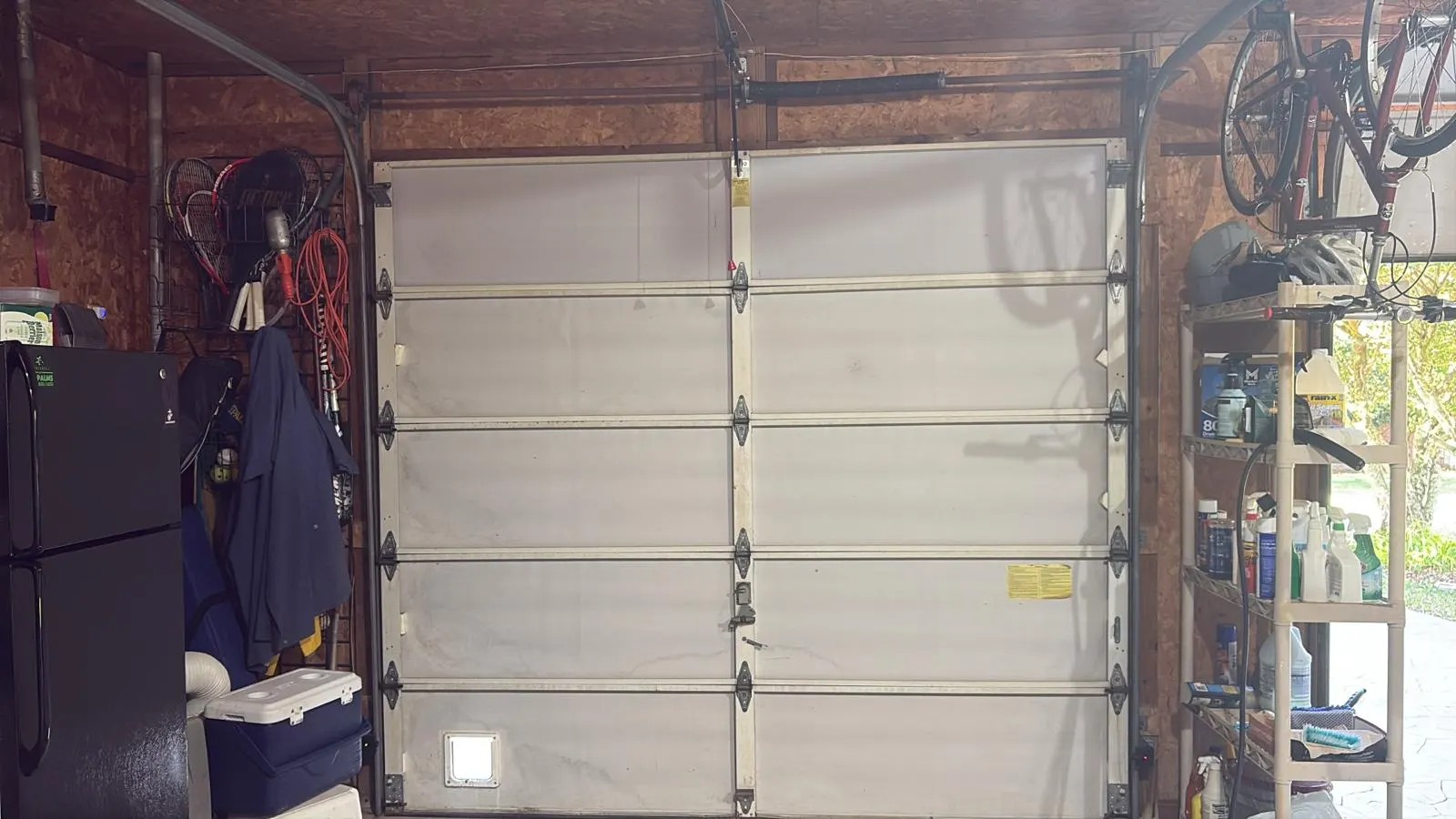
Look up at the bar above the door from a safe spot. A torsion spring with a visible gap of a couple of inches in its coils is broken. On doors with extension springs along the side tracks, a broken spring may hang loose or be missing. You may also have heard a loud bang from the garage earlier, which is often when it happened.
Don't try to lift the door by hand or with the opener once you suspect a spring. The door can weigh well over a hundred pounds without spring help. Our guide to the signs of a broken spring walks through what to look for, and broken spring repair is the fix.
Does the opener have power?
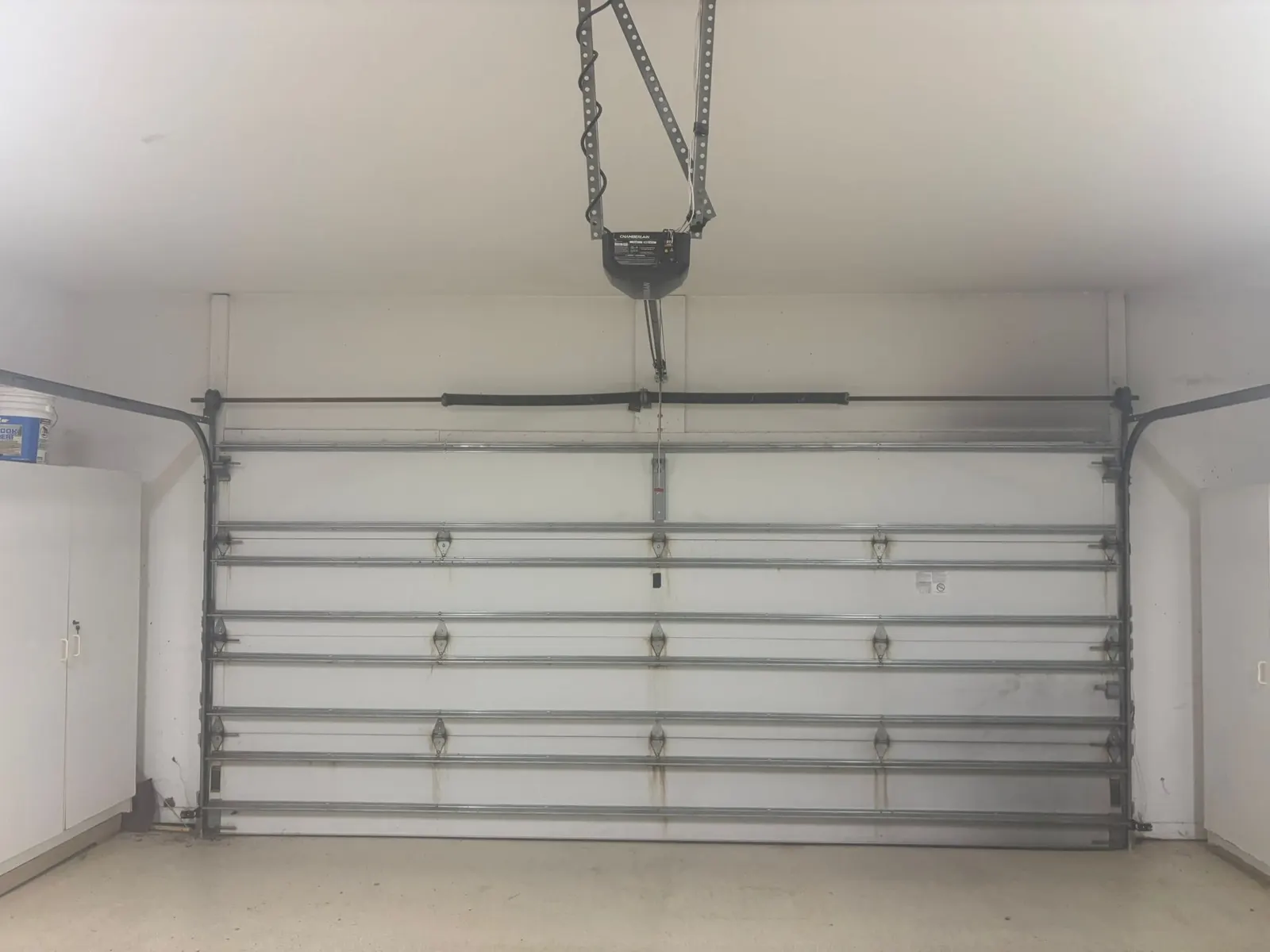
If nothing happens at all, no light and no sound, start with power. Check that the opener's cord is plugged into the ceiling outlet. Then check your breaker panel and any GFCI outlet in the garage, since a tripped GFCI on a shared circuit can cut power to the opener even when the rest of the garage works.
A storm or power surge can also damage the opener's logic board. If the outlet has power but the opener stays dark, the board or the power supply inside the unit may have failed. That is a repair for a technician.
Is it the remote, the keypad or a lock setting?
Try the wall button. If the wall button opens the door but the remote does not, replace the remote battery first. If a new battery doesn't help, the remote may have lost its programming. Re-pairing a remote with the opener's learn button is a safe task your owner's manual explains step by step.
If neither the wall button nor the remote works, look at the wall control. Many LiftMaster and Chamberlain wall controls have a lock or vacation mode that blocks remotes. A small flashing light or a lock symbol on the control is the clue. Turning it off restores normal operation. A keypad that stops working is often just a dead battery behind its cover.
Has the door been disconnected from the opener?
Every opener has a red emergency release cord. When someone pulls it, the trolley lets go of the door so it can be moved by hand. If the release was pulled during a power outage and never reset, the opener will run but the door will stay put. You'll hear the motor and see the chain or belt move without the door following.
On most models the trolley reconnects the next time the opener runs, or after a simple step described in your manual. Only reconnect with the door fully closed and the springs intact. Never pull the release while the door is open, because a door with a weak or broken spring can drop fast.
Is the door locked, frozen or jammed?
Some doors have a manual slide lock on the inside of a lower section. If it is engaged, the opener will strain against it. Slide it open and try again. Doors in snowy areas can also freeze to the slab overnight, so the opener can't break the bottom seal loose. Clear ice along the bottom edge carefully, with no metal tools against the seal.
Objects can jam a door too. A bike handlebar or shelf in the track path, or a dented track, can stop the rollers cold.
What if the opener hums or clicks but the door doesn't move?
A humming motor with no movement often means a stripped drive gear, a failed start capacitor or a broken chain or belt. A click with nothing else can mean a relay or board problem. In all of these, the door itself may be fine and only the opener needs work, which is a job for an opener technician.
The exception is a heavy door. If the springs are broken, the opener hums because the load is too much for it. Look at the springs before blaming the motor. If your opener also flashes its lights or shows an error code, our guide to LiftMaster and Chamberlain error codes explains what the pattern means.
Why does the door start to open and then go back down?
If the door lifts a short way and then reverses or stops, the opener has sensed more resistance than it expects. On the way up, the safety sensors aren't usually involved, so the cause is almost always the load. A broken or weak spring is first on the list. A binding roller, a bent track section or a frozen bottom seal that lets go partway can also do it.
Less often, the opener's travel limit or force setting has drifted, especially after a power surge or after someone has been working on the unit. Those settings decide how hard the opener pushes before it gives up, and they tie directly into the door's safety reversal. Turning up the force so a stubborn door will open hides the real problem and can make the door dangerous to anyone standing under it. Let a technician find out why the door is hard to move before changing anything.
Could a cable or the track be the problem?
A cable that has snapped or slipped off its drum leaves one side of the door unsupported. The door may hang crooked and bind in the track so it won't move either way. A roller that has jumped out of the track does the same thing.
These are among the most dangerous conditions a door can be in, because the remaining spring tension is uneven. Don't run the opener and don't try to force the door. Unplug the opener and keep people and cars clear.
What can you safely check before calling?
These checks keep you away from springs, cables and anything under tension. If none of them gets the door moving, stop there.
- Confirm the opener is plugged in and check the breaker and any GFCI outlet
- Try the wall button, then a remote with a fresh battery
- Turn off lock or vacation mode on the wall control
- Check whether the manual slide lock on the door is engaged
- Look for ice, debris or objects at the bottom edge and along the tracks
- From a safe distance, look for a gap in the spring or a loose cable
When should you call for repair?
Call if you see a broken spring or loose cable, if the door is crooked or off track, if the opener hums or clicks without moving the door, or if the simple checks don't help. A door stuck shut can also trap a car you need, so it's worth calling sooner rather than later.
Our garage door repair technicians work on all major brands. In Middle Tennessee, see our Nashville garage door repair page. Call (888) 754-4130 and we'll schedule the earliest available visit.