
Broken Garage Door Spring: Signs, Sounds and What to Do
By the H&D Garage Door team · Updated
How do you know if a garage door spring is broken?
The clearest sign of a broken garage door spring is a gap in the coil. On a torsion spring, the one mounted on the bar above the door, a break leaves a space of a few inches where the coils have separated. Other common signs are a loud bang from the garage, a door that suddenly feels very heavy, an opener that lifts the door a few inches and quits, and a door that sits crooked or slams shut.
You don't need to touch anything to confirm it. Most broken springs are easy to see from the floor if you know where to look. Once you've seen one, leave the door alone until it has been repaired.
What does a broken garage door spring sound like?
Most people hear it before they see it. A torsion spring that snaps releases its stored energy all at once, and the sound is often compared to a gunshot or a firecracker going off inside the garage. It can happen while the door is moving, but it often happens while the door is sitting closed and nobody is near it.
If you heard a bang and nothing in the garage fell over, check the springs before you press the remote. Running the opener against a broken spring can strip its gears or pull the door out of line.
Extension springs are usually quieter when they fail, especially if safety cables catch them. You might hear a twang or a clatter instead of a bang, or notice nothing until the door starts lifting crooked.
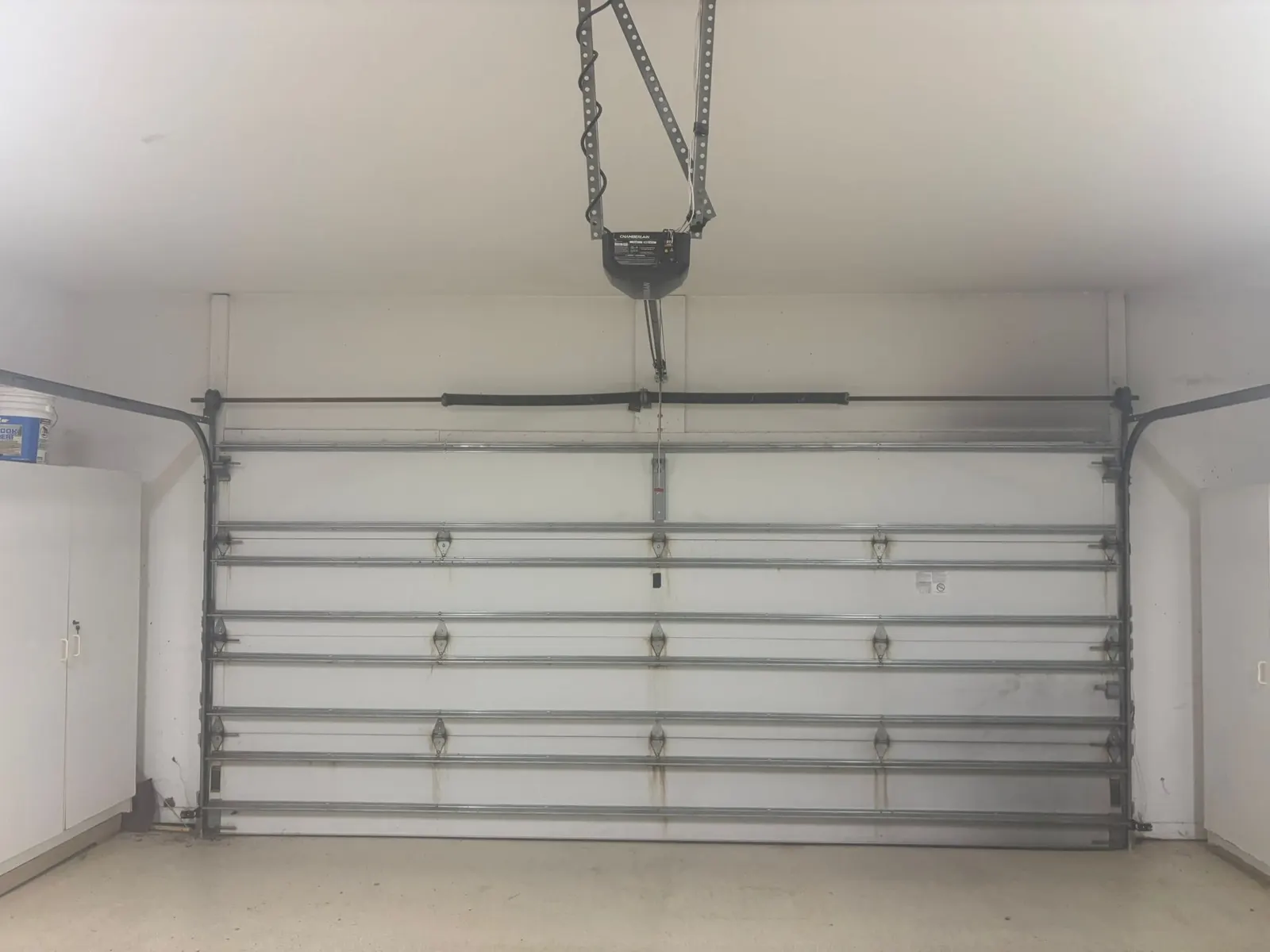
What does a broken torsion spring look like?
Stand inside the garage with the door closed and look at the metal shaft above the door. Most residential doors have one or two torsion springs on it. An intact spring is a tight, continuous coil. A broken one has a clear gap, often two to three inches, and the two halves may have spun apart on the shaft.
On a two-spring door, one spring may break while the other stays whole. The door may still move a little, but it is badly out of balance and the remaining spring is carrying a load it wasn't designed for.
How can you tell if an extension spring is broken?
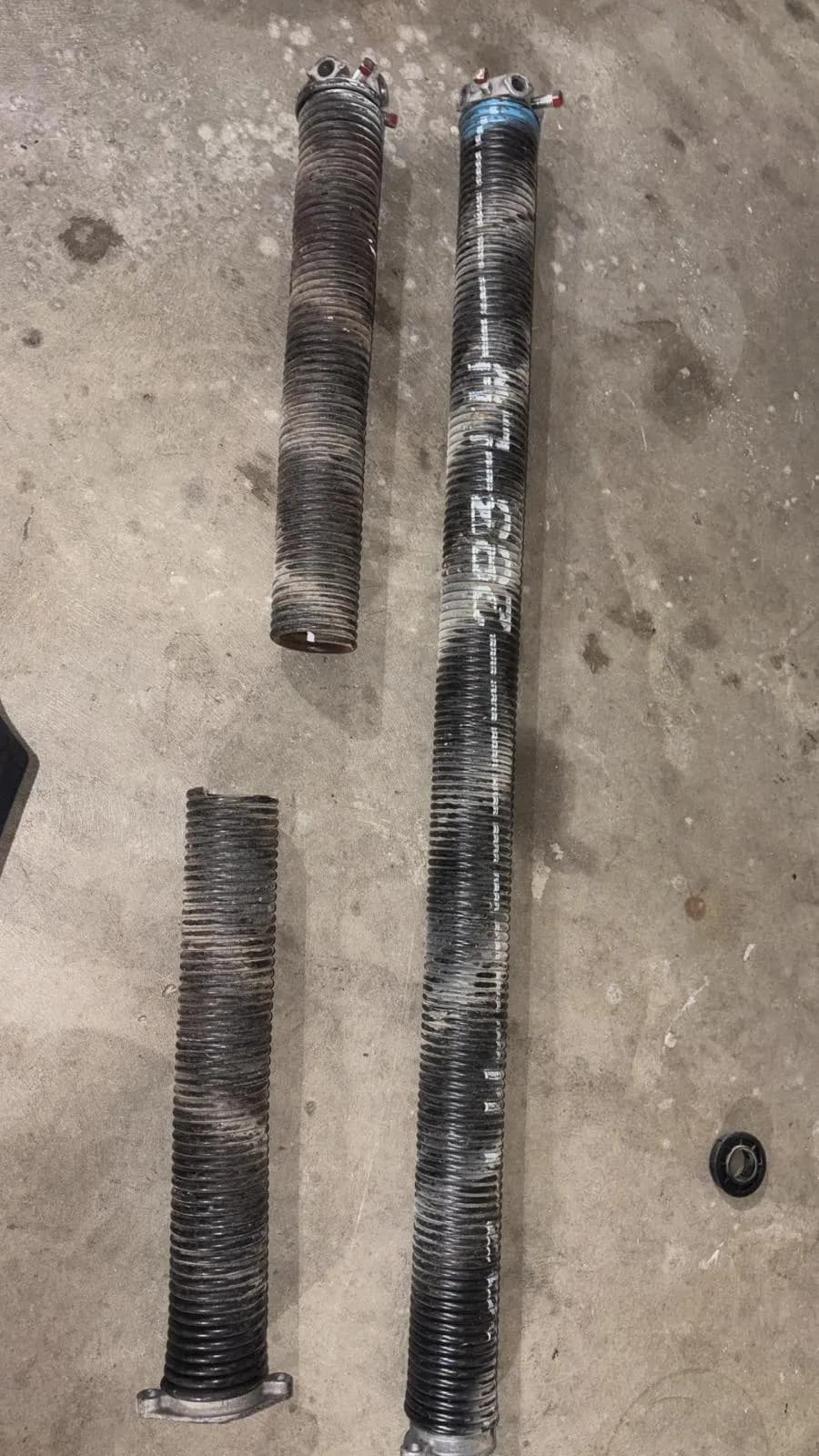
Extension springs run along the horizontal tracks on each side of the ceiling and stretch when the door closes. A broken one may hang down, lie on the floor, or dangle from its safety cable, which is a cable that runs through the middle of the spring to catch it when it breaks.
Because extension springs work in pairs, one broken spring makes the door lift unevenly. The side with the good spring rises first and the door tilts in the opening. If you don't see a safety cable through your extension springs, mention it when you call. A spring that breaks without one can whip across the garage.
What other signs point to a broken spring?
Even if you can't see the springs well, the door's behavior gives it away.
- The opener lifts the door a few inches, then stops or reverses
- The opener hums or strains but the door barely moves
- The door feels like dead weight when you try it by hand
- The door closes much faster than normal or slams the floor
- The door hangs lower on one side or binds in the tracks
- Lift cables look slack, loose or have come off the drums
- The top section bends or buckles as the opener pulls on it
Can a spring fail without a visible gap?
Yes. A spring doesn't have to snap in two to stop doing its job. Torsion springs lose some of their tension over time, and a tired spring may leave the door feeling heavier than it used to without any gap in the coil. A crack can also start near the cone at the end of the spring, where it is hard to see from the floor.
Extension springs can stretch out permanently. A stretched spring looks longer and more open between the coils than its partner on the other side, and the door may drift down when left partway open. If the door feels heavy, won't stay put when lifted halfway, or the opener has started to strain, treat the springs as suspect even if nothing looks broken.
What happens if you keep using the door with a broken spring?
It usually gets more expensive and more dangerous. The opener is built to guide a balanced door, not lift its full weight, so it strains on every cycle. Plastic drive gears strip, belts and chains stretch, and the motor can burn out. The top section, where the opener arm pulls, can bend or crack under the load.
The cables are at risk too. With the spring gone, the cables can go slack, jump off their drums and let the door drop or tilt in the opening. On a two-spring door, the remaining spring takes the whole load and is more likely to break as well. One broken spring can quickly turn into a spring, cable and opener repair.
What should you do right after a spring breaks?
First, stop using the door. Don't press the remote again to see what happens, and ask everyone in the house to leave it alone. Unplug the opener so nobody runs it by accident.
If the door is closed, leave it closed. If it's open, keep people, pets and cars out from under it, and don't pull the emergency release. With a broken spring, a released door can come down hard and fast. If a car is trapped inside, wait for a technician rather than lifting the door yourself.
Then call for broken spring repair. If the door is stuck open and the house can't be secured, or a car you need is trapped, that is a good reason to ask for emergency garage door repair.
Why shouldn't you replace a broken spring yourself?
Garage door springs hold enough energy to lift a door that can weigh a couple hundred pounds. Replacing a torsion spring means unwinding and rewinding that tension with steel winding bars, and the spring on the other side of the shaft is still loaded. A slip can break a hand, a wrist or a jaw. Extension springs carry similar risks when they are stretched.
There's also the matter of fit. Springs are sized to the door's weight and height, and the wrong spring leaves the door out of balance, which wears out the opener and the new spring early. A technician also checks the cables, drums and bearings, since a spring break often damages them.
Should you replace both springs if only one broke?
On a door with two springs, replacing both at once is usually the better choice. The springs were installed together and have the same number of cycles on them, so the second one is often close to failing too. A matched pair also keeps the door balanced side to side.
Our guide on how long garage door springs last explains how cycle ratings work. If cold winters are part of the story, our Cleveland broken spring repair page covers what freezing mornings do to aging springs. Call (888) 754-4130 to schedule.