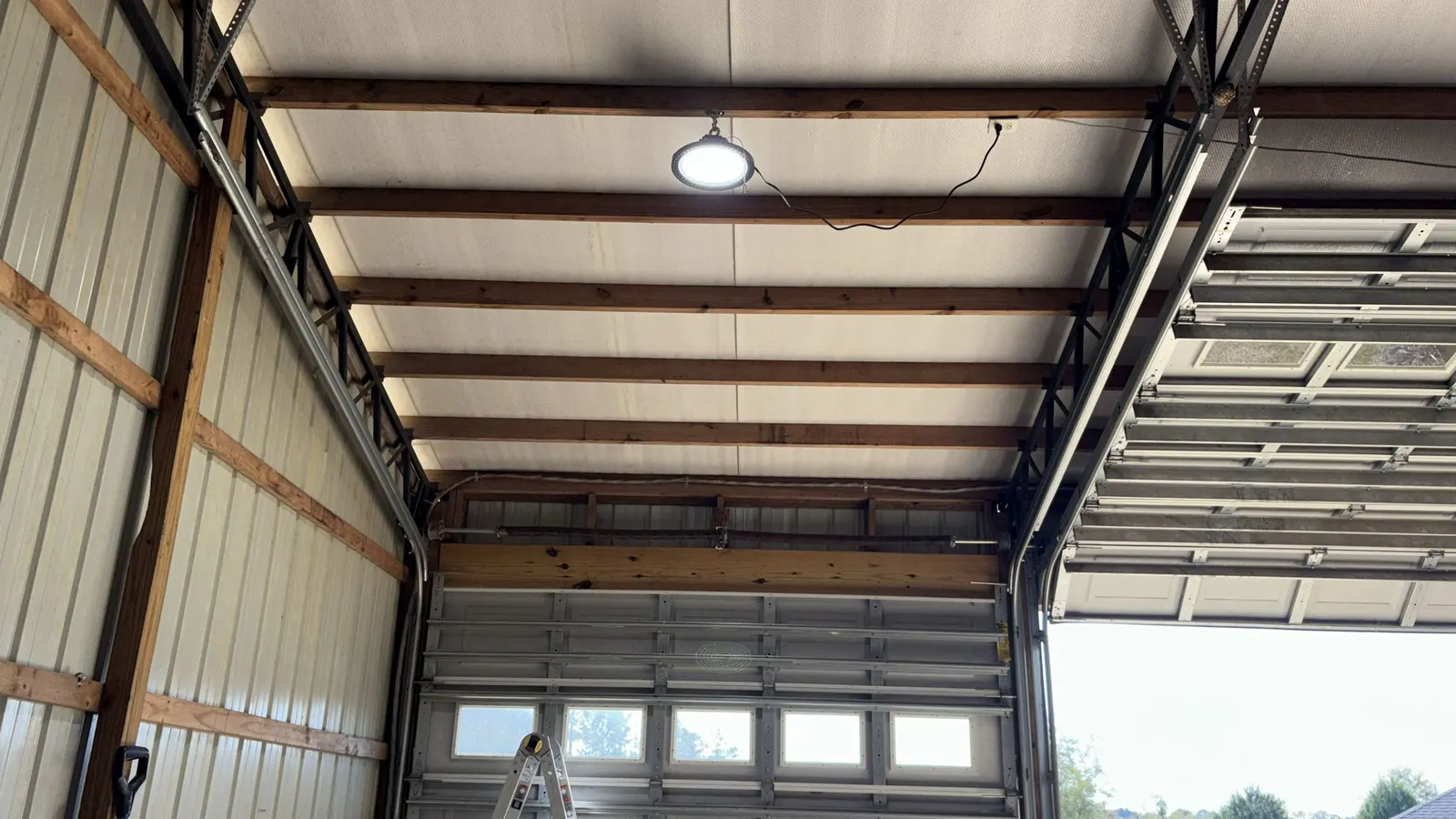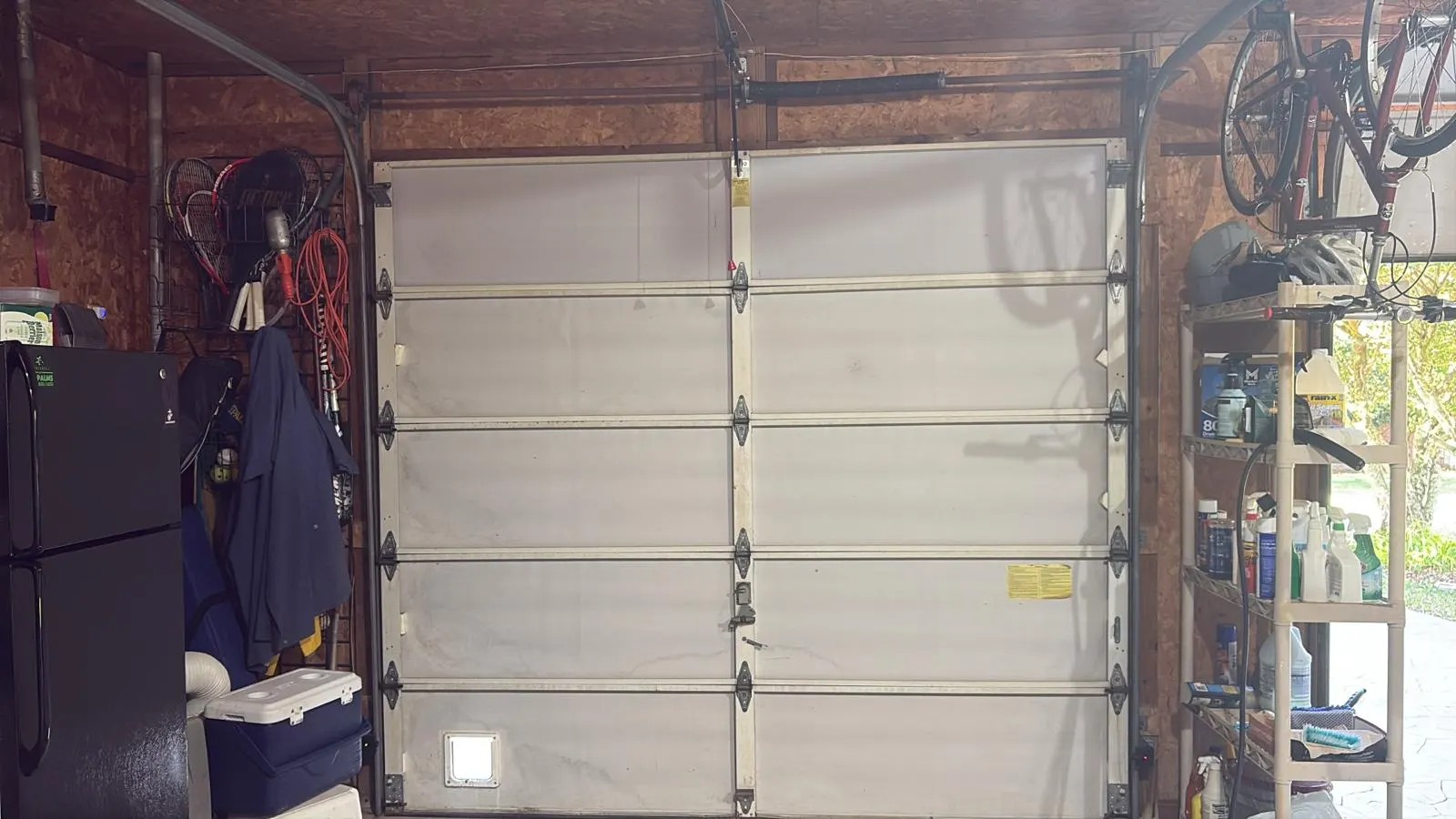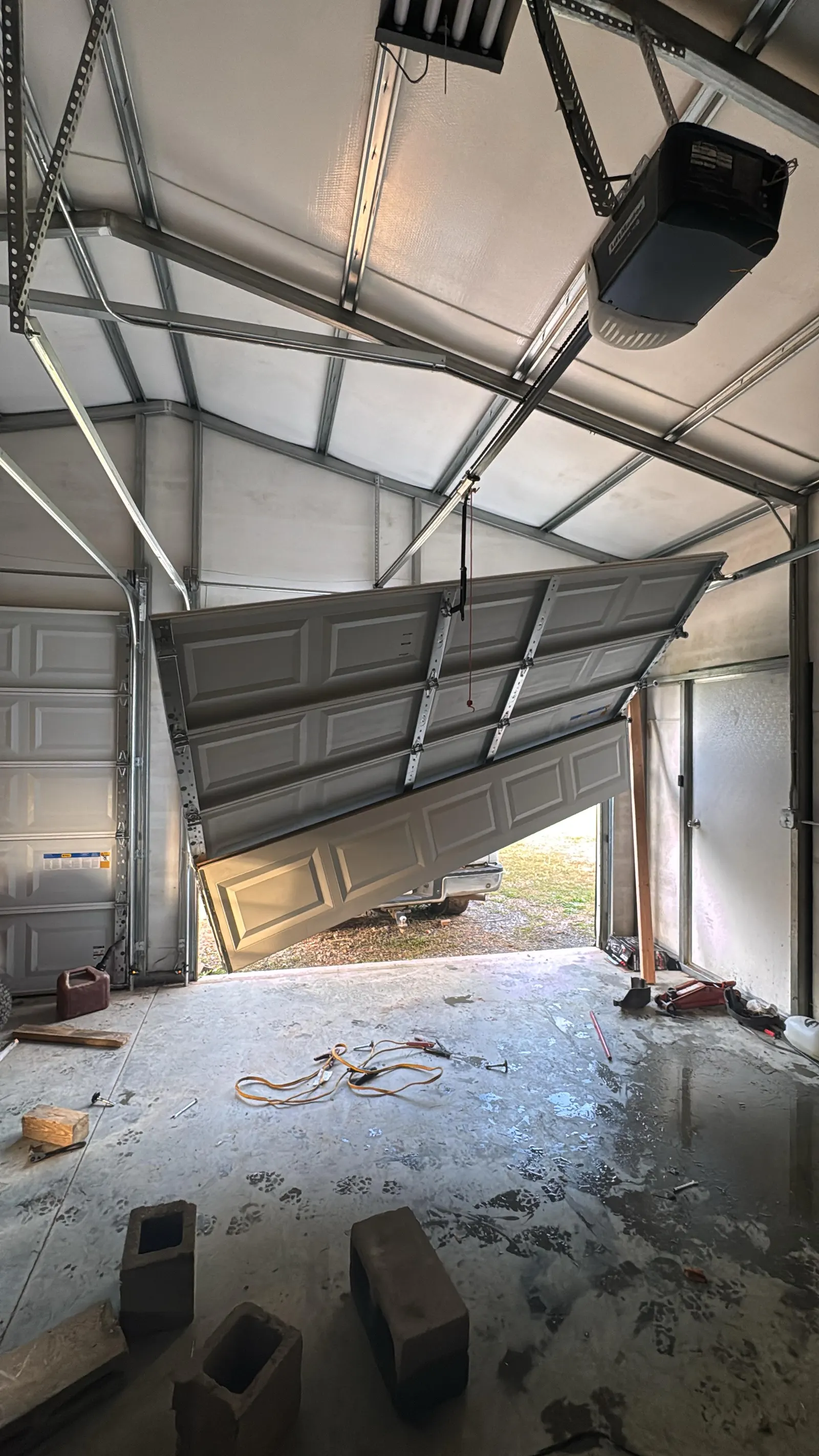
Signs you need commercial repair
- A door that won't open or close, or stops partway
- Damage from a forklift, truck or trailer
- Rolling steel curtain slats that are bent, jammed or binding in the guides
- Operator humming, tripping or not responding to controls
- Doors drifting down or not staying open
- Frayed cables, broken springs or loud banging
- Damaged dock seals or weatherstripping letting in weather
- Photo eyes, edge sensors or safety devices not working
- A door that can't lock or secure the building
Commercial doors we work on
Commercial openings come in more shapes than residential ones, and each type fails in its own way. We service:
- Sectional overhead doors: steel, insulated and full-view doors on shops, warehouses and service bays
- Rolling steel doors: coiling curtain doors on warehouses, storage units and storefronts
- High-lift and vertical-lift doors: doors that rise along the wall before turning back, used where ceiling space is needed for racks or equipment
- Loading dock doors: sectional or rolling doors at truck docks, plus their seals and weatherstripping
- Commercial operators: trolley, jackshaft and hoist operators, plus controls and safety devices
Why commercial door repair is different
Commercial doors are bigger and heavier, and they cycle many more times a day than a home door. A warehouse door might open and close dozens of times in one shift. That means springs, cables, rollers and operators wear on a much faster clock, and the parts are built heavier to match.
The stakes are different too. A broken bay door can stop shipping and receiving, leave inventory exposed, or force staff to work around an unsafe opening. When you call, tell us how the door is affecting operations, whether the building can be secured and whether the door is stuck open or shut. That helps us plan the visit and bring the right parts. If it can't wait, our emergency garage door repair page explains how we handle urgent calls.
Rolling steel door repair
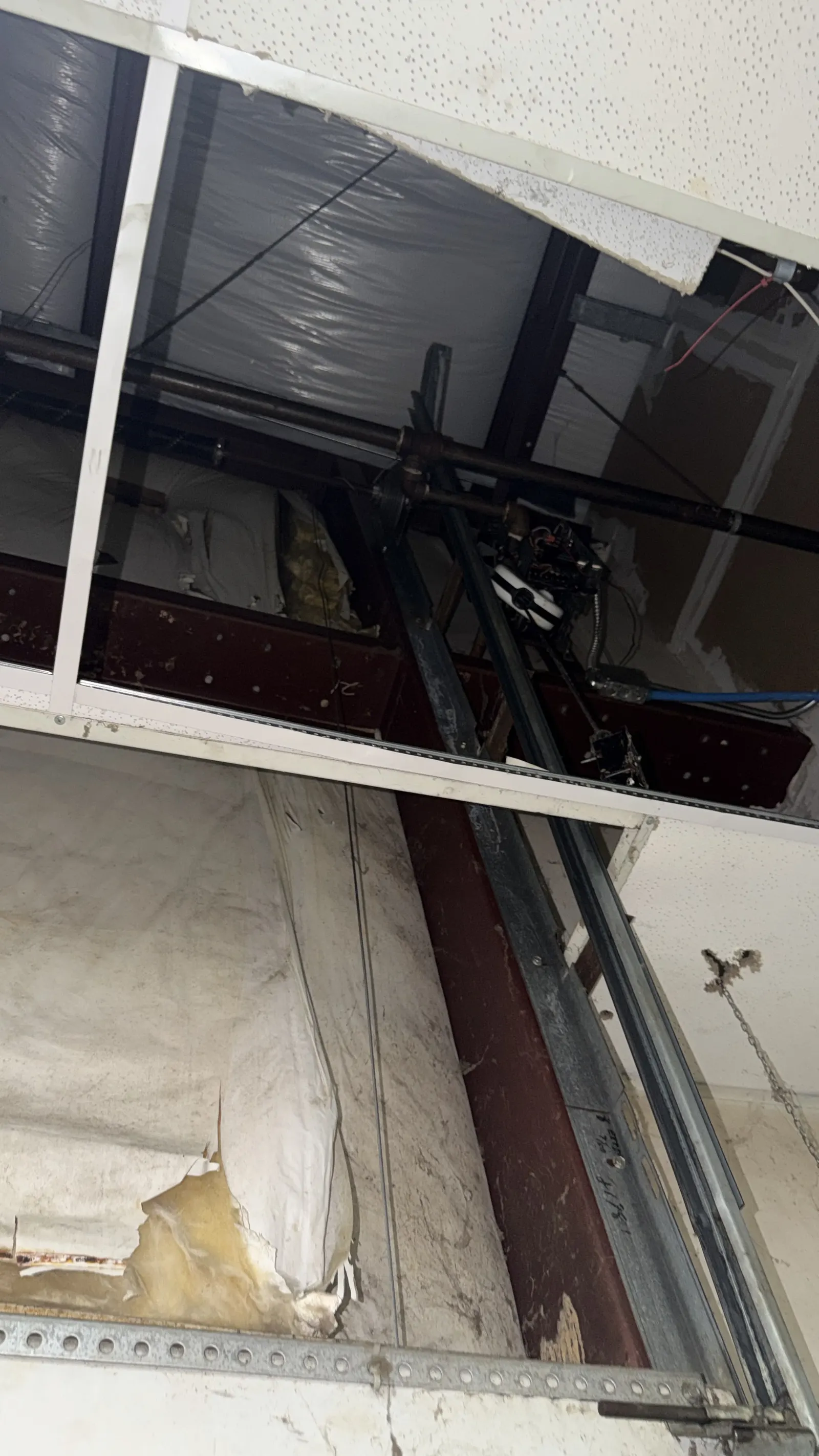
Rolling steel doors coil a curtain of interlocking slats onto a barrel above the opening, with springs inside the barrel to counterbalance the weight. Common problems include slats bent by impact, curtains that bind or come out of the guides, worn bottom bars, spring trouble inside the barrel, and operators or hand chains that no longer lift smoothly.
Damaged slats can often be replaced without changing the whole curtain. Guides that were hit by a forklift can be straightened or replaced. Spring work on a rolling steel door is high-tension work and is always done by a technician with the door secured.
High-lift doors and loading docks
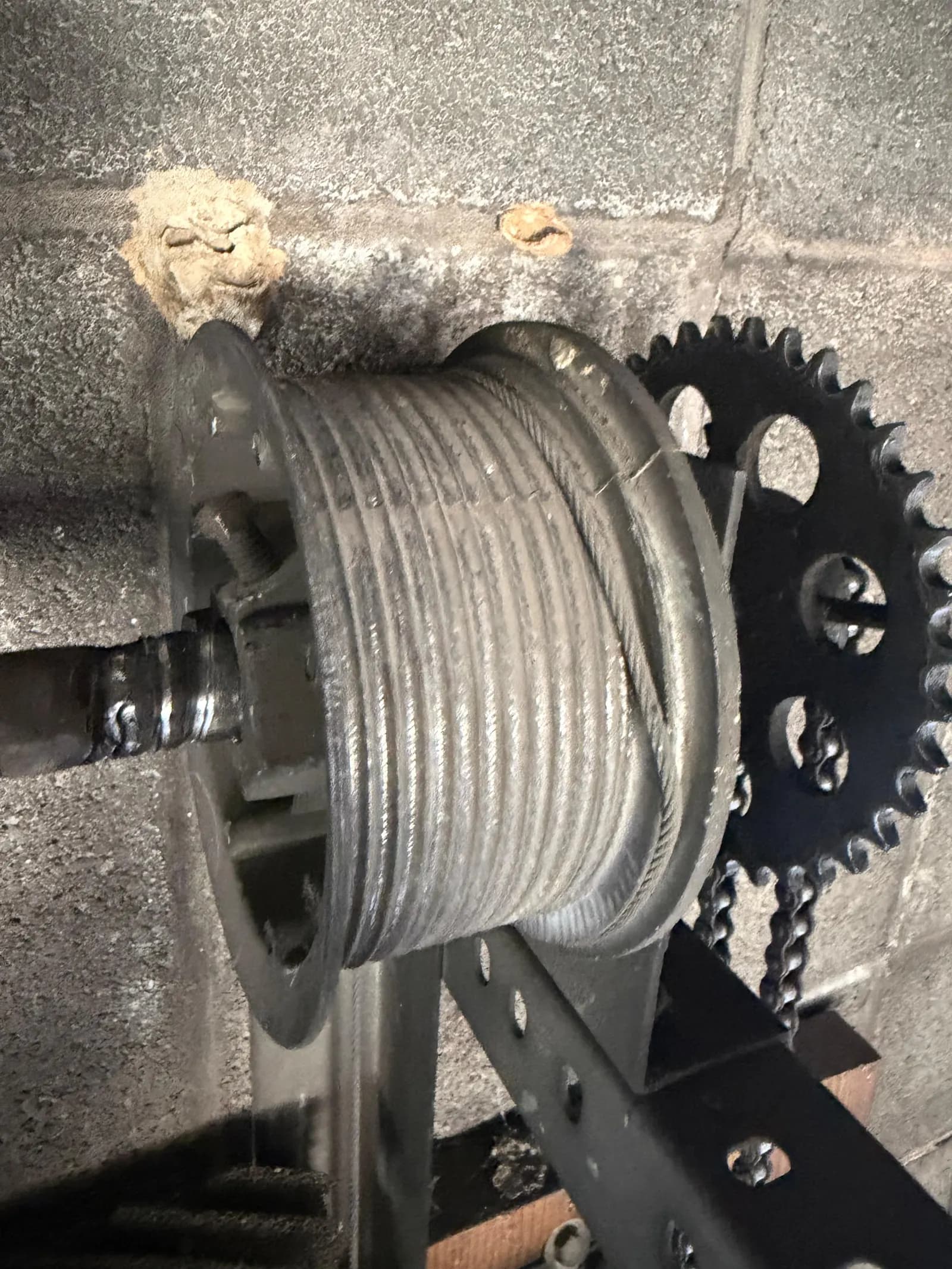
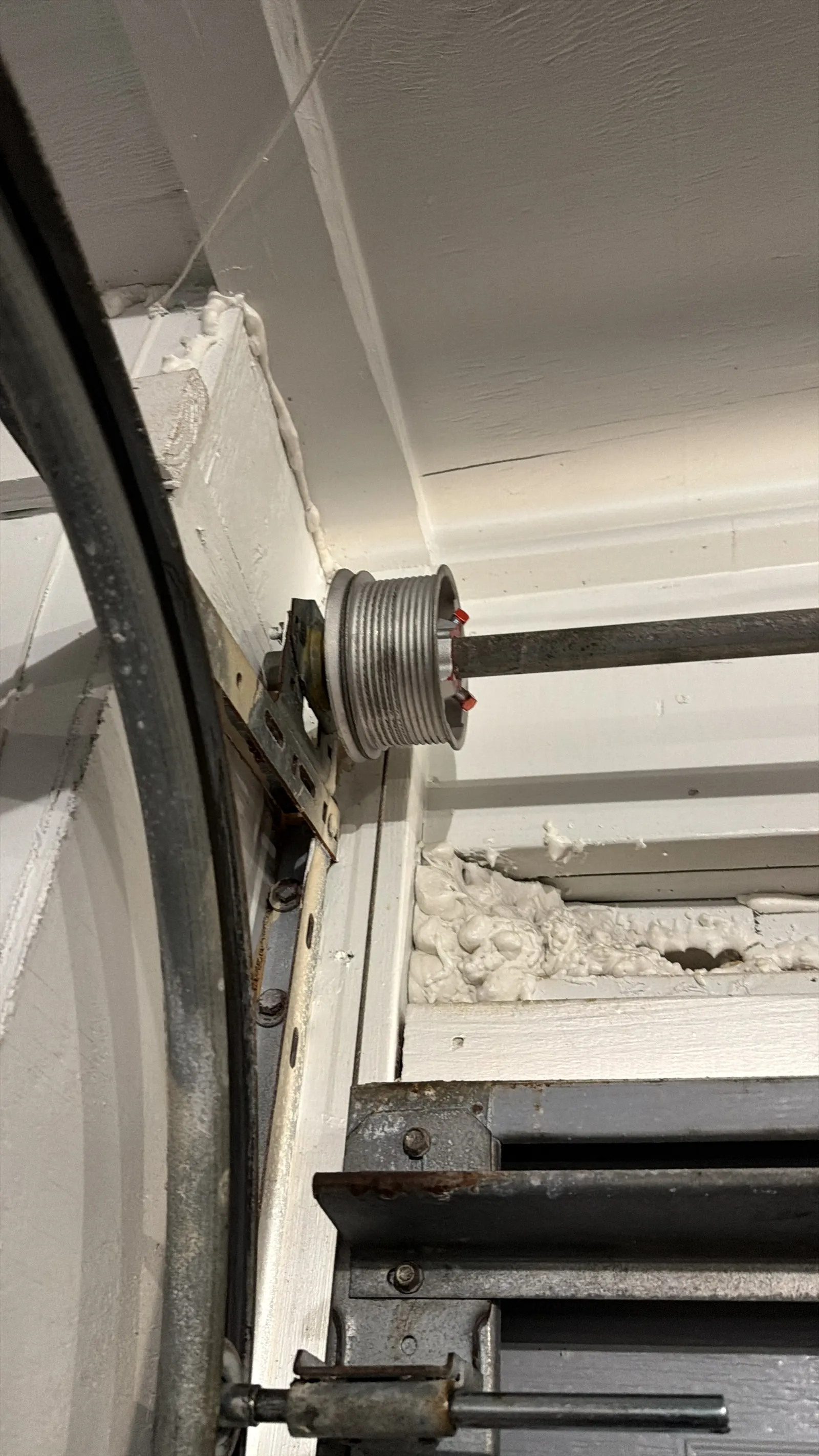
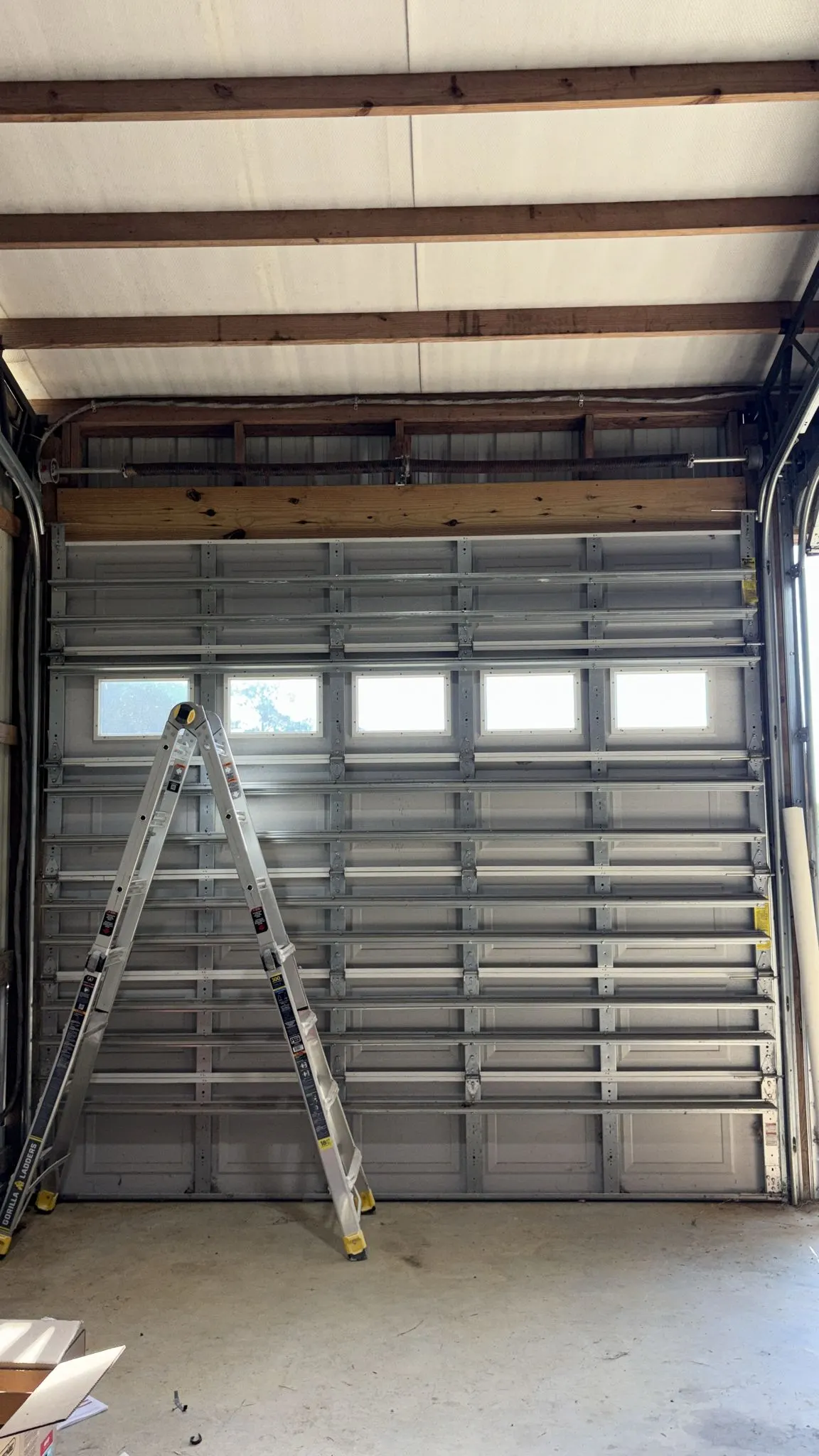
High-lift doors use longer vertical tracks, larger cable drums and special spring setups so the door rises high before turning back toward the ceiling. That extra length means more cable, more tension and more ways for things to go wrong if the system is out of balance. We check drums, cables and track carefully on these doors, because a cable fault on a tall door is a serious hazard. Our garage door cable repair page covers why.
At loading docks, the biggest problems are impact damage and weather. Trucks and forklifts bend bottom sections and track, and torn dock seals let rain, heat or cold into the building. We repair the door itself and the seals and weatherstripping around it.
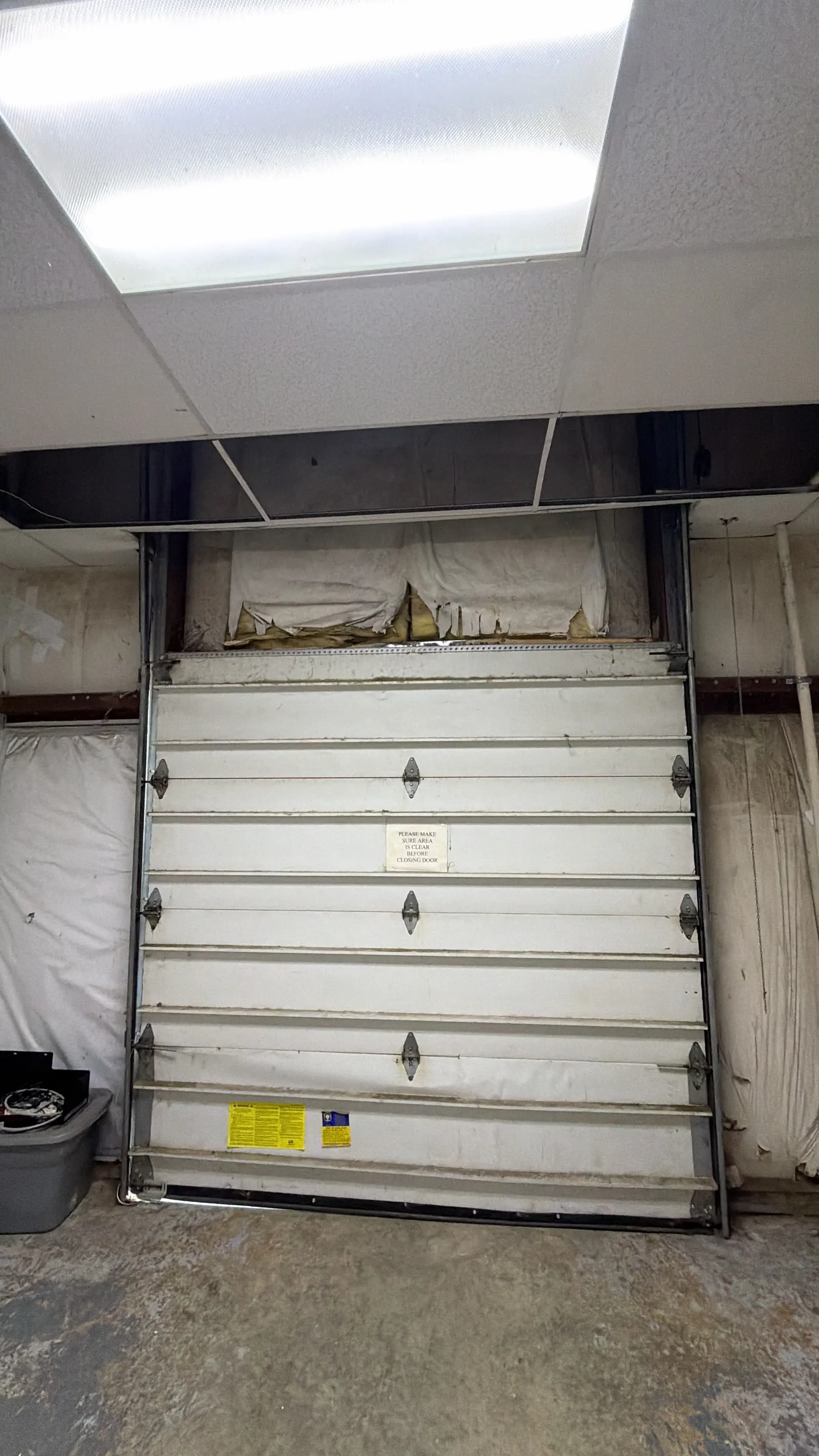
Commercial door operators and safety devices
Most commercial doors run on an operator, and an operator problem can look like a door problem. We troubleshoot motors, limit settings, control stations, wiring and safety devices such as photo eyes and reversing edges. We work on all major brands.
Safety devices matter more in a workplace, where staff, customers and vehicles move through the opening all day. A door that doesn't reverse, or a sensor that someone has bypassed, is a risk to people and a liability for the business. We'll test them on every visit and tell you plainly if something isn't working.
Preventive maintenance for commercial doors
The easiest repair to manage is the one that never turns into a breakdown. Busy commercial doors benefit from scheduled maintenance visits, with the schedule set by how often each door cycles and how hard the conditions are. Each visit covers balance, springs, cables, rollers, track, operators and safety devices, plus lubrication and hardware adjustments.
Many businesses with several doors prefer a planned maintenance arrangement so every door is checked on a regular schedule and problems are caught early. We set those up based on your doors and operations; ask us when you call and we'll walk through what makes sense for your site. Homeowners can find the residential version on our garage door maintenance page.
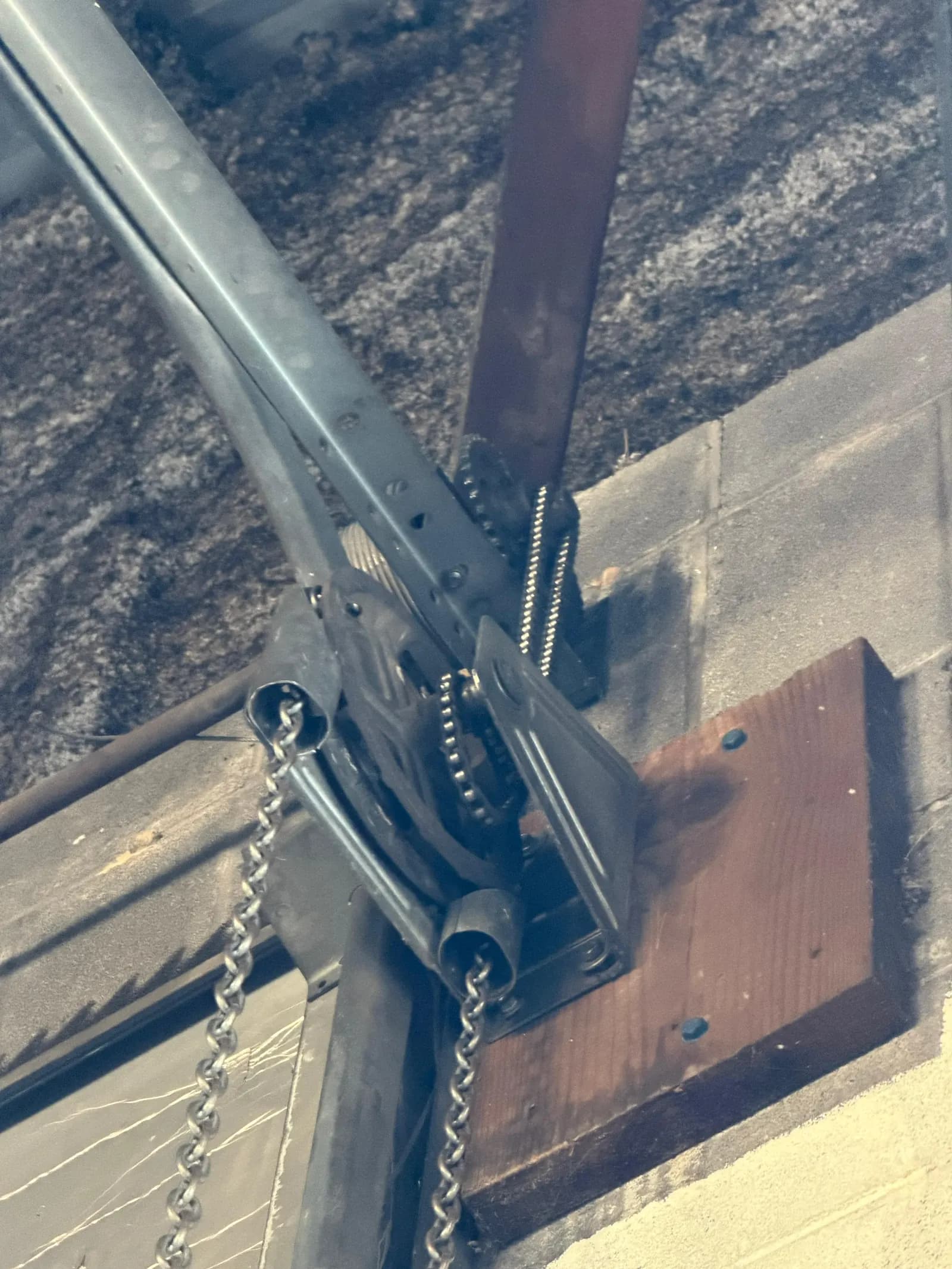
What affects the cost of commercial garage door repair?
Every commercial door is different, so we quote after seeing it. The main factors are the door type and size; the part that failed (springs, cables, slats, panels, operator); how many cycles the door runs and the grade of parts it needs; impact damage to track, guides or sections; access, such as lift equipment for tall openings; and any scheduling limits around your operations. For gates and access control at the same property, see commercial gate repair.
How the service works
- 1
Talk through the impact
We ask how the door affects operations and security so we can prioritize and plan.
- 2
Secure the opening
The door is made safe so staff and vehicles aren't at risk while we work.
- 3
Diagnose
We check the door, counterbalance, track or guides, operator and safety devices to find the real fault.
- 4
Repair or plan parts
We fix what we can on the spot and order heavy-duty parts when needed.
- 5
Test and advise
We test the door and safety devices and suggest a maintenance schedule based on its use.