Commercial Garage Door Won't Close? Roll-Up and Sectional Causes
By the H&D Garage Door team · Updated
Why won't my commercial garage door close?
A commercial garage door that won't close is usually reacting to one of four things: a blocked photo eye or damaged reversing edge, an operator fault such as a drifting close limit, a damaged curtain or guide, or a broken spring or cable. Secure the opening, keep people clear, and call a trained door technician.
How the door fails points you toward the cause. A door that won't start down, or moves only while someone holds the CLOSE button, points to the safety devices. A door that comes down and bounces back up points to an edge, the operator's reversal system or something binding. A curtain that stops crooked, jams, or comes down with a bang points to the door itself, and that door should not run again until it is inspected.
First, make the opening safe (and secure) right now
Before anyone tries the button again, take a minute to protect people and the building.
- Stop cycling the door. Each retry on a jammed curtain or a crooked sectional door can bend more slats, stretch a cable or pull a guide loose.
- Clear and mark the area under the door. Cones or caution tape keep forklifts, pallet jacks and staff from passing under a door that may not be holding its weight.
- Look from a distance. Check whether the curtain has left a guide, the bottom bar sits crooked, a cable hangs slack, or a guide or track shows fresh impact damage.
- Write down what you saw. Note whether the door won't move, moves only while the button is held, reverses, or stops partway, plus any blinking light on the operator or control station. A photo from a safe distance helps the technician bring the right parts.
- Secure the building another way if needed. If the door is damaged, lock interior doors, move inventory back from the opening or post a staff member until the door is repaired. A security gap is cheaper to manage than a door that drops.
If the door looks undamaged and only the safety system is stopping it, some operators can still close it under constant pressure, covered below.
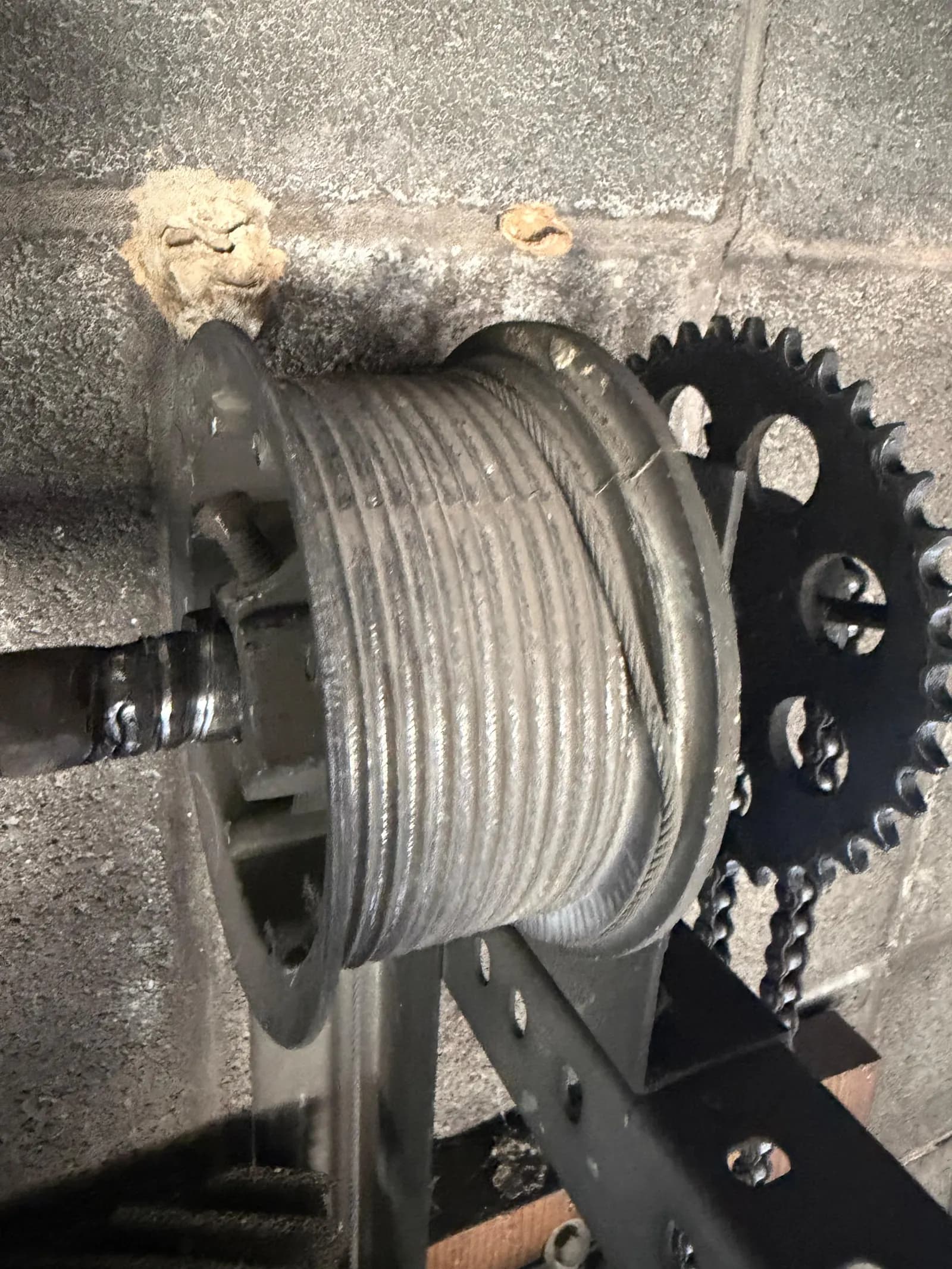
Safety devices: photo eyes and reversing edges on wide openings
Since August 29, 2010, UL 325 has required every commercial door operator to either close only under constant pressure on the button or use a primary external monitored entrapment protection device, typically a photoelectric eye. "Monitored" means the operator checks that the device is connected and working. If the device is blocked, misaligned or unplugged, the operator will not accept a normal one-touch close.
On LiftMaster Logic 5.0 operators, for example, the LMEP light on the logic board blinks when a monitored eye or edge is misaligned, activated or disconnected. The manual describes a Restricted Close mode for that situation: hold the CLOSE button, the door begins to move after about five seconds, and it keeps closing only while you hold the button. Use it only while you can see the entire opening.
Wide commercial openings give photo eyes more chances to fail:
- Something in the beam. Shrink wrap, a pallet corner, a snow pile or a parked lift truck across a 12- or 14-foot opening breaks the beam just like a person would.
- Bumped brackets. Eyes mounted on or near the guides take hits from equipment, and a small shift over that distance is enough to lose the beam.
- Eyes moved up the wall. Primary photo eyes must sit parallel to the floor and no higher than 6 inches above it. Some sites raise them to protect vehicles, which conflicts with UL 325 and the manufacturer's instructions. Extra eyes at vehicle height can be added, but the low pair stays.
- A damaged reversing edge. Many doors carry a sensing edge on the bottom bar instead of, or in addition to, photo eyes. A torn or crushed edge, or a damaged coil cord where it connects, can read as permanently activated.
Safe checks: clear the beam path, wipe the lenses, and look at the bottom-bar edge and its cord for tears or kinks. Never jumper, tape over or relocate a safety device to get the door closed.
Operator problems: limits, force, and control-station faults
Commercial operators come in three common styles. A trolley operator pulls the door along a rail on the ceiling. A jackshaft operator mounts beside the door and turns the door's shaft directly. A hoist operator also mounts on the side and adds a hand chain for manual operation. Each can fail in ways that keep the door open.
- Close limit out of adjustment. The close limit tells the operator where "closed" is. Set too short, the door stops above the floor. DASMA's maintenance guidance says limits on a rolling door should be set so the bottom bar isn't jammed against the guide stops and the curtain doesn't sag when closed.
- Reversal from resistance. On LiftMaster Logic 5.0 operators, an Auxiliary Reversal System senses when the clutch slips against an obstruction and reverses the door. Ice at the threshold, a binding curtain or a sticky track can trigger it with nothing visible in the opening.
- Hoist left engaged. On LiftMaster hoist models, engaging the hand-chain hoist trips an electrical interlock that disables the electric controls. If someone ran the door by hand and left the disconnect chain locked in its keeper, the push buttons won't work. Return the operator to electric operation only the way the operator manual describes.
- Door lock or interlock. Doors with a slide lock often have an interlock switch that cuts out the operator when the lock is thrown. Make sure the door is unlocked.
- Control station faults. A stuck STOP button, a station cracked by an impact, or a damaged wire run will stop the door from responding. Logic 5.0 stations also have a maintenance alert light that flashes when a preset number of cycles or months has passed, and the same light helps a technician read some faults.
Limit, force and clutch settings are part of the operator's safety system. LiftMaster's commercial operator manual says the product is to be installed and serviced by a trained door systems technician only, so leave those adjustments to the service visit and check the operator's manual before changing anything.
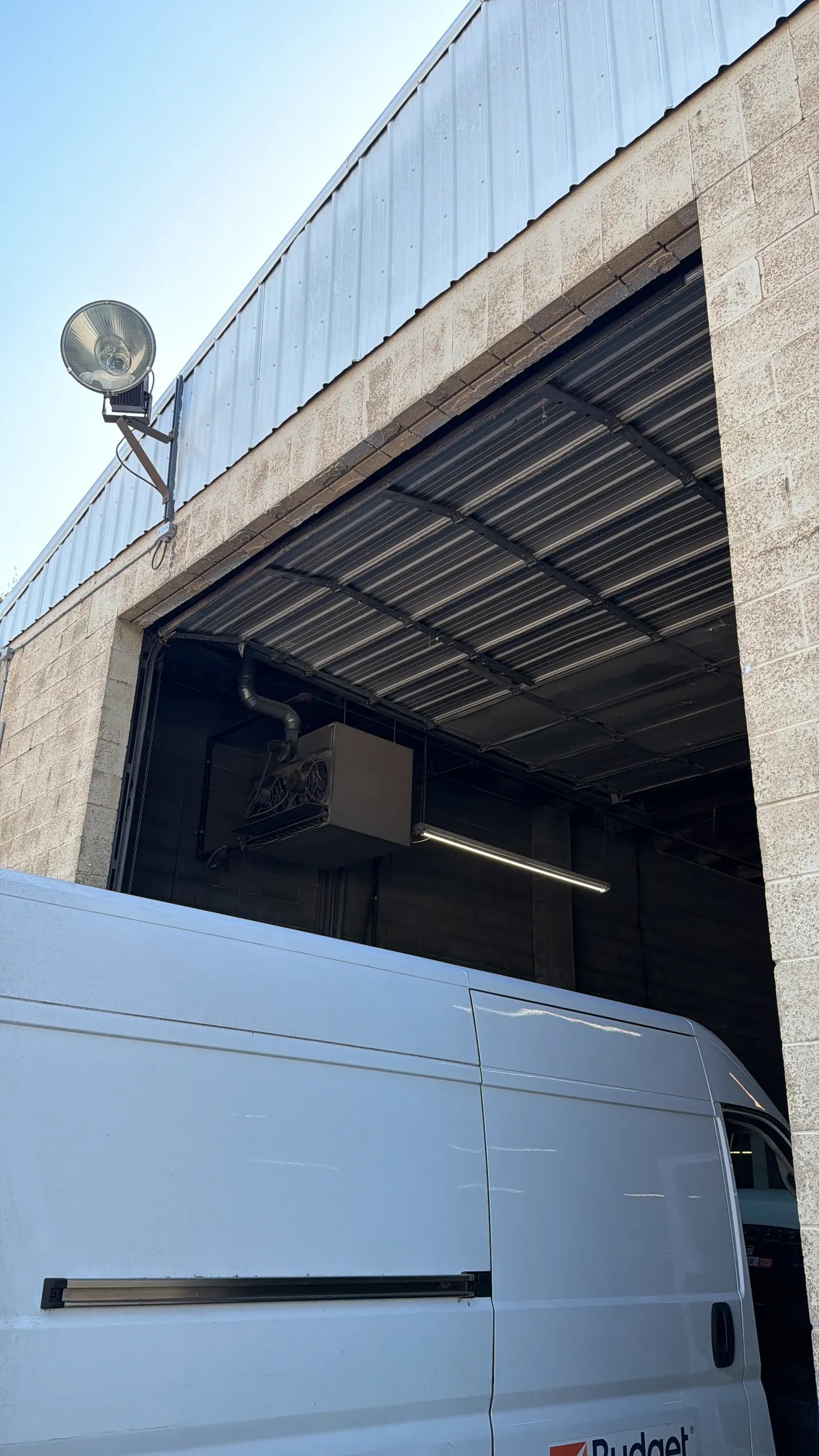
Rolling steel doors: guides, slats, endlocks and the bottom bar
A rolling steel door is a curtain of interlocking steel slats that coils around a barrel above the opening. The counterbalance springs live inside that barrel, under tension at all times. DASMA's guidance for building supervisors is direct: do not try to adjust the tension wheel, and call for service if the spring needs adjusting.
These are the parts that most often keep a rolling door from closing:
- Guides. The steel channels on each side of the opening. A guide bent by a forklift pinches the curtain. The gap should be even from top to bottom, and every fastener should be tight.
- Slats. A dented or bowed slat won't feed back into the guides, so the curtain stops or wedges partway down.
- Endlocks. The small pieces fixed to the ends of the slats that ride in the guides and keep slats from sliding sideways. When one breaks or goes missing, a slat can shift and catch.
- Bottom bar and astragal. The heavy bar along the bottom edge, usually with a rubber seal or sensing edge. Bent angles or loose bolts make the door close unevenly, and a torn or frozen seal can set off the reversing edge.
- Hood. The cover over the coil. If it sags into the curtain, the drag can stop the door.
If the door feels much heavier than usual on the hand chain, or the operator labors to lift it, the counterbalance may be failing. DASMA says opening a rolling door by hand chain shouldn't take more than about 35 pounds of pull. Much more than that can point to a counterbalance problem for a technician. Don't force a jammed curtain up or down. Forcing it bends more slats and can damage the barrel.
Sectional commercial doors: springs, cables and high-cycle wear
Sectional commercial doors work like oversized home doors: hinged panels ride on rollers in tracks, balanced by torsion springs on a shaft above the opening. Many run on standard, high-lift or vertical-lift track, and on a busy dock they cycle many times a day. That cycle count is what wears them out.
- Broken torsion spring. The door suddenly weighs far more than the operator was set to move. It may refuse to close, stop partway, or come down hard. Look above the door for a gap in a spring coil, from the floor.
- Slack or frayed cable. If one side loses its cable, the door tilts and binds in the track. A crooked sectional door is a stop-using-it-now problem.
- Worn rollers and hinges. Flat or seized rollers and cracked hinges add drag, which can trigger the operator's reversal and stop the door short.
- Impact on the track. A low hit on a vertical track can bind the door several feet higher than the dent.
Torsion springs and their cables hold enough energy to cause serious injury. Nobody on your staff should loosen, adjust or replace them. That work belongs to a technician during commercial garage door repair.
Fire doors and auto-closing doors are a separate case
Rolling fire doors look like service doors but do a different job: they close on their own when a fusible link melts or an alarm releases them. They are a life-safety system, not just a door. NFPA 80 requires rolling steel fire doors to be inspected and drop-tested at least once a year by a technician with documented training on these doors, and that applies even to fire doors that stay closed. A fire door that won't close, won't reset after a drop or has its release arm tied up should be reported to whoever handles your fire door inspections. Don't treat it as an ordinary repair.
How to cut downtime next time
- Know your door types. Keep a list of each door's style (rolling or sectional), operator model and whether it has a hand chain or a disconnect. It speeds up every service call.
- Get doors looked at after severe weather. DASMA recommends evaluating every door in a facility right after high wind or flooding, no matter when the last inspection was. In Central Florida, hurricane season runs June 1 to November 30. In Middle Tennessee, spring storms bring the same need.
- Plan for winter at the threshold. Around Cleveland, lake-effect snow, and in both Cleveland and Milwaukee, subzero cold can freeze bottom seals to the slab and pile snow into the photo-eye beam. Clear the threshold and the beam zone before the first cycle of the day. Our Cleveland service page covers the areas we serve in Northeast Ohio.
- Turn on the maintenance alert. Operators that offer a cycle-based service reminder, such as the Logic 5.0 maintenance alert, can tell you when service is due before a part fails.
- Schedule prevention. Our commercial garage door maintenance checklist splits upkeep into daily, monthly and professional tasks.
When to stop and call a technician
Stop using the door and call if the curtain or panels are crooked, a cable is slack or frayed, a spring shows a gap, a guide or track is bent, the door came down hard, or it still won't close after you've cleared the safety devices. H&D Garage Door handles commercial garage door repair for rolling steel and sectional doors in Orlando, Nashville, Cleveland and Milwaukee. Call (888) 410-7013 or send us a request with what the door is doing and a photo from a safe distance.