Signs you need gate repair
- The gate drags on the ground, sags at the latch end or will not line up with its catch
- A sliding gate jumps its track, wobbles or grinds as it rolls
- A swing gate binds at the hinges or swings past its stop
- The automatic gate will not open, will not close or stops partway
- The gate reverses for no visible reason or will not respond to remotes
- Keypad, intercom or clicker works for some users but not others
- The operator hums, clicks or beeps but the gate does not move
- Visible damage after a vehicle strike: bent pickets, twisted frame, cracked post
- Rust, broken welds or loose hardware on an iron or steel gate
What does gate repair include?
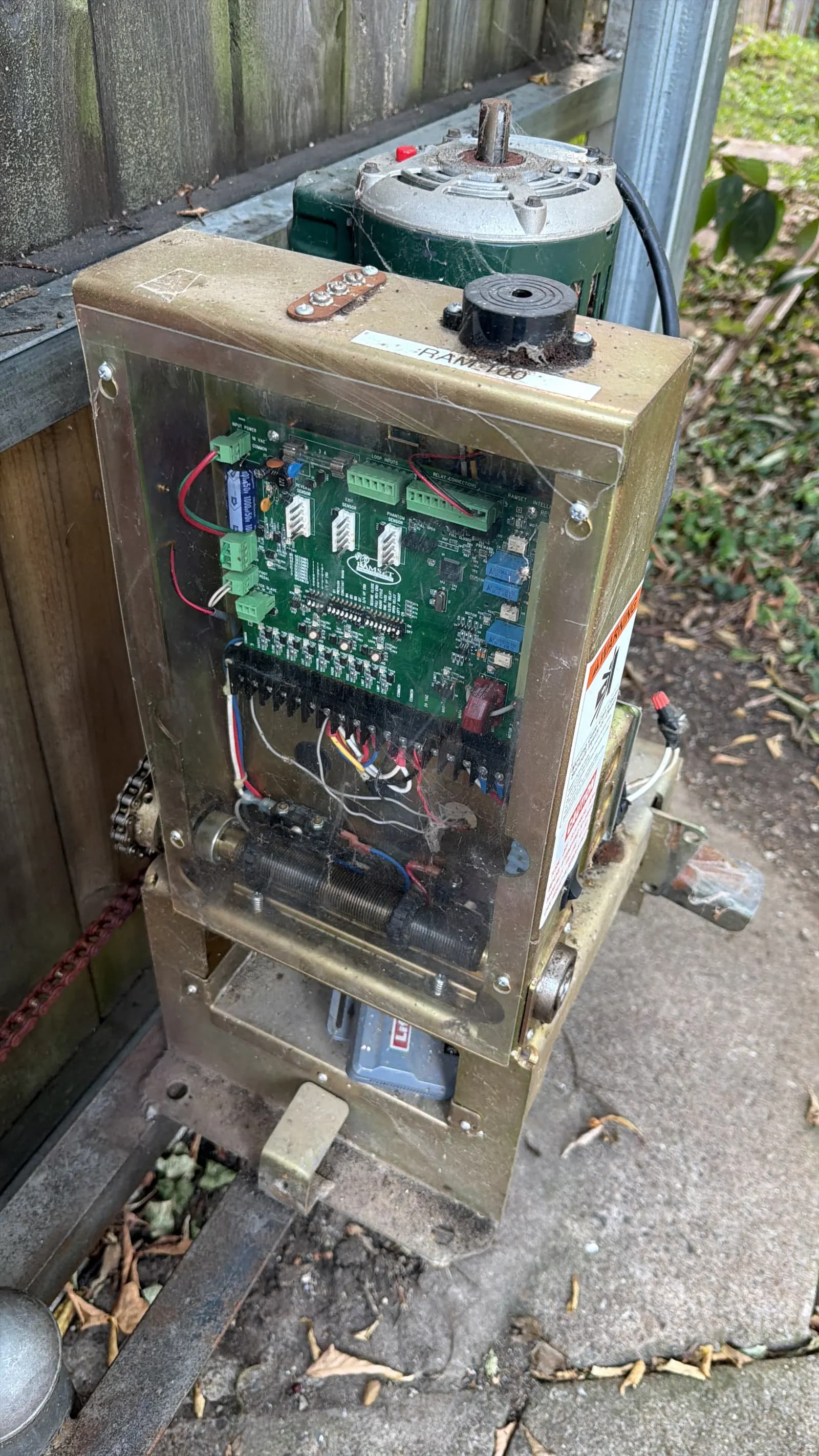
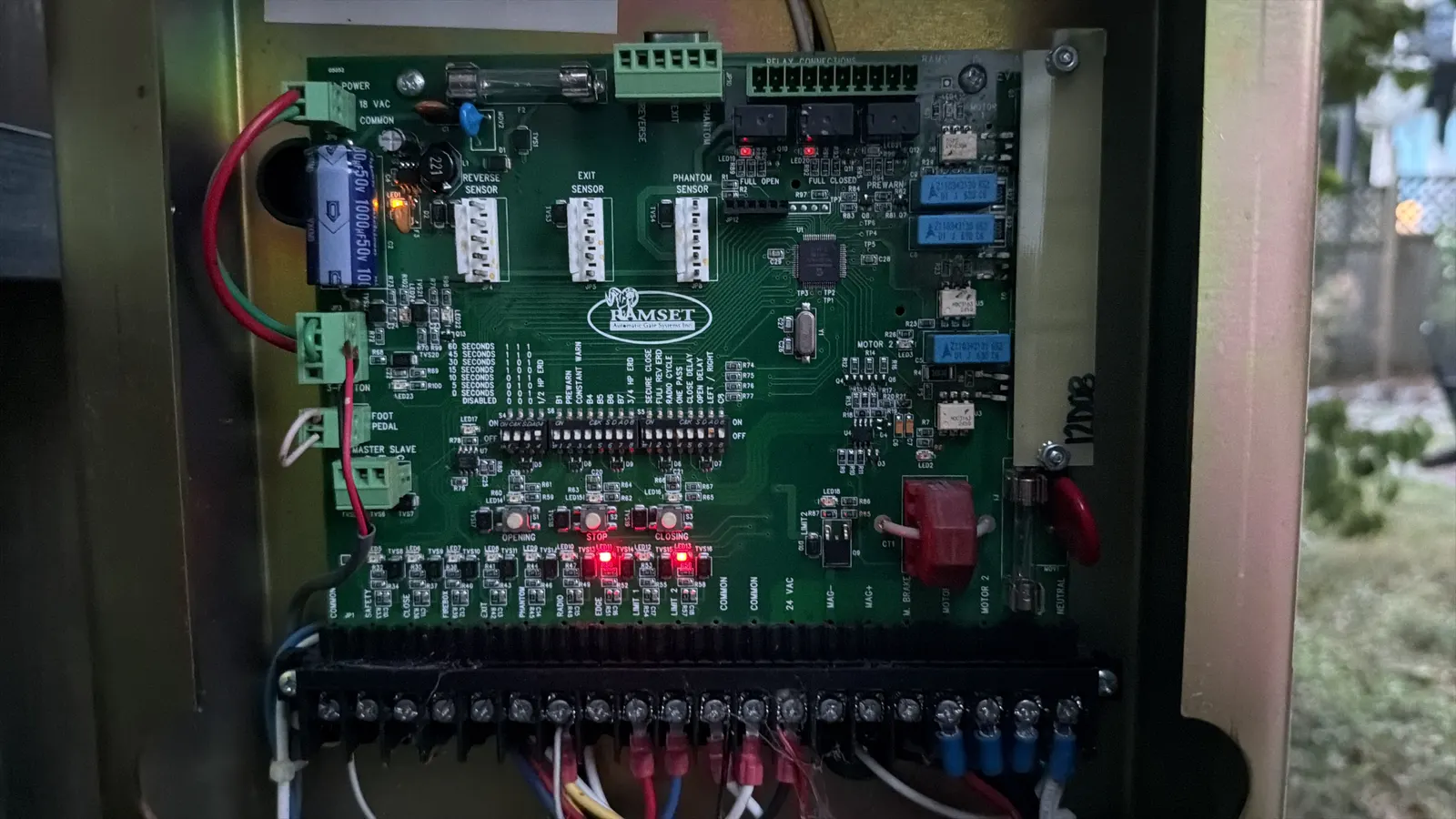
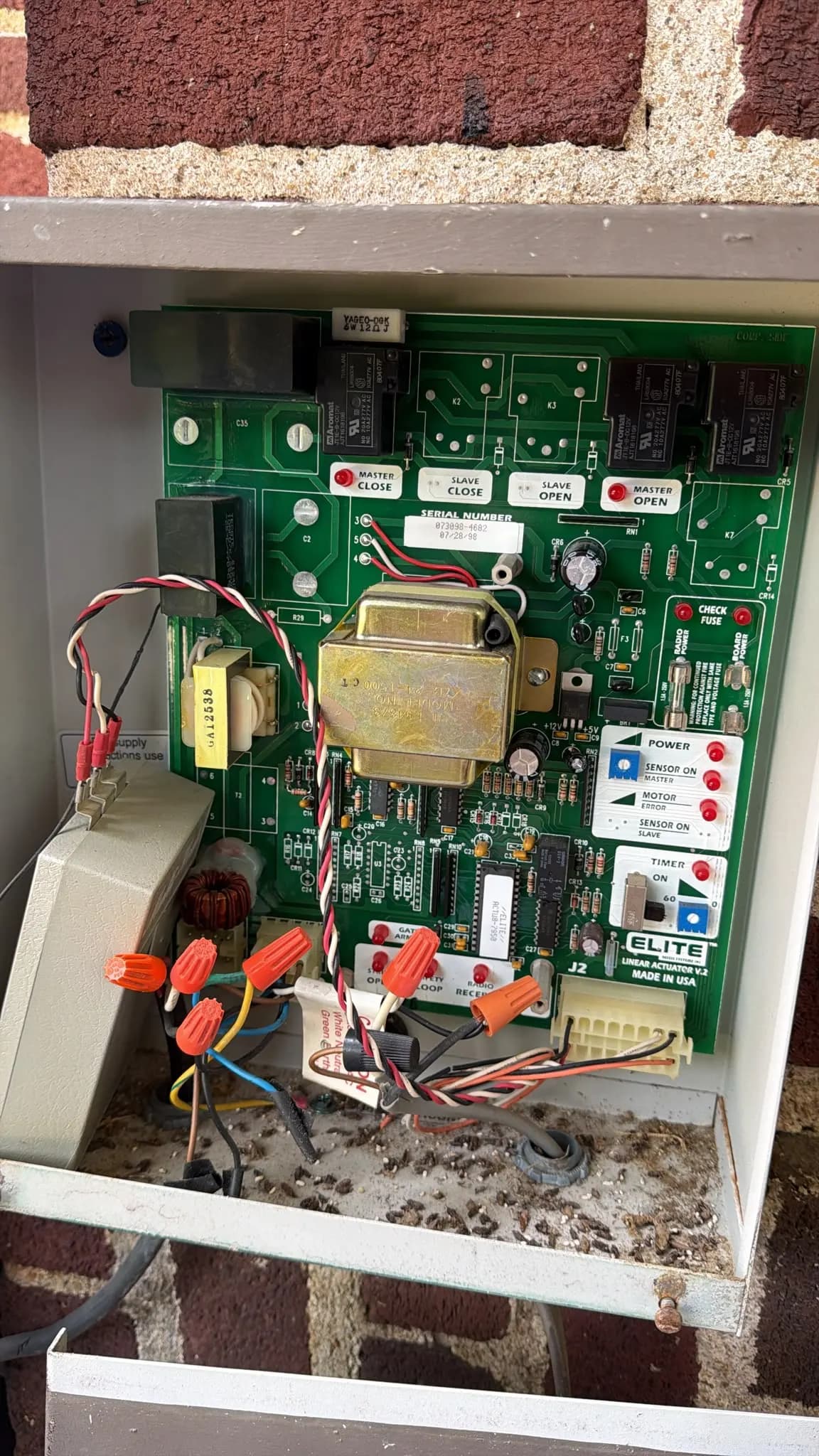
Gate repair covers three layers, and most service calls involve more than one. The first is the gate itself: the frame, pickets, welds, posts, hinges, wheels, rollers, track and latch. The second is the operator, the motor-driven machine that pushes, pulls or swings the gate. The third is the control layer: keypads, remotes, intercoms, safety sensors, vehicle loops and the control board that ties them together.
A gate that "won't open" can be failing in any of those layers. A sagging gate makes the operator work harder until it trips its overload protection. A bad loop detector can hold a gate open all night. A broken weld can throw a slide gate off its track. That is why we look at the full system on every visit instead of swapping the part that is easiest to reach.
If your gate is powered, start with our page on automatic gate repair. If the motor or control box is the problem, see gate opener and operator repair.
Which types of gates do we repair?
We work on the gate styles you see on homes, gated communities and commercial lots. Each one fails in its own way, so the repair starts with knowing the type.
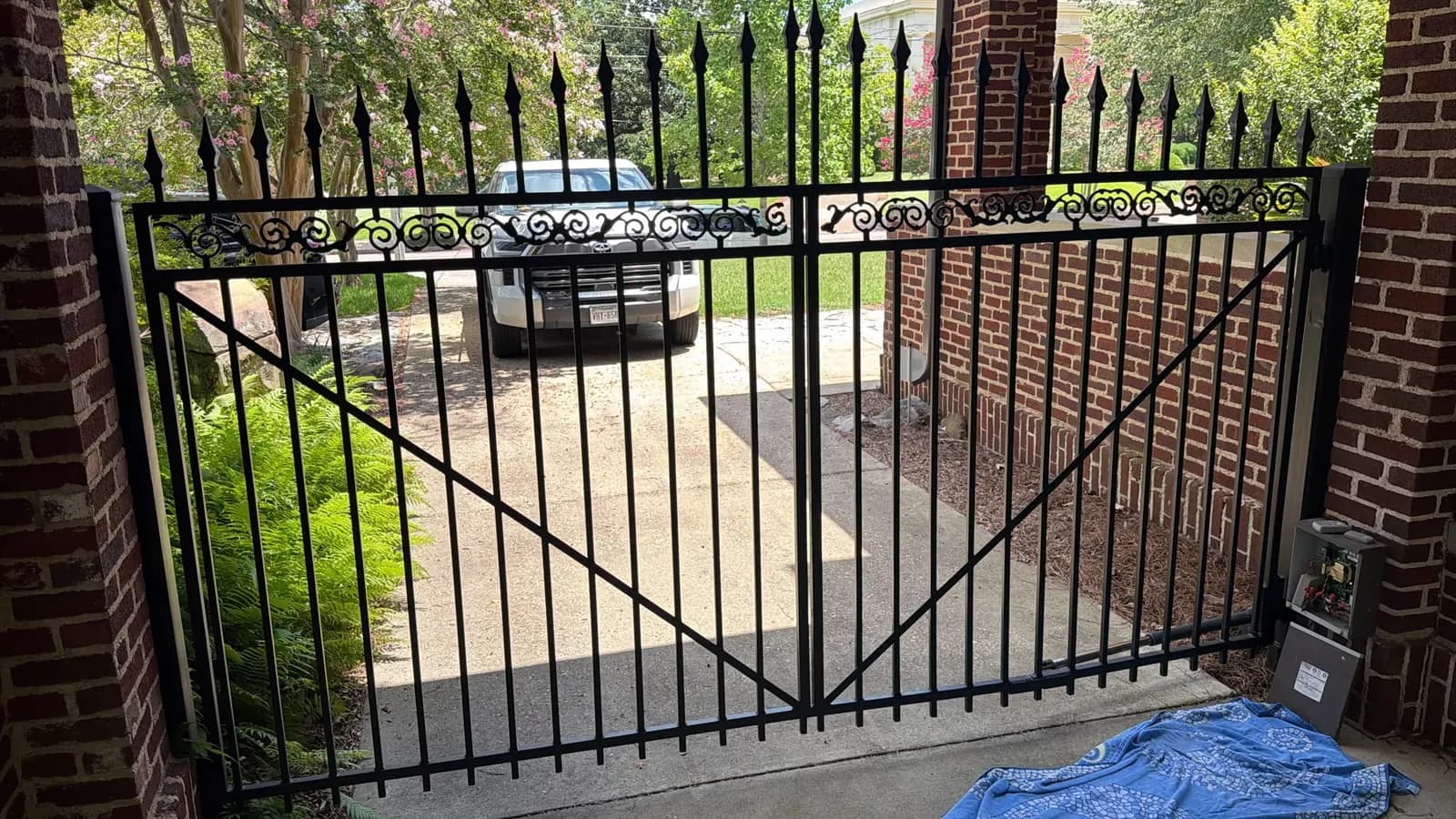
- Swing gates (single and double leaf): hinge wear, sagging, post movement, latch misalignment, arm and bracket damage.
- Sliding (V-track) gates: worn or flat wheels, bent or buried track, broken guide rollers, gear rack wear.
- Cantilever gates: the gate rides on rollers mounted to posts with no ground track. Roller carriages, frame straightness and post alignment matter most.
- Barrier arm gates: broken or bent arms, worn drive linkage, loop and sensor problems at parking entries.
- Pedestrian gates: self-closing hinges, magnetic or electric strike locks, keypad and card readers, gates that slam or will not latch.
- Driveway gates of all materials: ornamental iron, steel, aluminum and wood.
Why is my gate sagging or dragging?
Sagging is the most common problem on swing gates, and it is rarely the gate's fault alone. The usual causes are worn hinges or hinge pins, a hinge post that has leaned or loosened in its footing, a frame that has racked out of square, or a gate that is simply heavier than its hinges were rated for. Wood gates also swell and shrink with moisture, which changes how they hang through the year.
A dragging gate is more than a cosmetic issue. On an automatic gate, every foot of drag adds load to the operator, wears its gears and can trip the motor's built-in reversal. Over time, a sagging gate can bend the operator arm or crack the bracket that holds it.
Fixes range from adjusting or replacing hinges to resetting a post, adding a support wheel on a long gate, or reinforcing the frame. We will tell you which one actually solves the problem, not just the symptom.
What goes wrong with sliding and cantilever gates?
Sliding gates live and die by their rolling hardware. On a V-track gate, the wheels ride a steel track set in the driveway. Dirt, gravel, leaves and settled concrete can bury or bend that track, and worn wheels develop flat spots that make the gate shudder. The guide rollers at the top keep the gate upright; when one breaks, the gate leans and can bind or fall.
Cantilever gates have no ground track, which keeps them clear of debris, but they depend on roller carriages bolted to the posts and on a straight, rigid frame. A bent bottom rail or a loose carriage makes the gate rock and pinch.
On either type, the operator drives the gate through a gear rack or chain. A loose chain, stripped rack or misaligned drive gear causes clicking, jerky starts and gates that stop short of their limits. A gate that rolls freely by hand, after the operator is released, is a sign the problem is in the operator, not the gate.
Can a gate be repaired after a car hits it?
Often, yes. Vehicle strikes are common at HOA entries, apartment complexes and commercial lots, and the damage is usually local: a bent bottom rail, crushed pickets, a twisted hinge, a sheared operator arm or a cracked post. Damaged sections can often be straightened, cut out and rewelded, or replaced while the rest of the gate is kept.
What we check after an impact: whether the frame is still square, whether the posts moved in their footings, whether the track or roller carriages bent, and whether the operator and its safety devices still work as designed. A gate that looks fine but no longer reverses properly is a safety problem.
Before you call, take photos of the damage and the vehicle if you have them. Do not try to force a damaged automatic gate open or closed with the operator. If the gate is heavily damaged or the design is outdated, we will also walk you through gate installation options.
Residential, HOA and commercial gate repair
A single-family driveway gate might cycle a few times a day. A community entry gate can cycle hundreds of times, and a busy commercial gate even more. That difference changes what wears out and how the repair should be done.
For homeowners, the priorities are safe operation, easy access for family and deliveries, and a gate that looks good. For HOAs, it is resident access, visitor management and keeping the board informed. For property managers and businesses, it is uptime, security and liability.
The UL 325 safety standard sorts gate operators into usage classes, from Class I for one-to-four family homes through Class II for apartments, retail and other public-access sites, and Classes III and IV for industrial and restricted sites. Using a residential-class operator on a busy community gate is a common cause of repeat breakdowns. For multi-gate properties, see commercial gate repair.
Gate repair or gate replacement?
Most gates should be repaired. Replacement starts to make sense when several of these are true: the frame is rusted through at the welds, the posts are failing in their footings, the gate design leaves gaps or open rollers that current safety standards say should be screened or covered, the operator is too small for the gate and the gate is too heavy to fix that easily, or repair parts for the operator are no longer available.
We price repair and replacement side by side when it is a close call, so you can compare them. What affects the cost of a gate repair: the gate's size, weight and material, whether welding or post work is needed, the operator brand and which part failed, access-control hardware, and how many trips the job takes.
For access hardware like keypads and intercoms, see gate access control systems. Gate questions often come with garage door questions too, and we handle garage door repair as well.
Gate repair in Orlando and Nashville
We serve gate customers in all four of our markets: Orlando, Nashville, Cleveland and Milwaukee. Our local page for gate repair in Orlando covers what we see there, and our Nashville gate repair page does the same for Middle Tennessee: the gated communities, the weather and the gate styles common in each area.
Wherever you are, the first call is simple. Tell us the gate type (swing, slide, cantilever, barrier arm or walk gate), what it is doing, and whether it is powered. If you can, snap a photo of the operator's label and the control box without opening anything. If the gate is stuck open or closed, tell us that too, so we can help you leave it in the safest position until we arrive. We will schedule the earliest available visit.
How the service works
- 1
Tell us what the gate is doing
Gate type, symptoms, and photos of the gate and operator label if you can. Leave the gate secured in a safe position.
- 2
Full-system inspection
We check the gate, posts, hinges or rollers, the operator, the safety devices and the access controls, then find the root cause.
- 3
Clear options
We explain what failed, what it takes to fix it, and repair versus replace when it is a close call.
- 4
Repair and adjust
We fix the hardware, set the operator's force and limits, and confirm every safety device stops and reverses the gate.
- 5
Test with you
We run the gate through full cycles with your remotes, keypad and sensors so you see it working before we leave.