Signs you need commercial gates
- An entry or exit gate stuck open overnight, leaving the property unsecured
- A gate stuck closed with residents, tenants or trucks waiting
- Repeated breakdowns on the same gate every few weeks
- Barrier arm broken, bent or not lowering
- Complaints about the call box, tags or remotes not working
- A gate damaged by a vehicle and now operating unpredictably
- No record of when the gate was last serviced or tested
Who we work with
Commercial gates come with people behind them: residents who expect to get home, tenants who need deliveries, staff on shifts and a manager or board who answers for all of it. A residential call can wait for a convenient time; a stuck community entrance cannot. We work with:
- HOAs and gated communities: entry and exit gates, barrier arms, pedestrian gates and call boxes.
- Apartment and condo communities: vehicle gates, parking garage gates and resident access systems.
- Property and facility managers: multiple sites, multiple gates, one point of contact.
- Industrial sites, warehouses and yards: heavy slide and cantilever gates and truck traffic.
- Offices, retail and parking lots: barrier arms, gated parking and after-hours security.
Why commercial gates break down more often
A home gate might open a few times a day. A busy community or apartment gate can cycle hundreds of times. Every cycle wears hinges, wheels, rollers, gears and chains, so commercial gates need heavier hardware and more frequent service.
The most common causes of repeat breakdowns we see on commercial sites: a residential-class operator installed on a gate that needs a commercial-class unit; a gate that has sagged or dragged for months, overloading the operator; vehicle strikes that bent a rail or post just enough to cause binding; loops broken by pavement cracks; and access systems with no one assigned to keep them up to date.
UL 325 sorts gate operators by usage class. Class II covers commercial and general-access sites, including multi-family housing of five or more units, hotels, garages and retail. Class III covers industrial and limited-access sites, and Class IV covers restricted, guarded sites. When an operator's class does not match the site, we will say so.
Keeping the gate up: uptime planning
For a manager, a gate failure is not just a repair. It is calls from residents, a security gap or a line of trucks. Planning for uptime means making failures rarer and shorter.
Rarer comes from preventive maintenance and right-sized equipment. Shorter comes from knowing the site before something breaks: which operators and access systems are installed, which parts fail most, and how the gate should be secured if it has to be taken out of service.
We document each gate we service, including the gate type, operator brand and model, access devices and safety devices, so the next visit starts informed. For sites that depend on one gate, we can talk through options like battery backup, a second gate lane, or a manual fallback plan. Day-to-day failures like gates that will not close or that reverse are covered on our automatic gate repair page.
Security, liability and safety compliance
A gate stuck open is a security problem. A gate that closes on a person or car is a liability problem. Commercial gate service has to handle both.
On the security side, we look for gates that can be pushed or lifted off their tracks, access credentials that former residents still hold, call boxes that let anyone in, and exit loops that can be tripped from outside.
On the safety side, we check that each entrapment zone is protected by working photo eyes, safety edges or the operator's built-in sensing as UL 325 requires, that the gate's construction follows ASTM F2200 (screened openings, covered rollers on slide gates, positive stops), that warning signs are posted, and that people have a separate pedestrian gate instead of walking through the vehicle gate. When we find a gap, we put it in writing so your board or owner can act on it.
We do not give legal advice, but a documented, maintained gate is far easier to defend than one that was ignored.
What does commercial gate preventive maintenance include?
Preventive maintenance catches wear before it becomes a breakdown. How often a gate should be serviced depends on its cycles, the weather and the equipment, and we set a schedule with you. A typical visit covers:
- Gate hardware: hinges, wheels, guide rollers, cantilever carriages, track, posts and welds.
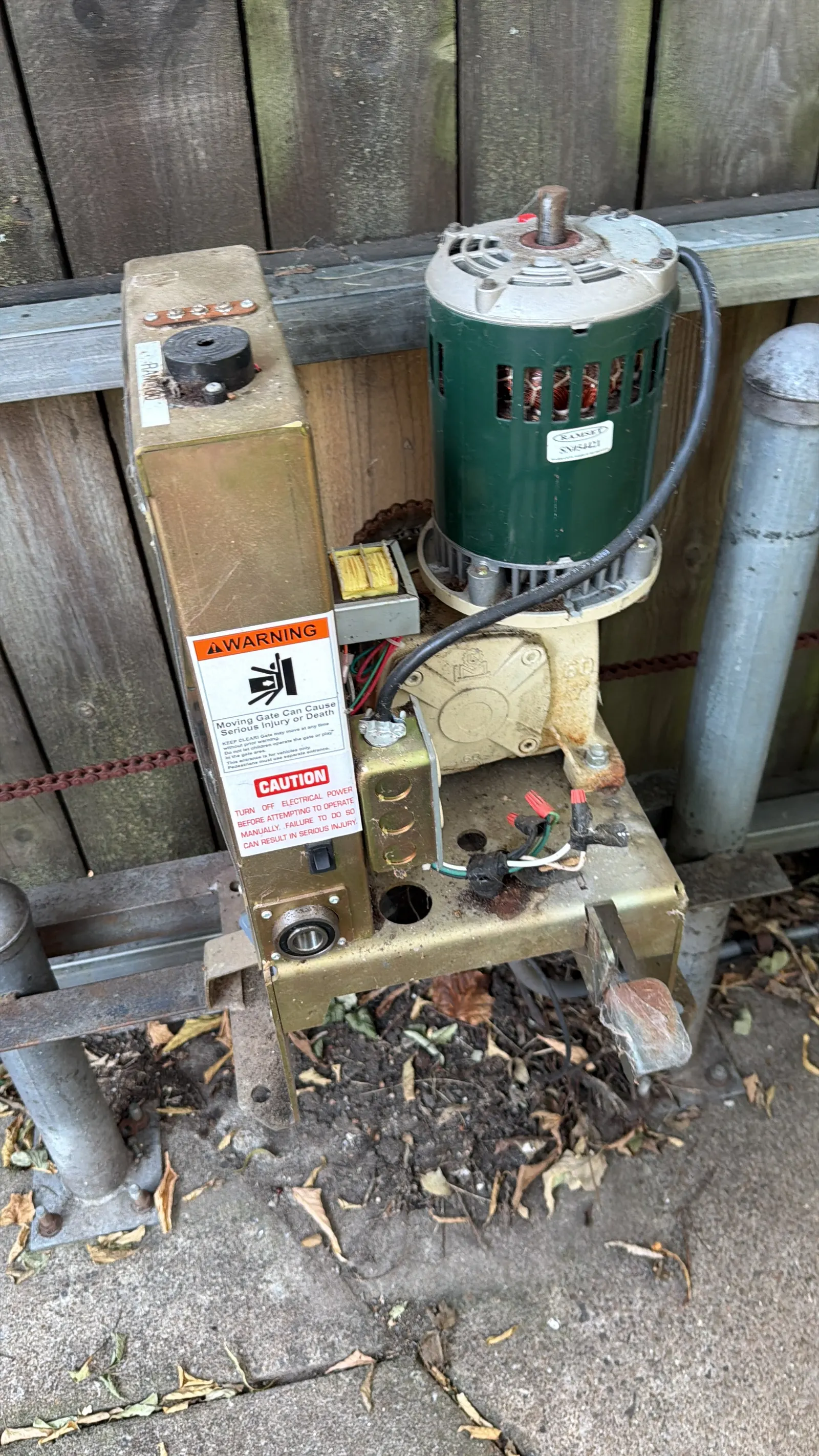
- Drive: chain tension, gear rack, arms and brackets, lubrication where the manufacturer calls for it.
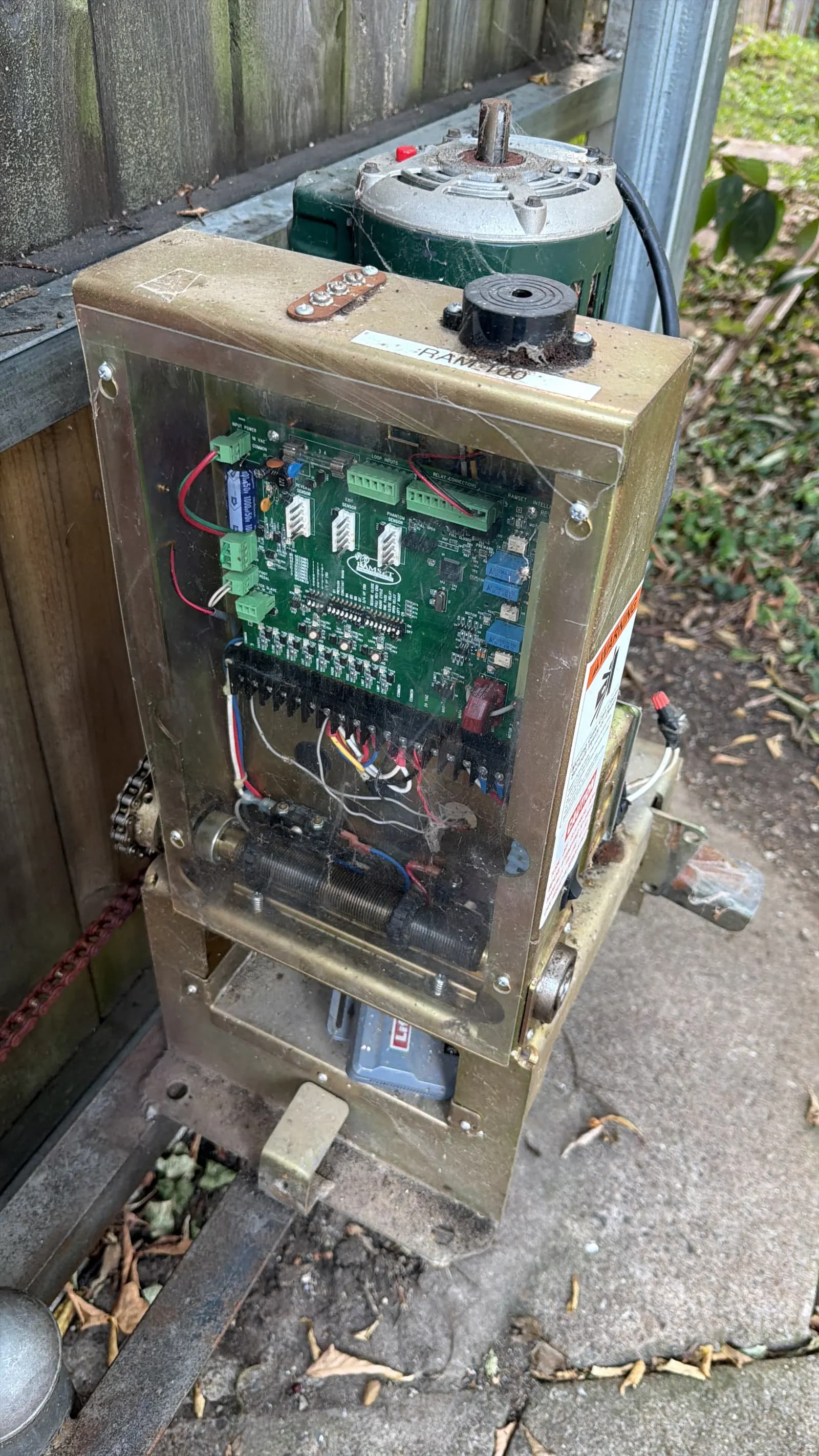
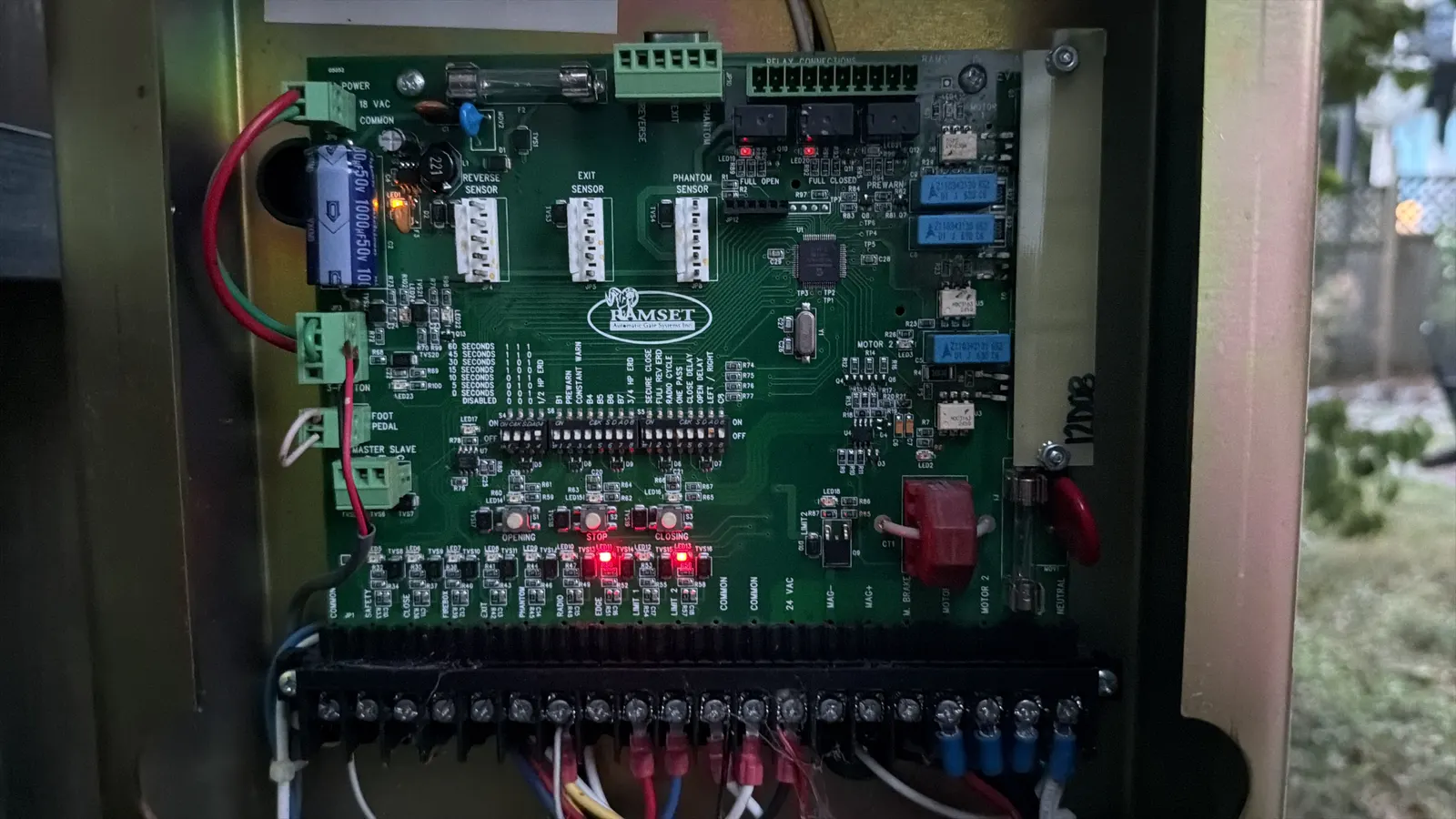
- Operator: motor, gearbox, clutch, limits, force settings and the control board.
- Safety: every photo eye, safety edge and loop tested to confirm the gate stops and reverses.
- Access: keypads, call box, readers, receivers and the user list.
- Power: battery backup, surge protection and any solar charging system.
- A written report of what we found and what should be planned next.
Barrier arms and parking gates
Barrier arm gates control parking lots, garages and community entries where traffic is heavy and a full gate is not needed. The arm itself is often the first thing to break, usually from a car that tailgates or pushes through. Many arms are designed to break away or be replaced quickly for that reason.
Barrier operators also tend to cycle more than any other gate on a property, since every car in and out raises the arm, which makes them a priority on a maintenance schedule.
Beyond the arm, we repair barrier operators, drive linkages, springs that balance the arm, and the loops that raise the arm for exiting cars and keep it up while a car passes underneath. A barrier that comes down on a car almost always points to a loop or detector problem, and we treat it as urgent. For gate operators of all types, see gate opener and operator repair.
One vendor for gates and garage doors
Many properties have both: an entry gate and a row of garage doors, a yard gate and dock doors, a parking gate and a garage. We handle both sides, so a property manager can make one call. See our commercial garage door repair service for overhead and roll-up doors.
When an older gate keeps failing, we can quote a replacement gate, operator or access system as part of gate installation, and lay it out side by side with continued repairs. That gives a board or owner what they need to budget: what it takes to keep the current equipment running, what a replacement involves, and the risks of each. For keypads, call boxes, tags and cloud access, see gate access control systems.
How the service works
- 1
Call or email the site details
Property, gate location, what the gate is doing, and whether it is secured open or closed.
- 2
Secure and diagnose
We make the gate safe, then diagnose the gate, operator, safety devices and access system.
- 3
Repair with a written record
We repair what failed and document parts, settings and anything else we found.
- 4
Recommend next steps
Safety or security gaps, parts likely to fail next and whether the equipment matches the site's traffic.
- 5
Set a maintenance schedule
For gates that matter to your operation, we set regular service visits around your traffic.