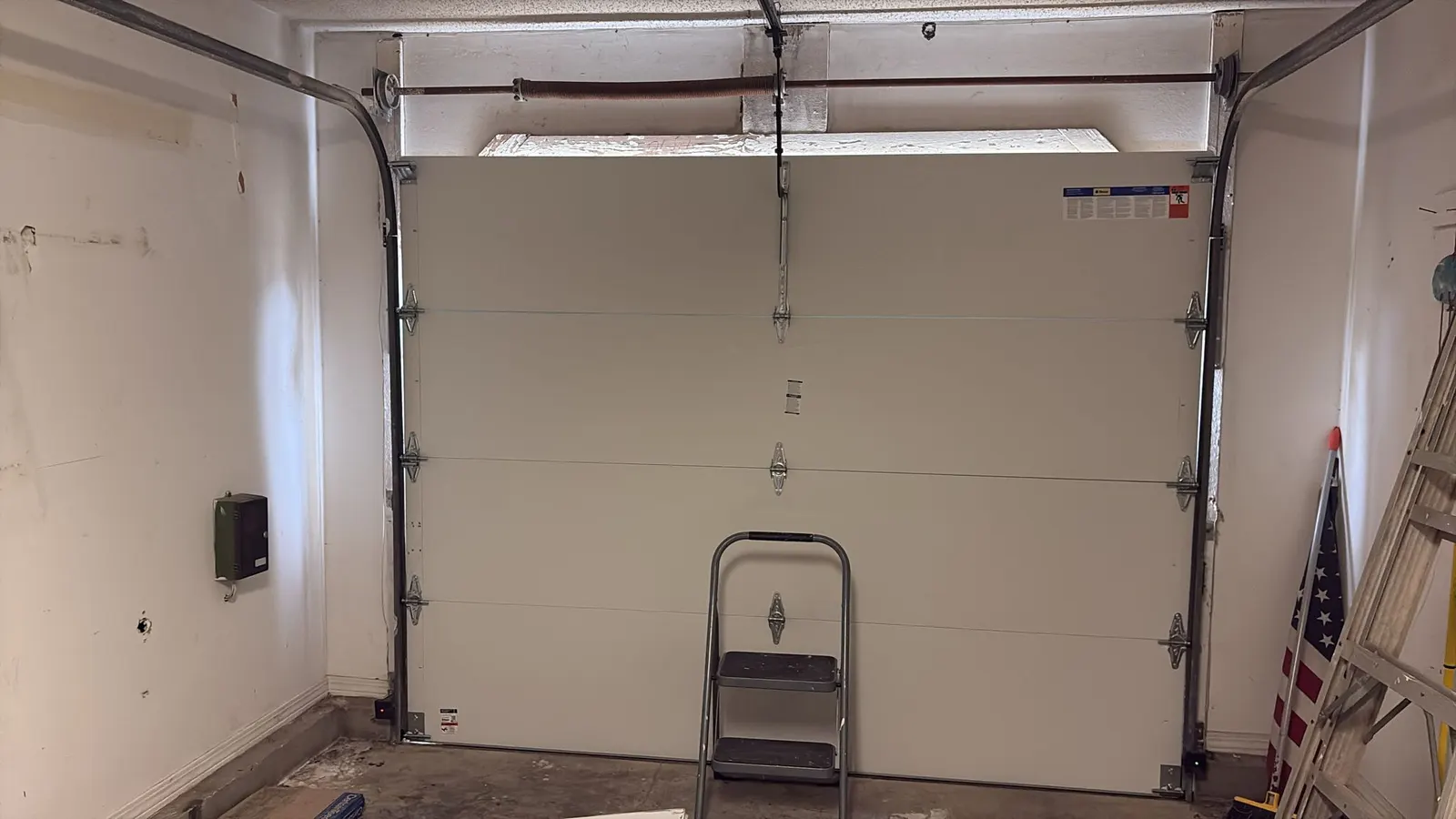
Signs you need opener installation
- Your current opener is loud enough to hear through the house
- It uses old fixed-code remotes or has no photo-eye sensors
- Repairs are adding up on an opener that's past its prime
- You want to open, close or check the door from your phone
- Power outages leave your car stuck in the garage
- You're installing a new door and want a matched opener
- You want to free up ceiling space for storage or a car lift
Belt drive vs. chain drive: which garage door opener should you get?
Chain drive openers use a metal chain to pull the trolley along the rail. They're strong, simple and widely used, and they handle heavy doors well. The trade-off is noise. You'll hear the chain rattle as the door moves, which matters less if the garage is detached or far from bedrooms.
Belt drive openers work the same way but use a reinforced rubber belt instead of a chain. They're noticeably quieter and smoother, which is why many people with a bedroom, office or nursery above or beside the garage choose them. Belt drives usually cost more up front.
If your garage shares a wall with living space, a belt drive is almost always worth it. If it's a detached garage or a workshop and you want straightforward strength, a chain drive does the job.
What about screw drive and wall-mount openers?
Screw drive openers move the trolley with a long threaded rod. They have fewer moving parts but can be noisy and are more sensitive to large temperature swings, so they've become less common. We install them when they suit a specific setup.
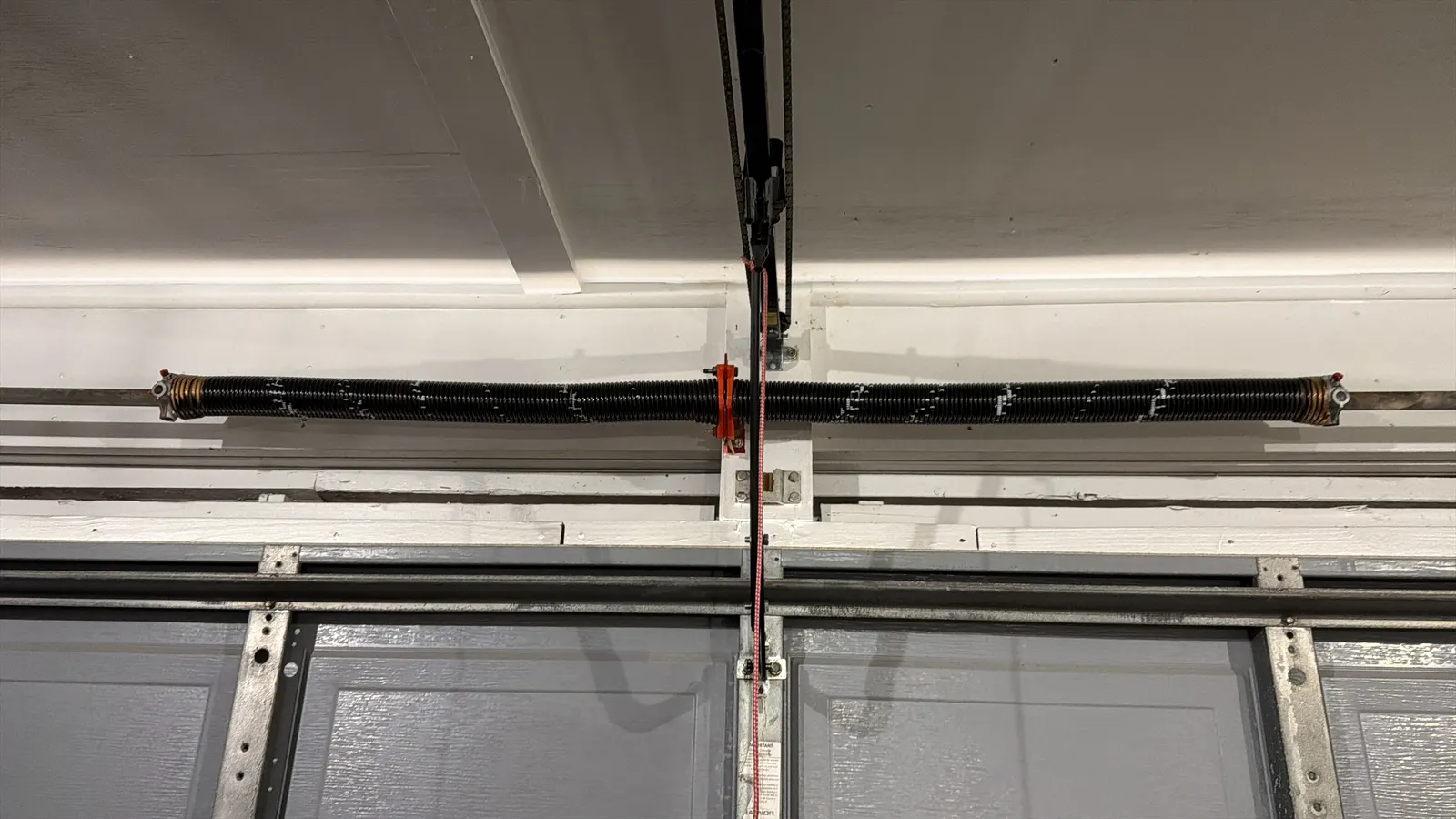
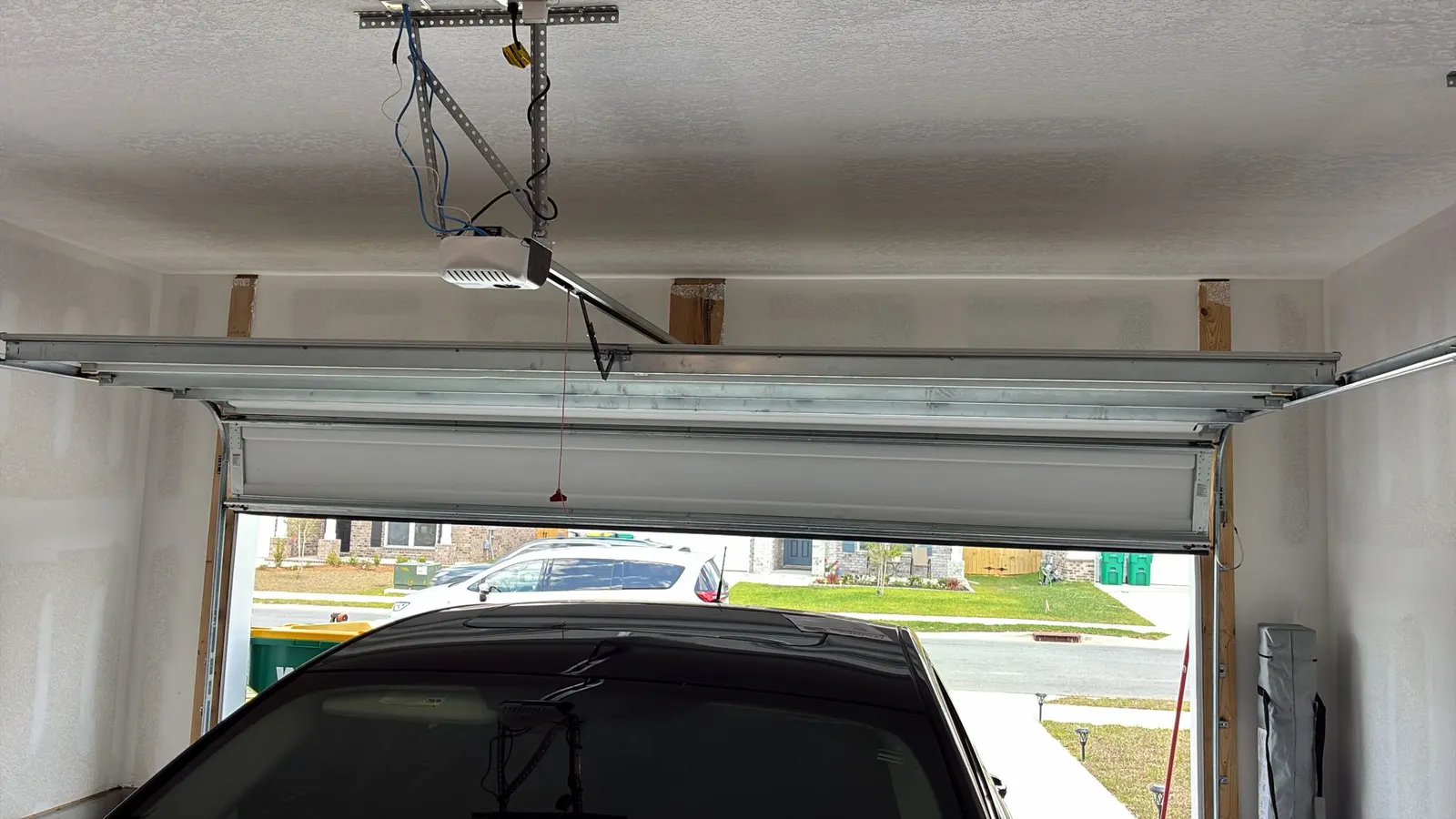
Wall-mount openers, also called jackshaft or side-mount openers, attach to the end of the torsion spring shaft beside the door instead of hanging from the ceiling. That frees up the ceiling for storage racks, a car lift, or a high-lift track. They're very quiet and look clean. They require a torsion spring system and enough side room next to the door, so not every garage qualifies.
We'll measure your space and tell you which options fit before you decide.
- Chain: strong and proven, louder
- Belt: quiet and smooth, a common choice for attached garages
- Screw: fewer parts, can be noisier
- Wall-mount: very quiet, frees the ceiling, needs torsion springs and side clearance
What size garage door opener do you need?
Opener strength is often listed in horsepower (HP), such as 1/2 HP or 3/4 HP, or in newton-force ratings on some models. The number matters less than people think, because a balanced door with good springs is light to lift. The springs carry the weight, and the opener only guides the door up and down.
That said, heavier doors deserve more muscle. A single-car non-insulated steel door is light. A 16-foot two-car insulated door, a wood or wood-look carriage door, or a door with lots of glass is much heavier and will put less strain on a stronger opener. DC motors, used in many belt drives, also start and stop more gently and tend to run quieter.
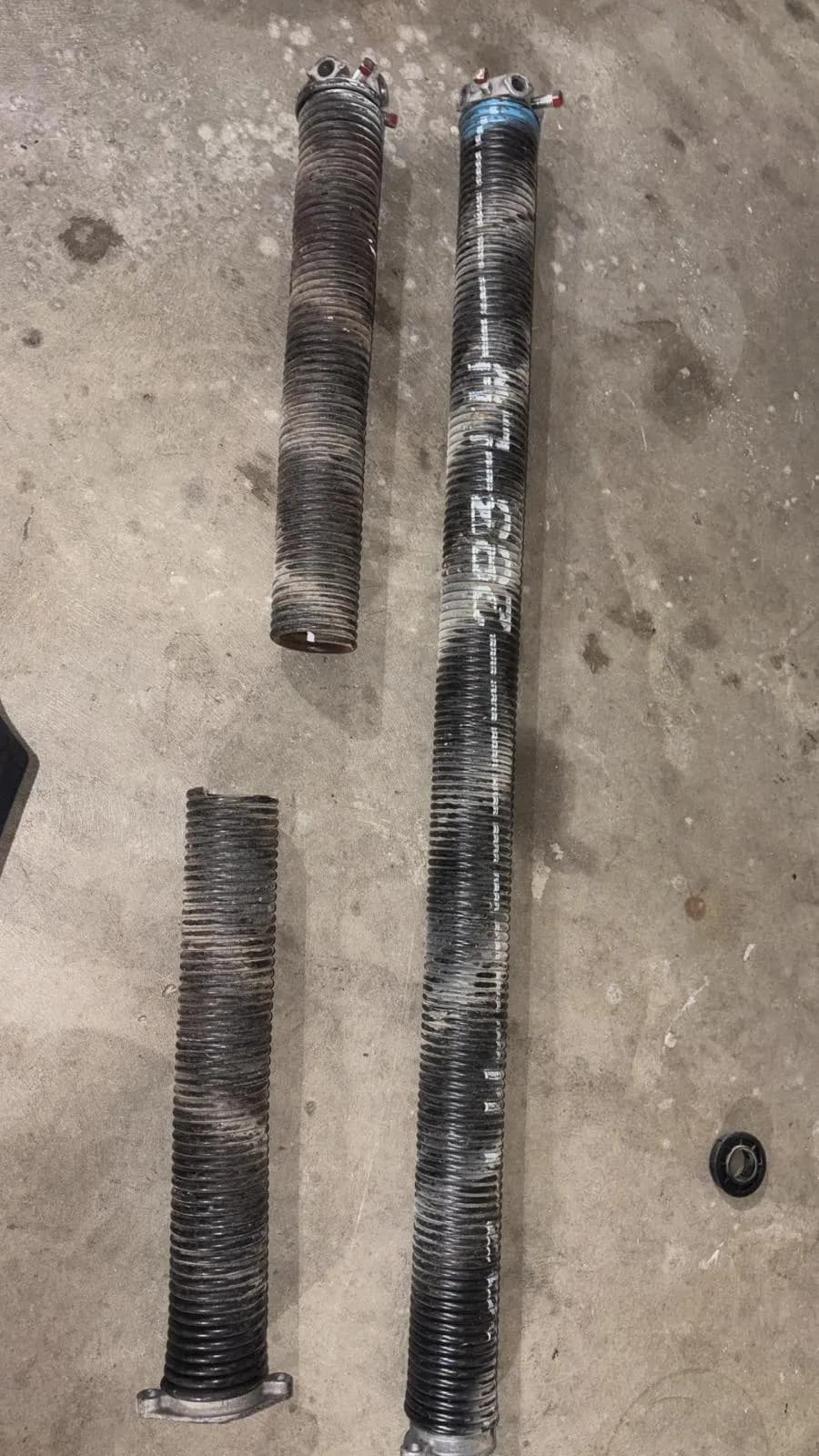
Before we install any opener, we check the door's balance. If the springs are weak, a new opener will wear out early, so we'll tell you if broken spring repair or spring adjustment should come first.
Are smart Wi-Fi garage door openers worth it?
For many homeowners, yes. A smart opener connects to your home Wi-Fi so you can open or close the door from a phone app, get alerts when it opens, check whether you left it open, and set it to close automatically at a certain time. Some models include a built-in camera, and many work with delivery services that drop packages inside the garage.
LiftMaster and Chamberlain use the myQ app, and Genie uses its own Aladdin Connect app. Some smart features need a subscription or work only with certain smart home systems, so check that the opener supports the platform you already use, such as Google Home, Amazon Alexa or Apple Home.
Your Wi-Fi needs to reach the garage. Detached garages and garages behind thick walls can have weak signal. We'll check signal strength during the visit and can talk through options like a range extender.
Do you need a garage door opener with battery backup?
A battery backup keeps the opener running for a limited number of cycles when the power goes out. Without one, you'll need to use the emergency release and lift the door by hand, which is awkward for many people and impossible for some.
Backup power is especially useful where outages are common. Orlando's summer thunderstorms and hurricane season knock out power regularly, and ice storms around Nashville and the lake-effect snow belt near Cleveland can do the same in winter. If you have a car you depend on daily, someone in the home with limited mobility, or a garage that's your main entry, a battery backup is a smart add-on.
Many openers include a backup battery or offer one as an add-on. The batteries need replacing every few years, and most units beep to tell you when it's time.
Which opener accessories are worth adding?
A new opener is a good time to think about how everyone in the house gets in and out. A few add-ons make daily life easier, and some can be added later if you'd rather wait.
An outdoor keypad lets kids, dog walkers or family members open the door with a code instead of a key or remote. Extra remotes are handy for a second car. Many cars have built-in buttons that can be paired with a new opener, though some newer models need the opener's own app or a bridge device.
If your garage is attached and you sometimes forget to close the door, an automatic timer-to-close feature can shut it after a set time. A motion-sensing light or an opener with a bright LED light helps on dark winter evenings. Ask which accessories your chosen model supports, because not all of them work across brands.
- Wireless outdoor keypad
- Extra remotes or car-button pairing
- Timer-to-close and open-door alerts
- LED lighting or a motion-sensing light
- Battery backup for outages
What happens during garage door opener installation?
A professional install is more than hanging the motor. The rail must be aligned with the center of the door, the header bracket mounted into solid framing, and the motor secured to ceiling joists so it doesn't vibrate loose. The photo-eye sensors are mounted no higher than about six inches off the floor and wired back to the motor, and the wall console goes where children can't easily reach it.
Then comes setup: travel limits so the door closes fully without crushing the bottom seal, force settings so it reverses when it meets resistance, remote and keypad programming, and Wi-Fi pairing if you chose a smart model. We remove the old opener and test everything with you before we leave.
If you're replacing the door too, see garage door installation. Having trouble with the opener you already own? Opener repair may be all you need. Ready to choose? Contact us.
How the service works
- 1
Measure and check balance
The technician measures the door, ceiling height and side room, and checks the springs and door balance before recommending an opener.
- 2
Remove the old opener
The old motor, rail, sensors and wall console are taken down, and wiring is checked.
- 3
Mount the new opener
The rail and header bracket are aligned and secured, the motor is hung from solid framing (or mounted beside the door for a wall-mount unit), and the arm is attached to the door.
- 4
Install safety and controls
Photo-eye sensors and the wall console are mounted and wired, and the optional keypad and battery backup are installed.
- 5
Program and test
Travel limits, force and remotes are set, Wi-Fi is paired if needed, and the auto-reverse is tested with you watching.