Why are Lakewood garages so small and so close to the lot line?
Lakewood filled in as a streetcar suburb. Lines opened on Detroit Avenue in 1893, on Clifton Boulevard in 1903 and on Madison Avenue in 1916, and the population jumped from about 40,000 in 1920 to about 70,000 by 1930. Builders put houses on narrow lots close to the car line, and the garage, if there was one, went at the back.
The city's own garage rules still reflect that. Its garage planning packet limits a garage to 480 square feet or 25% of the rear yard, whichever is greater, and allows side and rear setbacks as small as 18 inches in some zones. A garage within 3 feet of the property line needs fire-rated walls.
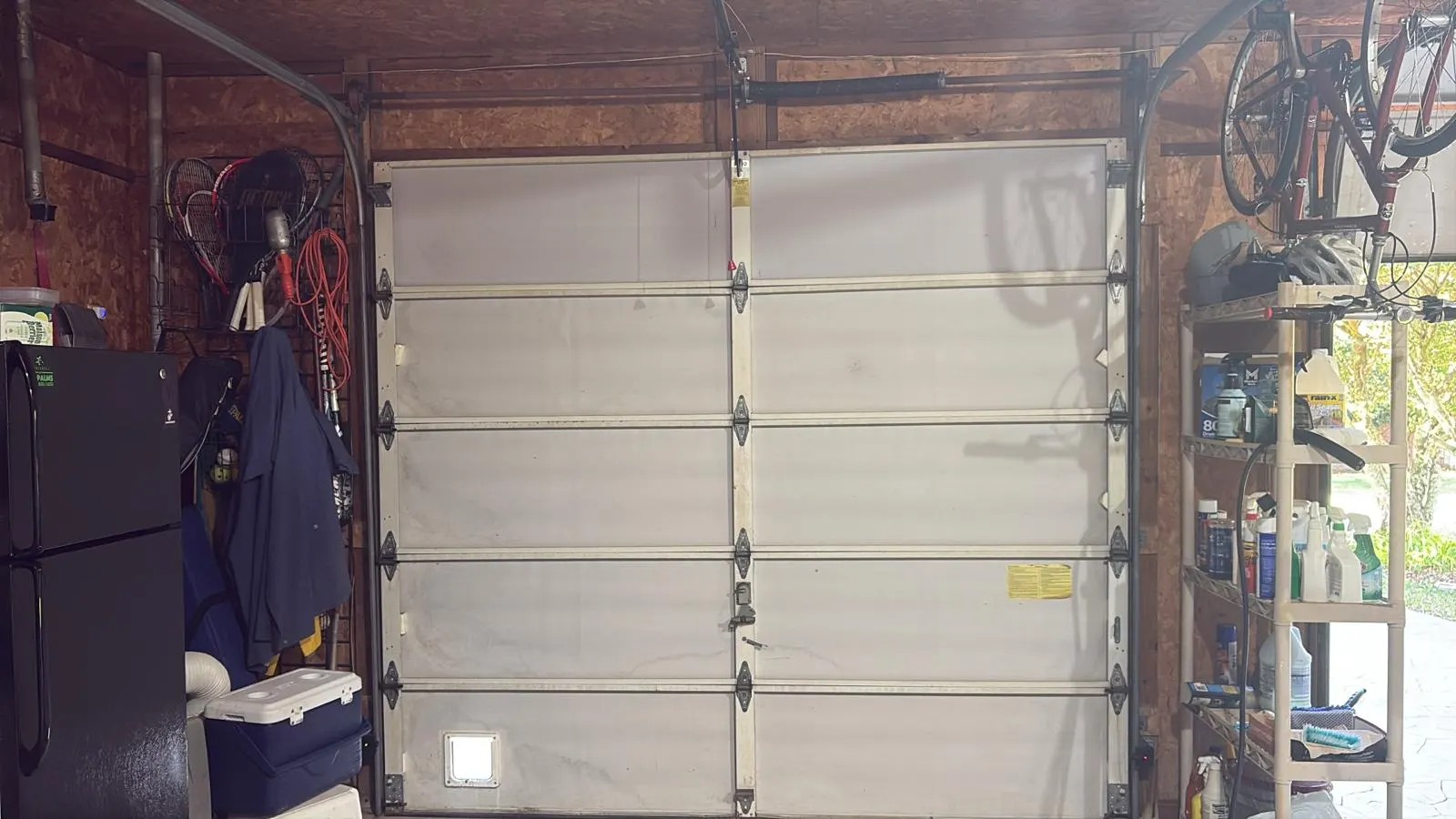
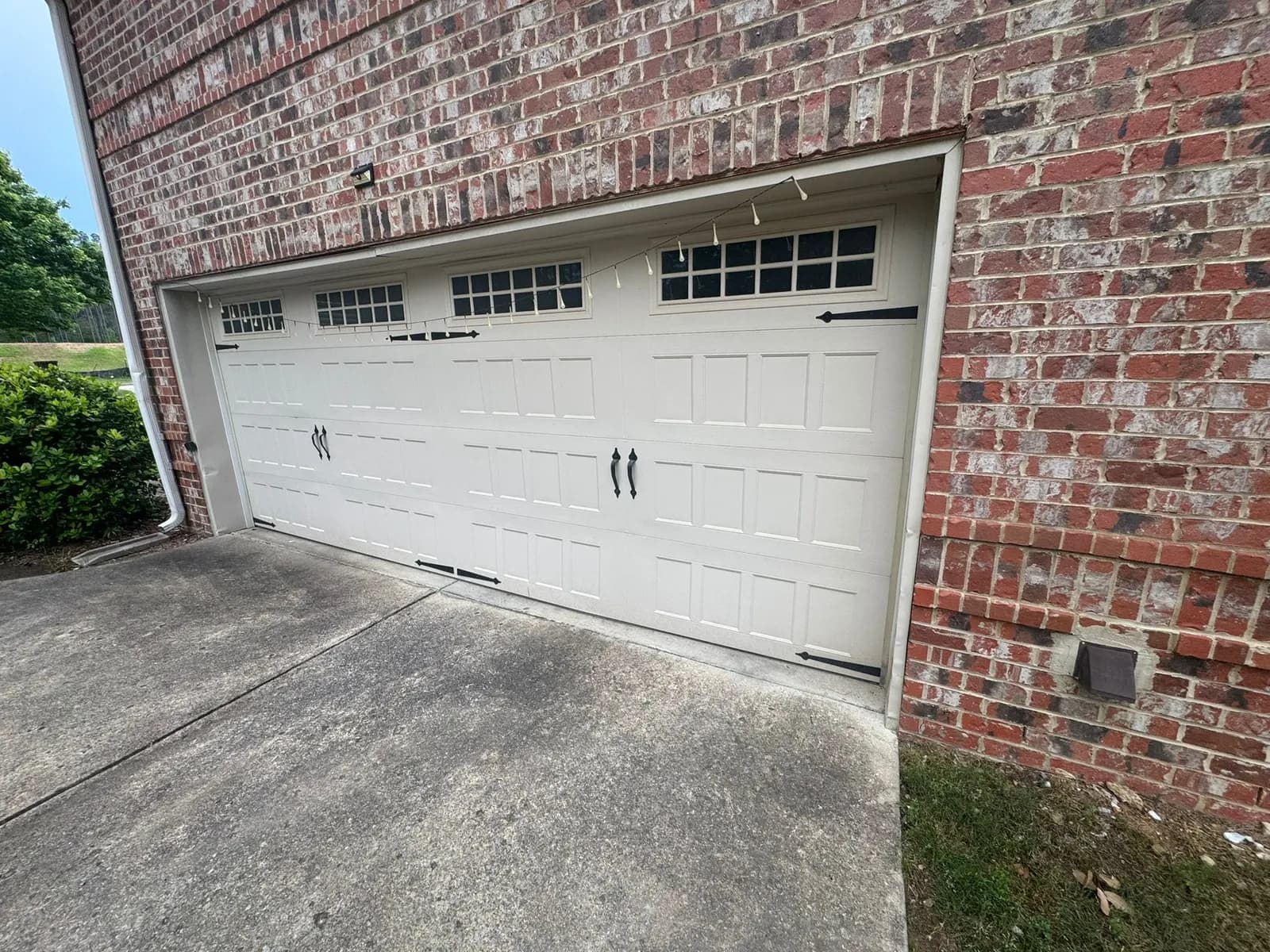
For the door, that means a single or small double opening, a long, skinny driveway with little room to swing a car around, and walls that sit right against a fence or a neighbor's garage. Doors get clipped by mirrors and bumpers more than doors on wide suburban driveways do.
Fixing a dented or cracked panel on a detached Lakewood garage
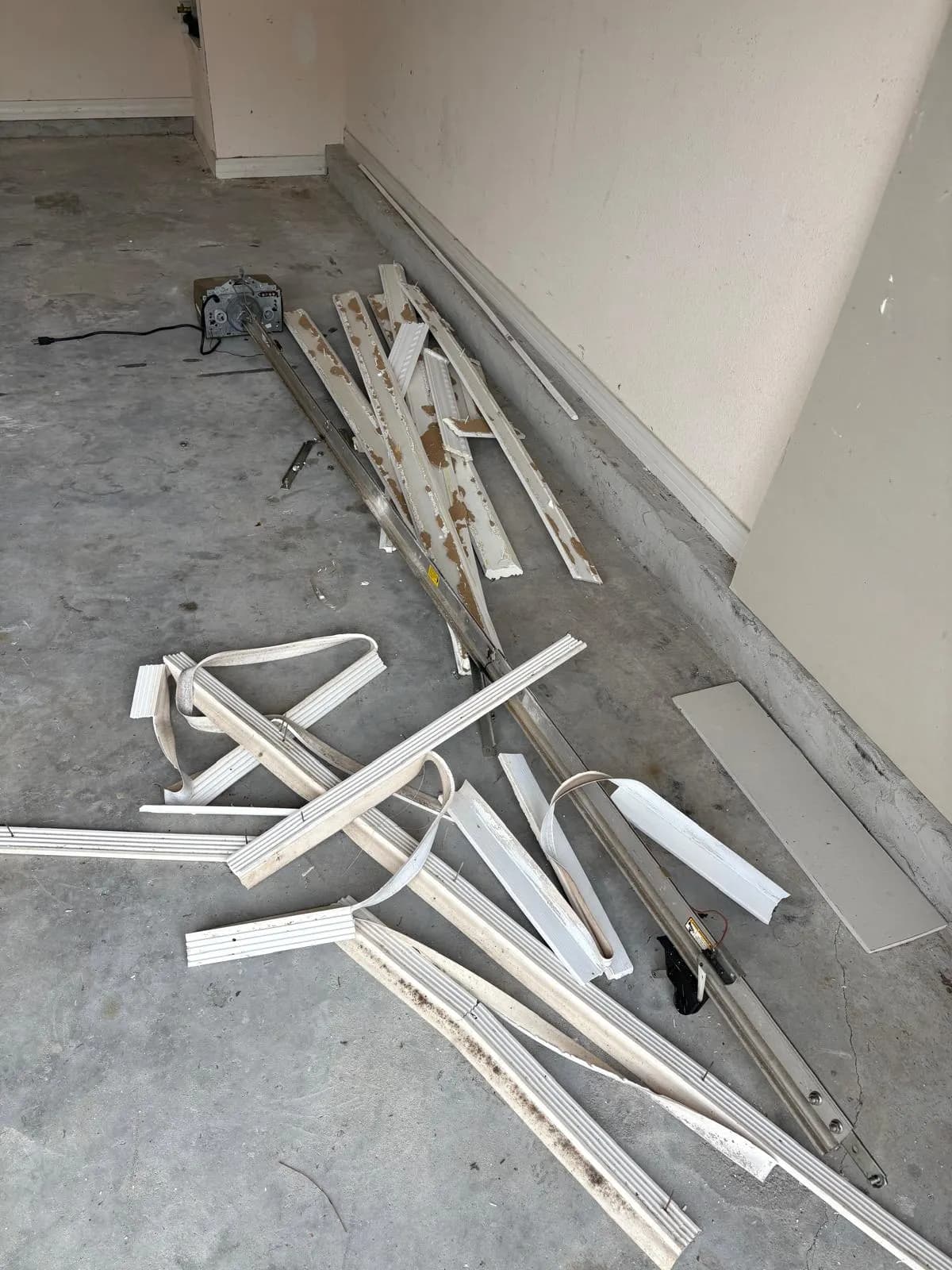
A bent bottom section is the classic Lakewood repair. When a car backs out of a tight driveway at an angle, it can catch the door, crease a panel and knock a roller out of the track. Keep running the door like that and the bend spreads to the hinges and the track.
Stop using the door if a section is creased or the door sits crooked. A single damaged section can often be replaced if the door model is still made; older or discontinued doors usually need a full replacement. Our garage door panel replacement page explains how that decision gets made.
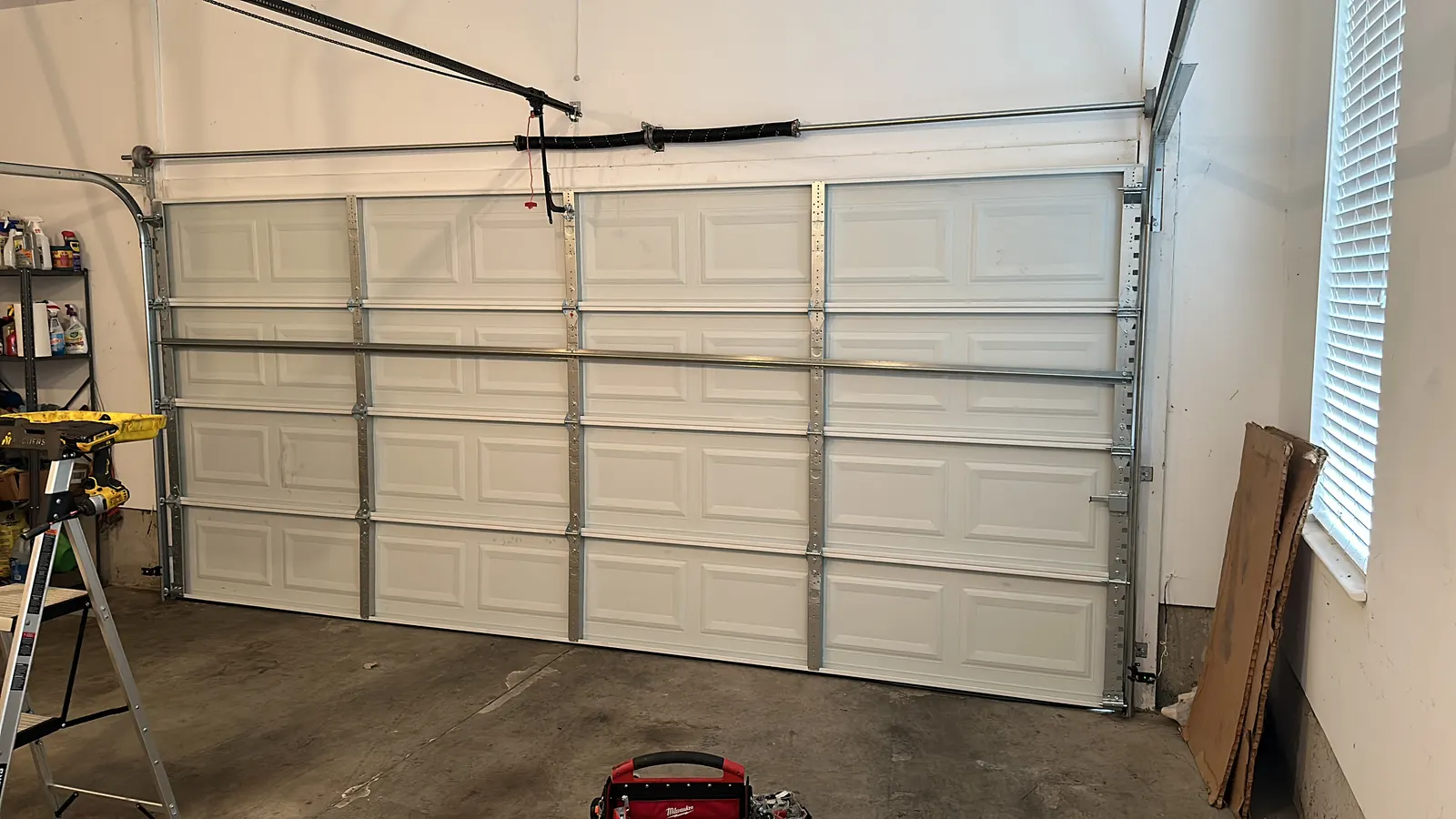
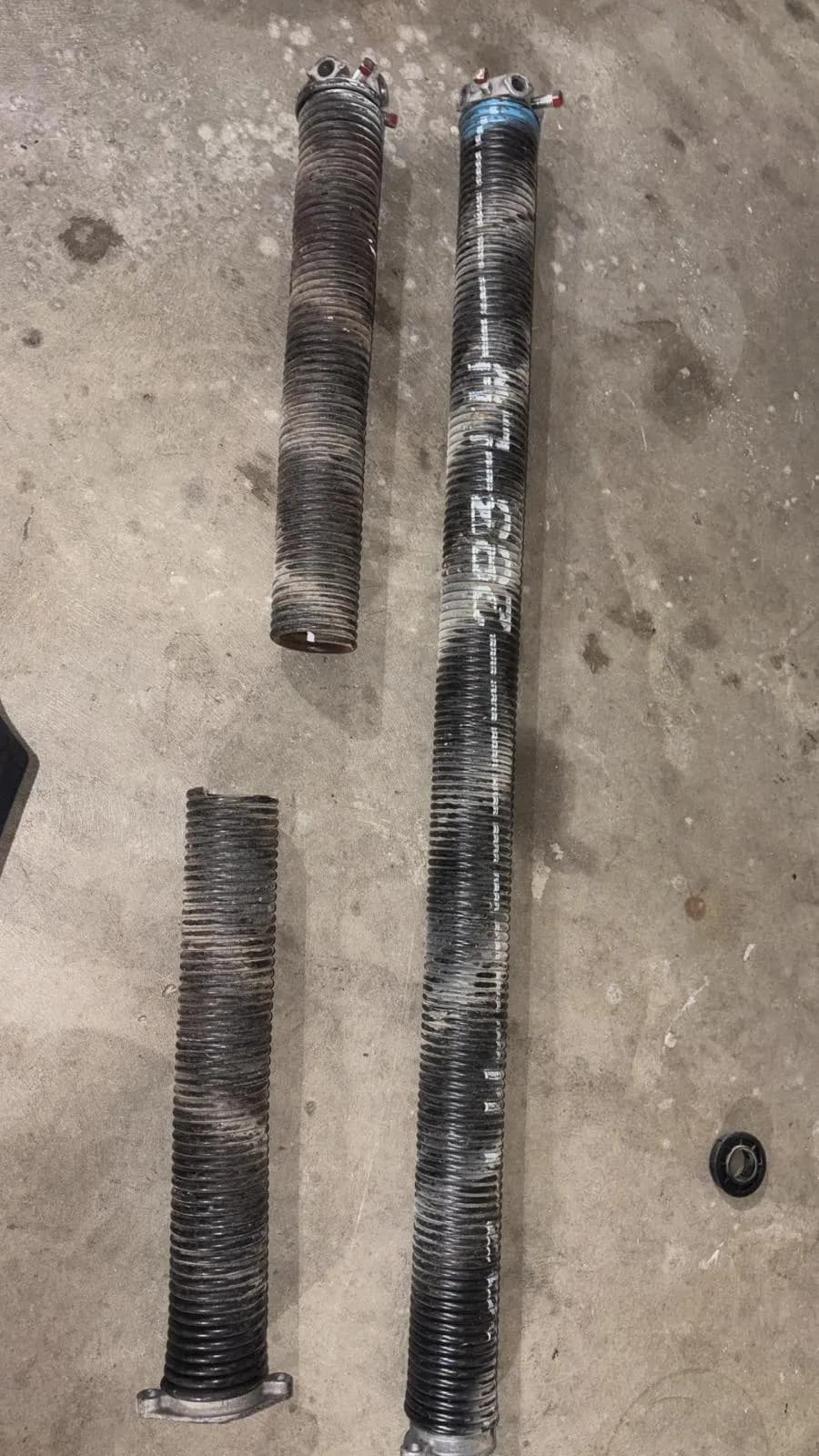
Many small detached garages also still run extension springs along the horizontal tracks. Each one needs a safety cable through it. If a spring is stretched, gapped or missing its cable, leave it alone and call a technician for broken spring repair. Those springs hold a lot of stored energy.
Do you need a permit or design approval for a new garage door in Lakewood?
For a straight swap, usually not. Lakewood's permit chart lists door and window replacement that doesn't change the structural framing as not needing a permit. Building a new garage is different: it needs a permit, construction drawings, zoning review and review by the Architectural Board of Review.
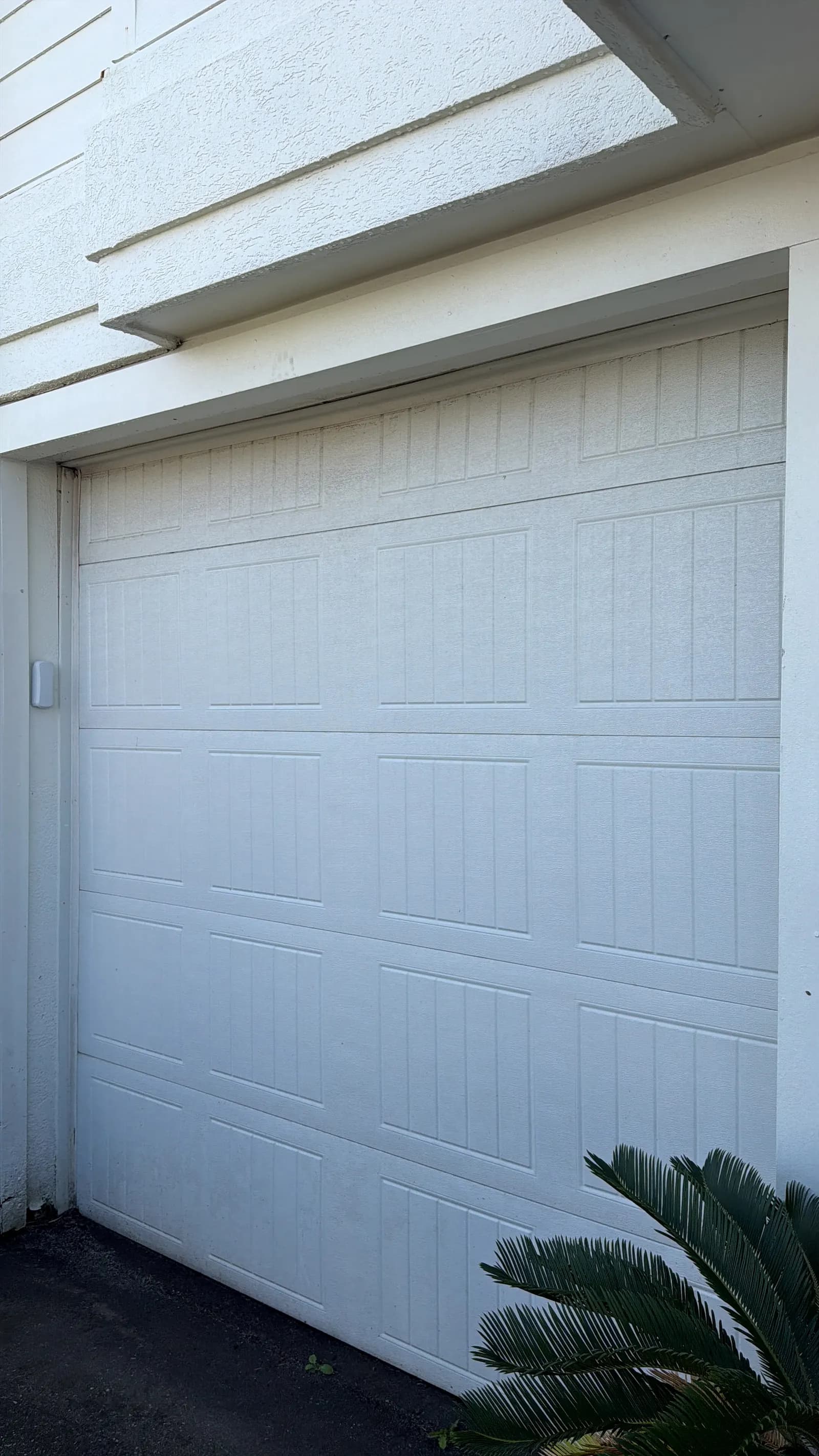
Looks matter here. The city's residential design guidelines say garage doors must be compatible with the architectural style of the house and the homes around it, and they prefer detached or rear-facing garages to garages that face the street. On a Craftsman, a foursquare or a Colonial, a carriage-style or simple paneled door usually fits better than a flush modern one.
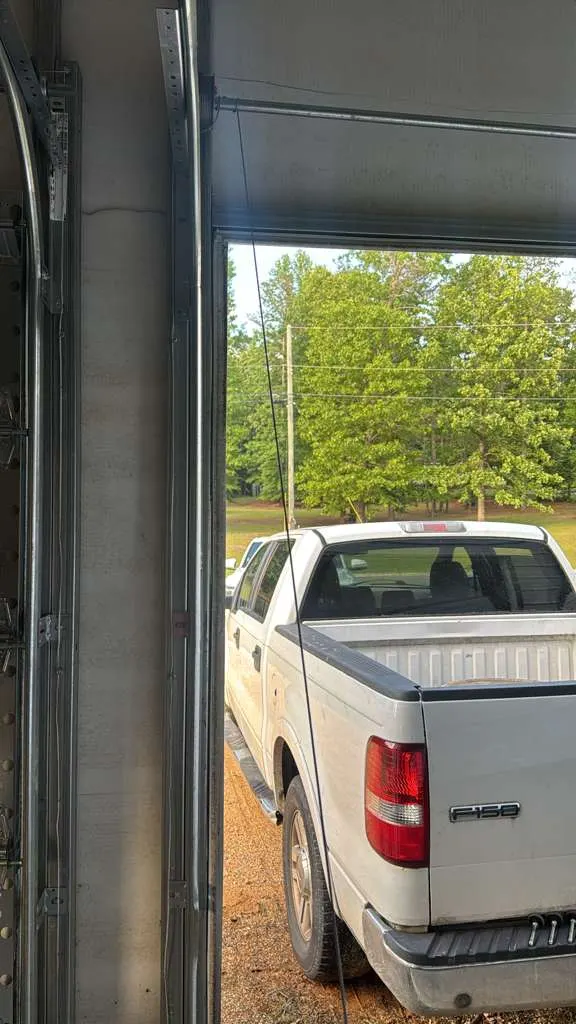
If you plan to widen the opening or rebuild the garage, talk to the city first. If you just need a new door in the existing opening, we'll measure it carefully, since pre-1930 openings rarely match today's stock sizes.
Adding an opener to a garage built before cars had remotes
Plenty of Lakewood garages have one bare bulb and one outlet, or no power at all. Today's rules for new garages call for GFCI outlets and one receptacle for each parking bay, which gives you a sense of what a modern opener setup expects.
Before an opener goes on an old door, the door itself has to be balanced and move freely by hand. An opener pulling a door that is binding or out of balance will wear out fast and can bend the top section. Low headrooms are common, so a jackshaft (wall-mount) opener or a low-profile rail is sometimes the better fit.
If the garage needs new wiring, that work belongs to an electrician. Once there is power where it's needed, see our garage door opener installation page for the choices.
Selling or renting in Lakewood: who gets inspected?
Lakewood does not run a point-of-sale inspection on owner-occupied homes. It does require a certificate of code compliance before the sale of any non-owner-occupied residential rental property, and that inspection covers the interior, the exterior and the yard. The city also does periodic inspections of rental properties.
Only about a third of Lakewood's housing units are detached single-family homes, so rentals are common, from older houses to the high-rises of the Gold Coast, and this rule matters to many owners. A garage door that won't stay up, a missing spring safety cable or a rotted panel can show up on the exterior list.
If you own a rental, fixing the door before the inspection is simpler than doing it under a deadline. Owner-occupants selling a home still face the buyer's own inspector, who will test the auto-reverse and look at the springs.
Lake wind, salt and Lakewood's historic blocks
Lakewood sits on the west side of Cleveland, on the Lake Erie shore. The west side usually gets far less lake-effect snow than the eastern suburbs, but the wind off the lake is cold and wet, and the streets get salted all winter. That salt ends up in slush at the bottom of the door, where it rusts the bottom bracket and cable ends.
The city has two neighborhoods on the National Register of Historic Places. Birdtown, an eight-street district on the southeast side, was built in the 1890s for workers at the nearby National Carbon Company. Clifton Park, in the northwest corner along the lake, is the city's wealthiest neighborhood, with larger homes.
Whichever part of town you're in, a spring life check is worth doing before winter. Lakewood is part of the Cleveland area we serve, next to Rocky River and the west side of Cleveland.