Signs you need off-track repair
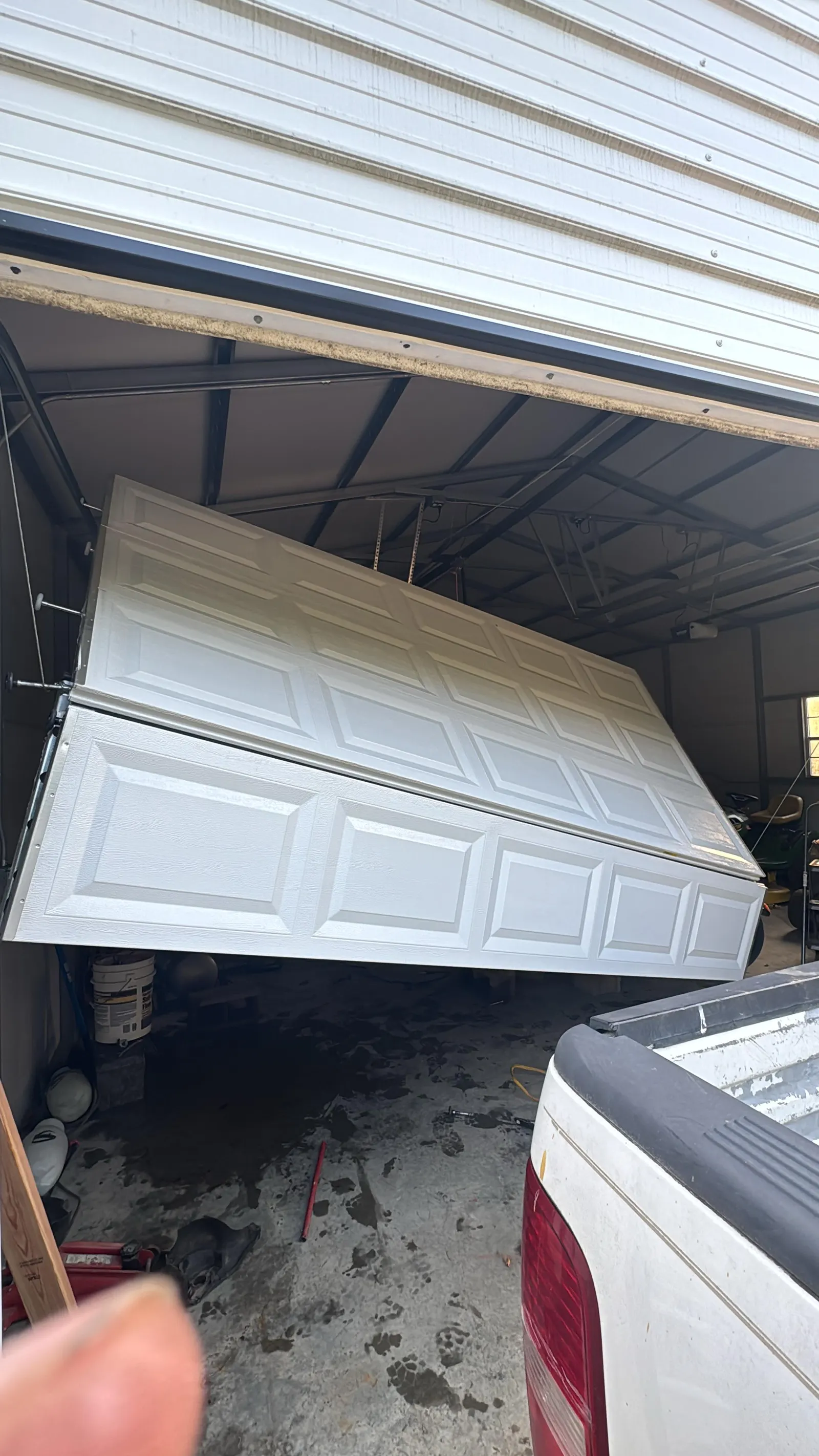
- Rollers have popped out of the track on one or both sides
- The door is crooked, tilted or hanging at an angle
- There is a visible gap between the door edge and the track
- The track is bent, dented or pulled away from the wall
- The door stopped partway and won't move up or down
- Grinding, scraping or popping sounds while the door moves
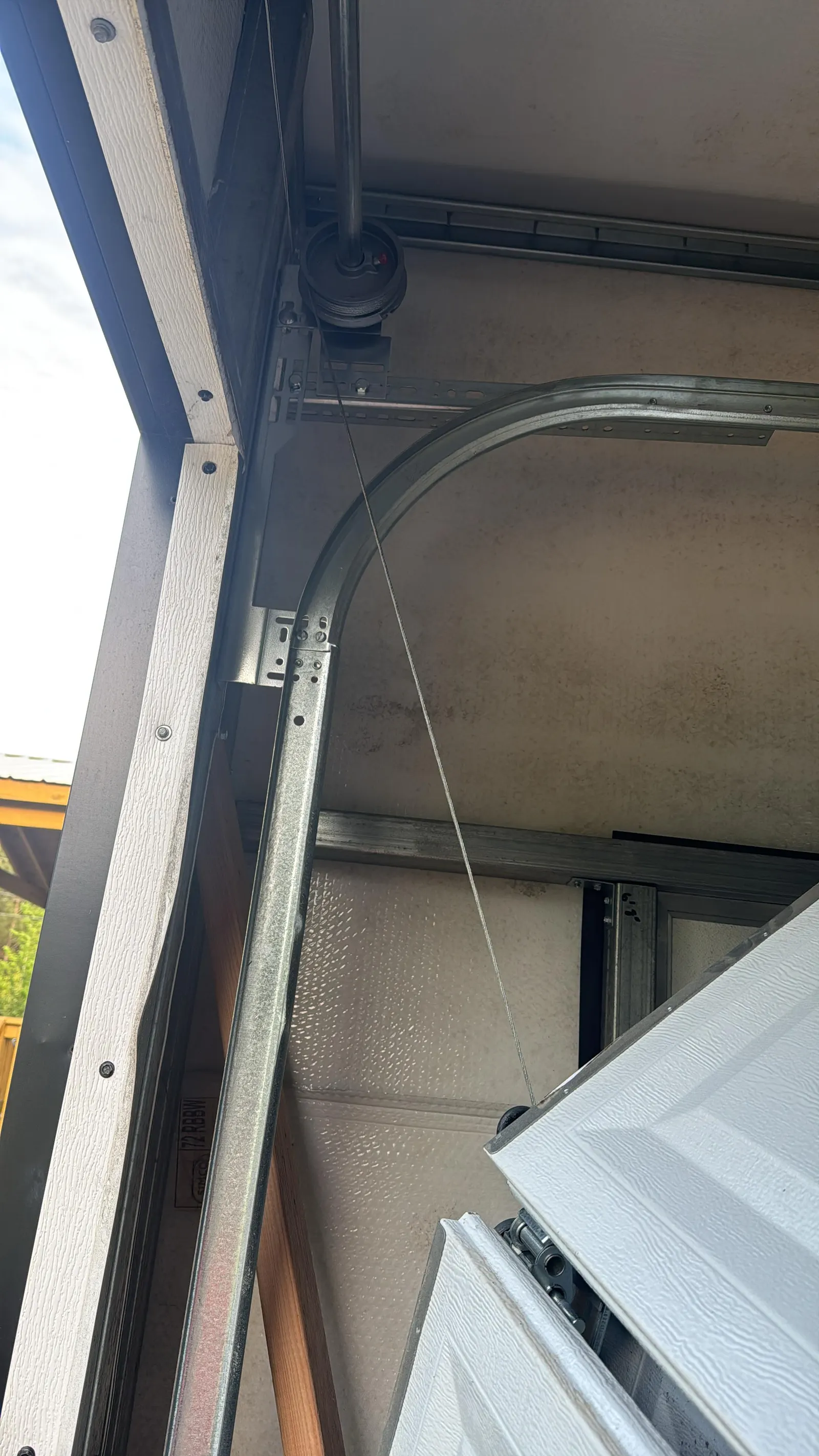
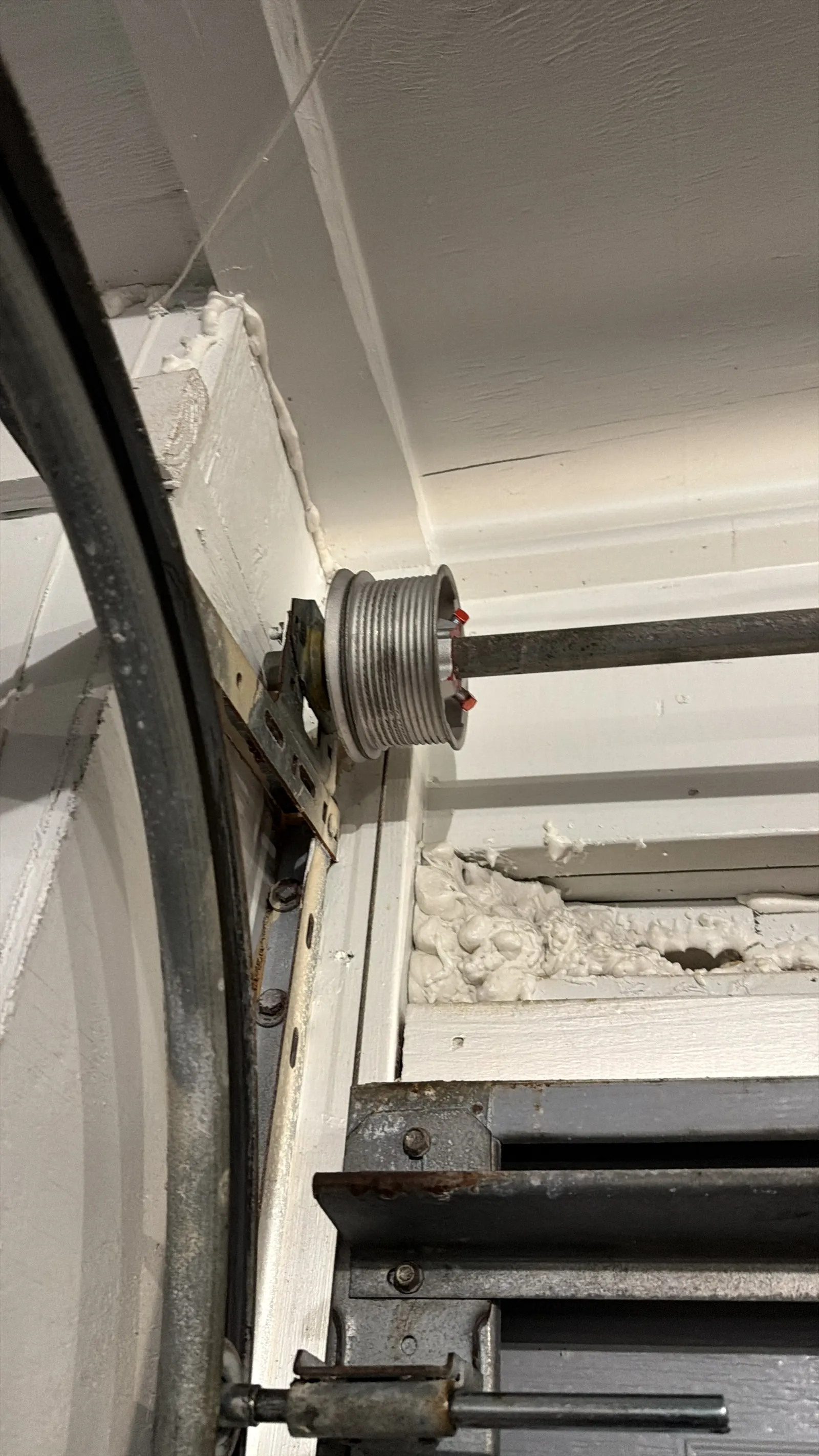
- A cable is slack or off its drum
- Panels look bowed or folded near the top or bottom
My garage door came off track. What should I do right now?
First, unplug the opener or switch off its breaker so nobody presses the button. An opener will keep pushing or pulling on a derailed door, and that is how a fixable problem turns into bent panels and a broken cable.
Then leave the door alone. It may look like you could just push a roller back in, but the door is heavy, it is probably under uneven spring tension, and it can shift or fall if something gives. Keep people, pets and cars out of the opening. If the door is stuck open and you can't secure the garage, tell us that when you call.
- Don't run the opener or use the wall button
- Don't pull the emergency release on a crooked door; it can drop
- Don't hammer or pry the track back into place
- Don't park under a door that is stuck partly open
How does a garage door get off track?
Doors don't jump the track on their own. Something forces the rollers out, and finding that cause is half the repair. The most common ones we see:
- Backing into the door or hitting it with a car, mower or trailer
- A broken cable or spring that lets one side drop
- Worn or broken rollers that slip out of the track
- Loose track brackets or lag bolts that let the track spread
- Something left in the track path, like a bike, bin or storage shelf
- An opener with force settings that keep driving a binding door
Off track at the top, bottom or in the middle: what it tells us
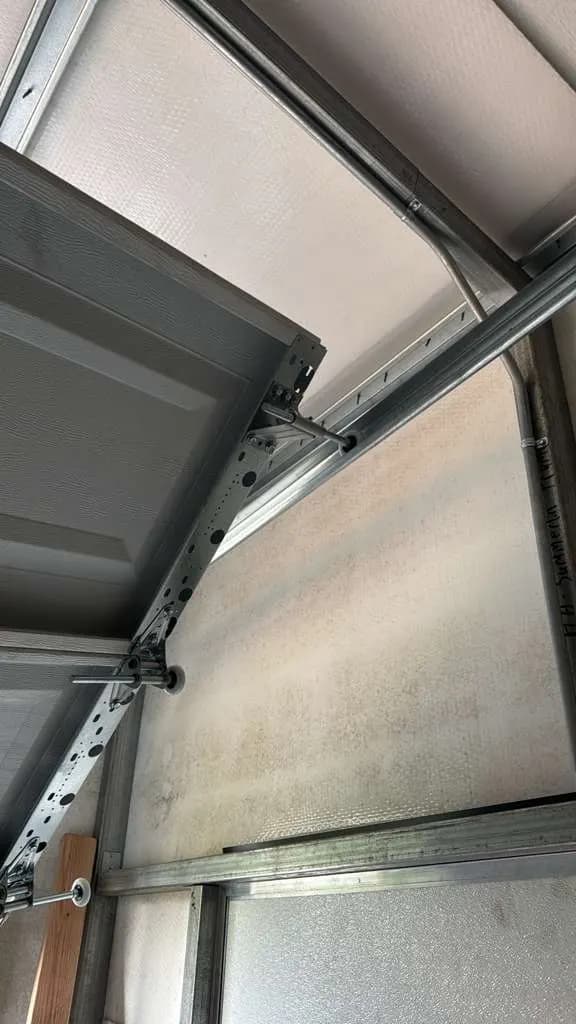
Where the door came off gives a good clue about why. A door that is off track at the top, near the curve, often has a cable or spring problem, or the horizontal track has sagged because a hanger came loose from the ceiling. A door off track at the bottom usually got hit, or a bottom roller or bracket failed. Off track in the middle tends to mean the vertical track has spread away from the door or a roller stem has broken.
Off track on one side with the door tilted almost always involves a cable. In that case the cable has to be dealt with before the door can be realigned; our garage door cable repair page explains why that work is never a DIY job.
How a technician realigns the track
Getting the door back on track is not just about pushing rollers in. A proper repair puts the door back in a track system that is straight, plumb and set at the right distance from the door so it doesn't happen again.
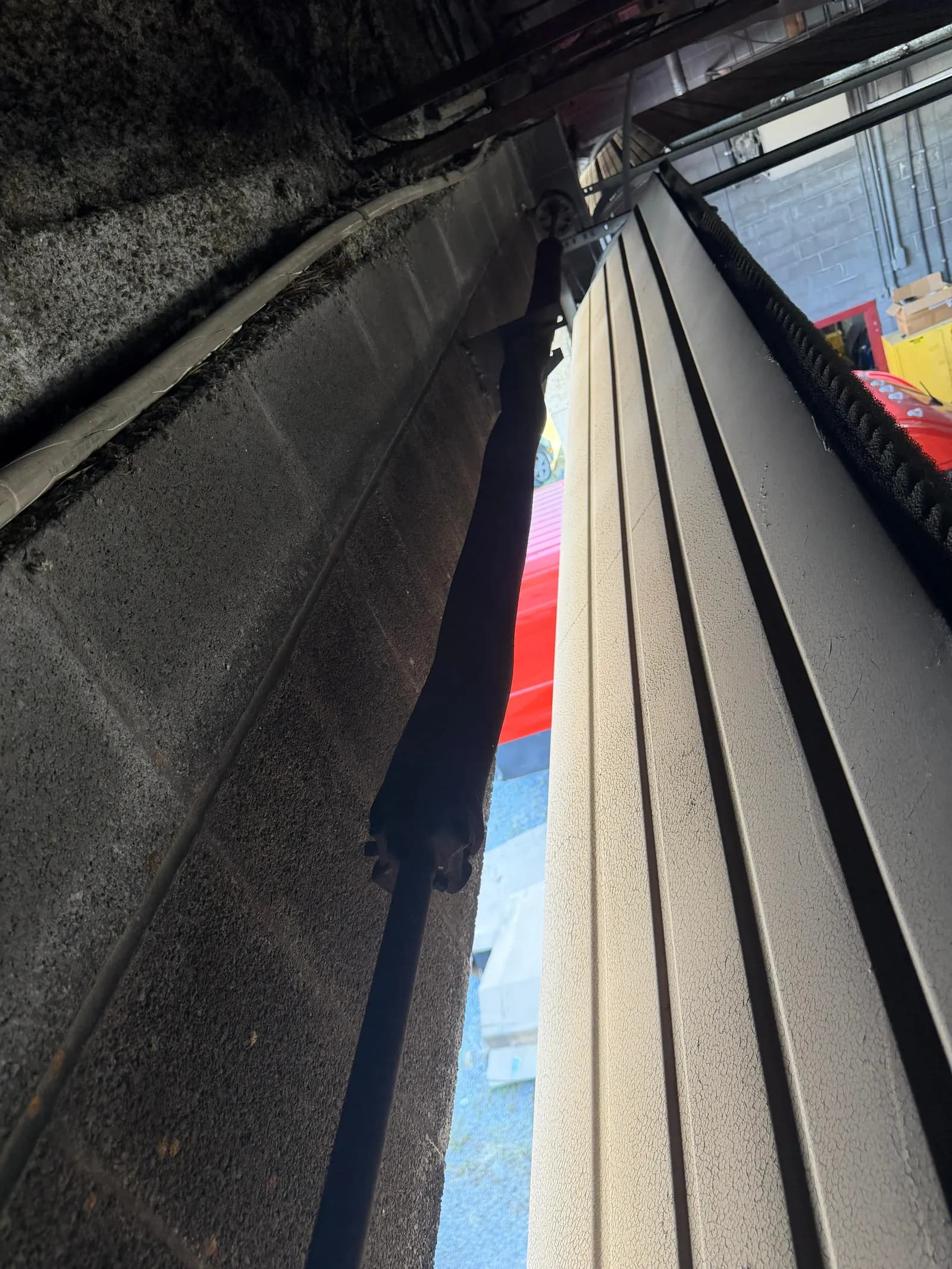
That means checking the vertical tracks with a level, making sure both tracks are parallel, and confirming the horizontal tracks are supported and sloped correctly. Mounting brackets and lag bolts get tightened or replaced, and any track section that is kinked gets straightened or replaced. Bent track can feel fine for a few days and then throw the door off again, so we don't leave it.
Can an off-track garage door be fixed, or does it need replacing?
Most off-track doors can be repaired. The track, rollers and cables are replaceable parts. The real question is the panels. If the door was hit hard or twisted while the opener kept running, a section can be folded or cracked through its frame. One damaged section can often be swapped, as covered on our garage door panel replacement page.
If several sections are damaged, the door is older, or matching panels are no longer made, a new door may make more sense than piecing an old one together. We'll show you what we see and explain the options, including garage door installation, without pushing either way.
What affects the cost of off-track garage door repair?
Off-track repairs vary a lot, so we price after seeing the door. The main factors:
- Whether rollers simply popped out or the track is bent
- Whether cables or springs failed and need replacing
- How many panels, if any, are damaged
- Door size, weight and material
- Whether the opener or its rail was damaged too
Keeping it from happening again
Most derailments trace back to worn parts or a single impact. Worn rollers are a big one, because a roller with a cracked wheel or bent stem can slip out of the track. Our garage door roller replacement page covers the signs. A yearly tune-up that checks track alignment, bracket bolts and opener force settings also catches most problems early. And keep the track path clear: storage shelves and bikes leaning near the track are an easy fix.
How the service works
- 1
Make it safe
We disconnect the opener and clamp the door so it can't drop or shift.
- 2
Relieve tension
If a cable or spring is involved, spring tension is released in a controlled way.
- 3
Re-seat and realign
Rollers go back in the track, and tracks are straightened, plumbed and re-secured.
- 4
Replace damaged parts
Bent track, broken rollers, frayed cables or damaged panels are replaced as needed.
- 5
Balance and test
We check door balance, run the opener and test the safety reverse and photo eyes.