
Why Is My Garage Door Off Track? Causes and What to Do
By the H&D Garage Door team · Updated
Why is my garage door off track?
A garage door goes off track when one or more rollers slip out of the metal rails that guide the door. The most common causes are an impact, such as a car backing into a partly open door, a lift cable that breaks or slips off its drum, worn or broken rollers, and track that has loosened, bent or drifted out of line. An opener that keeps pushing a door that is binding can also force rollers out.
An off-track door is not just stuck. It is a heavy panel held up by uneven spring tension and partial support, and it can fall. Stop using it, unplug the opener and keep everyone clear until it is repaired.
What are the signs a garage door is coming off track?
Doors often give warnings before rollers leave the track completely. Watch and listen for these.
- A roller sitting outside the track or riding on the track's edge
- A visible gap between the door edge and the vertical track
- The door hanging lower on one side or tilting in the opening
- Grinding, scraping or popping as the door moves
- The door stopping partway and shuddering
- A section that bows outward or a bent track
- A cable hanging slack on one side
Can hitting the door with a car knock it off track?
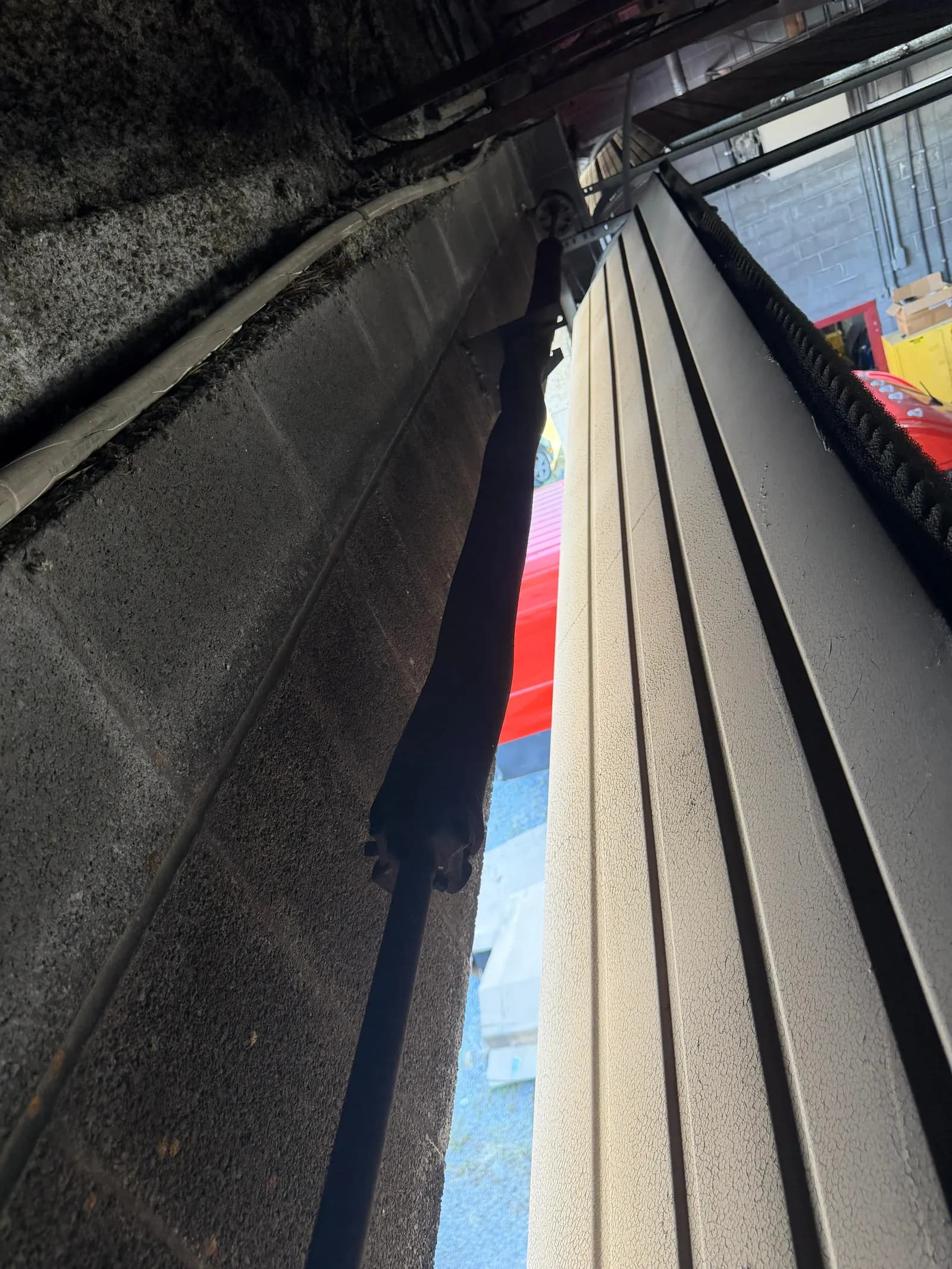
Yes, and it's one of the most frequent causes. A bumper that taps the bottom section while the door is still moving can bend the vertical track, crack a section or pop the bottom rollers out. Even a light impact can twist the track enough that the door binds a few cycles later.
If a car or anything heavy has hit the door, don't run it to test it. Look at the tracks and rollers from a distance. A bent track or rollers out of line need to be fixed before the door moves again.
How does a broken cable or spring pull a door off track?
The lift cables on each side raise the door evenly. If one cable snaps or comes off its drum, that side loses support while the other side keeps lifting. The door twists in the opening and the rollers on the weak side get pulled out of the track. A broken spring on a two-spring or extension-spring door does something similar, because one side is suddenly doing more work.
This is the most dangerous kind of off-track door. The remaining spring is still loaded, and the door can shift or fall without warning. Our article on what to do when a garage door cable comes off explains why you should leave it alone, and garage door cable repair covers the fix.
Can worn rollers cause the door to jump the track?
They can. Rollers have bearings that wear out, and their wheels can crack, flatten or chip. A roller that wobbles or binds doesn't follow the curve of the track smoothly, and over time it can climb out, especially at the curve where the vertical track turns horizontal. Cheap plastic rollers and rollers with no bearings wear out sooner than steel or nylon rollers with sealed bearings.
Replacing worn rollers before they fail is far simpler than repairing an off-track door. If yours are noisy, wobbly or visibly damaged, ask about roller replacement at your next service visit.
Do loose or misaligned tracks cause derailing?
Yes. The tracks are held by brackets bolted to the wall and ceiling, and those bolts can loosen from vibration over years of use. When a track shifts, the gap between the door and the track changes. If the track moves too far away from the door, rollers can drop out. If it moves too close, the door binds.
Older garages and garages with wood framing that has shifted or softened from moisture are more prone to this. In northern cities with heavy road salt, rusted brackets and fasteners can fail as well, which is one reason routine inspections in places like Cleveland include the track hardware. See our Cleveland garage door repair page for more on local conditions.
Can an object in the track or the opener's force cause it?
Both can contribute. A tool, toy or buildup of debris in the bottom of the vertical track can stop a roller and lever the door sideways. An opener with its force set too high will keep pushing against that resistance instead of reversing, which can twist the door out of the track. Force settings are part of the opener's safety system and should be set by a technician, not turned up to make a stubborn door move.
Is it safe to put a garage door back on track yourself?
No. Online videos show people forcing rollers back in with pliers or loosening track bolts while the door is partly open. Doing that while the springs are still holding tension, or while a cable is slack, can release the door suddenly. A door that drops onto a person can cause serious injury.
A technician secures the door first, takes tension off where needed, straightens or replaces the track, refits rollers and cables, and then checks the springs and balance before the door runs again. That last step matters, because a door that came off track usually did so for a reason that also needs fixing.
Which doors are most likely to come off track?
Any sectional door can derail, but some setups are more prone to it. Doors with worn steel rollers and no bearings, doors on track that was never braced well at the curve, and doors in garages where cars park close to the opening all see more trouble. Low-headroom track systems, which use a tighter curve to fit under a low ceiling, leave less room for a roller to wander.
High-use doors wear faster simply because they move more. A door that opens many times a day, or a commercial door at a busy loading area, puts more miles on its rollers and track brackets. Older one-piece tilt-up doors work on a different system entirely, with pivoting hardware rather than rollers in a curved track, and when they jam they can be just as dangerous.
How can you keep a garage door from coming off track?
Most of prevention is noticing small changes early. A door that starts to grind, catch at one spot or sit unevenly is telling you something before a roller leaves the track. Keep the tracks clear of stored items, and make sure everyone waits until the door has fully opened before backing out.
Routine service helps too. A technician checks roller wear, tightens track brackets, looks at cables and drums, and tests the door's balance and the opener's force setting, which together cover most of the causes in this article. Fixing a worn roller or a loose bracket during a tune-up is far simpler than straightening a twisted door after it derails.
What should you do while you wait for repair?
Leave the door where it is, whether open, closed or stuck partway. Unplug the opener so it can't be triggered by a remote or a family member. Keep children, pets and cars away from the opening. If the door is stuck open and you need to secure the house, lock the inside door between the garage and your home.
Then call for off-track repair. Be ready to describe what happened just before, such as a bang, an impact or a grinding noise, and whether you can see a loose cable. That helps the technician come prepared. Call (888) 754-4130 and we'll schedule the earliest available visit.