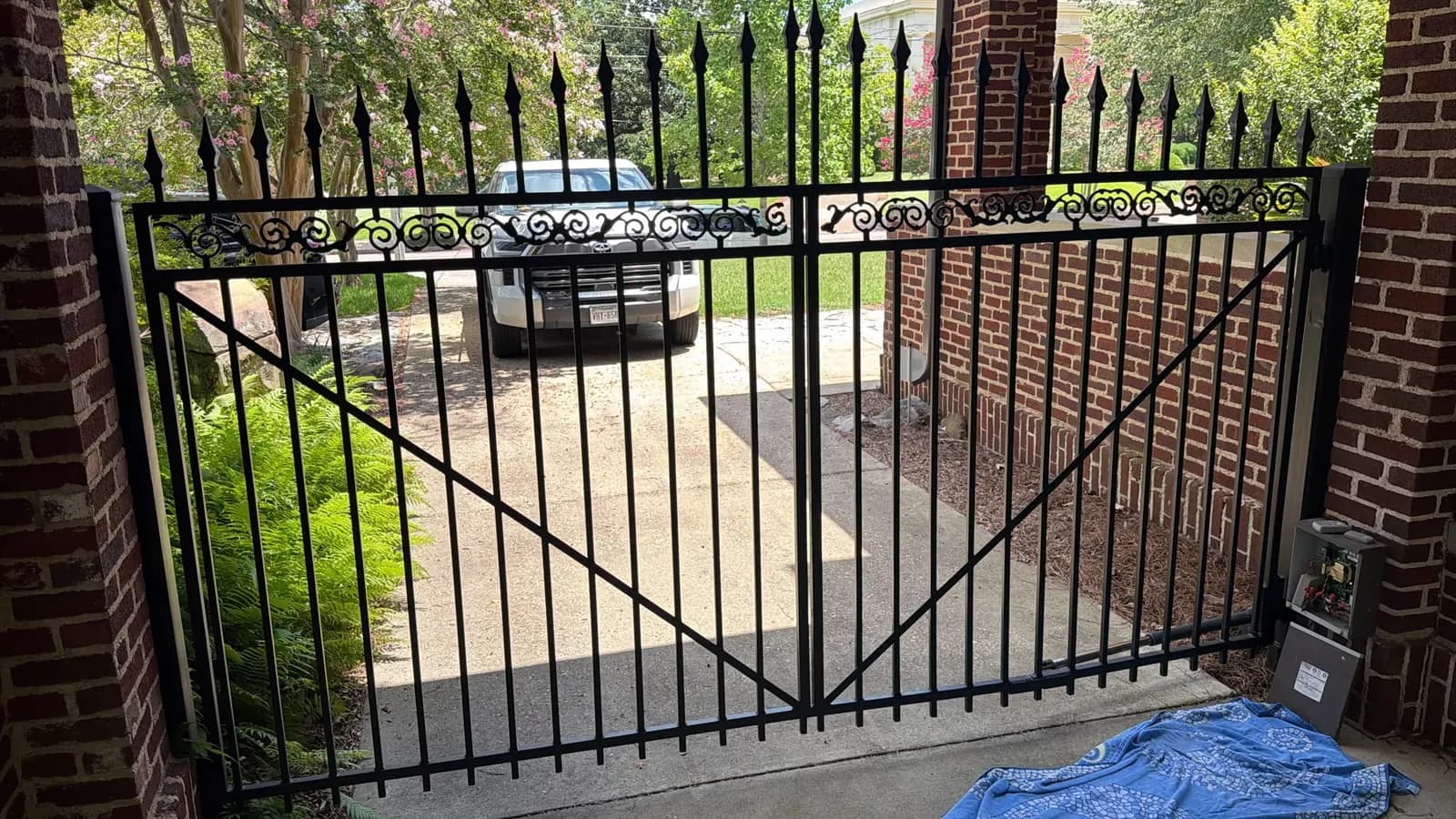
Signs you need gate installation
- You want privacy or security for a driveway that is open to the street
- Your current gate is rusted through, failing at the posts or beyond repair
- You want to automate a manual gate you open by hand
- Your gate operator is undersized and keeps breaking down
- Your gate has open rollers, gaps or pinch points you want made safe
- Your HOA or business needs a new entry gate or access system
Sliding gate vs. swing gate: which is right for you?
The biggest decision is how the gate moves, and your site usually decides it for you.
A swing gate needs clear room for the leaves to swing, plus extra room for the people and cars that will stand nearby. On a short driveway, a gate that swings toward the street can block the sidewalk or leave a car hanging in the road while it opens. Swing gates generally prefer level ground; on a driveway that rises across the swing path, the gate can hit the slope unless it is designed for it.
A sliding gate needs a straight run of space alongside the opening, roughly the gate's width plus some extra for the operator and the gate's tail. Slide gates handle short driveways, slopes in the direction of travel and windy sites better than swing gates, and they are common on wide openings and commercial sites.
- Swing gate: good when there is room in front of or behind the opening, the ground is level and you like the look of a classic double-leaf gate.
- V-track slide gate: good when there is side room and a solid, clean driveway for the track.
- Cantilever slide gate: good when there is side room plus extra length for the counterbalance, and you want no track in the driveway.
Which gate material should you choose?
Material affects weight, maintenance, look and how big an operator the gate needs.
- Aluminum: light, does not rust, easy on operators. A good fit for humid and coastal climates. Less rigid than steel on very long spans.
- Steel: strong and rigid, common on commercial and security gates. Needs a good finish, such as galvanizing or powder coat, to resist rust.
- Ornamental (wrought) iron: classic, heavy and very durable when maintained. The weight calls for heavier hinges, posts and operators.
- Wood: warm, private look. Heavier than it looks and moves with moisture, so it needs a steel frame or careful bracing to stay square.
- Mixed builds: a steel or aluminum frame with wood or composite infill gives privacy without the sag of an all-wood gate.
How do you size a gate operator?
An operator is sized by the gate's weight and length, how often it will cycle each day, and the site's conditions. Manufacturers publish maximum gate weight and length for each operator, and those limits assume a gate that moves freely. A solid privacy gate also catches wind, which adds load a picket gate never sees.
Usage matters as much as weight. The UL 325 standard sorts operators into Class I (one-to-four family homes), Class II (commercial and general access, including multi-family buildings of five or more units, hotels and retail), Class III (industrial, limited access) and Class IV (restricted, guarded sites). A community entrance needs a Class II operator built for heavy cycling, not a residential kit.
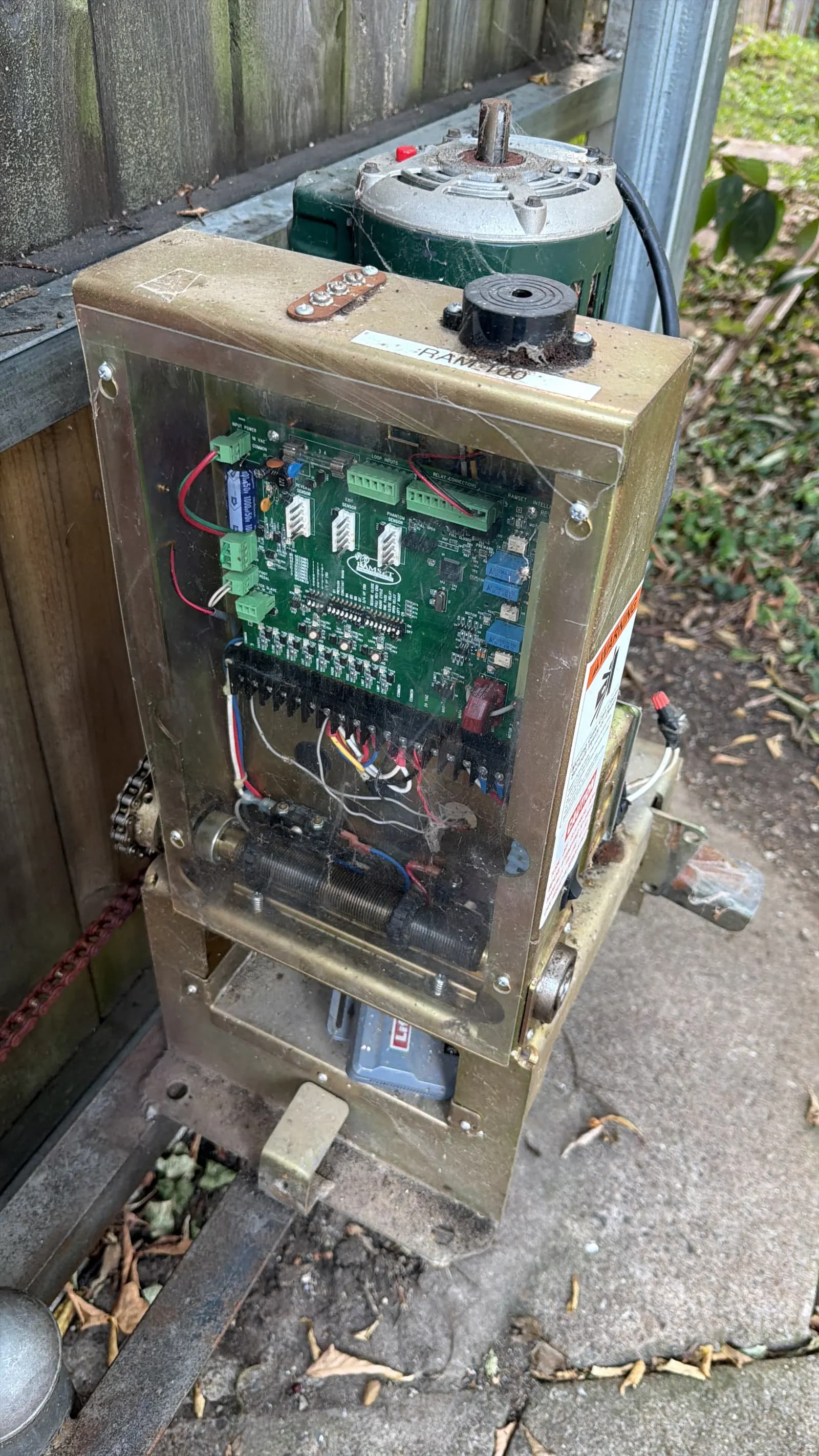
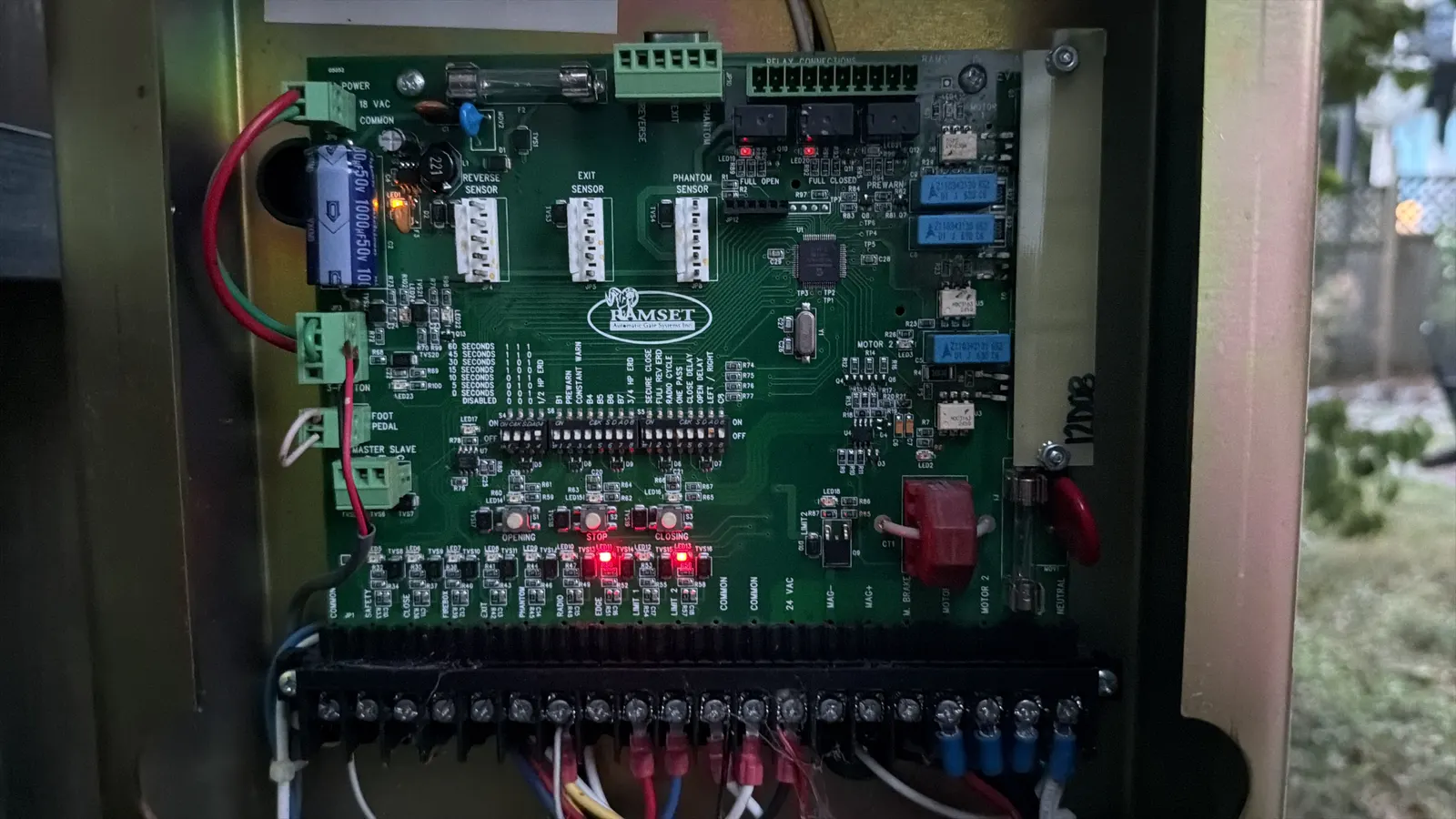
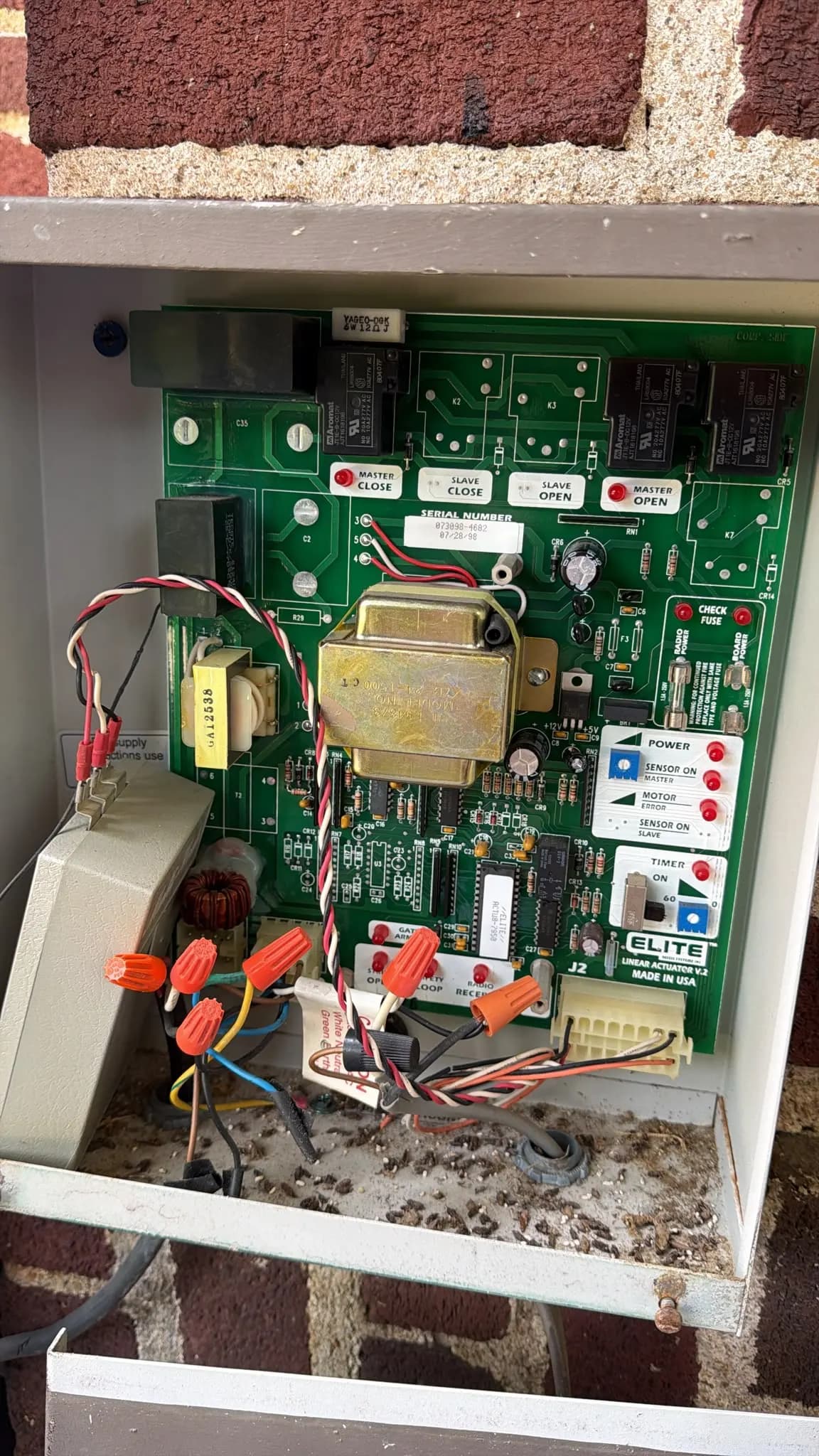
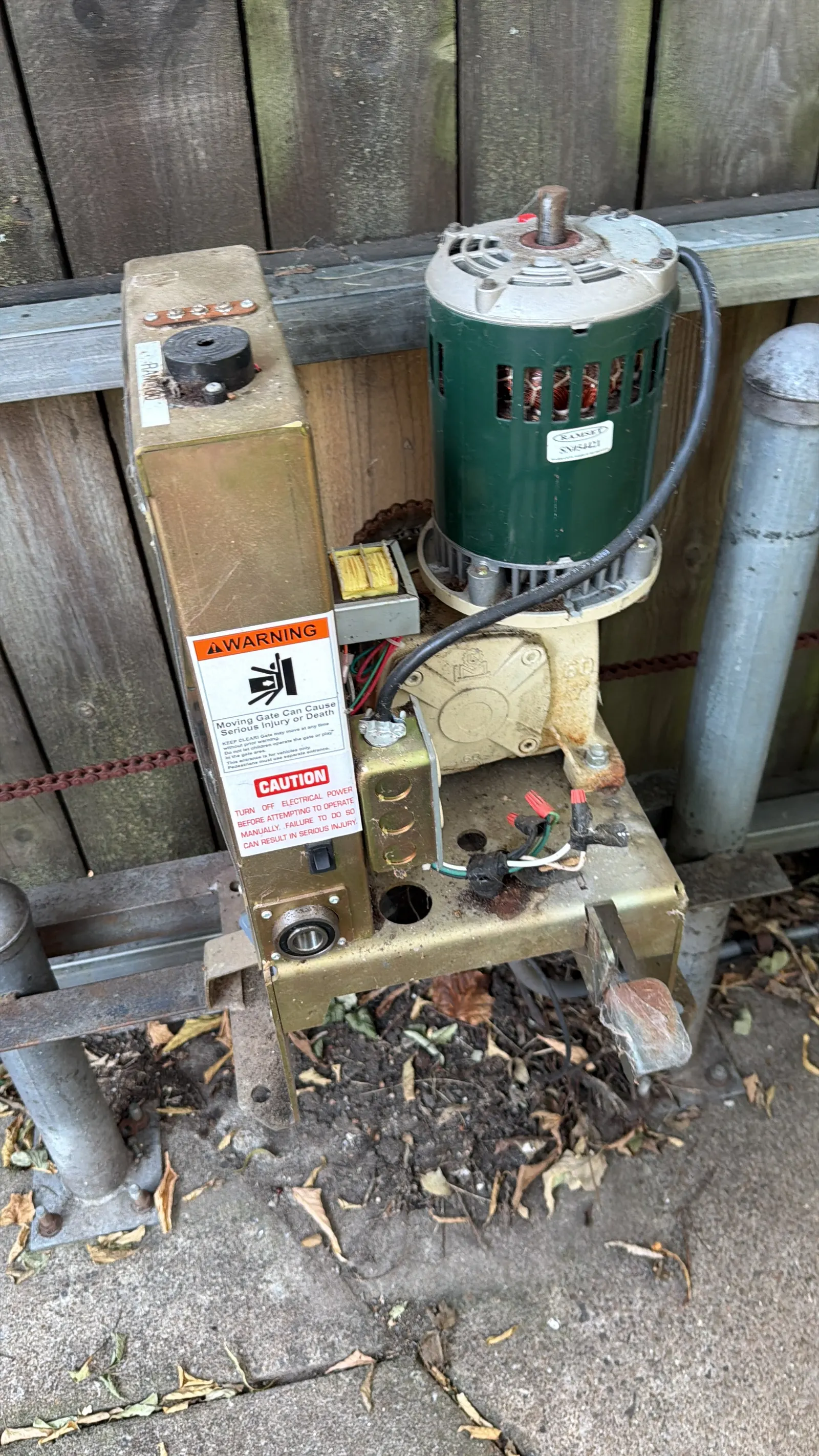
We also plan power. Options include standard wired power, battery backup for outages, and solar for remote gates with light traffic. Solar is sized to the gate's daily cycles and the accessories it runs. Undersizing any of this is the most common reason we later end up doing gate opener repair on a newer gate.
What are UL 325 and ASTM F2200?
They are the two main US safety standards for automatic vehicular gates, and they work together. UL 325 covers the operator. ASTM F2200 covers how the gate itself is built.
UL 325 requires entrapment protection at each spot where a person could be caught by the moving gate. A system typically combines the operator's built-in obstruction sensing with external devices such as photo eyes or safety edges, and current editions require those external sensors to be monitored so the gate will not run normally if one fails. UL 325 also sets the usage classes above. Its gate operator rules apply to vehicular gates, not pedestrian gates, which is why foot traffic should have its own separate walk gate.
ASTM F2200 sets construction rules for automated vehicular gates: no gaps a hand or arm can reach through near the operator's path, openings screened from the ground up to 4 feet, covered rollers on slide gates, positive stops so the gate cannot travel off its hardware, and no protrusions that can snag. We build and retrofit to both.
Planning for slope, space and the street
Before we quote, we look at the things that decide whether a gate works every day:
- Stacking space: room for a car to pull fully off the street while the gate opens.
- Slope and grade: a swing path that rises can hit the ground; slide gates and special hinges solve this.
- Side room: a slide gate needs clear space alongside the fence line, free of trees, meters and walls.
- Soil and posts: posts and footings carry the gate's weight and the operator's push. Poor soil needs deeper footings.
- Power and conduit: where power comes from, and where loops, keypads and intercoms will be wired.
- Rules: HOA approval, local permits and setback rules can affect where a gate can go. Check these before you order.
Adding access control and safety devices
An automatic gate is only as convenient as the way people get through it. During installation we plan remotes, keypads, telephone or video intercoms, app-based access and vehicle loops so wiring goes in once and in the right place. An exit loop or wand lets cars leave without a remote. Safety loops under the gate keep it from closing on a vehicle.
The safety devices themselves are part of the installation, not an add-on: photo eyes and safety edges positioned to cover each entrapment zone, warning signs on both sides of the gate, and a separate pedestrian gate if people will walk through. For keypads, intercoms and visitor systems, see gate access control.
Already have a gate you like? We can often automate it instead of replacing it, as long as the gate is solid, moves freely and can be brought up to current construction standards. See gate repair for what that inspection looks like.
What affects the cost of gate installation?
Every gate is a custom job, so we quote after seeing the site. The main cost factors are the opening's width and the gate's height, the material and design, swing versus slide versus cantilever, post and footing work, the operator's class and power source, how far power has to run, access-control hardware, and any work to meet HOA or permit requirements.
Two gates that look alike can be very different jobs. A slide gate on a flat, open lot with power nearby is simpler than a swing gate on a sloped driveway that needs new posts, a long trench for power and a call box at the street. We put each of those items on the quote so you can see where the cost comes from and adjust the design if you want.
We serve gate installation customers in all four markets, with local pages for Orlando gate installation and Nashville gate installation. Thinking about a new garage door at the same time? We also do garage door installation.
How the service works
- 1
Site visit
We measure the opening, check slope, side room, soil and power, and talk through how you will use the gate.
- 2
Design and quote
Gate type, material, operator class, power and access controls, with a written quote and the reasons behind each choice.
- 3
Approvals
You confirm HOA and permit needs; we provide the specs they usually ask for.
- 4
Install the gate and posts
Posts, footings, hinges or track and rollers go in first so the gate moves freely before any operator is attached.
- 5
Install operator and safety
Operator, photo eyes, edges, loops, signs and access controls are installed, wired and set.
- 6
Walkthrough
We test every device, show you the manual release and program your remotes and codes.