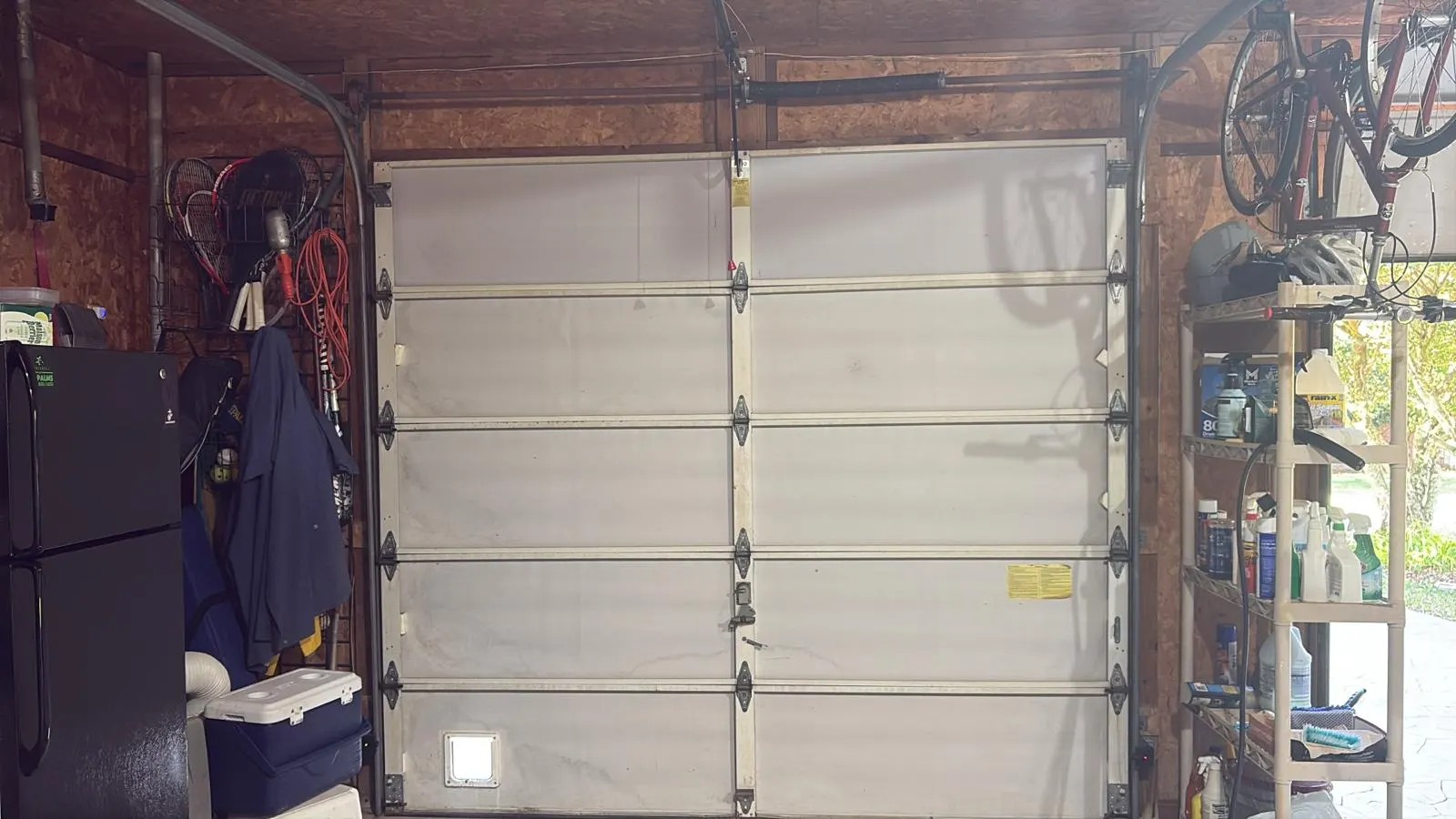
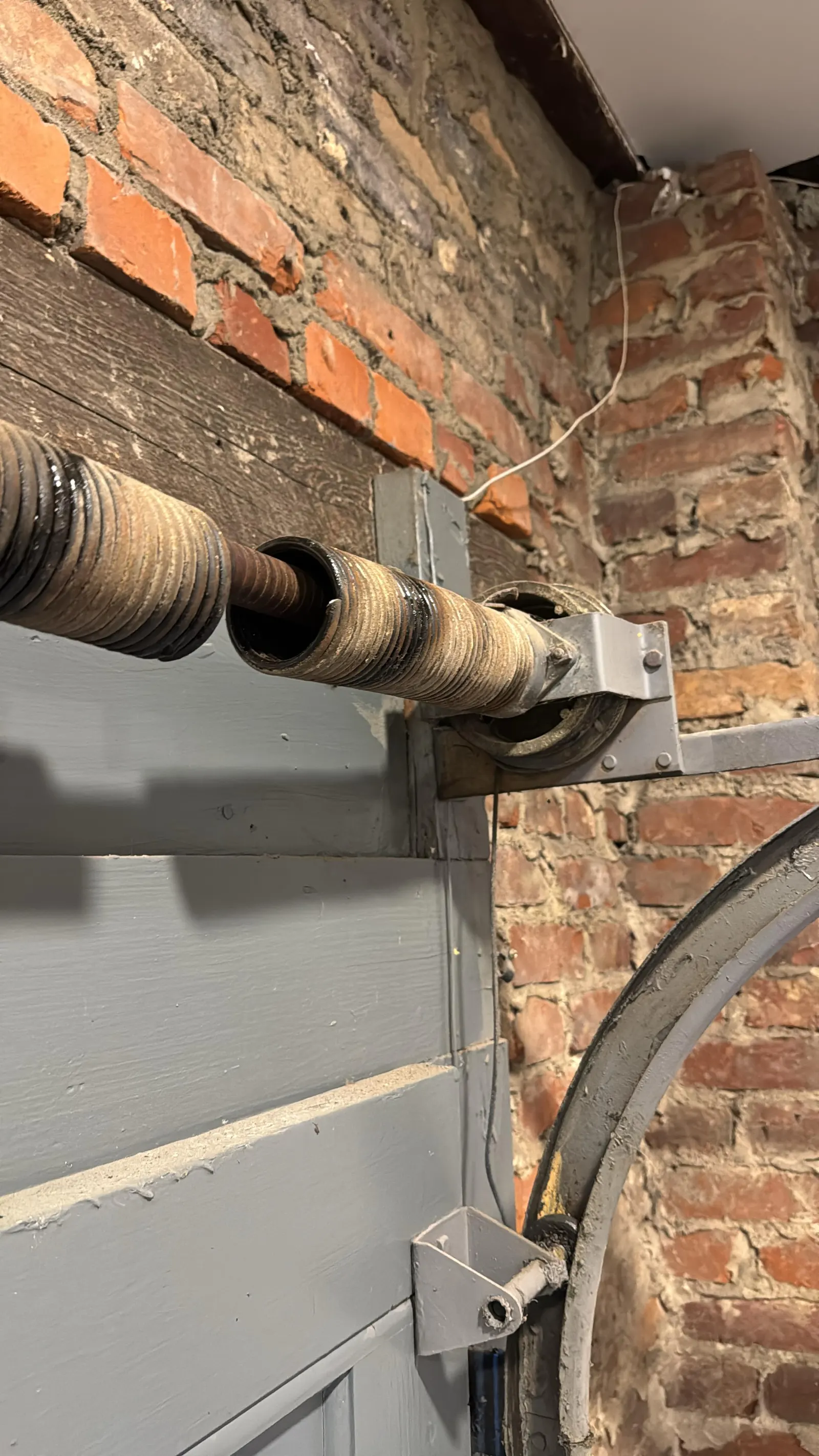
Signs you need spring repair
- A loud bang from the garage, like a gunshot or a dropped board
- A visible gap of a few inches in a coiled spring above the door
- The door opens only a few inches, then the opener stops or reverses
- The door feels extremely heavy when you try to lift it
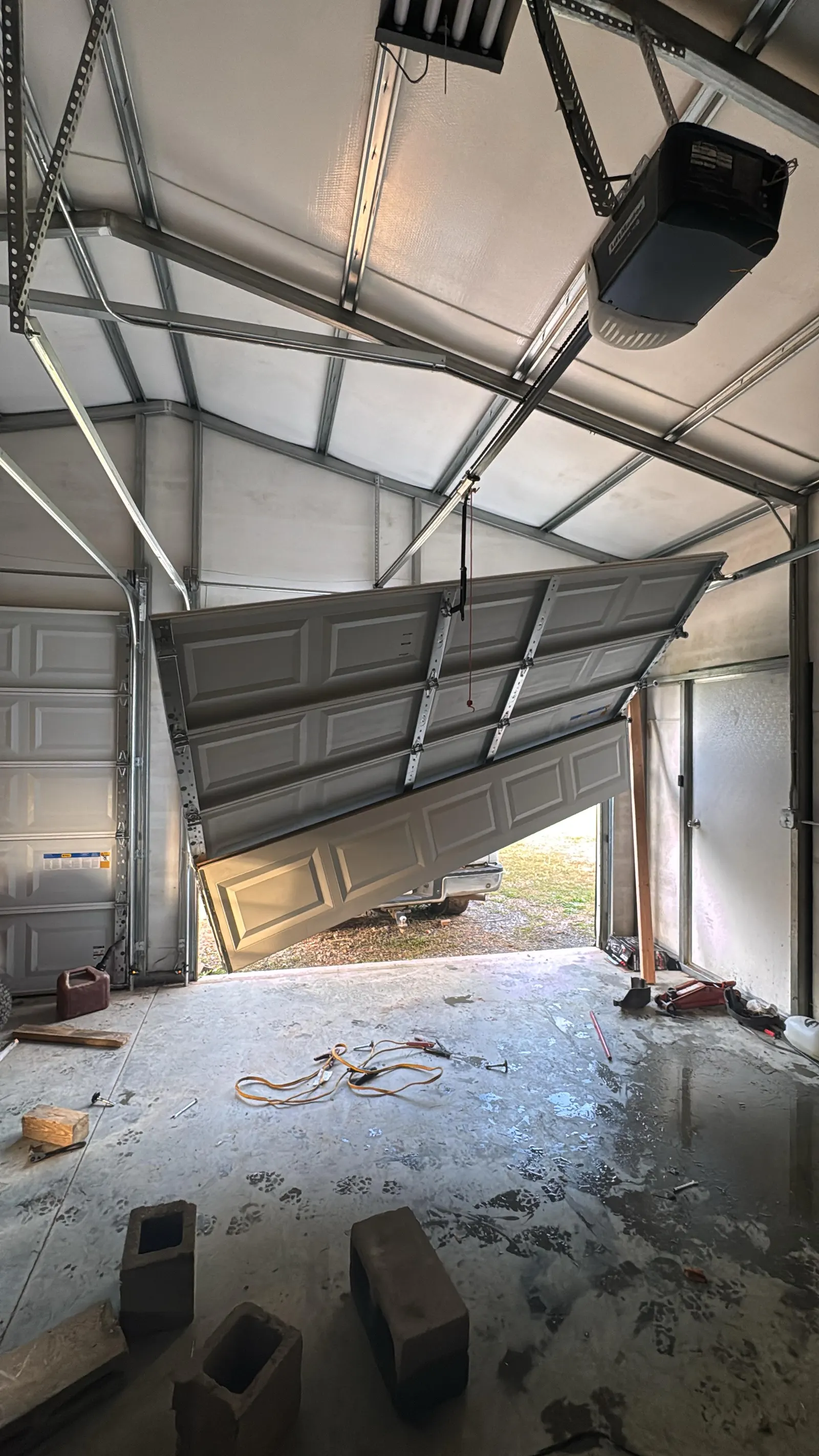
- The door rises crooked or one side lags behind
- Cables look slack or have come off the drums
- The opener strains, hums or the motor runs with no lift
- On extension spring doors, a stretched or hanging spring along the side track
How do you know if a garage door spring is broken?
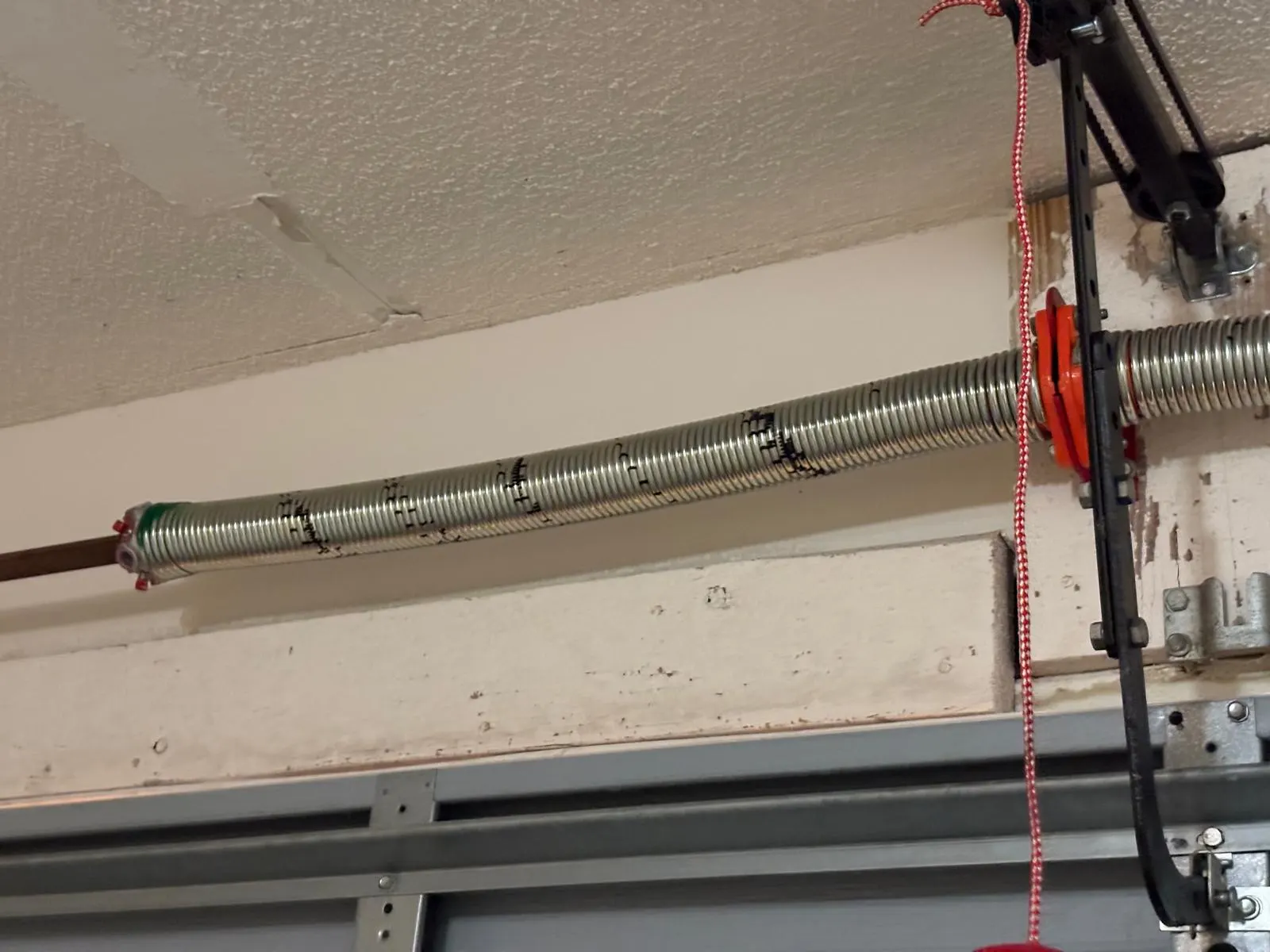
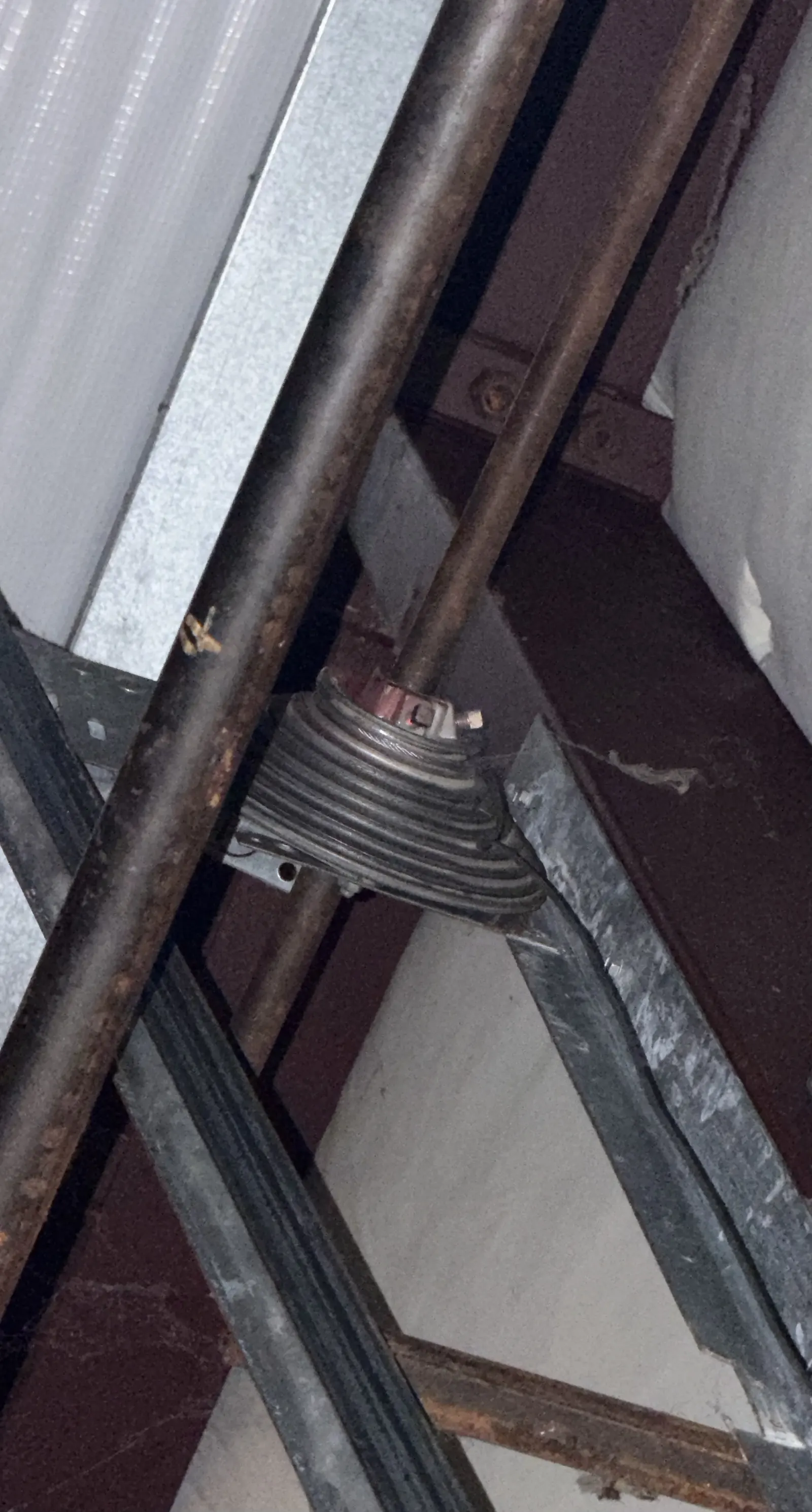
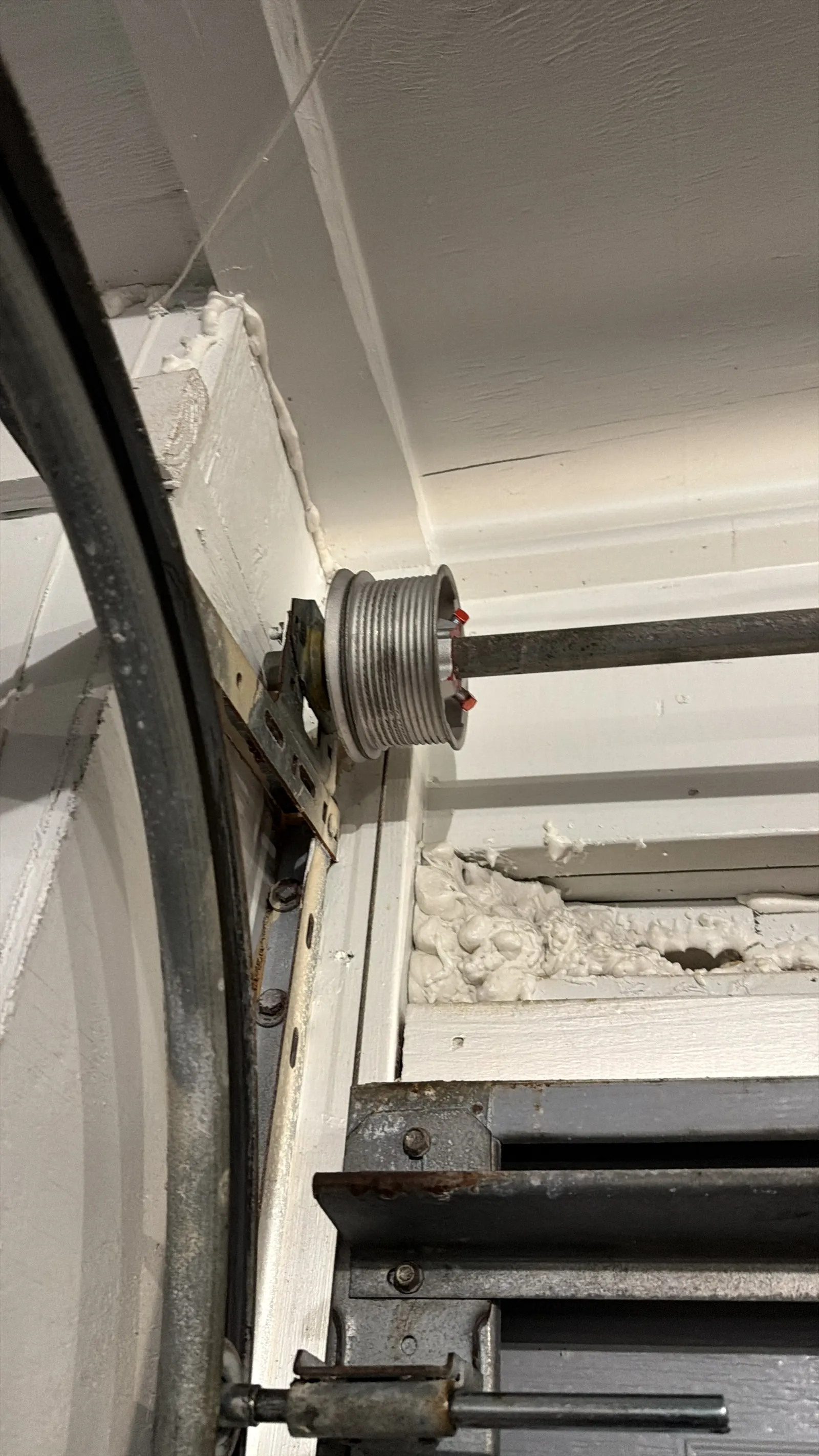
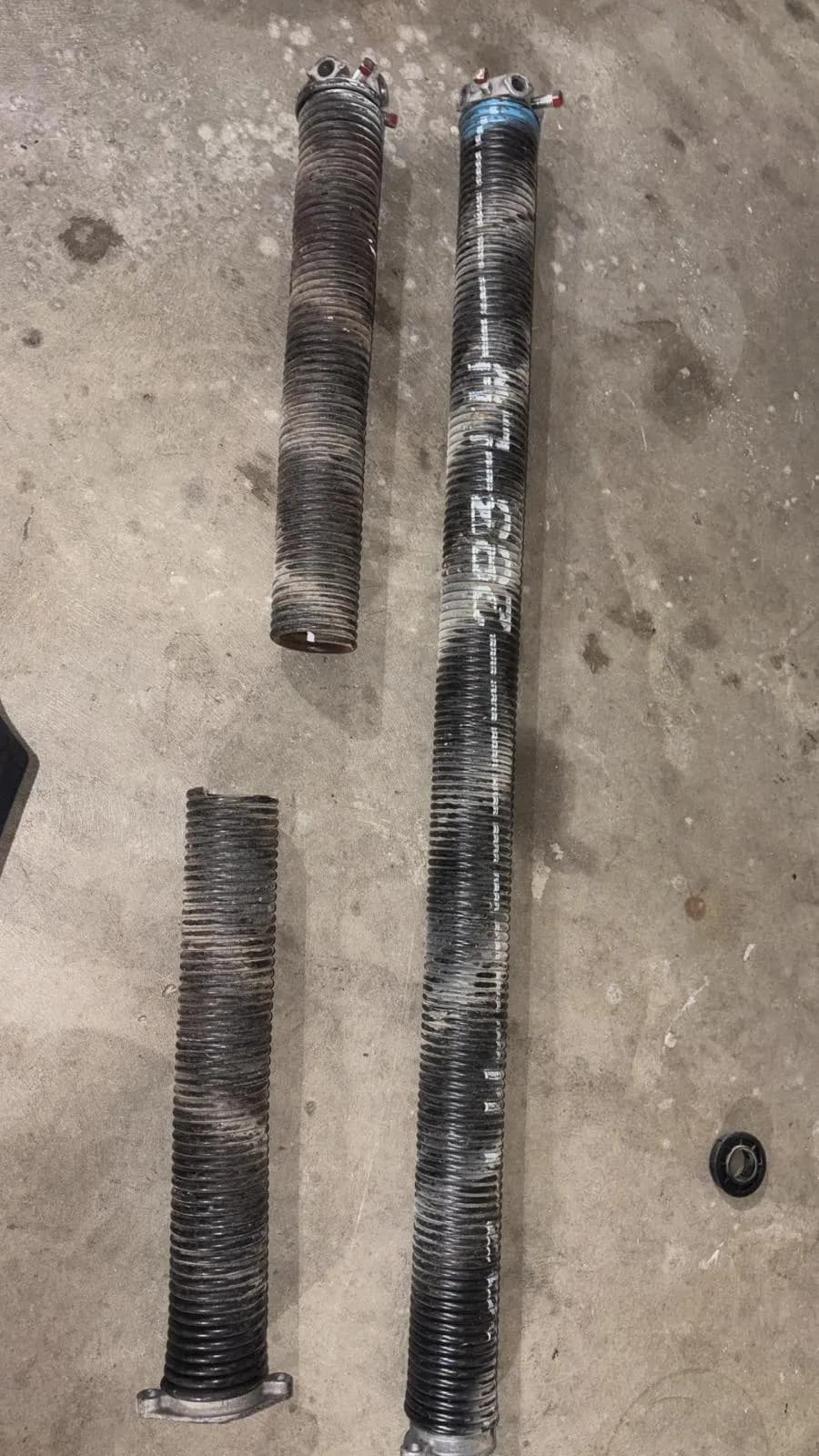
The clearest sign is a gap in the coil. Torsion springs sit on a metal bar above the door. When one breaks, the coil unwinds and you'll see a space of two inches or more where it split apart. You may also notice the cables hanging loose on each side, because there's no tension pulling them tight.
The second sign is weight. A balanced garage door with good springs feels light enough to lift with one hand when the opener is disconnected. With a broken spring, the same door can feel like it weighs a few hundred pounds, because now it does.
Many people notice the problem only when the opener fails. The motor runs, the door lifts a few inches, then stops or reverses. Modern openers sense the extra load and shut off to protect themselves. If you're seeing that, don't keep pressing the button. Each try strains the motor and gears.
Torsion springs vs. extension springs: which one do you have?
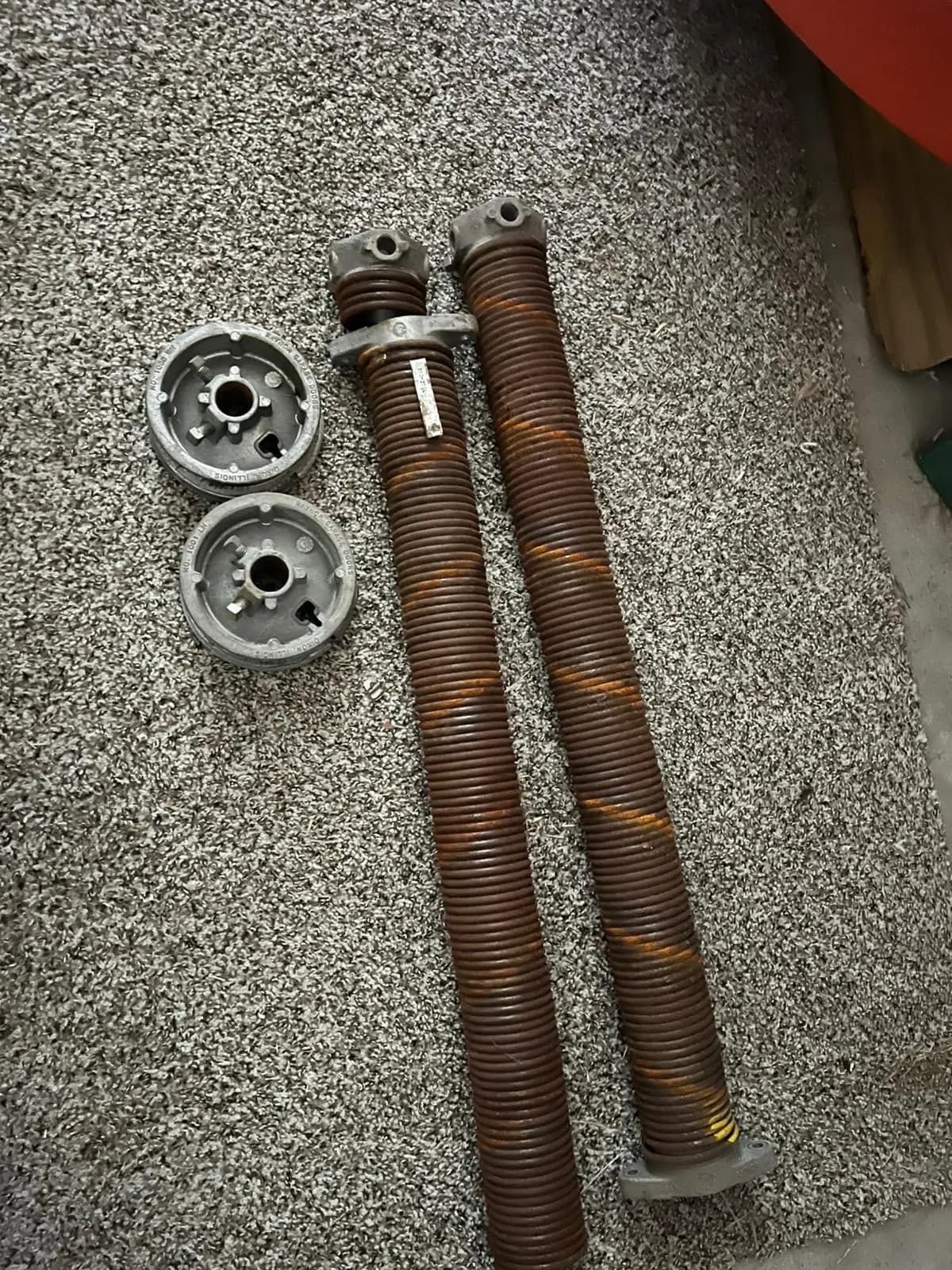
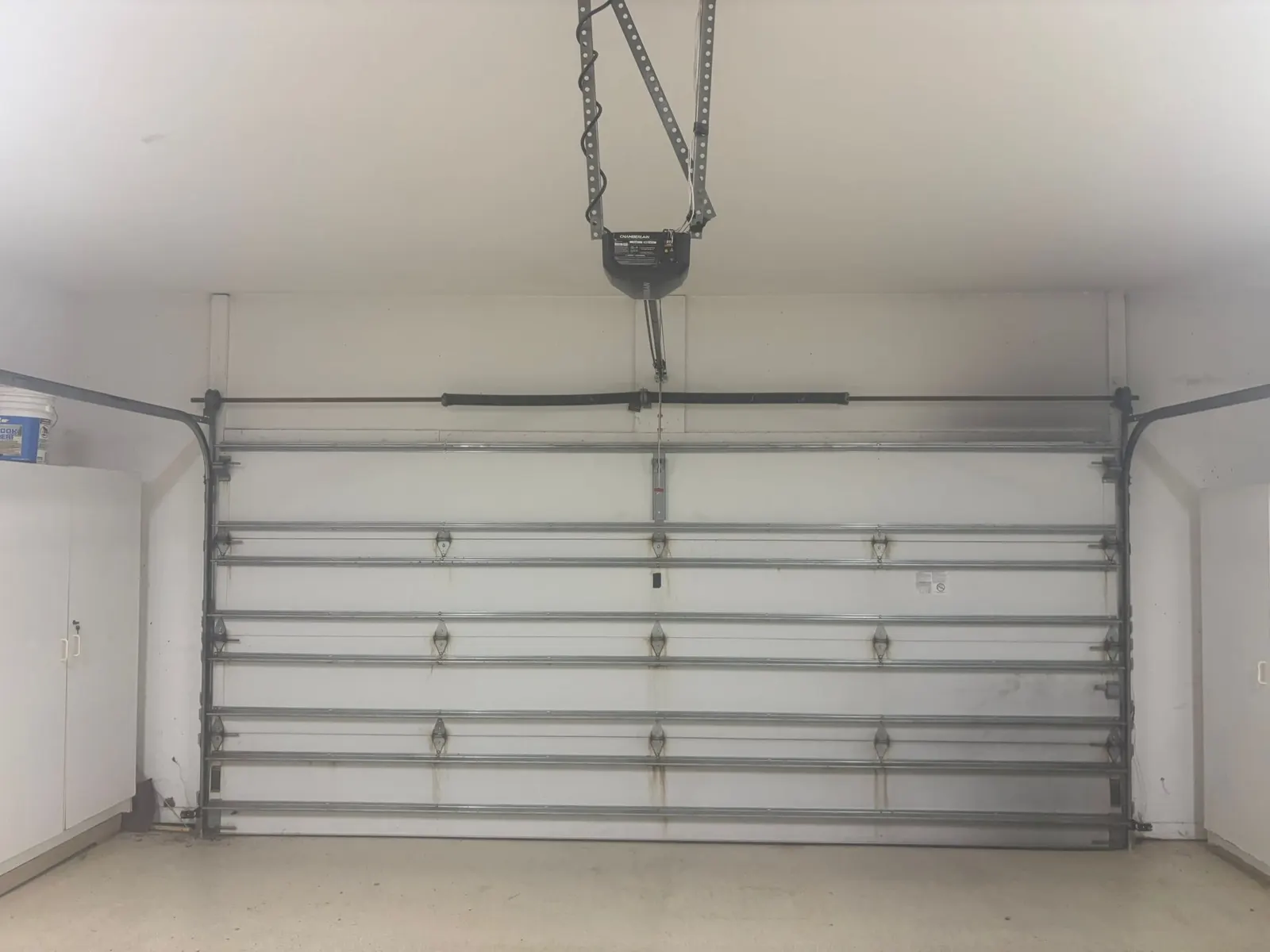
Look above the door first. If you see one or two thick coiled springs on a steel shaft running across the top of the opening, you have torsion springs. They twist to store energy and turn cable drums at each end of the shaft. Most newer homes and most two-car doors use torsion springs because they lift smoothly and last longer.
If there's no spring above the door, look along the horizontal tracks near the ceiling. Long springs stretched parallel to the tracks, often with pulleys and cables, are extension springs. They stretch to store energy. You'll find them on many older homes and lighter single-car doors.
Some doors use an enclosed torsion system, where the spring sits inside the shaft tube. Wayne Dalton's TorqueMaster is a common example. These look different but still hold serious tension.
- Torsion: mounted above the door, twists, smoother and quieter, usually a longer service life
- Extension: mounted beside the tracks, stretches, needs safety cables run through the springs
- Enclosed torsion: spring inside a tube, needs brand-specific parts
Can you open a garage door with a broken spring?
Technically you sometimes can, but we don't recommend it. Once the spring breaks, nothing is counterbalancing the door. If it slips while you're lifting it, it can fall hard and fast. The opener isn't built to lift that weight either.
The red emergency release cord adds a hidden risk. If the door is partly open and a spring is broken, pulling that cord disconnects the opener, and the opener was the only thing holding the door up. The door can drop all at once.
If your car is stuck inside, the safest option is usually to arrange another ride and let the technician open the door once the new spring is installed. If you absolutely must get out, read our emergency garage door repair guide first. It covers what's reasonably safe and what isn't.
Why garage door spring replacement isn't a DIY job
A torsion spring on a typical two-car door is wound with enough force to lift the entire door. Winding or unwinding it means turning the spring with steel bars while it stores that energy. If a bar slips, it can spin with enough force to break bones. Extension springs can snap loose and whip across the garage if a safety cable isn't in place.
Beyond the danger, the right spring is a calculation, not a guess. The technician measures wire size, inside diameter, length and wind direction, and matches the spring to the door's weight and height. A spring that's too strong makes the door fly up; too weak and the opener does the lifting and wears out early.
That's why we stop all DIY advice at safe checks. Online videos make it look simple. The injuries that send people to the emergency room every year say otherwise.
Should you replace both garage door springs at once?
On a door with two torsion springs, we usually recommend replacing both, even if only one broke. The two springs were installed together and have gone through the same number of cycles. When one fails, the other is usually close behind. Replacing both also keeps the door evenly balanced, since a new spring paired with a worn one pulls unevenly.
The same logic applies to cables. If a spring broke and the cables are frayed, rusty or kinked, replacing them during the same visit saves a second service call and lowers the chance of a cable snapping later. It's also a good time to check the rollers and bearings, which carry the same load.
We'll show you what we see and let you decide. Some homeowners replace one spring to handle the immediate problem; most choose the pair once they see the condition of the old one.
How long do garage door springs last?
Standard torsion springs are commonly rated for about 10,000 cycles. One cycle is one trip up and one trip down. A household that opens and closes the door four times a day uses roughly 1,500 cycles a year, so standard springs often last somewhere around six or seven years. Heavy daily use can wear them out in half that time.
Climate matters too. Midwest winters in places like Cleveland and Milwaukee are hard on springs, because steel becomes less forgiving in deep cold and many springs break on the first frigid mornings of the season. In humid areas like Orlando, the enemy is rust, which pits the coil and weakens it from the outside.
If you use the door a lot, ask about high-cycle springs. They use heavier wire and a longer coil, so each turn is under less stress and the spring lasts more cycles. Regular garage door maintenance also helps, since a light coat of lubricant slows rust and wear.
What affects the cost of garage door spring replacement?
Spring repair pricing depends on the door, so we give a quote after we see it. Two homes on the same street can need very different springs if one has a light single-layer door and the other has a heavy insulated door with windows. These are the main factors. If your cables also need replacement, see our garage door cable repair page for what that involves. For anything else that's wrong with the door, start with our garage door repair overview, or contact us to book a visit.
- Torsion, extension or enclosed torsion system
- One spring or a matched pair
- Standard vs. high-cycle springs
- Door size, weight and height (heavier doors need heavier springs)
- Whether cables, drums, bearings or rollers also need replacing
- Timing, if you need an urgent visit
How the service works
- 1
Secure the door
The technician makes sure the door is fully closed or safely clamped before touching any spring hardware.
- 2
Measure and match
They measure the old spring's wire size, inside diameter, length and wind direction, and check the door's weight so the new spring is sized correctly.
- 3
Unwind and remove
Remaining tension is released with proper winding bars, and the broken spring and any worn hardware come off.
- 4
Install and wind
New springs go on, cables are reset on the drums, and the springs are wound to the correct number of turns for your door.
- 5
Balance and test
The door is tested by hand for balance, the opener is reconnected, and the auto-reverse and sensors are checked before the job is signed off.