
Garage Door Won't Open in Florida? What to Check and When to Call for Repair
By the H&D Garage Door team · Updated
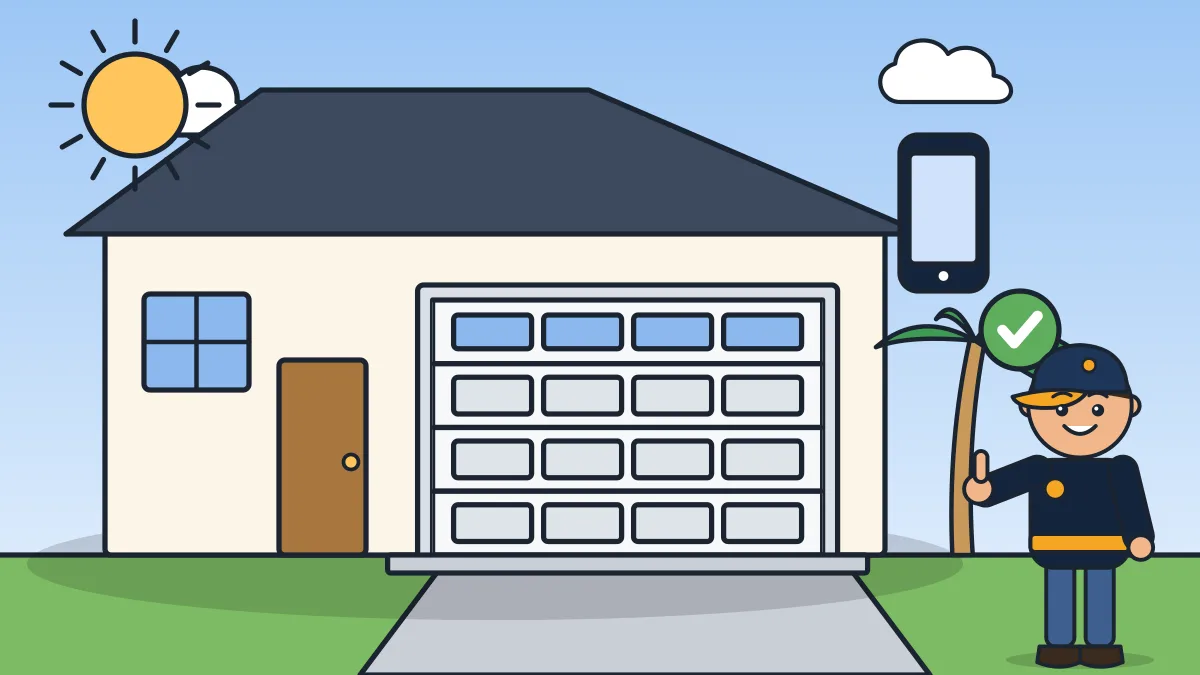
What should you check first when your garage door won't open?
Start with power and controls. Many "broken" garage doors turn out to have an unplugged opener, a tripped breaker, dead remote batteries or the wall control's lock mode switched on. Those take minutes to check and need no tools.
If the door still will not move, look at what the opener does when you press the button. That sound, or lack of it, tells a technician a lot about where the problem is.
- Confirm the opener light comes on and the outlet has power
- Reset the breaker or GFCI outlet if the opener is dead
- Replace the remote and keypad batteries
- Turn off lock or vacation mode on the wall control
- Clean the photo-eye lenses and check that both indicator lights are steady
- Look for anything blocking the tracks or the floor under the door
What does it mean if the opener runs but the door doesn't move?
If you hear the motor but the door stays put, the cause is usually one of three things: a broken spring, a stripped gear inside the opener, or the opener being disconnected from the door by the emergency release.
A broken spring is the most common, and it is the one to take seriously. Look up at the spring above the door. If you see a gap in the coil, stop pressing the button and do not try to lift the door. Springs and cables hold stored energy, and they are a job for broken spring repair. If a lift cable is hanging loose or frayed, the same rule applies; see garage door cable repair.
How do Florida's heat and humidity wear down garage doors?
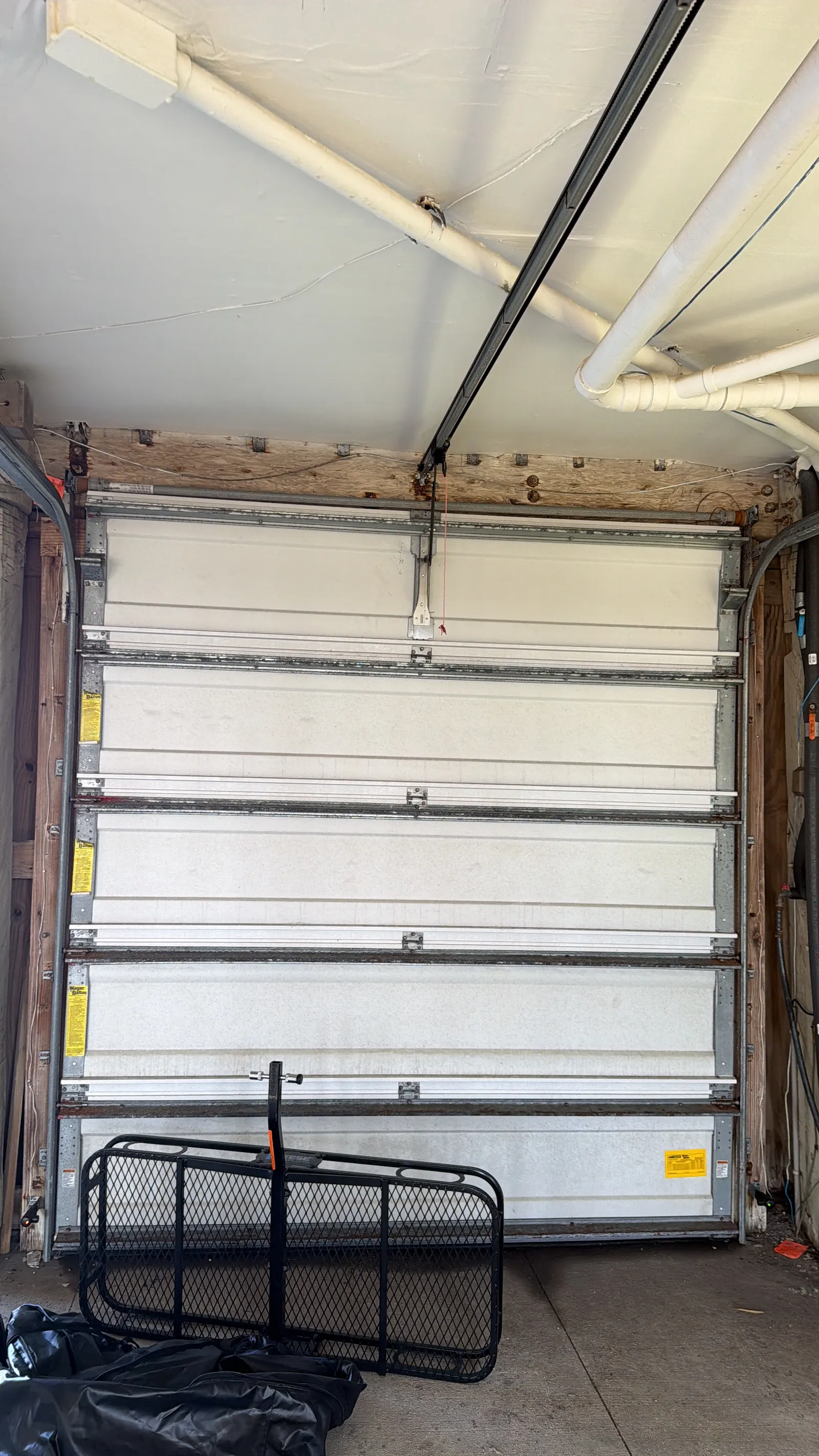
Florida's climate works on a garage door every day. High humidity speeds up rust on springs, hinges, track bolts and the bottom edge of steel panels. Heat dries out lubricants, so rollers and hinges start to grind and the opener works harder. Strong sun fades and chalks paint and breaks down vinyl weather seals over time.
Frequent summer thunderstorms add two more problems. Power surges can damage opener circuit boards, and wind-driven rain wears out the bottom seal and lets water and pests into the garage. In Central Florida, these issues tend to show up together, which is why a yearly maintenance visit catches so much.
What does hurricane season mean for your garage door?
Hurricane season runs from June 1 through November 30. A garage door is a large, flat surface, and if wind pushes it in, pressure inside the house can rise quickly and damage the roof. That is why the Florida Building Code requires garage doors to meet wind-load ratings, and why many doors in the state carry a label showing their rating.
Before storm season, check that your door opens and closes smoothly, that no rollers are missing, and that the track is firmly attached. If your door came with a bracing kit, make sure you know where it is and how to install it. After a storm, look for bent panels or tracks before running the opener. A door that took a hit can bind and come off track the first time it moves.
Which garage door problems need a professional right away?
Some problems should not wait, either because the door is unsafe or because your home is left open. Unplug the opener and call for emergency garage door repair if you see any of these.
- A broken spring or a loud bang followed by a door that will not lift
- A snapped or loose lift cable
- The door is crooked, off track or hanging at an angle
- Bent panels or track after a vehicle impact or storm
- The door will not close and the house is not secure
What happens during a garage door repair visit?
A technician starts by asking what happened and watching the door, if it can be operated safely. Then they inspect the springs, cables, rollers, hinges, track and opener to find the cause, not just the symptom. You get an explanation of what is wrong and the price before work begins.
After the repair, the technician should test the door through several full cycles, check balance, and confirm the auto-reverse and photo eyes work. That final check matters, because a door that opens is not the same as a door that is safe. Our garage door repair page lists the repairs we handle, and you can see our coverage on the Orlando service page.