
Should You Repair or Replace Your Garage Door?
By the H&D Garage Door team · Updated
Should you repair or replace your garage door?
Repair your garage door when the problem is in its working parts, such as springs, cables, rollers, the opener or a single damaged section, and the rest of the door is sound. Replace it when the door itself is failing: several sections are damaged, matching panels are no longer made, the structure is rusted through or rotted, or the door can't meet the safety, energy or wind requirements you need.
Most service calls end in a repair. Springs, cables and openers are designed to be replaced over the door's life, so a broken part is rarely a reason on its own to buy a new door. The decision gets harder when several issues pile up at once.
Which garage door problems are almost always repairs?
These parts wear out on a normal schedule and are replaced without touching the door sections.
- Broken torsion or extension springs
- Frayed or snapped lift cables
- Worn, noisy or broken rollers and hinges
- Opener faults, remotes, keypads and safety sensors
- Worn bottom seals and weatherstripping
- Track that is loose, bent in one spot or out of alignment
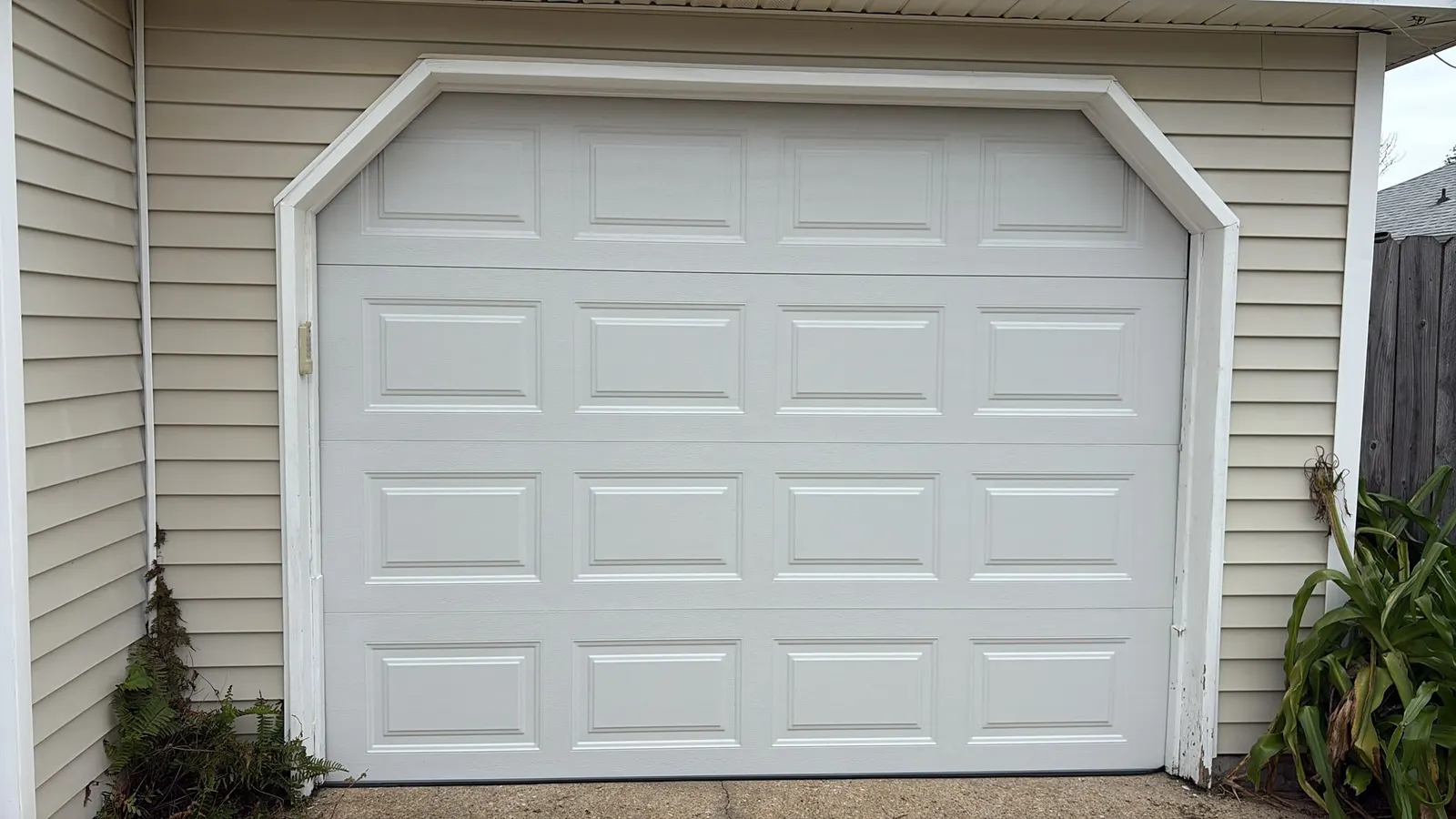
Can you replace just one damaged panel?
Often, yes. If a car dented the bottom section or a ball cracked a window section, a single section can usually be replaced as long as the manufacturer still makes a matching one. A technician needs the brand, model and design to order it, and the color and texture have to blend with the rest.
The catch is availability and appearance. Doors from discontinued lines may have no matching sections left. A new section on a faded, sun-worn door can also stand out. Our garage door panel replacement page explains how matching works. If two or three sections are damaged, replacing the whole door often makes more sense than piecing it together.
How do the age and condition of the door affect the choice?
Age alone doesn't decide it. A well-kept steel door can run for a long time. What matters is the condition of the sections and the frame. Look for rust that has eaten through the steel rather than just staining the surface, wood that is soft, cracked or rotting at the bottom, sections that bow or separate at the joints, and hinges that have torn through the metal.
Those problems can't be fixed with a new part, because they are the door. Once the sections themselves are failing, money spent on springs and rollers is going into a door that is wearing out underneath them.
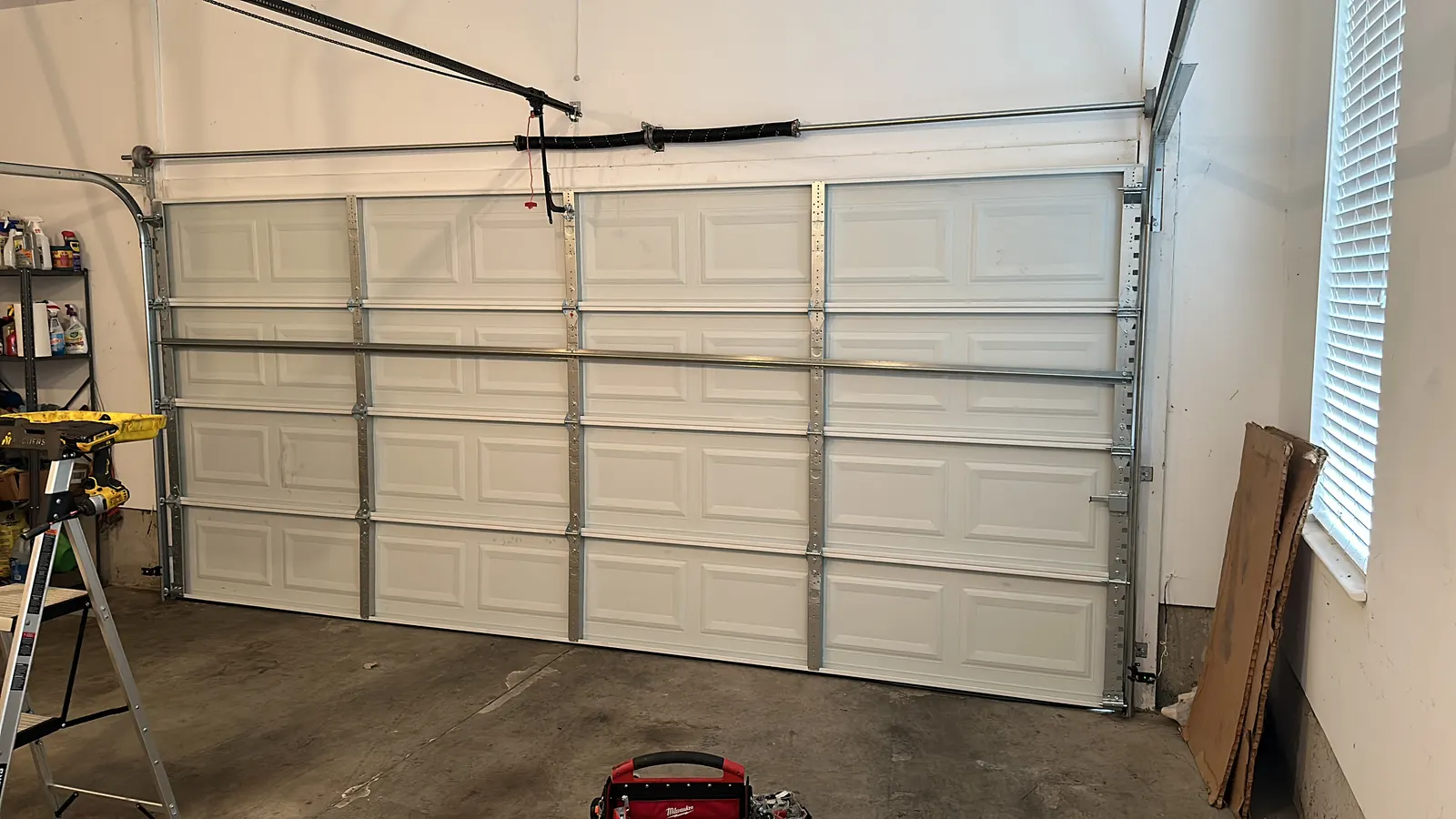
Is an old wood garage door worth repairing?
Wood doors can be repaired, but it depends on where the damage is. A single cracked panel or a split trim piece on an otherwise solid door can often be fixed or replaced by a carpenter or door technician. Rot is the harder problem. It usually starts at the bottom section, where water splashes and snow sits, and spreads up through the joints. Once the wood is soft, it no longer holds hinge screws well, and the door can sag or pull apart.
Wood doors are also heavy, and their weight changes as they soak up moisture or get repainted many times over. That puts more strain on the springs and opener. If a wood door has rot in more than one section, or needs constant refinishing to keep it sound, a steel or composite door with a wood-look finish may give you a similar style with far less upkeep.
When does safety point to replacement?
Older doors may lack features that newer ones include, such as pinch-resistant section joints that keep fingers from being caught between sections, and tamper-resistant bottom brackets. Very old openers may have no photo-eye sensors at all. Federal rules have required photo eyes or similar entrapment protection on residential openers sold in the US since 1993.
An opener without sensors can be replaced on its own. But if the door has no pinch protection, sections that are cracking, or hardware that can't be secured properly, a new door is the safer choice, especially in a home with young children.
Do energy efficiency and climate change the answer?
They can. An uninsulated single-layer steel door does little to keep heat in or out. If you use the garage as a workshop or gym, have a room above it, or live with long winters or long, hot summers, an insulated door can make the space more comfortable. Insulation is built into the sections, so it usually isn't something you can add to an old door in a satisfying way.
In Florida, wind is part of the decision too. An older door that predates current wind-load standards may be worth replacing with a rated door. Our guide to hurricane garage door requirements in Florida explains what the code asks for.
Does curb appeal or selling the home matter?
On many homes, the garage door takes up a large share of the front of the house. A dented, faded or dated door drags down the look of the whole facade, and buyers notice. If you plan to sell, replacing a worn door can be a simple way to improve first impressions.
It also helps to think about style. If the house has been updated and the door hasn't, a new door with windows or a carriage-house design can tie it together. Our article on the best material for a garage door compares steel, wood, aluminum and composite.
How do repair frequency and cost factors fit in?
One repair is not a warning sign. A pattern is. If the door has needed several repairs in a short period and the causes keep coming back to the door itself, such as bent sections, rotted wood or rust, that money may be better spent on replacement.
When comparing, look at what drives the cost on each side. Repair cost depends on the parts involved, whether the springs and cables need replacing together, and how much labor the job takes. Replacement depends on the door's size, material, insulation, windows, wind rating and whether the opener is replaced at the same time. Our guide to garage door repair cost covers what affects the price of common repairs.
What happens to the opener if you replace the door?
A new door doesn't always need a new opener, but it's worth checking. If the new door is heavier, such as an insulated steel door replacing a single-layer one, the opener has to be strong enough to guide it, even though the springs do the lifting. A very old opener may also lack photo-eye sensors or use an older radio system that newer remotes and keypads can't talk to.
If the opener is newer, quiet and has working safety sensors, it can usually be reconnected to the new door and adjusted. If it's old, noisy or already giving trouble, replacing it during the same visit avoids a second appointment and lets the installer set it up for the new door from the start.
How do you get an honest recommendation?
Ask the technician to show you what is wrong and to explain whether the problem is a part or the door itself. A good recommendation separates the two. Ask whether matching sections are still available, and what a new door would change for you, not just what it costs.
If replacement is the right call, see our garage door installation page for what the process looks like. In Middle Tennessee, our Nashville garage door installation page covers local options. Call (888) 754-4130 to have a technician take a look.