
How Much Does Garage Door Spring Replacement Cost? What Drives the Price
By the H&D Garage Door team · Updated
How much does garage door spring replacement cost?
Garage door spring replacement cost comes down to five things: which spring system your door uses, how many springs it has, the cycle rating you choose, how heavy and tall the door is, and which nearby parts turn out to be worn. Two neighbors with identical-looking doors can get different quotes because one door has a single builder-grade spring and the other has a heavy insulated door on a pair of high-cycle springs.
That is why we don't post a number. A price you can rely on comes after someone knows your door. Call (888) 754-4130 with the door size and a photo of the spring, and we'll talk you through what the job involves. If the rest of the door is acting up too, our broader guide to garage door repair cost covers the other kinds of repairs.
Torsion or extension springs: which do you have, and why does it matter for the price?
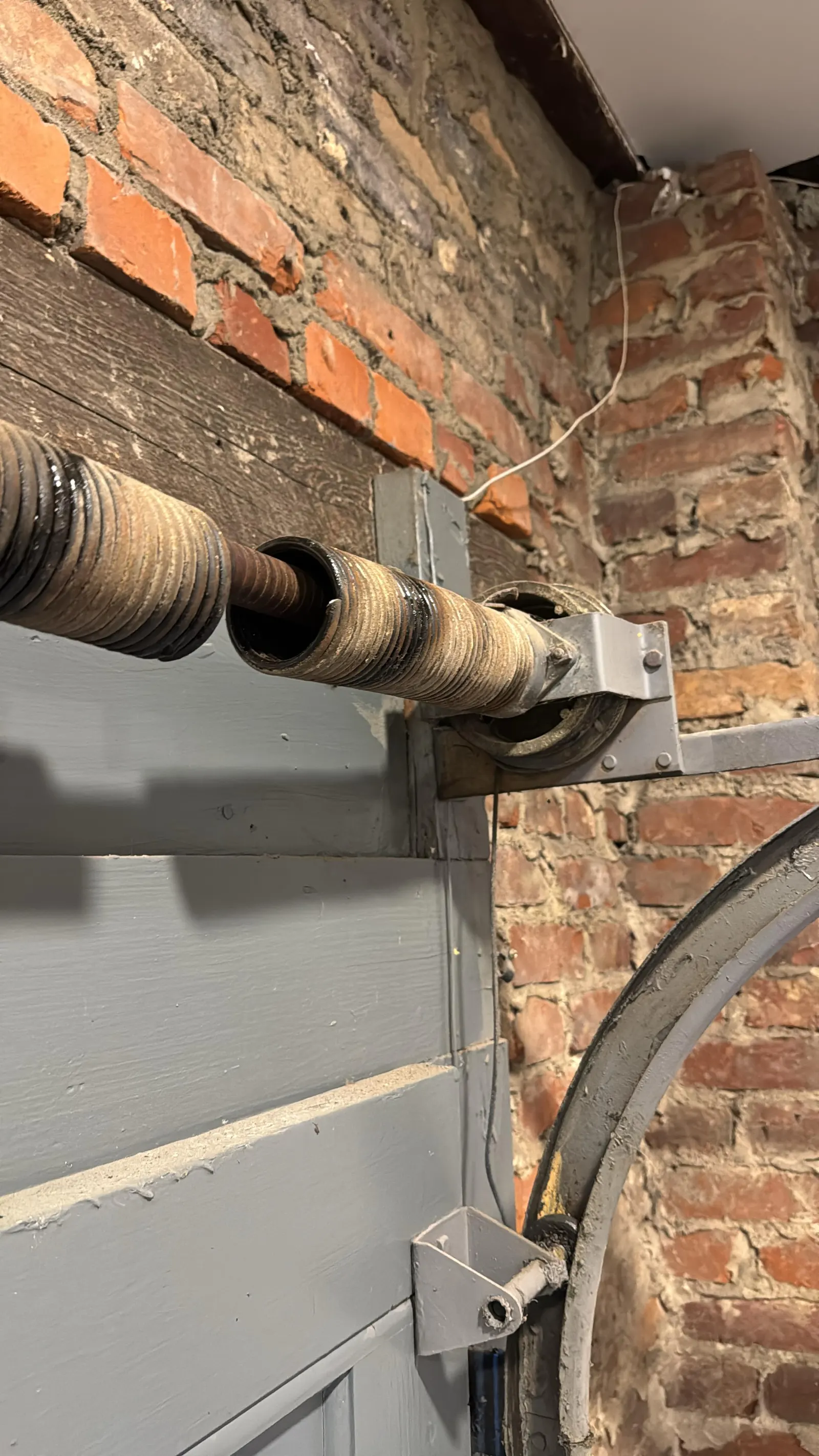
The spring system sets the parts list. A torsion spring mounts on a steel shaft above the door, and it works together with winding cones, a center bracket, end bearings, two cable drums and two lift cables. An extension spring setup puts one spring along each horizontal track and adds pulleys, lift cables and a safety cable running through each spring.
Each system brings its own hardware and its own labor. On a torsion door the technician has to unload and reload spring tension on the shaft safely. On an extension door both sides are separate, so both springs and their pulleys and cables usually get attention together. Some newer doors use an enclosed torsion system, where the spring sits inside a tube instead of out in the open. Those use parts made for that one system, which can mean ordering them rather than pulling a standard spring off the truck.
Not sure which you have? Our comparison of torsion vs extension springs shows how to tell from the floor without touching anything.
Why do most technicians replace both springs?
If your door has two springs and one has broken, you'll likely hear the advice to replace both. The reasoning is simple. Both springs were installed together and have opened the door the same number of times, so the survivor is close to the end of its life as well. A new spring paired with a tired one also pulls unevenly, which works against the door's balance.
Replacing a pair costs more on the day than replacing one spring, and that is a fair trade-off to weigh. What you avoid is a second visit when the older spring lets go a few months later. A good technician explains the choice and lets you make it. On a door with a single spring, the question may be the opposite one: whether moving to two springs makes sense for a wide or heavy door.
Standard vs high-cycle springs: is the upgrade worth it?
Springs are rated by how many open-and-close cycles they should deliver before metal fatigue catches up with them. The industry's specification for sectional doors, ANSI/DASMA 102, calls for door systems designed to run at least 10,000 cycles, and many standard residential springs are built around that figure. High-cycle springs are wound from heavier wire or made longer so the stress on each coil is lower, which lets them run many more cycles.
The heavier wire is why a high-cycle spring is priced above a standard one. Whether it pays off depends on your household. If the garage is the family's front door and the door runs all day, fewer replacements over the years can outweigh the higher price today. If the door opens a couple of times a day, a standard spring may be all you need. Our article on how long garage door springs last walks through the cycle math.
How do door size, weight and insulation change the spring you need?
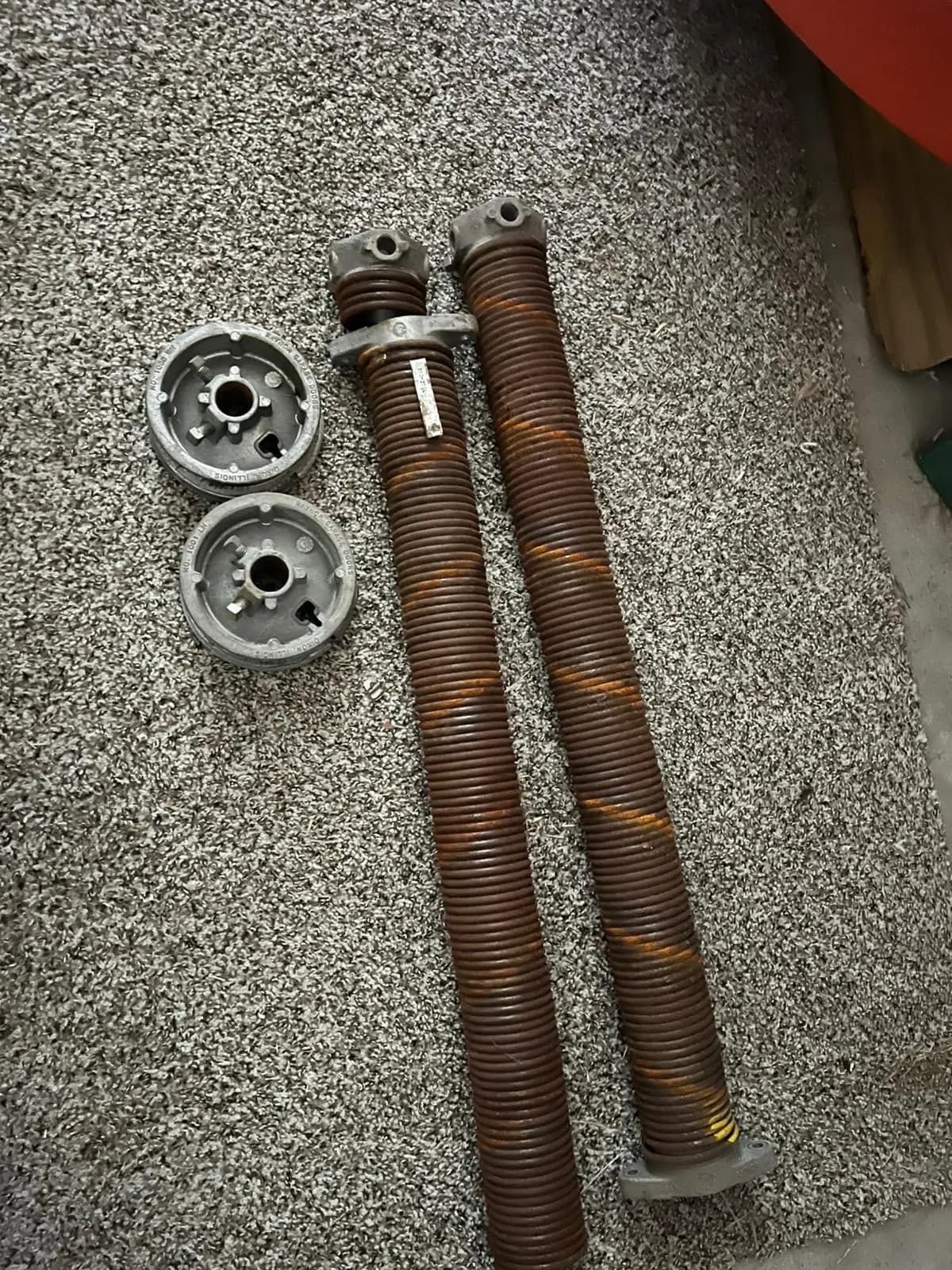
A spring is chosen to balance one particular door. The technician works from the door's weight, its height and the drum size, then picks a wire size, inside diameter and length that will hold that door in balance. A taller door needs a spring that can store energy over more turns. A heavier door needs heavier wire, a longer spring or two springs sharing the load. Each of those changes the part, and the part changes the price.
Weight is not always what it looks like. Insulation, a window section, a wood overlay, layers of paint or anything bolted to the door all add pounds. DASMA's technical guidance notes that these additions can push a door past what its original springs were designed for, and that a trained technician can weigh the door once the counterbalance has been safely taken off. Custom, extra-tall and oversized doors may need springs ordered to size.
Which parts might a technician find worn at the same visit?
A broken spring is often the most visible problem, not the only one. The hardware around it has seen every cycle the spring has, and a spring break can jolt it. These are the parts a technician typically looks at during the same visit.
- Lift cables, especially frayed strands or rust near the bottom brackets (usually treated as needed for safety)
- Cable drums and the end and center bearings on a torsion shaft
- Winding cones and the center bracket the spring anchors to
- Pulleys on an extension spring door, and missing or damaged safety cables
- Rollers and hinges that are worn, noisy or cracked (often optional and can wait)
- The opener, if it strained against the heavy door after the break
Which of those extra repairs can wait?
Ask the technician to sort the list into "needed now" and "can wait." Anything that carries the door's weight, such as a frayed cable or a cracked drum, belongs in the first group, because it can fail under the tension of a new spring. Worn rollers or a squeaky hinge usually belong in the second. They make the door louder and rougher, but they rarely make it dangerous on the day of the repair.
You should be able to see the worn parts yourself. A clear explanation, and the option to say yes to some items and no to others, is a reasonable thing to expect from any company quoting spring work. If you suspect a spring problem but aren't certain, our guide to the signs of a broken spring helps you describe what you're seeing.
Does converting extension springs to torsion change the price?
Yes. A conversion is a bigger job than a like-for-like swap because the whole counterbalance system changes. The old extension springs, pulleys and their cables come out. In their place go a shaft, one or two torsion springs, a center bracket, end bearing plates, drums and new lift cables, all sized to the door.
People choose a conversion for smoother travel, a spring that stays on its shaft if it breaks, and a door that is easier to keep in balance. It only works if there is enough room above the door for the shaft, or a low-headroom setup that fits the space. A technician measures that before quoting. If your extension springs are already due for replacement, it is a sensible moment to ask what a conversion would involve.
What about commercial and oversized doors?
Commercial sectional doors use the same basic idea on a larger scale: bigger springs, often several on one shaft, heavier shafts and bearings, and high-cycle springs because the door may run dozens of times a day. Rolling steel doors carry their springs inside the barrel at the top of the opening. Tall openings may need lift equipment, and the work may have to be scheduled around deliveries or shifts. All of that shapes a commercial spring quote, alongside the spring itself.
Is replacing a spring yourself a way to save money?
It isn't, and the risk is the main reason. DASMA, the door industry's association, says springs should be replaced only by a trained technician. A wound torsion spring stores enough energy to lift a door weighing a couple hundred pounds, and releasing or loading that energy is the step where people get badly hurt.
The money doesn't work out either. A spring that is the wrong size, or wound with the wrong number of turns, leaves the door out of balance. DASMA's spring guidance flags both mistakes as safety problems, and both wear out the new spring and the opener sooner. A replacement that has to be redone, or an opener damaged by a badly balanced door, costs more than having it done right once.
How do you get an accurate spring replacement quote?
The more we know before the visit, the closer the first conversation gets to the final price. Have these ready when you call, and stay away from the springs and cables while you gather them.
- The door's width and height, and whether it is insulated or has windows
- Whether you see one spring above the door, two, or springs along the side tracks
- A photo of the springs and cables taken from the floor
- The opener brand and model from the label on the motor unit
- Whether the door is stuck closed, stuck open or hanging crooked
- Roughly how many times a day the door is used
Ready to have your springs looked at?
Our broken spring repair page explains how the service works. In Central Florida, where humid garages are hard on spring steel, see our Orlando broken spring repair page. Call (888) 754-4130 and we'll set up the earliest available visit and talk through the options with you.