
Why Is My Garage Door So Loud? Noises and What They Mean
By the H&D Garage Door team · Updated
Why is my garage door so loud?
A loud garage door usually has dry or worn moving parts, loose hardware or an opener that needs attention. Squeaks come from hinges and rollers that need lubrication, grinding from worn rollers or track trouble, rattling from loose fasteners or a slack chain, and humming from the opener's motor. Those are common and often simple to fix.
A few sounds are different. A single loud bang, popping during travel, or a scraping noise along with a crooked door can point to a broken spring, a slipping cable or a door coming off track. Those are safety problems, not just noise. The sections below match each sound to its likely cause.
What causes squeaking or squealing?
Squeaks almost always come from metal rubbing on metal. The hinges between sections, the roller bearings and the stems where rollers sit in the hinges all need occasional lubrication. When they dry out, the door squeaks at each joint as it bends around the curve of the track.
A garage door lubricant, usually a silicone or lithium spray, on the hinge pivots and roller bearings quiets most squeaks. Don't grease the inside of the tracks; that collects dirt and makes rollers skid. If squealing continues after lubrication, the roller bearings may be worn out.
What does a grinding or scraping noise mean?
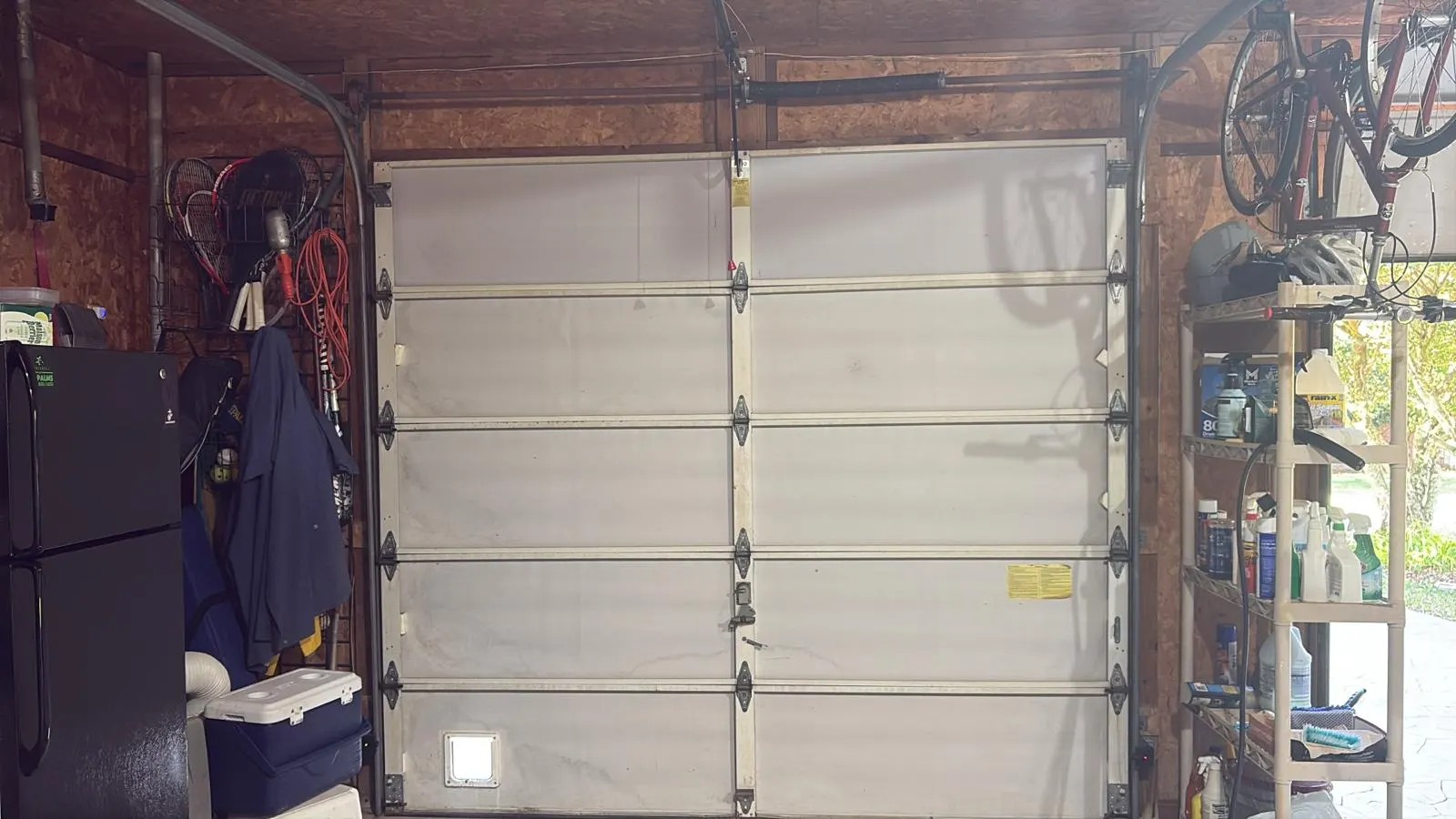
Grinding usually means rollers that no longer turn freely. Worn bearings, cracked wheels and flat spots make a roller drag along the track instead of rolling. Steel rollers without bearings are noisier from day one and wear the track as they go.
Scraping can also mean the door is rubbing the track or the jamb, a section is bent, or the track has drifted out of line. If the door also shudders, binds or sits crooked, stop using it. That combination can mean the door is starting to come off track. Worn rollers are a good candidate for garage door roller replacement, and nylon rollers with sealed bearings are much quieter than basic steel ones.
Why does my garage door rattle?
Rattling usually comes from loose hardware. The door's vibration can loosen hinge screws, track bracket bolts and the bolts that hold the opener to its ceiling mount. A slack chain on a chain-drive opener can also slap against its rail.
Tightening hinge screws and the bolts that hold the track brackets to the wall is a reasonable homeowner task with the door closed. Do not loosen or touch the bottom brackets at the lower corners of the door, where the lift cables attach. They are under spring tension, and loosening them can release the cable violently. Chain tension adjustment is covered in most opener manuals; if in doubt, leave it to a technician.
What does a loud bang from the garage mean?
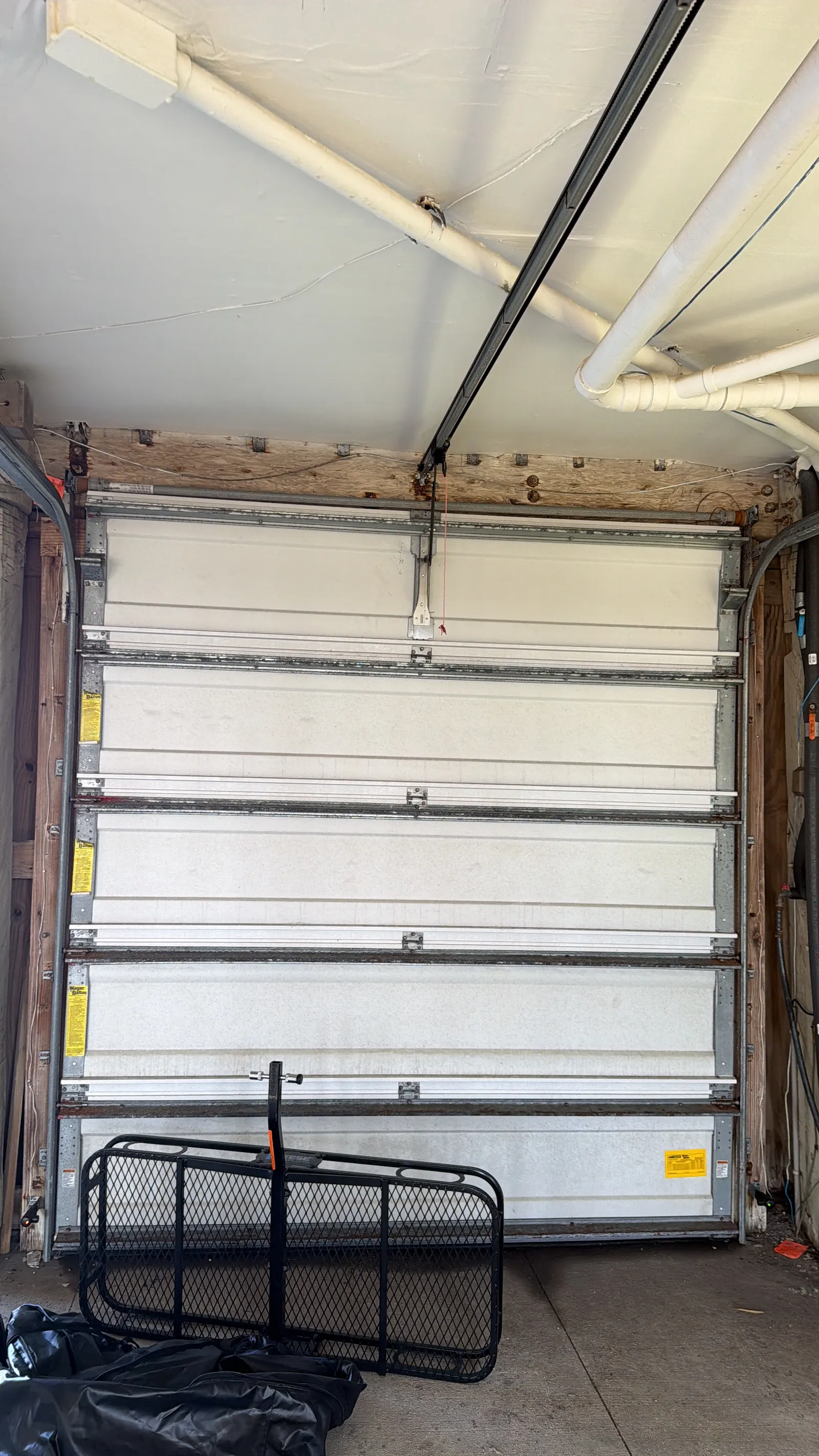
A sudden, sharp bang, often while nobody is using the door, is the classic sound of a torsion spring breaking. The spring releases its energy all at once. Look at the bar above the door from a safe distance for a gap in the coil. Our guide to broken garage door spring signs walks through what to look for.
A bang can also come from a lift cable snapping or jumping off its drum, or from the door hitting the floor because a spring has weakened. In all of these cases, stop using the door and unplug the opener.
Why does my garage door pop or crack when it moves?
Popping during travel has several possible causes. Sections can flex and pop as they pass the curve if the door is out of balance or the struts are loose. A torsion spring that is binding on its shaft, or that has a crack starting, can make a snapping or creaking sound as it winds and unwinds. A cable that is slipping in its drum grooves can also pop.
Because two of those causes involve parts under high tension, popping is worth having inspected rather than tolerating. A technician can tell a harmless flexing section from a spring or cable problem.
What noises come from the opener itself?
Opener noise depends on the drive type. Chain drives are naturally the loudest, with a clatter that gets worse when the chain is slack or dry. Belt drives are much quieter. A humming motor with no movement can point to a failed capacitor or stripped gear, or to a door too heavy to lift because of a broken spring. Grinding inside the motor housing often means worn gears.
A clicking relay with nothing else happening usually points to a control board problem. These are repairs for an opener technician. If you have a chain drive and the noise bothers people in a room above or beside the garage, a belt-drive opener is a common upgrade.
Why does my garage door shake or vibrate as it moves?
Shaking usually comes from rollers that are worn or out of round, track that is loose on its brackets, or a door that is out of balance so the opener jerks it along. On chain-drive openers, a chain that is too slack can make the whole door lurch at the start and end of travel. A rail or motor unit that has worked loose from its ceiling mount adds vibration through the house.
Watch the door from the inside as it moves. If one side lags, the door twists, or the shaking gets worse at the same spot every time, have it inspected. Those signs can point to a cable or spring issue on one side rather than simple wear.
Does a noisy door mean a spring is about to break?
Not necessarily. Most noise comes from rollers, hinges and the opener, and a door can be loud for a long time without any spring problem. Springs themselves are usually fairly quiet until they fail. A dry spring can creak or squeak as it winds, and a light lubrication during maintenance quiets it.
The sounds that do point to springs are a sharp snap or bang, a grinding or scraping from the shaft above the door, or creaking that comes with the door feeling heavier than usual. Rust on the coils is also worth noting. If you hear any of these, look at the springs from a distance, and if anything looks off, leave the door closed and call.
Can maintenance make a garage door quieter?
Yes. Routine maintenance addresses most of the causes of a noisy door at once.
- Lubricating hinges, roller bearings, spring coils and the opener rail where specified
- Tightening loose hinges, track brackets and opener mounting bolts
- Replacing worn rollers with quieter nylon rollers with sealed bearings
- Checking spring condition and door balance
- Inspecting cables and drums for fraying or slipping
- Adjusting chain tension and checking the opener's gears
When is a noisy garage door a safety concern?
Treat noise as a warning when it is new, when it comes with a change in how the door moves, or when it comes from the springs, cables or bottom brackets. A door that bangs, pops, shudders, sits crooked or suddenly feels heavy should not be used until it has been checked.
A garage door maintenance visit handles routine noise and spots the parts that are close to failing. In Central Florida, where humidity dries out and rusts hardware faster, see our Orlando garage door repair page. Call (888) 754-4130 to schedule.