
Commercial Garage Door Panel Replacement: Sections, Slats and Dock Doors
By the H&D Garage Door team · Updated
Can you replace one panel on a commercial garage door?
Usually, yes. On a commercial sectional door, one damaged section can be swapped for a matching new one, and on a rolling steel door, bent slats can often be replaced without changing the whole curtain. The repair makes sense when the damage is limited to one area, the rest of the door runs well and a matching part is still available.
A new door is the better call when several sections are bent, the door is an old or discontinued model, or the impact also damaged the track, guides or frame. The sections below explain how the job differs on each type of commercial door, so you know what to tell the technician and what to expect.
Why commercial doors get damaged in the first place
Most commercial panel damage comes from impact. A forklift mast that clips the bottom of a door that isn't fully open, a trailer that backs in too far, or a delivery truck in a tight service lane all hit the lowest sections first. Doors that close on a vehicle, or that are run while partly off track, can also fold a section in the middle.
Weather and wear play a part too. Bottom sections sit closest to water, salt and debris, so rust and rot start there. On busy doors that cycle many times a day, worn hinges and rollers let sections rub and crack along the hinge lines. When the cause is a door that keeps getting hit, it's worth asking whether the door's open height, the operator's speed or the photo eyes and safety devices are part of the problem, not just the panel.
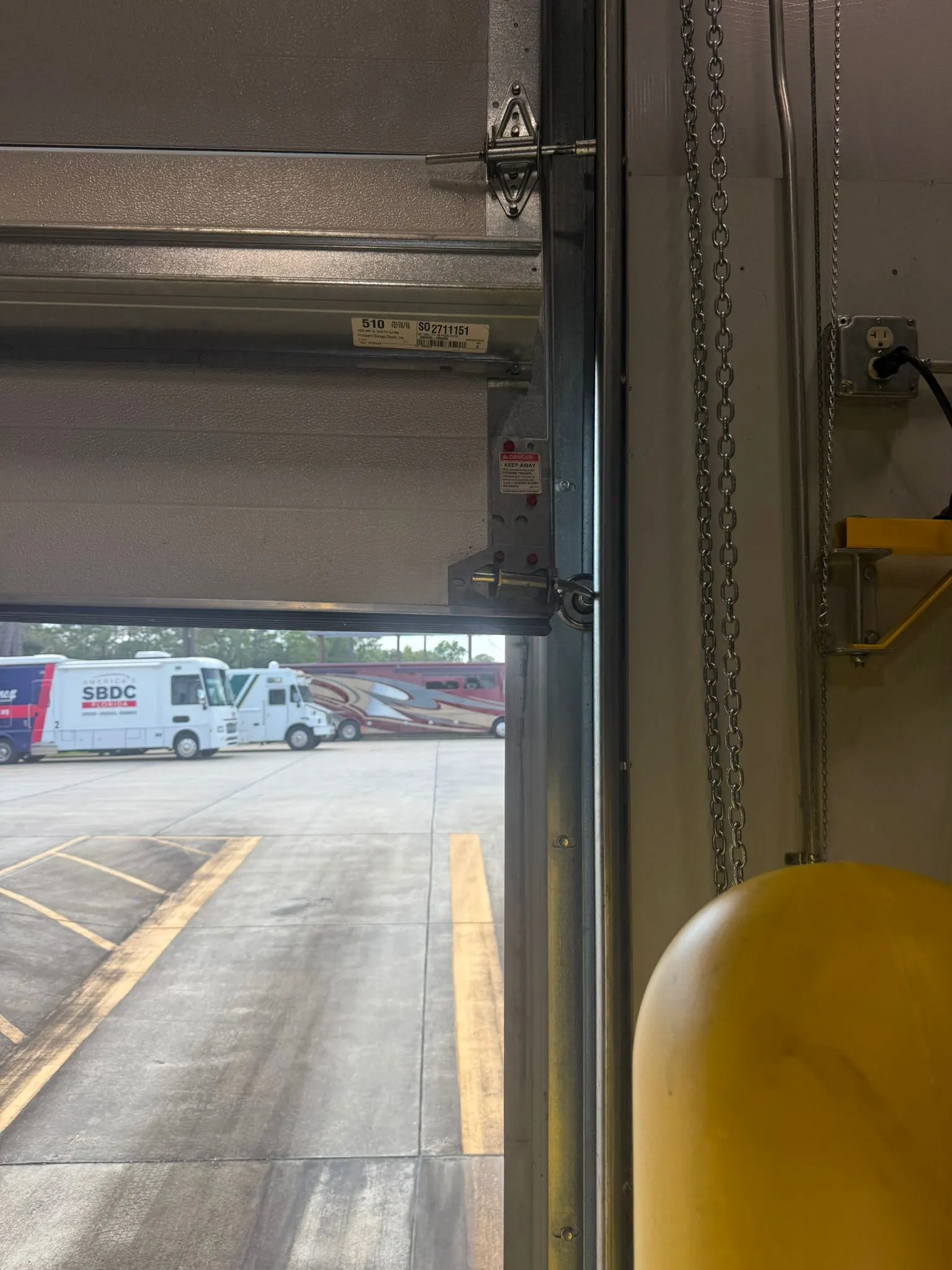
Sectional commercial doors: replacing one section
A commercial sectional door works like a large home door: horizontal sections hinged together, riding on rollers in tracks and balanced by springs. Commercial sections are usually wider, heavier and often insulated, and wide doors carry steel struts across the sections so they don't sag or bow.
To replace one section, the technician identifies the door's maker, model, width, section height and thickness, then orders a matching section. When the new section arrives, the struts, hinges and roller hardware move over to it. If it's the bottom section, the job also involves the bottom brackets that hold the lift cables, which are under spring tension, so the springs have to be handled safely before anything is loosened. The same is true on a homeowner's door, and our garage door panel replacement page explains how sections are matched on residential doors.
After the swap, the door is rebalanced and the operator's limits and force are checked, because a new section can change the door's weight slightly.
Rolling steel doors: replacing damaged slats
A rolling steel door has no hinged sections. Its curtain is a run of interlocking slats that coils onto a barrel above the opening, with the counterbalance springs inside that barrel. The ends of the slats ride in side guides, and the bottom bar seals against the floor.
Bent slats can usually be replaced as long as the slat profile and gauge are still available. The damaged slats are removed and new ones are fed into the curtain, along with any end pieces that keep the slats aligned in the guides. Because the curtain is connected to a loaded barrel, this work is done with the door secured and the tension controlled. It's never a job to attempt with a pry bar on a door that's still connected.
Slat damage often comes with other damage. If a guide is bent, the curtain will keep binding even with new slats, and a bent bottom bar can stop the door from sealing or locking. A good repair looks at the guides, bottom bar and barrel at the same time. Our commercial garage door repair page covers rolling steel doors in more detail.
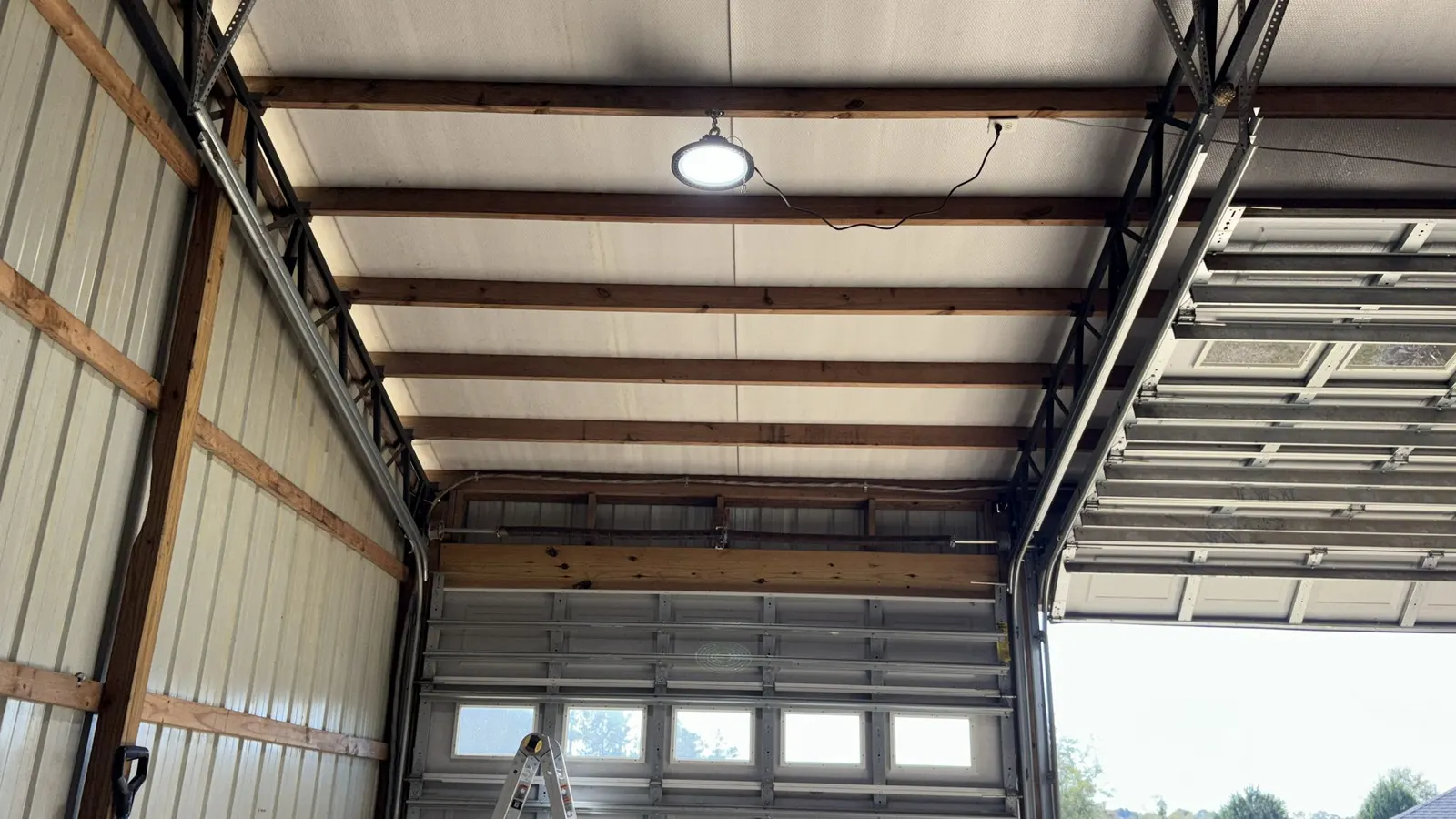
Loading dock doors: bottom sections, track and seals
Dock doors take more hits than any other door on a property. Trailers, dock plates and forklifts all work right at the bottom of the opening, so the bottom section or bottom slats and the lower track or guides tend to be damaged together.
When a dock door is hit, check three things before ordering parts. First, is the door still in its track or guides? A door that has jumped the track should not be run, and our off-track garage door repair page explains why. Second, are the cables still seated and tight? A slack cable is a sign the lift system took part of the impact. Third, are the dock seals or shelters torn? Replacing the panel without fixing a torn seal still leaves weather coming in.
Full-view and glass-panel commercial doors
Full-view doors, with aluminum frames and glass or clear panels, are common on auto service bays, restaurants and showrooms. Damage on these doors is often limited to one cracked glass or plastic panel, and that panel can sometimes be replaced within the existing section, as long as the frame isn't bent.
If the aluminum frame of the section is bent or the corners have pulled apart, the whole section usually needs to be replaced, because a bent frame won't hold the panel tight or ride straight in the track. Matching is easier when the door's maker and model are known, so check for a label on the inside of the door before you call.
Keeping the opening secure while a section is on order
Replacement sections and slats are often made or shipped to order, so there can be a gap between the first visit and the repair. For a business, that gap matters more than the panel itself. Ask the technician whether the door can be made safe to run in the meantime, whether it can be closed and locked, or whether it should stay down until the part arrives.
If the door can't be secured, tell us right away when you call. A door that leaves a building open, or that's stuck on a dock you need for deliveries, is handled as urgent. Our emergency garage door repair page explains how we handle those calls.
Replace a panel or replace the commercial door?
There's no fixed rule, but these signs usually point one way or the other:
- Replace the section or slats: one area is damaged, the door runs and seals well otherwise, and matching parts are available
- Replace the section and service the door: the door is busy and the visit is a good time to check springs, cables, rollers and the operator
- Replace the door: several sections or a long run of slats are damaged, the model is discontinued, or the door is old and other parts are also near the end of their life
- Replace the door: you need something the old door can't give you, such as insulation, a wind-rated door in Florida, or a different door type for the opening
What affects the cost of commercial garage door panel replacement?
We quote after seeing the door, because commercial doors vary so much. The main factors are the door type (sectional, rolling steel or full-view); the door's size, material and insulation; which section or how many slats are damaged; whether the bottom section and lift system are involved; whether the track, guides, bottom bar or seals also need work; and how long the matching part takes to arrive.
Doors on a wind-rated assembly, common in Florida, should get the maker's matching parts so the door still matches what was approved. If you run several doors, scheduling the repair with a preventive maintenance visit can catch other worn parts at the same time. You can also contact us with a photo of the damage and the door's label, and we'll tell you what we need to check.