
Why Won't My Garage Door Close All the Way?
By the H&D Garage Door team · Updated
Why won't my garage door close all the way?
The most common reason a garage door won't close all the way is the safety sensors. If the two small photo eyes near the floor can't see each other, the opener refuses to close the door or sends it back up. The next most likely causes are travel limit settings that are off, something in the door's path, or a mechanical problem that makes the door harder to move than the opener expects.
The way the door fails tells you a lot. A door that goes back up right away points to the sensors. A door that reverses just before touching the floor points to the limit or force settings. A door that stops halfway, shudders or hangs crooked points to the hardware, and that is when you should stop using it.
Is a blocked or misaligned safety sensor stopping the door?
Check this first, because it is the cause most often and the easiest to rule out. Every opener made for the US market since 1993 has photo eyes mounted a few inches above the floor on each side of the door. They send an invisible beam across the opening. When the beam is broken, the door will not close.
Look at the small indicator lights on each sensor. On LiftMaster and Chamberlain openers, the sending sensor shows an amber light and the receiving sensor shows a green light. Both should glow steadily. If one is off, dim or flickering, the eyes are blocked, dirty, bumped out of line or have a wiring problem. Many openers also flash their main light bulbs when a sensor fault stops the door. Our guide to sensor lights explains each color.
Common culprits are a broom or trash can leaning near the track, a spider web over a lens, a sensor knocked sideways by a bike or car, and strong morning or evening sun shining straight into the receiving eye.
What does it mean if the door reverses right before it hits the floor?
If the door comes almost all the way down, touches or nearly touches the floor, and then goes back up, the opener thinks it has hit an obstruction. That usually comes down to one of three things.
The travel limit may be set too far, so the opener keeps pushing after the door is already closed and reads the floor as an obstacle. The force setting may be too sensitive for how the door moves today. Or something at the bottom is actually in the way, such as ice, a thick mat, a buildup of debris at the threshold, or a bottom seal that has torn and folded under.
Limit and force settings are part of the opener's safety system, and setting the force too high to stop the reversing can defeat the auto-reverse feature. Clear the floor and look at the bottom seal yourself. If that doesn't fix it, let a technician make the adjustment during garage door opener repair.
In cold-weather markets, ice at the threshold and a frozen, stiff bottom seal cause this every winter. Our Milwaukee garage door repair page covers what subzero mornings do to doors there.
Why does the door stop partway down?
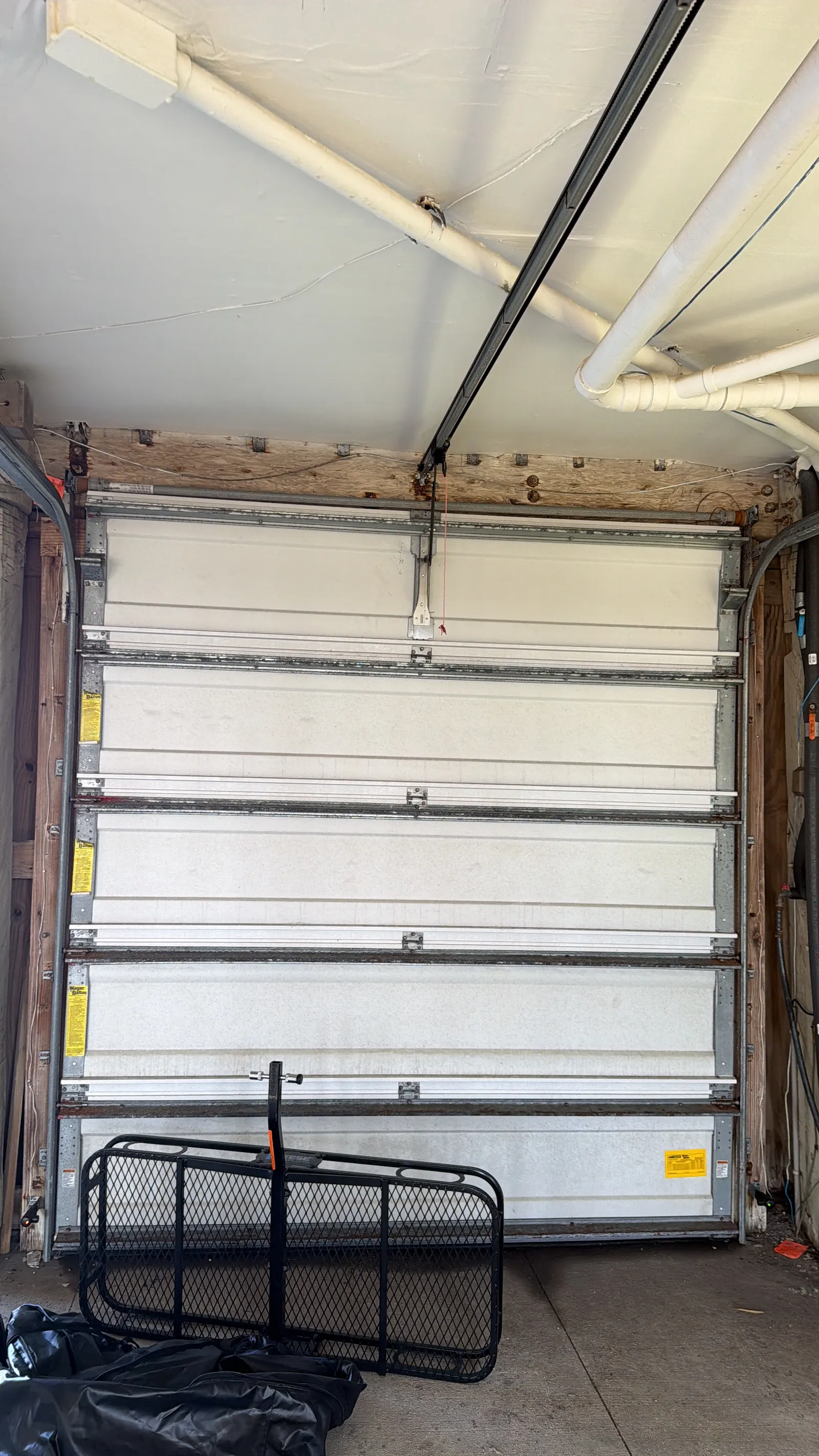
A door that stops in the middle of its travel is often binding. Worn or broken rollers, a bent section of track, loose hinges or a dented panel can all create resistance. The opener senses the extra effort and stops or reverses to protect itself and anyone nearby.
Look at the tracks from a distance while the door is stopped. If a roller has popped out, the track is bent, or the door is hanging lower on one side, do not run it again. Those are signs the door may be coming off track or that a cable or spring has failed, which calls for off-track repair rather than another try with the remote. Worn rollers alone are a simpler fix through roller replacement.
Why does my garage door only close when I hold the button?
If the door closes only while you press and hold the wall button, the opener is almost always telling you the safety sensors are not working. Many openers allow this hold-to-close override so you are not stuck with an open garage. It is meant for emergencies, not daily use, because it bypasses the protection that keeps the door from closing on a person, pet or car.
Use the override only while you can see the whole opening, then fix the sensor issue. Remotes and keypads will not close the door until the photo eyes see each other again.
Why won't my garage door close after a power outage?
Some openers lose their travel limit settings or remote programming when the power drops or surges back on. The door may then stop short of the floor, reverse at the bottom, or ignore the remote while the wall button still works. A surge after a storm can also damage the logic board or the sensor circuit, which often shows up as dark or flickering sensor lights.
Start with the simple things. Make sure the opener is plugged in and its breaker hasn't tripped, and check that both sensor lights came back on. If you pulled the emergency release during the outage, the trolley has to reconnect, which on most models happens the next time the opener runs, as your manual describes. If the door still won't close, the limits may need resetting. That is a quick job for a technician, and it avoids guessing at settings that also control the auto-reverse.
Could a broken spring or cable keep the door from closing?
Yes. A door with a broken spring is far heavier than the opener expects, so it may stop, reverse, or come down fast and slam. A cable that has slipped off its drum lets one side drop, and the door binds crooked in the track. Both are dangerous to keep running.
From a safe distance, look above the door for a gap in the spring coil and along each side for a loose cable. If you see either one, leave the door where it is and unplug the opener. Our guide on what to do when a cable comes off explains why.
What can you safely check before calling a technician?
These checks need no tools and keep you away from parts under spring tension. If none of them solve the problem, stop there.
- Clear anything near the door opening and along both tracks
- Wipe both sensor lenses with a soft dry cloth
- Check that both sensor indicator lights are steady
- Gently straighten a sensor that has clearly been bumped, then recheck the lights
- Make sure the bottom seal is not torn or folded under the door
- Look for ice, a mat or debris at the threshold
- Turn off lock or vacation mode on the wall control and replace remote batteries
When should you stop using the door and call for repair?
Stop and unplug the opener if the door is crooked, a roller is out of the track, a cable looks loose or frayed, you heard a loud bang, or the door suddenly feels heavy. Running a damaged door can pull it further out of line or bring it down unexpectedly.
Also call if the sensors check out but the door keeps reversing, or if you have to use the hold-to-close override more than once. Our garage door repair team works on all major brands and will find the cause rather than just reset the settings. Contact us and we will schedule the earliest available visit.